Protractor
CN → US| HS Code | Tariff Rate | Origin | Destination | Doc |
|---|---|---|---|---|
| 9031808085 | 10.0% | CN | US | Official Doc |
| 9031499000 | 35.0% | CN | US | Official Doc |
| 9017208080 | 39.6% | CN | US | Official Doc |
| 9017800000 | 40.3% | CN | US | Official Doc |
Product Images
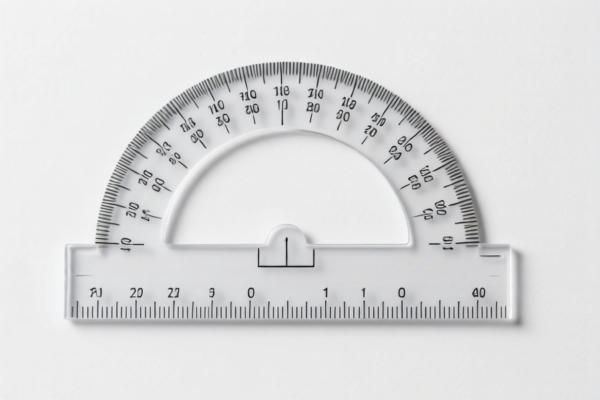
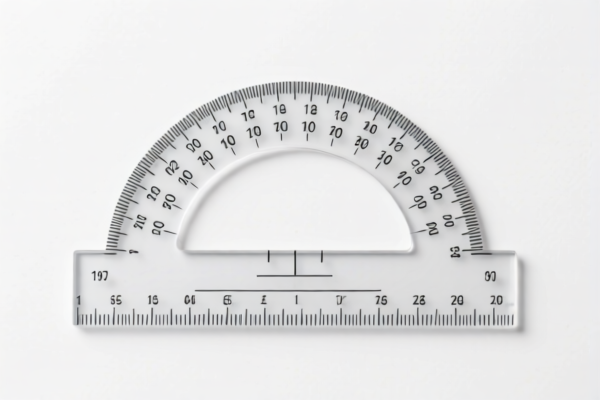
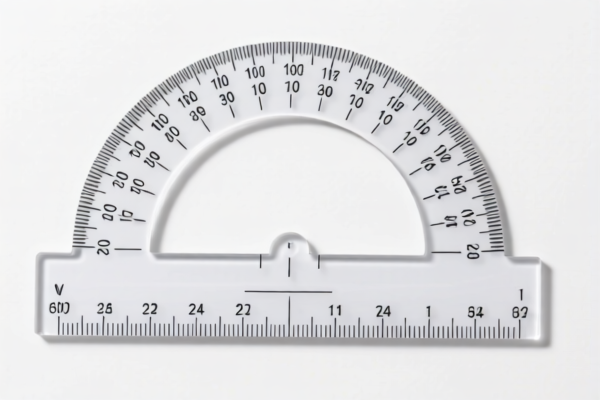
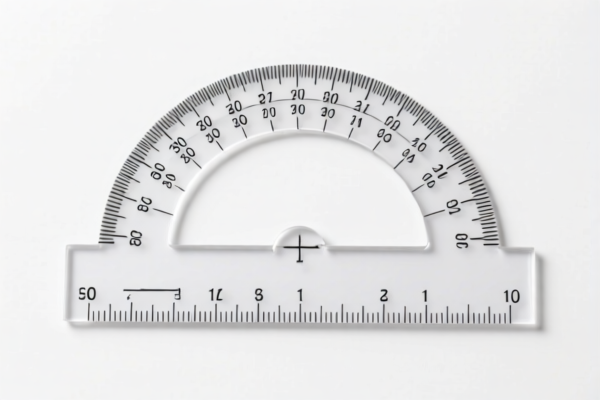
AI Analysis
📐 Protractor (Electronic Angle Finder)
🌐 HS Code Reference & Customs Clearance Guide | 2026 Latest Tariff Analysis | Professional Clearance Strategy
📌 Part I: Product Definition & Classification: Do You Really Understand "Protractors"?
An electronic protractor (or digital angle finder) is a precision instrument used to measure angles relative to a horizontal or vertical plane. In international trade, its classification is often contentious because it straddles the line between general measuring instruments and optical/mechanical precision devices. The classification significantly impacts the total duty burden due to Section 301 and IEEPA附加 tariffs.
⚠️ Key Distinction:
- Is it a general mechanical/electronic measurement device? → Likely 9031
- Is it considered an optical or precision mechanical drafting tool? → Likely 9017
📦 Part II: HS Code Classification Details (2026 Latest Tariff Authority Comparison)
| HS Code | Product Description | Classification Logic | Total Tax Rate |
|---|---|---|---|
9031.80.80.85 |
Electronic Protractor / Other Measuring/Checking Instruments | Classified as a general "Other measuring or checking instruments" due to its electronic angle measurement function. | 10.0% |
9031.49.90.00 |
Electronic Protractor / Other Optical Instruments | Classified under optical/precision instruments due to electronic sensor attributes mimicking optical precision. | 35.0% |
9017.20.80.80 |
Protractors, Drafting Mats & Boards / Mathematical Calculation Instruments | Classified under drafting/mathematical instruments because its use matches 9017.20 (protractors/drafting tools) with no material conflict. | 39.6% |
9017.80.00.00 |
Protractors, Drafting Mats & Boards / Other Instruments | Classified as angle-measuring instruments fitting the description of protractors and length/angle measuring devices in the 9017 explanatory notes. | 40.3% |
🔍 Critical Note:
- The tax rate difference is massive: from 10% to 40.3%.
- 9031.80.80.85 is the most favorable option if the customs authority accepts it as a "general electronic measuring instrument."
- 9017 classifications are risky because they attract the 25% Section 301 tariff on top of base duties.
💰 Part III: 2026 Latest Tariff Rate Breakdown (Including Additional Taxes & Policy Surcharges)
✅ Applicable Country: United States (US)
✅ Origin: China (CN)
✅ Effective Date: From November 10, 2025 (including subsequent imports)
🎯 1. 9031.80.80.85 — General Electronic Measuring Instruments
| Item | Details |
|---|---|
| Base Rate | 0.0% |
| Section 301 Additional Tariff | 0.0% |
| IEEPA Additional Tariff | +10% (Targeting China/HK products) |
| Total Tax Rate | 10.0% |
| Tax Calculation | CIF Value × 10% |
| De Minimis Eligibility | ❌ Not Eligible (deny_de_minimis applies to Section 301 items, but IEEPA may have specific thresholds; generally, high-risk electronic goods are scrutinized) |
| Legal Basis Path | IEEPA:9903.01.25 → USITC:9031.80.80.85 |
📌 Explanation:
- This is the most cost-effective classification.
- It avoids the 25% Section 301 tariff entirely.
- Only the 10% IEEPA tariff applies.
- Strategy: Argue that the device is a generic electronic sensor/angle meter, not a precision optical or drafting tool.
🎯 2. 9031.49.90.00 — Other Optical Instruments
| Item | Details |
|---|---|
| Base Rate | 0.0% |
| Section 301 Additional Tariff | +25.0% |
| IEEPA Additional Tariff | +10% |
| Total Tax Rate | 35.0% |
| Tax Calculation | CIF Value × 35% |
| De Minimis Eligibility | ❌ Not Eligible |
| Legal Basis Path | IEEPA:9903.01.24 → USITC:9031.49.90.00 → FOOTNOTE:9903.88.01 |
📌 Note:
- Although classified under 9031 (Measuring Instruments), it falls into the optical sub-category, triggering the 25% Section 301 tariff.
- This is a mid-range risk classification.
- Justification: The device uses electronic/optical sensors that mimic optical precision equipment.
🎯 3. 9017.20.80.80 — Drafting/Mathematical Instruments
| Item | Details |
|---|---|
| Base Rate | 4.6% |
| Section 301 Additional Tariff | +25.0% |
| IEEPA Additional Tariff | +10% |
| Total Tax Rate | 39.6% |
| Tax Calculation | CIF Value × 39.6% |
| De Minimis Eligibility | ❌ Not Eligible |
| Legal Basis Path | IEEPA:9903.01.24 → USITC:9017.20.80.80 → FOOTNOTE:9903.88.01 |
📌 Reasoning:
- Classified under 9017 (Protractors, Drafting Mats, etc.).
- The base duty is 4.6%, not 0%.
- Plus 25% Section 301 and 10% IEEPA.
- Strategy: Avoid this if possible, as the base duty adds unnecessary cost.
🎯 4. 9017.80.00.00 — Other Drafting Instruments
| Item | Details |
|---|---|
| Base Rate | 5.3% |
| Section 301 Additional Tariff | +25.0% |
| IEEPA Additional Tariff | +10% |
| Total Tax Rate | 40.3% |
| Tax Calculation | CIF Value × 40.3% |
| De Minimis Eligibility | ❌ Not Eligible |
| Legal Basis Path | IEEPA:9903.01.24 → USITC:9017.80.00.00 → FOOTNOTE:9903.88.01 |
📌 Reasoning:
- Classified as "Other instruments for measuring angle."
- Highest base duty (5.3%) among the options.
- Plus 25% Section 301 and 10% IEEPA.
- Worst-case scenario for duty costs.
🛠️ Part IV: Customs Clearance Practical Advice (Avoiding Pitfalls)
✅ 1. Required Documentation Checklist (Non-negotiable)
| Document | Mandatory? | Notes |
|---|---|---|
| ✅ Product Specification Sheet | ✔️ | Must clearly state: "Electronic Angle Measurement," resolution, accuracy, power supply. |
| ✅ User Manual | ✔️ | Shows intended use (e.g., construction, woodworking, engineering). |
| ✅ Product Photos | ✔️ | Clear images of the device, screen, and sensors. |
| ✅ Commercial Invoice | ✔️ | Must accurately describe the product. Use neutral terms like "Electronic Angle Finder" instead of "Protractor" if possible to argue for 9031. |
| ✅ Origin Certificate | ✔️ | If not China-origin, may qualify for preferential rates. |
| ✅ Packaging List | ✔️ | Detail contents to avoid separation charges. |
✅ 2. Declaration Strategy (Key Tips)
🔥 "Argue General, Avoid Optical, Skip Drafting!"
| Situation | Recommended Declaration | Risk |
|---|---|---|
| Generic Electronic Protractor | 9031.80.80.85 |
Low Risk, Low Tax (10%) |
| High-Precision Digital Sensor | 9031.49.90.00 |
Mid Risk, Mid Tax (35%) |
| Used for Drafting/Blueprints | 9017.20.80.80 |
High Risk, High Tax (39.6%) |
| General Angle Measuring Tool | 9017.80.00.00 |
High Risk, Highest Tax (40.3%) |
📌 Tip:
- Emphasize the electronic sensor nature over the "protractor" label.
- Avoid words like "drafting," "precision optical," or "surveying instrument" unless necessary.
- Use "Electronic Angle Finder" or "Digital Inclinometer" in the description to steer towards 9031.
✅ 3. Special Cases
| Case | Handling Advice |
|---|---|
| OEM Custom Protractor | Provide client specs to prove it's a general-purpose tool, not a specialized drafting instrument. |
| Bundled with Other Tools | Declare separately if possible. Bundling may trigger higher classification. |
| Used in Medical/Industrial Context | If it's part of a larger system, consider declaring as a "part" of that system (if applicable) to potentially reduce duty. |
| High-Volume Import | Apply for an Advance Ruling to lock in the 9031.80.80.85 classification and avoid disputes. |
🌍 Part V: Global Market Clearance Comparison (2026 Latest)
| Country/Region | Recommended HS Code | Tariff Rate | Certification Requirements | Notes |
|---|---|---|---|---|
| 🇺🇸 USA | 9031.80.80.85 |
10% (IEEPA) | FCC, RoHS | Best option. Avoid 9017 to save 30%+ in duties. |
| 🇨🇳 China | 9017.80.00.00 |
~5% | CCC (if applicable) | Domestic duties are lower, but export to US is the focus. |
| 🇪🇺 EU | 9031.80.80 |
0% (if MFN) | CE, RoHS | No Section 301/IEEPA equivalent, but VAT applies. |
| 🇬🇧 UK | 9031.80.80 |
0% | UKCA | Post-Brexit rules similar to EU. |
| 🇨🇦 Canada | 9031.80.80 |
0% (if FTA) | Health Canada | No significant additional tariffs. |
📌 Conclusion:
- The US is the most challenging market due to the complex interplay of Section 301 and IEEPA tariffs.
- Strategic classification is critical to save 30-35% in duty costs.
- China-origin products should aggressively pursue 9031.80.80.85 to minimize the 10% IEEPA burden.
📌 Part VI: Common Mistakes & Pitfalls (Lessons Learned)
❌ Mistake 1: Using "Protractor" as the primary description
👉 Consequence: Customs may classify it under 9017 → 39.6% - 40.3% tax.
❌ Mistake 2: Ignoring the IEEPA 10% tariff
👉 Consequence: Unexpected cost increase even if Section 301 is avoided.
❌ Mistake 3: Bundling with non-covered items
👉 Consequence: Complex duty calculation, potential audit triggers.
❌ Mistake 4: No Advance Ruling
👉 Consequence: Customs officer discretion may lead to inconsistent classification.
✅ Correct Approach:
"Digital Electronic Angle Finder, Non-Optical, General Purpose Measurement Tool, Model XYZ, FCC Certified"
🎯 Part VII: Conclusion: Precision Classification, Cost Savings!
🎯 Remember the Golden Rule:
🔹 "General Electronic (9031) is King: 10% Total. Optical (9031.49) is Middle: 35% Total. Drafting (9017) is Queen: 40% Total."
🔹 "HS Code determines profit margin. A 30% difference is everything!"
📌 Pro Tip:
If your product is originating from Vietnam, Mexico, Thailand, or Malaysia, you may qualify for IEEPA exemptions or lower Section 301 rates.
Strongly recommend applying for an Advance Ruling to secure the 9031.80.80.85 classification.
📣 Immediate Action Required:
📞 Contact a professional customs broker + Provide product specs + Apply for HS Code Advance Ruling
🚀 Ensure your protractors clear customs smoothly, reduce costs, and maximize profits!
✨ Professional clearance starts with precise classification!
💼 Every dollar saved on duty is pure profit!
Customer Reviews
About HS Code Classification
The Harmonized System (HS) is an internationally standardized nomenclature developed by the World Customs Organization (WCO) to classify traded products. Over 200 countries use the HS system as the basis for customs tariffs, trade statistics, and import/export regulations.
Each HS code follows a hierarchical structure:
- Chapter (2 digits) — Broad category of goods (e.g., Chapter 84: Machinery and Mechanical Appliances)
- Heading (4 digits) — More specific grouping within the chapter
- Subheading (6 digits) — Internationally standardized breakdown, used by all WCO member countries
- National subdivisions (8-10 digits) — Country-specific extensions for further classification, such as US HTSUS 10-digit codes
Correct HS code classification is essential for smooth customs clearance, accurate duty payment, and compliance with trade regulations. Misclassification can lead to customs delays, overpayment of duties, or penalties.
When importing from CN to US, the applicable tariff rates may include:
- Most-Favored-Nation (MFN) rate — The standard duty rate applied to WTO members
- General rate — Applied to countries without trade agreements
- Trade remedy duties — Additional tariffs such as Section 301 (anti-dumping), Section 232 (national security), or countervailing duties
The information provided on this page is for reference purposes only. For official classification, please consult with your local customs authority or a licensed customs broker.