Pull out Kitchen Storage
CN → US| HS Code | Tariff Rate | Origin | Destination | Doc |
|---|---|---|---|---|
| 3924104000 | 13.4% | CN | US | Official Doc |
| 3924905650 | 20.9% | CN | US | Official Doc |
| 9403200090 | 85.0% | CN | US | Official Doc |
| 7326908688 | 87.9% | CN | US | Official Doc |
| 9403608093 | 35.0% | CN | US | Official Doc |
| 7323999030 | 88.4% | CN | US | Official Doc |
Product Images
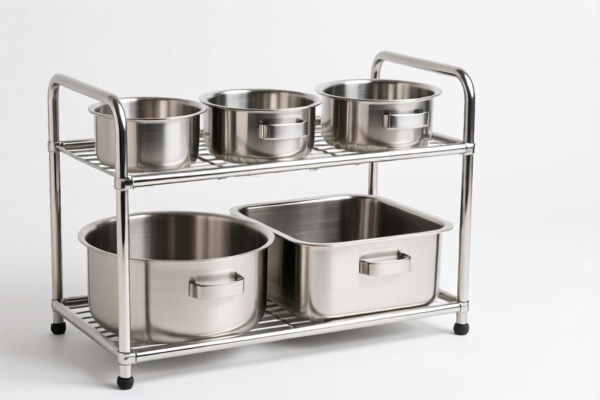
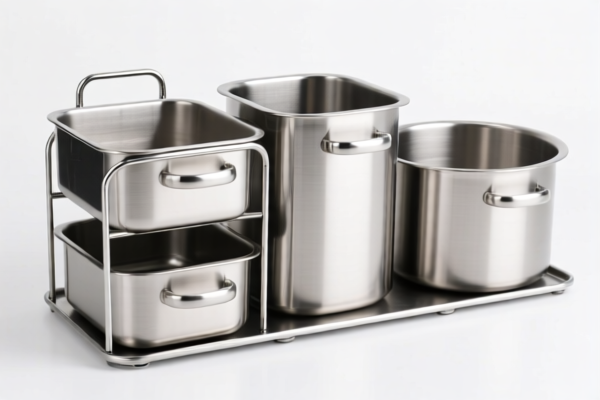
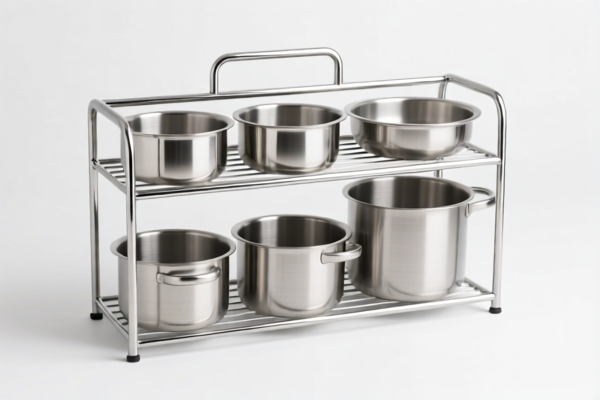
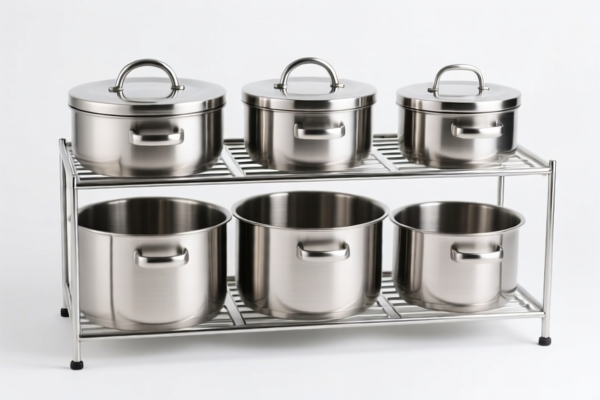
AI Analysis
🧺 Pull Out Kitchen Storage (Basket & Organizer Systems)
🌐 HS Code Reference & Customs Clearance Guide | 2026 Latest Tariff Analysis | Professional Compliance Strategy
📌 I. Product Definition & Classification: What Exactly is "Pull Out Kitchen Storage"?
"Pull Out Kitchen Storage" is a broad category of organizational products designed to maximize space in cabinets and drawers. In international trade, the material composition and functional classification strictly determine the Harmonized System (HS) Code.
Misclassification here leads to catastrophic tariff differences (e.g., 13.4% vs. 88.4%).
Core Categories: 1. Plastic Storage Baskets: Lightweight, molded plastic bins for pantry or drawer organization. 2. Metal Storage Containers: Iron, steel, or stainless steel racks/baskets for heavy-duty kitchen use. 3. Furniture Components: Wooden or metal units that are integral parts of kitchen cabinetry (e.g., slide-out pantry shelves). 4. Kitchen Utensils: Specific containers like trash bins or utensil holders made of metal.
⚠️ Critical Distinction:
- If it is a standalone plastic bin → Likely Plastics (Chapter 39).
- If it is a metal rack or basket → Likely Iron/Steel Articles (Chapter 73).
- If it is a wooden drawer unit integrated into cabinetry → Likely Wooden Furniture Parts (Chapter 94).
- If it is a specific kitchen tool/utensil container → Likely Kitchenware (Chapter 73).
📦 II. HS Code Classification Details (2026 Latest Tariff Authority对照)
| HS Code | Product Description | Material | Key Function/Feature | Tax Rate (Total) |
|---|---|---|---|---|
3924.10.40.00 |
Plastic Houseware: Drawer baskets, plastic household articles / storage containers | Plastic | General plastic storage bins, lightweight, non-metallic | 13.4% |
3924.90.56.50 |
Plastic Other Houseware: Drawer baskets, plastic other household articles / storage supplies | Plastic | Plastic items not specified elsewhere; often complex or specialized plastic organizers | 20.9% |
9403.20.00.90 |
Metal Furniture: Drawer baskets, finished container consumer goods | Steel/Aluminum/Copper | Metal furniture pieces or finished metal containers classified as furniture items | 85.0% |
7326.90.86.88 |
Other Iron/Steel Articles: Drawer baskets, other metal articles of iron or steel | Iron/Steel | Generic metal wire baskets, racks, or frames not classified as furniture or kitchenware | 87.9% |
9403.60.80.93 |
Wooden Furniture: Drawer baskets, wooden furniture accessories / parts | Wood | Wooden drawer units, cabinet inserts, or wooden organizational components | 35.0% |
7323.99.90.30 |
Kitchenware: Iron/Steel kitchen storage buckets | Iron/Steel | Specific kitchen items like metal trash bins, utensil holders, or cooking-related storage | 88.4% |
🔍 Key Insight:
- Plastic items have the lowest tax burden (13.4% - 20.9%).
- Metal items are heavily penalized due to Section 301 and Section 232 tariffs, ranging from 85% to 88.4%.
- Wooden items sit in the middle at 35.0%.
💰 III. 2026 Latest Tariff Rate Breakdown (Including Additional Taxes & Policy Add-ons)
✅ Applicable Country: United States (US)
✅ Origin: China (CN)
✅ Effective Date: Includes imports after 2025-11-10
🎯 1. 3924.10.40.00 – Plastic Drawer Baskets (Lowest Risk)
| Item | Content |
|---|---|
| Base Tariff | 3.4% |
| Section 301 Add-on | 0.0% (Exempt or Lower Tier) |
| Section 232 (122 Clause) Tax | 10.0% |
| Total Tariff | 13.4% |
| Calculation | CIF Value × 13.4% |
| De Minimis Eligibility | ❌ No (Denied for China-origin plastic houseware under current enforcement) |
| Legal Basis | Section 232: 9903.01.25 → USITC: 3924.10.40.00 |
📌 Explanation:
- This is the most cost-effective classification for plastic organizers.
- The base tariff is low (3.4%), and there is no Section 301 add-on, only the 122 Clause (10%).
🎯 2. 3924.90.56.50 – Other Plastic Storage Items
| Item | Content |
|---|---|
| Base Tariff | 3.4% |
| Section 301 Add-on | 7.5% |
| Section 232 (122 Clause) Tax | 10.0% |
| Total Tariff | 20.9% |
| Calculation | CIF Value × 20.9% |
| De Minimis Eligibility | ❌ No |
| Legal Basis | Section 301: 9903.01.24 → Section 232: 9903.01.25 → USITC: 3924.90.56.50 |
📌 Note:
- If your plastic basket is considered "Other" (not standard household ware), you pay an additional 7.5% under Section 301.
🎯 3. 9403.20.00.90 – Metal Furniture/Finished Containers
| Item | Content |
|---|---|
| Base Tariff | 0.0% |
| Section 301 Add-on | 25.0% |
| Section 232 (122 Clause) Tax | 10.0% |
| Steel/Aluminum/Copper Surcharge | 50.0% |
| Total Tariff | 85.0% |
| Calculation | CIF Value × 85.0% |
| De Minimis Eligibility | ❌ No |
| Legal Basis | Section 301: 9903.01.24 → Section 232: 9903.01.25 → USITC: 9403.20.00.90 |
📌 Warning:
- If classified as Steel/Aluminum/Copper, the 50% surcharge applies on top of Section 301 and 232 taxes.
- This is a very high-risk classification for standard metal racks.
🎯 4. 7326.90.86.88 – Other Iron/Steel Articles (Metal Racks)
| Item | Content |
|---|---|
| Base Tariff | 2.9% |
| Section 301 Add-on | 25.0% |
| Section 232 (122 Clause) Tax | 10.0% |
| Steel/Aluminum/Copper Surcharge | 50.0% |
| Total Tariff | 87.9% |
| Calculation | CIF Value × 87.9% |
| De Minimis Eligibility | ❌ No |
| Legal Basis | Section 301: 9903.01.24 → Section 232: 9903.01.25 → USITC: 7326.90.86.88 |
📌 Warning:
- Standard wire baskets often fall here.
- The 50% steel surcharge makes this extremely expensive.
🎯 5. 9403.60.80.93 – Wooden Furniture Parts
| Item | Content |
|---|---|
| Base Tariff | 0.0% |
| Section 301 Add-on | 25.0% |
| Section 232 (122 Clause) Tax | 10.0% |
| Total Tariff | 35.0% |
| Calculation | CIF Value × 35.0% |
| De Minimis Eligibility | ❌ No |
| Legal Basis | Section 301: 9903.01.24 → Section 232: 9903.01.25 → USITC: 9403.60.80.93 |
📌 Note:
- Wooden drawer organizers are taxed significantly lower than metal ones (35% vs 88%).
- Ensure the product is clearly wood and described as a furniture part.
🎯 6. 7323.99.90.30 – Kitchenware (Metal Buckets/Bins)
| Item | Content |
|---|---|
| Base Tariff | 3.4% |
| Section 301 Add-on | 25.0% |
| Section 232 (122 Clause) Tax | 10.0% |
| Steel/Aluminum/Copper Surcharge | 50.0% |
| Total Tariff | 88.4% |
| Calculation | CIF Value × 88.4% |
| De Minimis Eligibility | ❌ No |
| Legal Basis | Section 301: 9903.01.24 → Section 232: 9903.01.25 → USITC: 7323.99.90.30 |
📌 Warning:
- If you sell a metal trash bin or utensil holder, it is classified as kitchenware, not furniture.
- This is the highest tax rate (88.4%) due to all surcharges applying.
🛠️ IV. Customs Clearance Practical Advice (Real-World Pitfall Guide)
✅ 1. Material Verification Checklist (Non-negotiable)
| Document | Must Provide | Reason |
|---|---|---|
| ✅ Material Specification Sheet | ✔️ | Must explicitly state "100% Polypropylene," "Stainless Steel 304," or "Bamboo/Wood." |
| ✅ Product Photos (Close-up) | ✔️ | Show texture, welds, or molding marks to distinguish plastic from metal. |
| ✅ Bill of Materials (BOM) | ✔️ | Breaks down components (e.g., "Plastic Basket + Steel Slider"). |
| ✅ Commercial Invoice | ✔️ | Description must match HS Code intent (e.g., "Plastic Storage Basket" vs. "Metal Kitchen Rack"). |
✅ 2. Declaration Strategy (Key Mantras)
🔥 “Material First, Function Second, Description Precise, Tax Lowered!”
| Scenario | Correct Declaration | Wrong Declaration |
|---|---|---|
| Plastic Basket | 3924.10.40.00 – "Plastic Household Storage Basket" |
"Kitchen Organizer" (Vague → Risk of audit) |
| Metal Wire Rack | 7326.90.86.88 – "Steel Wire Storage Rack" |
"Furniture Part" (Misclassification → Penalty) |
| Wooden Drawer | 9403.60.80.93 – "Wooden Cabinet Drawer Insert" |
"Plastic Drawer" (If wood → Misclassification) |
| Metal Trash Can | 7323.99.90.30 – "Steel Kitchen Trash Bin" |
"Steel Storage Container" (Too vague) |
✅ 3. Special Cases Handling
| Situation | Recommendation |
|---|---|
| Hybrid Materials (Plastic + Metal) | If >50% by weight/value is plastic, try 3924.10.40.00. If metal frame dominates, risk 7326 or 9403. |
| Slide-out System (Hardware) | If sold as a hardware kit (slides only), consider 7318 (Screws/Fittings). If sold with the basket, it follows the basket. |
| OEM Custom Designs | Provide design files. If unique, argue for 3924.90.56.50 (Other Plastic) if not standard. |
| Export to US | Avoid Metal Furniture (9403.20) if possible due to 85% tax. Prefer Plastic (3924) or Wooden (9403.60). |
🌍 V. Global Market Clearance Comparison (2026 Latest)
| Country/Region | Recommended HS Code | Estimated Tax | Certification | Remarks |
|---|---|---|---|---|
| 🇺🇸 USA | 3924.10.40.00 (Plastic) |
13.4% | FCC (if electronic), CPC | Metal: 85-88%. Wood: 35%. |
| 🇨🇳 China | 3924.10.40.00 |
5-10% | None | No Section 301/232. |
| 🇪🇺 EU | 3924.10.40.00 |
4-6% | LFGB, Food Contact | No high add-on tariffs. |
| 🇨🇦 Canada | 3924.10.40.00 |
5-10% | CFIA (Food Contact) | CUSMA preferential rates apply. |
| 🇦🇺 Australia | 3924.10.40.00 |
5% | Standards Australia | No major anti-dumping. |
📌 Conclusion:
- USA is the hardest market for Metal and Wooden storage due to Section 301 and 232 tariffs.
- Plastic (3924) is the safest and cheapest route for US export.
- Wooden (9403.60) is a viable middle ground (35%) if plastic is not feasible.
📌 VI. Common Errors & Pitfall Guide (Lessons Learned)
❌ Error 1: Classifying a metal wire basket as "Plastic" because it has plastic feet.
👉 Consequence: Customs seizes goods, fines, and 75% retroactive tax + penalties.
👉 Solution: Disclose all materials. If metal >50%, use Metal HS Code.
❌ Error 2: Calling a wooden drawer a "Plastic Drawer" to avoid tax.
👉 Consequence: Rejection at border, return to sender.
👉 Solution: Accurate material declaration. Use 9403.60.80.93.
❌ Error 3: Missing the Section 232 (122 Clause) 10% in cost calculation.
👉 Consequence: Margin erosion. Many importers only account for Base + Sec 301.
👉 Solution: Always add 10% for Section 232 on plastic and steel goods.
❌ Error 4: Classifying a metal trash can as "Furniture" (9403.20).
👉 Consequence: Audit. It’s kitchenware (7323), tax is 88.4% vs 85% (close, but documentation matters).
👉 Solution: Accurate functional description.
✅ Correct Approach:
“Plastic Drawer Basket, PP Material, Stackable, 10L Capacity, For Kitchen/Closet Use, Made in China”
🎯 VII. Conclusion: Precision in Classification Saves Millions!
🎯 Remember the Mantras:
🔹 “Plastic is King (13-20%), Wood is Queen (35%), Metal is Death (85-88%)!”
🔹 “Section 301 + 232 = 35-60% Extra Tax on Metal/Plastic!”
🔹 “Material Dictates Code, Code Dictates Cost!”
📌 Pro Tip:
If you are importing metal racks or wooden organizers to the US, consider:
1. Transshipment (via Vietnam/Mexico) – Risk of scrutiny!
2. Duty Drawback programs.
3. Switching to Plastic alternatives for US-bound goods.
📣 Immediate Action:
📞 Consult a licensed customs broker.
📸 Provide detailed material specs and product photos.
🚀 Apply for an IRS Advance Ruling if unsure about hybrid products.
✨ Professional Clearance Starts with Accurate Classification!
💼 Every 1% of Tariff Saved is Pure Profit!
Customer Reviews
About HS Code Classification
The Harmonized System (HS) is an internationally standardized nomenclature developed by the World Customs Organization (WCO) to classify traded products. Over 200 countries use the HS system as the basis for customs tariffs, trade statistics, and import/export regulations.
Each HS code follows a hierarchical structure:
- Chapter (2 digits) — Broad category of goods (e.g., Chapter 84: Machinery and Mechanical Appliances)
- Heading (4 digits) — More specific grouping within the chapter
- Subheading (6 digits) — Internationally standardized breakdown, used by all WCO member countries
- National subdivisions (8-10 digits) — Country-specific extensions for further classification, such as US HTSUS 10-digit codes
Correct HS code classification is essential for smooth customs clearance, accurate duty payment, and compliance with trade regulations. Misclassification can lead to customs delays, overpayment of duties, or penalties.
When importing from CN to US, the applicable tariff rates may include:
- Most-Favored-Nation (MFN) rate — The standard duty rate applied to WTO members
- General rate — Applied to countries without trade agreements
- Trade remedy duties — Additional tariffs such as Section 301 (anti-dumping), Section 232 (national security), or countervailing duties
The information provided on this page is for reference purposes only. For official classification, please consult with your local customs authority or a licensed customs broker.