Pulp Art Installation
CN → US| HS Code | Tariff Rate | Origin | Destination | Doc |
|---|---|---|---|---|
| 4823901000 | 35.0% | CN | US | Official Doc |
| 4823908680 | 35.0% | CN | US | Official Doc |
| 9701990000 | 17.5% | CN | US | Official Doc |
| 9701910000 | 17.5% | CN | US | Official Doc |
| 4823902000 | 35.0% | CN | US | Official Doc |
Product Images
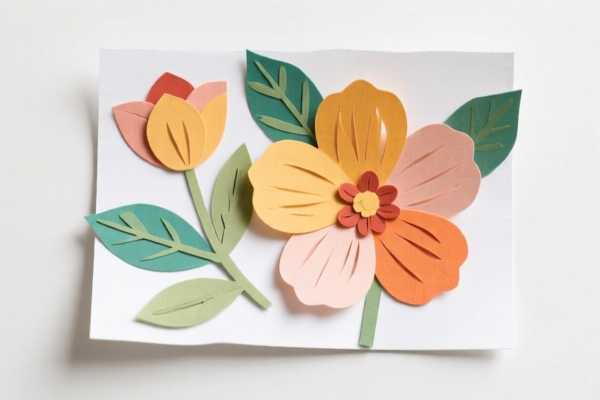
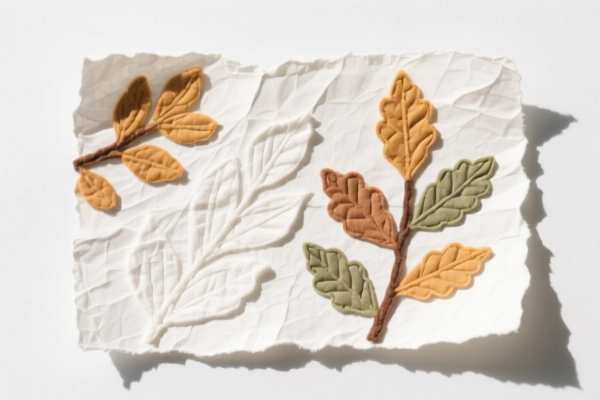
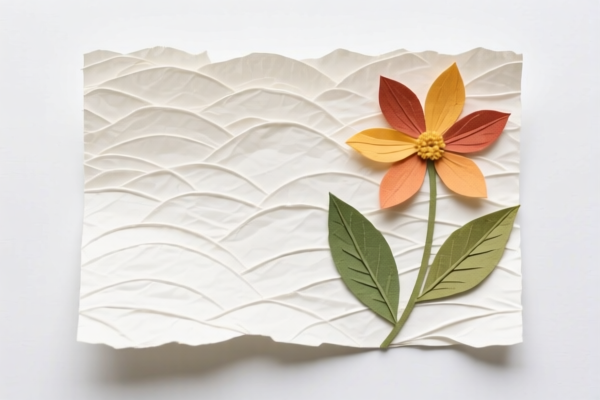
AI Analysis
🎨 Pulp Art Installation (Paper Mâché / Decorative Panels)
🌐 HS Code Reference & Customs Clearance Guide | 2026 Latest Tariff Analysis | Professional Compliance Strategy
📌 I. Product Definition & Classification: What Exactly is "Pulp Art"?
"Pulp Art Installation" generally refers to decorative objects, panels, or sculptural pieces made primarily from paper pulp (paper mâché) or processed paper materials. In international trade, these items are often confused with general art or finished paper products. However, customs authorities strictly classify them based on material composition and form.
Key Distinctions:
- Paper Pulp/Material Base: If the core material is paper pulp, it falls under Chapter 48 (Paper and Paperboard).
- Artistic/Decorative Nature: If classified strictly as "Art," it might fall under Chapter 97, but this is rare for mass-produced pulp items unless they are unique, handmade masterpieces.
- Functional vs. Decorative: Purely decorative pulp items do not qualify for "Art" treatment if they are industrial or semi-industrial productions.
⚠️ Critical Classification Point:
- Most "Pulp Art" items are technically Paper Products (Chapter 48), not "Works of Art" (Chapter 97), unless they meet strict criteria for original prints, paintings, or sculptures by artists.
- Misclassification as "Art" to avoid high tariffs is a common audit risk.
📦 II. HS Code Classification Details (2026 Tariff Book Authority Match)
Based on the provided data, here are the five possible HS Codes for "Pulp Art Installation," ranked by likelihood and logic:
| HS Code | Product Description | Matching Criteria from Data | Tax Rate |
|---|---|---|---|
4823.90.10.00 |
Other articles of paper pulp, not specified elsewhere | Material Match: Pulp-based; Category: Pulp-made articles | 35.0% |
4823.90.86.80 |
Other paper pulp & paper articles (Catch-all) | Material Match: Pulp-based; Category: General pulp paper products | 35.0% |
4823.90.20.00 |
Paper pulp articles, shaped/molded | Form Match: Shaped/sculptural pulp items; Material: Pulp | 35.0% |
9701.99.00.00 |
Works of art, prints, paintings (Other) | Form/Use Match: Art-like decorative plaques/signs | 17.5% |
9701.91.00.00 |
Collages, mosaics, and similar decorative panels | Material/Art Match: Pulp-based decorative panels/mosaics | 17.5% |
🔍 Analysis of Classification Logic:
- Lower Tax (17.5%): Codes9701.99.00.00and9701.91.00.00apply if the item is declared as a unique work of art, collage, or mosaic. This requires proof of artistic origin (e.g., signed by an artist, unique piece).
- Higher Tax (35.0%): Codes4823.90.10.00,4823.90.86.80, and4823.90.20.00apply if the item is considered a manufactured paper product (e.g., mass-produced paper mâché decorations, molded pulp shapes).
💰 III. 2026 Tariff Rate Breakdown (Detailed Tax Clauses)
✅ Applicable Country: USA (US)
✅ Origin: China (CN)
✅ Effective Time: Post-2025 Tariff Structure (Including IEEPA & Section 301)
🎯 1. 4823.90.10.00 – Paper Pulp Articles (Other)
| Item | Detail |
|---|---|
| Base Rate | 0% (Ad Valorem) |
| Section 301 Additional Duty | +25% (USITC Footnote 9903.88.01) |
| IEEPA Additional Duty | +10% (China/Hong Kong products, effective Nov 2025) |
| Total Duty Rate | 35.0% |
| Calculation | CIF Value × 35% |
| De Minimis Exemption | ❌ Not Eligible |
| Legal Reference | IEEPA:9903.01.25 → USITC:4823.90.10.00 → FOOTNOTE:9903.88.01 |
📌 Explanation:
- This is the standard rate for manufactured pulp products.
- The 25% is from Section 301 tariffs on Chinese paper goods.
- The 10% is from IEEPA (International Emergency Economic Powers Act)对华加征关税.
- Total: 35%. High impact on cost.
🎯 2. 4823.90.86.80 – Other Paper Pulp Articles (Catch-All)
| Item | Detail |
|---|---|
| Base Rate | 0% |
| Section 301 Additional Duty | +25% |
| IEEPA Additional Duty | +10% |
| Total Duty Rate | 35.0% |
| Calculation | CIF Value × 35% |
| De Minimis Exemption | ❌ Not Eligible |
| Legal Reference | IEEPA:9903.01.24 → USITC:4823.90.86.80 → FOOTNOTE:9903.88.01 |
📌 Note:
- Used when the specific pulp article doesn’t fit other 4823 subheadings.
- Same tax burden as4823.90.10.00.
- Common for irregularly shaped or custom-made pulp items.
🎯 3. 4823.90.20.00 – Shaped/Profiled Paper Pulp Articles
| Item | Detail |
|---|---|
| Base Rate | 0% |
| Section 301 Additional Duty | +25% |
| IEEPA Additional Duty | +10% |
| Total Duty Rate | 35.0% |
| Calculation | CIF Value × 35% |
| De Minimis Exemption | ❌ Not Eligible |
| Legal Reference | IEEPA:9903.01.25 → USITC:4823.90.20.00 → FOOTNOTE:9903.88.01 |
📌 Explanation:
- Applies specifically to molded or shaped pulp products (e.g., paper mâché sculptures, 3D decorative shapes).
- If your "Art Installation" is a molded pulp shape, this is the most accurate Chapter 48 code.
🎯 4. 9701.99.00.00 – Works of Art (Other)
| Item | Detail |
|---|---|
| Base Rate | 0% |
| Section 301 Additional Duty | +7.5% |
| IEEPA Additional Duty | +10% |
| Total Duty Rate | 17.5% |
| Calculation | CIF Value × 17.5% |
| De Minimis Exemption | ❌ Not Eligible |
| Legal Reference | IEEPA:9903.01.24 → USITC:9701.99.00.00 → FOOTNOTE:9903.88.01 |
📌 Explanation:
- This is a lower tax option (17.5% vs. 35%).
- Condition: Must be declared as a Work of Art. Requires strong evidence: artist signature, certificate of authenticity, unique design, not mass-produced.
- "Art-like decorative plaques" may qualify if they are not functional or industrial.
🎯 5. 9701.91.00.00 – Collages, Mosaics, and Similar Decorative Panels
| Item | Detail |
|---|---|
| Base Rate | 0% |
| Section 301 Additional Duty | +7.5% |
| IEEPA Additional Duty | +10% |
| Total Duty Rate | 17.5% |
| Calculation | CIF Value × 17.5% |
| De Minimis Exemption | ❌ Not Eligible |
| Legal Reference | IEEPA:9901.25 → USITC:9701.91.00.00 → FOOTNOTE:9903.88.01 |
📌 Explanation:
- Best fit for flat or semi-flat pulp art panels, mosaics, or collages.
- If your installation is a panel (e.g., a large decorative wall piece made of pulp), this code is highly appropriate.
- Tax Advantage: Saves 17.5% compared to Chapter 48 codes.
🛠️ IV. Customs Clearance Practical Advice
✅ 1. Document Preparation Checklist
| Document | Required? | Purpose |
|---|---|---|
| Product Photographs | ✔️ | Must show material texture (pulp), form (sculpture/panel), and any artist signatures. |
| Material Composition Statement | ✔️ | Explicitly state: "100% Paper Pulp," "Biodegradable," etc. |
| Artistic Origin Proof | ✔️ (If using Ch. 97) | Certificate of Authenticity, Artist Statement, Design Sketches. |
| Commercial Invoice | ✔️ | Clear description: "Pulp Sculpture Art Installation" vs. "Paper Decorative Panel." |
| Packing List | ✔️ | Details dimensions, weight, and whether items are modular or single piece. |
✅ 2. Classification Strategy (Key Decision Tree)
🔥 "Material First, Form Second, Art Proof Third!"
| Scenario | Recommended HS Code | Tax Rate | Reason |
|---|---|---|---|
| Mass-produced pulp decor (e.g., factory-made paper mâché ornaments) | 4823.90.10.00 or 4823.90.86.80 |
35% | Industrial paper product; no artistic uniqueness. |
| Molded pulp sculpture (3D shape, functional/decorative) | 4823.90.20.00 |
35% | Shaped pulp article. |
| Unique pulp collage/mosaic panel (Artist-made, signed) | 9701.91.00.00 |
17.5% | Qualifies as "Similar Decorative Panel" or Art. |
| Unique pulp sculpture/plaque (One-of-a-kind art) | 9701.99.00.00 |
17.5% | Qualifies as "Work of Art." |
📌 Critical Tip:
- To use Chapter 97 (17.5%), you MUST provide evidence that the item is a Work of Art.
- If you cannot prove artistic uniqueness, Customs will reclassify to Chapter 48 (35%) and issue penalties.
- "Art Installation" is a vague term. Be specific: "Handcrafted Pulp Mosaic Panel by Artist X" vs. "Decorative Pulp Wall Panel."
🌍 V. Global Market Comparison (2026)
| Country/Region | Recommended HS Code | Duty Rate (China Origin) | Notes |
|---|---|---|---|
| 🇺🇸 USA | 9701.91.00.00 (if Art) |
17.5% | If Art proof provided. Otherwise 4823... → 35%. |
| 🇪🇺 EU | 4901.99 or 9701.90 |
0% – 6.5% | EU may classify pulp art under Chapter 49 (Printed Materials) or 97 (Art) with lower tariffs. |
| 🇨🇳 China | 4823.90 |
5% – 10% | No Section 301/IEEPA. Lower base duty. |
| 🇬🇧 UK | 9701.90 |
0% | Post-Brexit trade agreements may offer zero duty for art. |
📌 Conclusion:
- USA is the most challenging market due to Section 301 + IEEPA surcharges.
- Chapter 97 (Art) is the key to saving 17.5% in the US.
- Ensure your product description and supporting documents align with the "Art" classification.
📌 VI. Common Pitfalls & Avoidance Guide
❌ Mistake 1: Declaring "Pulp Art" as "Paper Crafts" (Chapter 49) without proof.
👉 Result: Customs may reject Ch. 97 and assign 4823... → 35% Tax.
❌ Mistake 2: Using vague descriptions like "Decorative Item."
👉 Result: Customs has discretion to choose the highest applicable duty rate.
❌ Mistake 3: Assuming all "Art" qualifies for Ch. 97.
👉 Result: Mass-produced items are excluded from Ch. 97. Only original works qualify.
❌ Mistake 4: Ignoring IEEPA 10% surcharge.
👉 Result: Underpaying duties by 10% leads to fines and seizure.
✅ Best Practice:
Description Example:
"Handcrafted Pulp Art Installation, Unique Sculpture by Artist [Name], Signed, Certificate of Authenticity Included, HS Code 9701.99.00.00"
🎯 VII. Conclusion: Smart Classification, Higher Margins!
🎯 Remember:
🔹 "Art Status = 17.5% Tax; Paper Status = 35% Tax."
🔹 "Prove the Art, Save the Money."
🔹 "Don't Risk It: Prepare Artist Proof for Chapter 97."
📌 Pro Tip:
If you are exporting unique, handcrafted pulp art to the USA:
1. Obtain a Certificate of Authenticity.
2. Include Artist Bios and Design Sketches.
3. Apply for an Advance Ruling from US Customs if possible.
4. Clearly label shipments as "WORKS OF ART" on commercial invoices.
📣 Take Action:
📞 Consult a customs broker to validate "Art" classification.
📸 Document every unique piece with photos and artist statements.
🚀 Maximize profits by minimizing duty through accurate classification!
✨ Professional Clearance, Precise Classification!
💼 Your Art is Valuable – Don’t Let High Duties Diminish It!
Customer Reviews
About HS Code Classification
The Harmonized System (HS) is an internationally standardized nomenclature developed by the World Customs Organization (WCO) to classify traded products. Over 200 countries use the HS system as the basis for customs tariffs, trade statistics, and import/export regulations.
Each HS code follows a hierarchical structure:
- Chapter (2 digits) — Broad category of goods (e.g., Chapter 84: Machinery and Mechanical Appliances)
- Heading (4 digits) — More specific grouping within the chapter
- Subheading (6 digits) — Internationally standardized breakdown, used by all WCO member countries
- National subdivisions (8-10 digits) — Country-specific extensions for further classification, such as US HTSUS 10-digit codes
Correct HS code classification is essential for smooth customs clearance, accurate duty payment, and compliance with trade regulations. Misclassification can lead to customs delays, overpayment of duties, or penalties.
When importing from CN to US, the applicable tariff rates may include:
- Most-Favored-Nation (MFN) rate — The standard duty rate applied to WTO members
- General rate — Applied to countries without trade agreements
- Trade remedy duties — Additional tariffs such as Section 301 (anti-dumping), Section 232 (national security), or countervailing duties
The information provided on this page is for reference purposes only. For official classification, please consult with your local customs authority or a licensed customs broker.