Pulp Disposable Plates
CN → US| HS Code | Tariff Rate | Origin | Destination | Doc |
|---|---|---|---|---|
| 4823690040 | 35.0% | CN | US | Official Doc |
| 4823610020 | 35.0% | CN | US | Official Doc |
| 4819502000 | 35.0% | CN | US | Official Doc |
| 4805911090 | 35.0% | CN | US | Official Doc |
| 3924102000 | 24.0% | CN | US | Official Doc |
Product Images
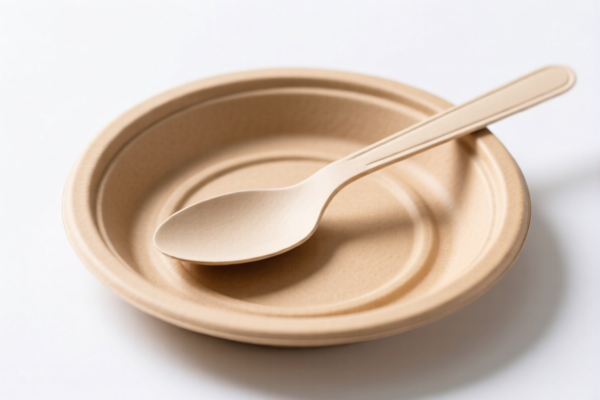
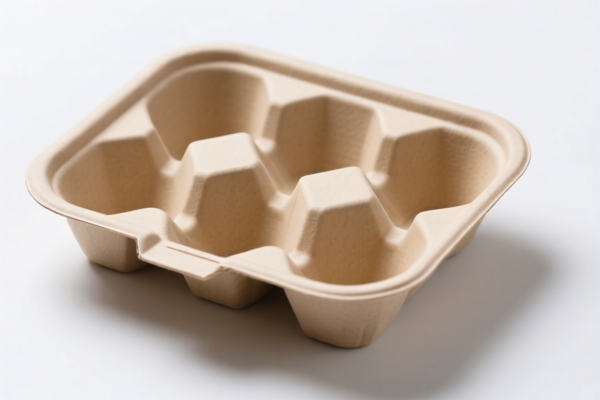
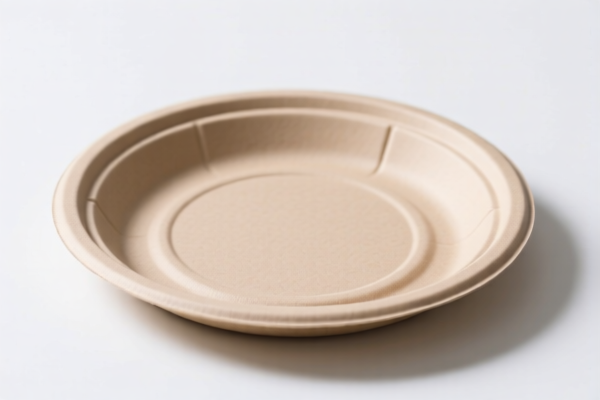
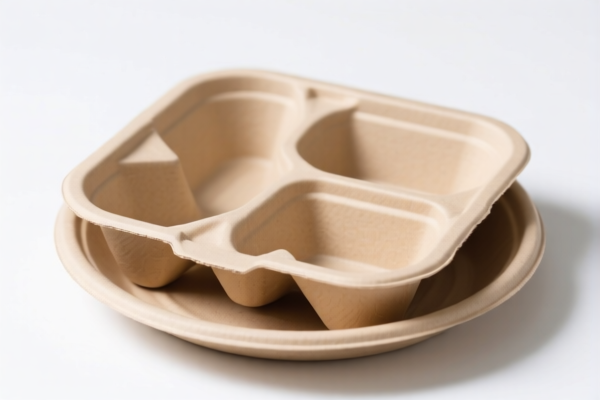
AI Analysis
🥗 Pulp Disposable Plates (Paper-Based Tableware)
🌐 HS Code Reference & Customs Clearance Guide | 2026 Latest Tariff Analysis | Professional Clearance Strategy
📌 1. Product Definition & Classification: Do You Really Understand "Pulp Plates"?
Pulp disposable plates are eco-friendly tableware made from fibrous materials, primarily molded paper or bamboo pulp. In international trade, they are often confused with plastic alternatives or generic paper products. Correct classification is critical because "Paper Plates" and "Plastic Plates" have vastly different tariff structures.
⚠️ Key Distinction Point:
- If the product is made of Paper/Cellulose Fiber (molded, coated, or uncoated) → Classify under Chapter 48 (Paper/Paperboard).
- If the product is made of Plastic (even if biodegradable or "eco-friendly" in marketing) → Classify under Chapter 39 (Plastics).🚨 Critical Warning:
Many suppliers label "Biodegradable Plates" as plastic because they use PLA (Polylactic Acid). PLA is a plastic polymer, so it falls under HS 3924, NOT HS 4823. Misclassification leads to severe penalties and delays.
📦 2. HS Code Classification Details (Based on Provided Data)
The provided dataset contains 5 HS Codes. Below is the detailed breakdown, grouped by material type.
🟢 Category A: Paper/Paperboard Based Pulp Plates (HS 48xx)
| HS Code | Product Description | Material/Form | Key Classification Logic |
|---|---|---|---|
| 4823.69.00.40 | Paper Pulp Plates | Paper-based, shaped as plates/trays | Classified as "Paper trays, dishes, and plates." Specifically targets molded paper tableware. |
| 4823.61.00.20 | Paper Pulp Plates | Paper-based, shaped as plates/dishes | Classified as "Trays, dishes, and plates of paper pulp." Focuses on the form (plate/dish) from pulp material. |
| 4819.50.20.00 | Paper Pulp Plates | Paper-based, food container | Classified as "Packaging/Container class," suitable for food hygiene containers. Often used if the plate is part of a packaged set or considered a "container" for food. |
| 4805.91.10.90 | Paper Pulp Plates | Paper-based, non-folded cardboard | Classified under "Other products of non-folded paperboard." This is a fallback/alternative classification if the plate is made from rigid, non-folded paperboard sheets rather than molded pulp. |
🔵 Category B: Plastic-Based Disposable Plates (HS 39xx)
| HS Code | Product Description | Material/Form | Key Classification Logic |
|---|---|---|---|
| 3924.10.20.00 | Disposable Tableware | Plastic inferred, plate form | Classified as "Plastic tableware, kitchenware, and other household articles." Important: If your "pulp" plate is actually PLA (bioplastic) or coated with a plastic film for water resistance, it may be classified here. |
💰 3. 2026 Latest Tariff Rate Breakdown (Including Surtaxes)
✅ Applicable Country: United States (US)
✅ Origin: China (CN)
✅ Effective Date: November 10, 2025 (and subsequent imports)
All products in the provided data are subject to the same total tariff rate of 35% (for Paper) or 24% (for Plastic), but the composition differs.
🎯 1. Paper Pulp Plates (HS Codes: 4823.69.00.40, 4823.61.00.20, 4819.50.20.00, 4805.91.10.90)
| Item | Content |
|---|---|
| Base Tariff | 0% (Ad Valorem) |
| USITC Surtax (Section 301) | +25% |
| IEEPA Surtax (Section 122/1230) | +10% |
| Total Tariff Rate | 35% |
| Tax Calculation | CIF Value × 35% |
| De Minimis Eligibility | ❌ No (Cannot use $800 de minimis exemption for Section 301/IEEPA goods from China) |
| Legal Basis Path | USITC:4823.69.00.40 → FOOTNOTE:9903.88.01 (for 301) + IEEPA:9903.01.24 (for 122) |
📌 Explanation:
- Base Tariff (0%): Paper products often have low base duties.
- USITC +25%: Applied under Section 301 of the Trade Act to offset Chinese trade practices.
- IEEPA +10%: Additional tariff applied to specific Chinese goods (often referred to as "122 clause" or similar emergency provisions).
- Total 35%: This is a high tariff for paper products. Importers must budget accordingly.
🎯 2. Plastic Disposable Plates (HS Code: 3924.10.20.00)
| Item | Content |
|---|---|
| Base Tariff | 6.5% (Ad Valorem) |
| USITC Surtax (Section 301) | +7.5% |
| IEEPA Surtax (Section 122/1230) | +10% |
| Total Tariff Rate | 24% |
| Tax Calculation | CIF Value × 24% |
| De Minimis Eligibility | ❌ No |
| Legal Basis Path | USITC:3924.10.20.00 → FOOTNOTE:9903.88.01 (for 301) + IEEPA:9903.01.24 (for 122) |
📌 Explanation:
- Base Tariff (6.5%): Plastic tableware has a higher base duty than paper.
- USITC +7.5%: Lower Section 301 surtax compared to paper products in some categories, but still significant.
- IEEPA +10%: Same additional surtax as paper products.
- Total 24%: While lower than paper (35%), it is still substantial. Misclassifying plastic as paper to get 35% is risky; misclassifying paper as plastic to get 24% is also risky if audited.
🛠️ 4. Customs Clearance Practical Advice (Real-World Pitfall Guide)
✅ 1. Preparation Checklist (Mandatory)
| Document | Required? | Notes |
|---|---|---|
| ✅ Product Specification Sheet | ✔️ | Must specify material composition (e.g., "100% Bamboo Pulp," "PLA," "Paper + PE Coating"). |
| ✅ Material Safety Data Sheet (MSDS) | ✔️ | If coated or treated, show chemical composition. |
| ✅ Product Photos (Labeled) | ✔️ | Show texture, edges, and any logos. Pulp plates have a distinct fibrous texture vs. smooth plastic. |
| ✅ Certificate of Origin (CO) | ✔️ | Essential for proving Chinese origin (triggers surtaxes). |
| ✅ Commercial Invoice | ✔️ | Clearly state: "Paper Pulp Plate" or "Plastic Disposable Plate" – Do not use vague terms like "Eco-Friendly Plate." |
| ✅ Packaging List | ✔️ | Detail items per carton to avoid weight discrepancies. |
✅ 2. Declaration Tips (Key Mnemonic)
🔥 "Material First, Form Second, Name Precise, Tax Saved!"
| Scenario | Correct Declaration | Wrong Practice |
|---|---|---|
| True Paper Pulp Plate (Molded, fibrous) | HS 4823.69.00.40 or 4823.61.00.20 Name: "Molded Paper Pulp Plate" |
Declaring as Plastic (3924) to avoid paper classification scrutiny. |
| PLA/Bioplastic Plate (Smooth, shiny, meltable) | HS 3924.10.20.00 Name: "PLA Disposable Plate" |
Declaring as Paper to get 0% base tax, but 35% total vs 24% total. Risk of audit if material test shows plastic. |
| Paper Plate with Plastic Coating | Still likely HS 4823 (if paper is chief material) | Misclassifying as pure Plastic. Must prove paper is essential character. |
| Non-Folded Paperboard Plate | HS 4805.91.10.90 | Using this for molded pulp → Incorrect. This is for rigid sheets. |
📌 Note:
- 35% (Paper) vs. 24% (Plastic): The difference is 11%.
- If your product is PLA (plastic), using HS 3924 saves 11% on the CIF value.
- If your product is Paper, using HS 3924 is risky because customs may require material testing, revealing the truth and leading to penalties for false declaration.
✅ 3. Special Handling
| Situation | Handling Advice |
|---|---|
| Mixed Shipments (Paper + Plastic) | Declare separately! Do not mix under one HS code. |
| Biodegradable Certification | Provide third-party lab tests (ASTM D6400, EN 13432). Note: Certification does not change HS Code if material is plastic. |
| Customs Audit | Be ready to provide a cross-section photo showing the fibrous structure (Paper) vs. smooth homogeneous structure (Plastic). |
🌍 5. Global Market Comparison (2026 Latest)
| Country/Region | Recommended HS Code (Paper) | Total Tariff (Paper) | Recommended HS Code (Plastic) | Total Tariff (Plastic) | Notes |
|---|---|---|---|---|---|
| 🇺🇸 USA | 4823.69.00.40 |
35% | 3924.10.20.00 |
24% | Highest tariffs globally for Chinese goods. |
| 🇨🇳 China | 4823.69.00.40 |
~5-7% | 3924.10.20.00 |
~6.5% | Low base tariffs, no surtaxes. |
| 🇪🇺 EU | 4823.69 |
~6.5% | 3924.10 |
~6.5% | No Section 301/IEEPA surtaxes. |
| 🇯🇵 Japan | 4823.69 |
~8-10% | 3924.10 |
~8-10% | Stable tariffs, no major surtaxes. |
📌 Conclusion:
- USA is the only major market with punitive surtaxes.
- For US-bound shipments, accurate material declaration is financial critical.
- If your product is PLA, consider HS 3924 to save 11% in total duty vs. paper.
- If your product is true paper pulp, HS 4823 is correct despite the higher rate.
📌 6. Common Mistakes & Pitfalls (Lessons Learned)
❌ Mistake 1: Calling all "eco-friendly plates" "Paper Plates" to avoid plastic scrutiny.
👉 Consequence: If customs tests and finds PLA, you face penalties, back taxes, and potential seizure.
❌ Mistake 2: Using HS 4805.91.10.90 for molded pulp plates.
👉 Consequence: Customs may reject this as "incorrect form" (4805 is for sheets/board, not molded items). Delays ensue.
❌ Mistake 3: Ignoring the IEEPA 10% surtax.
👉 Consequence: Your landed cost calculation is wrong. Budget for 35% or 24%, not just the base tariff.
❌ Mistake 4: Assuming "Biodegradable" means lower tariffs.
👉 Consequence: Tariffs are based on material and form, not environmental impact. PLA (plastic) still gets plastic tariffs.
✅ Correct Action:
"Molded Bamboo Pulp Plate, 100% Cellulose, No Plastic Coating" → HS 4823.69.00.40
"PLA Biodegradable Plate, Smooth Finish, Melts at 180°C" → HS 3924.10.20.00
🎯 7. Conclusion: Professional Declaration, Cost Efficiency!
🎯 Remember the Mnemonic:
🔹 "Paper Pulp? 35%. Plastic PLA? 24%. True Material, True Tax."
🔹 "Do not mix Paper and Plastic. One HS per product line."
🔹 "35% is high, but honesty is cheaper than penalties."
📌 Pro Tip:
If your product is PLA (plastic), and you can prove it is not made in China (e.g., sourced from Thailand or Brazil), you may avoid the USITC/IEEPA surtaxes.
👉 Recommendation: Seek Advance Ruling from US Customs if your product's material composition is ambiguous (e.g., heavily coated paper).
📣 Immediate Action:
📞 Contact a licensed customs broker.
📄 Provide material test reports.
🚀 Ensure accurate HS Code declaration to avoid customs holds.
✨ Professional Customs Clearance Starts with Accurate Classification!
💼 Your Profit Margin Depends on Precision!
Customer Reviews
About HS Code Classification
The Harmonized System (HS) is an internationally standardized nomenclature developed by the World Customs Organization (WCO) to classify traded products. Over 200 countries use the HS system as the basis for customs tariffs, trade statistics, and import/export regulations.
Each HS code follows a hierarchical structure:
- Chapter (2 digits) — Broad category of goods (e.g., Chapter 84: Machinery and Mechanical Appliances)
- Heading (4 digits) — More specific grouping within the chapter
- Subheading (6 digits) — Internationally standardized breakdown, used by all WCO member countries
- National subdivisions (8-10 digits) — Country-specific extensions for further classification, such as US HTSUS 10-digit codes
Correct HS code classification is essential for smooth customs clearance, accurate duty payment, and compliance with trade regulations. Misclassification can lead to customs delays, overpayment of duties, or penalties.
When importing from CN to US, the applicable tariff rates may include:
- Most-Favored-Nation (MFN) rate — The standard duty rate applied to WTO members
- General rate — Applied to countries without trade agreements
- Trade remedy duties — Additional tariffs such as Section 301 (anti-dumping), Section 232 (national security), or countervailing duties
The information provided on this page is for reference purposes only. For official classification, please consult with your local customs authority or a licensed customs broker.