Pulp Egg Tray
CN → US| HS Code | Tariff Rate | Origin | Destination | Doc |
|---|---|---|---|---|
| 3923109000 | 38.0% | CN | US | Official Doc |
| 4819100040 | 35.0% | CN | US | Official Doc |
| 3926901000 | 20.9% | CN | US | Official Doc |
| 3926909989 | 22.8% | CN | US | Official Doc |
| 3923900080 | 38.0% | CN | US | Official Doc |
| 4819504060 | 35.0% | CN | US | Official Doc |
Product Images
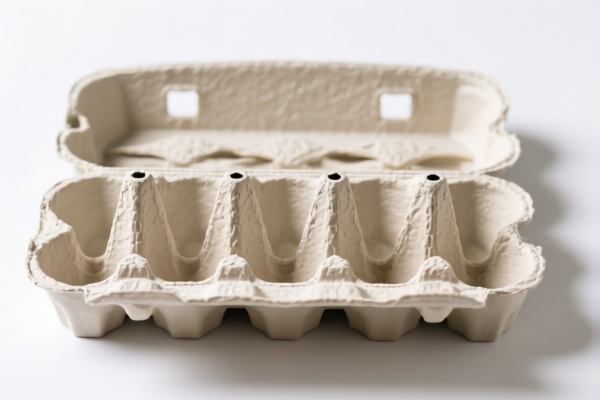
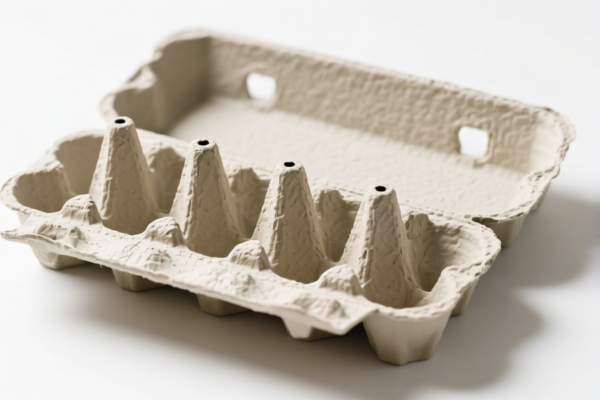
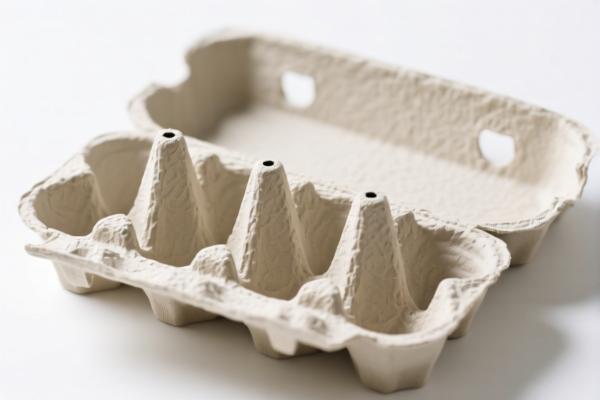
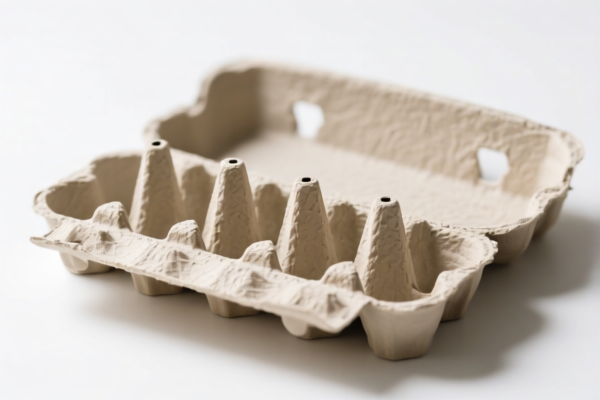
AI Analysis
🥚 Pulp Egg Tray (Paper Moulded Pulp Containers)
🌐 HS Code Reference & Customs Clearance Guide | 2026 Latest Tariff Analysis | Professional Clearance Strategy
📌 I. Product Definition & Classification: Do You Really Understand "Egg Trays"?
Egg trays, specifically those made from pulp, are biodegradable packaging solutions widely used in agriculture, food logistics, and retail. In international trade, they are primarily classified based on their material composition and functional form.
Pulp-based (Paper/Cellulose): Made from recycled paper, cardboard, or wood pulp. These are the most common "eco-friendly" egg trays. They fall under Chapter 48 (Paper and Paperboard).
Plastic-based: Made from polyethylene (PE), polypropylene (PP), or PET. These are durable, reusable, or high-gloss single-use trays. They fall under Chapter 39 (Plastics and Articles Thereof).
⚠️ Key Distinction Point:
- If the material is paper pulp, cardboard, or molded fiber → Classify under HS 4819.
- If the material is plastic (rigid, shiny, or flexible film) → Classify under HS 3923 or HS 3926.
- Misclassification Risk: Declaring a plastic tray as "pulp" or vice versa can lead to severe penalties, seizure, or incorrect tax calculations.
📦 II. HS Code Classification Details (2026 Latest Tariff Authority Comparison)
| HS Code | Product Description | Material Basis | Application Scenario |
|---|---|---|---|
4819.10.00.40 |
Cartons, boxes, and cases, of corrugated paper or paperboard | Paper/Cardboard | Standard molded pulp egg trays, biodegradable packaging |
4819.50.40.60 |
Other packing containers, of paper or paperboard, not corrugated | Paper/Pulp | Non-corrugated pulp trays, molded fiber containers |
3923.10.90.00 |
Boxes, cases, crates and similar articles | Plastic | Plastic egg trays/crates, rigid polymer containers |
3923.90.00.80 |
Other packing materials and supplies, of plastics | Plastic | Plastic film wraps, plastic liners, non-rigid plastic packaging |
3926.90.10.00 |
Other articles of plastics | Plastic | Molded plastic egg trays (not primarily for packing but as articles) |
3926.90.99.89 |
Other articles of plastics and articles of other materials | Plastic/Composite | Fallback category for complex plastic/pulp composite trays |
🔍 Key Reminder:
- "Pulp" (纸浆) inherently points to Chapter 48 in 90% of cases.
- If the tray contains significant plastic components (e.g., a plastic bottom with a pulp lid), consult a customs broker for composite material rules.
- For pure pulp egg trays,4819.10.00.40is the most accurate and common classification.
💰 III. 2026 Latest Tariff Rate Breakdown (Including Additional Taxes & Policy Surcharges)
✅ Applicable Country: United States (US)
✅ Country of Origin: China (CN)
✅ Effective Date: From November 10, 2025 (including subsequent imports)
🎯 1. 4819.10.00.40 & 4819.50.40.60 — Pulp/Paper Egg Trays (The Most Likely Match)
| Item | Content |
|---|---|
| Basic Tariff | 0.0% (Ad Valorem) |
| USITC Additional Tariff | +25.0% (Section 301 Trade Act) |
| IEEPA Additional Tariff | +10.0% (针对中国/香港产品, effective Nov 10, 2025) |
| Total Tariff Rate | 35.0% |
| Tax Calculation | CIF Value × 35% |
| De Minimis Exemption Available? | ❌ No (deny_de_minimis) |
| Legal Basis Path | IEEPA:9903.01.25 → USITC:4819.10.00.40 → FOOTNOTE:301 |
📌 Explanation:
- 0% Base: Paper products often have low or zero base tariffs.
- +25% USITC: Standard Section 301 tariff for Chinese goods in this category.
- +10% IEEPA: The new "122 Clause" tariff targeting specific Chinese imports.
- Total 35%: This is the standard high tariff for Chinese-made paper packaging entering the US.
- Critical: Even though the base is 0%, the additional tariffs make it expensive. There is no de minimis exemption for these HS codes.
🎯 2. 3923.10.90.00 & 3923.90.00.80 — Plastic Egg Trays/Packaging
| Item | Content |
|---|---|
| Basic Tariff | 3.0% |
| USITC Additional Tariff | +25.0% |
| IEEPA Additional Tariff | +10.0% |
| Total Tariff Rate | 38.0% |
| Tax Calculation | CIF Value × 38% |
| De Minimis Exemption Available? | ❌ No |
| Legal Basis Path | IEEPA:9903.01.25 → USITC:3923.10.90.00 → FOOTNOTE:301 |
📌 Explanation:
- Plastic packaging incurs a slightly higher base tariff (3%) compared to paper (0%).
- The additional tariffs are identical (+35%).
- Total 38%: Slightly higher than pulp trays.
🎯 3. 3926.90.10.00 & 3926.90.99.89 — Plastic Articles (Fallback/Other)
| Item | Content |
|---|---|
| Basic Tariff | 3.4% or 5.3% |
| USITC Additional Tariff | +7.5% |
| IEEPA Additional Tariff | +10.0% |
| Total Tariff Rate | 20.9% or 22.8% |
| Tax Calculation | CIF Value × 20.9%/22.8% |
| De Minimis Exemption Available? | ❌ No |
| Legal Basis Path | IEEPA:9903.01.24 → USITC:3926.90.10.00 → FOOTNOTE:301 |
📌 Explanation:
- Lower Tariff Option? These codes fall under a different USITC footnote category with a lower additional tariff (+7.5% instead of +25%).
- Risk: Misclassifying a standard "packing box" (3923) as an "article" (3926) to save tax is highly audited.
- Only applicable if the item is not primarily "packing material" but a "finished article" (e.g., a decorative plastic tray with no packing function).
- Warning: US CBP frequently reclassifies "packing" into 3923, leading to back-taxes. Use only with professional legal advice.
🛠️ IV. Customs Clearance Practical Advice (Battle-Tested Pitfall Guide)
✅ 1. Required Documentation Checklist (None Can Be Missing)
| Document | Mandatory | Explanation |
|---|---|---|
| ✅ Product Specifications | ✔️ | Must state material: "100% Recycled Paper Pulp" or "Polypropylene Plastic". |
| ✅ Material Composition Certificate | ✔️ | Lab report confirming pulp vs. plastic content. Crucial for 4819 vs. 3923. |
| ✅ Product Photos (Clear) | ✔️ | Show texture (matte/fibrous for pulp, shiny/solid for plastic). |
| ✅ Commercial Invoice | ✔️ | Description: "Molded Pulp Egg Tray, Biodegradable, Paper Based". |
| ✅ Packing List | ✔️ | Weight and dimensions. |
| ✅ Fumigation Certificate | ❌ Optional | Required if wooden pallets are used, but not for the tray itself. |
✅ 2. Declaration Tips (Key Mantra)
🔥 “Material First, Function Second, Name Precise, Tax Minimized!”
| Scenario | Correct Declaration | Wrong Practice |
|---|---|---|
| Paper Pulp Tray | 4819.10.00.40 - "Paper Pulp Egg Tray" |
Declare as "Plastic Tray" → 38% (Higher) or Audit Risk |
| Plastic Tray | 3923.10.90.00 - "Plastic Egg Container" |
Declare as "Paper" → 0% Base but Seizure for Misdeclaration |
| Composite Material | Consult Broker for Essential Character Rule | Guessing the code → 25% Penalty + Back Tax |
✅ 3. Special Case Handling
| Scenario | Handling Advice |
|---|---|
| Biodegradable Claims | Provide ASTM D6400 or EN 13432 certification. Helps avoid plastic restrictions in some states. |
| OEM Custom Printing | Declare as "Printed Pulp Tray". No extra tax, but ensure design doesn’t look like a "finished good" (3926) if it’s packing. |
| Small Samples | Still subject to de minimis rules? NO for China-origin HS 4819/3923. No $800 exemption. |
| Return Goods | If returning defective pulp trays, apply for Return Relief (Duty Drawback) if original declaration was correct. |
🌍 V. Global Market Customs Comparison (2026 Latest)
| Country/Region | Recommended HS Code | Tariff (China Origin) | Certification | Remarks |
|---|---|---|---|---|
| 🇺🇸 USA | 4819.10.00.40 |
35% (Pulp) / 38% (Plastic) | None specific | High tariff environment. 122 Clause active. |
| 🇨🇳 China | 4819.10.00.40 |
0% | GB Standards | Low tax, high export volume. |
| 🇪🇺 EU | 4819.10 |
0% | CE (if plastic) | No Section 301 equivalent. Eco-friendly bonus. |
| 🇬🇧 UK | 4819.10 |
0% | UKCA | Post-Brexit alignment with EU. |
| 🇦🇺 Australia | 4819.10 |
5% | None | Moderate tariff, no major surcharges. |
| 🇯🇵 Japan | 4819.10 |
0% | JIS | No major surcharges. |
📌 Conclusion:
- The US is the most expensive market for egg trays due to the 35-38% total tariff.
- EU/UK/JP offer 0% tariff for paper pulp trays, making them highly competitive.
- Consider supply chain diversification (e.g., Vietnam, Thailand) if targeting the US market heavily, though many factories are still in China.
📌 VI. Common Errors & Pitfall Guide (Blood & Tears Lessons)
❌ Error 1: Declaring "Pulp Tray" as "Plastic" to avoid high tariffs?
👉 Consequence: Seizure + 3x Penalty. CBP lab tests will prove it’s paper/plastic.
❌ Error 2: Using HS 3926 (Other Articles) to get 20.9% instead of 35%?
👉 Consequence: Audited. CBP argues it’s a "packing container" (3923/4819). Back-taxes + interest.
❌ Error 3: Ignoring the "122 Clause" (IEEPA 10%) in 2026?
👉 Consequence: Underpayment of 10% on top of the 35%. Surprise bill upon audit.
❌ Error 4: Assuming De Minimis ($800) applies?
👉 Consequence: Full Tax Collection. China-origin HS 4819/3923 are explicitly denied de minimis.
✅ Correct Approach:
"Molded Pulp Egg Tray, 12-Egg Capacity, Made from 100% Recycled Paper Pulp, Biodegradable, Not Plastic."
🎯 VII. Conclusion: Precise Classification Saves Millions!
🎯 Remember the Mantra:
🔹 "Pulp is Paper (4819), Plastic is Plastic (3923). US Tax is 35%, Don’t Get Caught in 1022!"
🔹 "HS Code Determines Life, Tax Rate Determines Profit. Wrong Declaration, Back Tax Forever!"
📌 Pro Tip:
If your egg trays are exported to the US, consider:
1. Applying for an Exclusion (if available under specific HTS codes, though rare for 4819).
2. Using Overseas Warehouses in non-US countries to consolidate, but be aware of transshipment rules.
3. Pre-Ruling Request: Submit a Binding Ruling Request to US CBP to confirm the correct HS code for your specific product design.
📣 Immediate Action:
📞 Contact a Licensed Customs Broker + Provide Material Spec Sheet + Apply for Pre-Ruling.
🚀 Let your Egg Trays Clear Smoothly, Keep Profits High, and Avoid Customs Nightmares!
✨ Professional Clearance Starts with Precise Classification!
💼 Every Cent of Tariff is Worth Calculating!
Customer Reviews
About HS Code Classification
The Harmonized System (HS) is an internationally standardized nomenclature developed by the World Customs Organization (WCO) to classify traded products. Over 200 countries use the HS system as the basis for customs tariffs, trade statistics, and import/export regulations.
Each HS code follows a hierarchical structure:
- Chapter (2 digits) — Broad category of goods (e.g., Chapter 84: Machinery and Mechanical Appliances)
- Heading (4 digits) — More specific grouping within the chapter
- Subheading (6 digits) — Internationally standardized breakdown, used by all WCO member countries
- National subdivisions (8-10 digits) — Country-specific extensions for further classification, such as US HTSUS 10-digit codes
Correct HS code classification is essential for smooth customs clearance, accurate duty payment, and compliance with trade regulations. Misclassification can lead to customs delays, overpayment of duties, or penalties.
When importing from CN to US, the applicable tariff rates may include:
- Most-Favored-Nation (MFN) rate — The standard duty rate applied to WTO members
- General rate — Applied to countries without trade agreements
- Trade remedy duties — Additional tariffs such as Section 301 (anti-dumping), Section 232 (national security), or countervailing duties
The information provided on this page is for reference purposes only. For official classification, please consult with your local customs authority or a licensed customs broker.