Pulp Festival Theme Gift Box
CN → US| HS Code | Tariff Rate | Origin | Destination | Doc |
|---|---|---|---|---|
| 3923102000 | 35.0% | CN | US | Official Doc |
| 3923109000 | 38.0% | CN | US | Official Doc |
| 4819200020 | 35.0% | CN | US | Official Doc |
| 4819504040 | 35.0% | CN | US | Official Doc |
| 4410110060 | 35.0% | CN | US | Official Doc |
Product Images
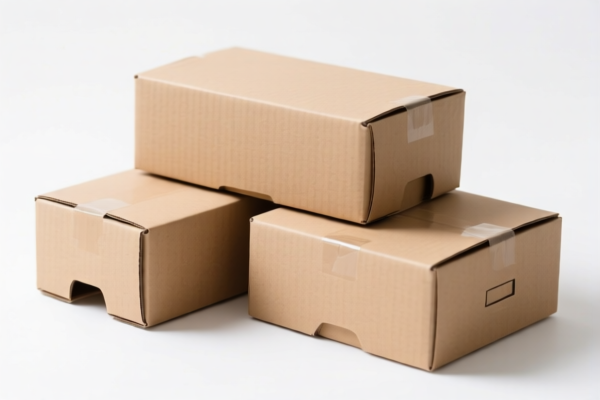
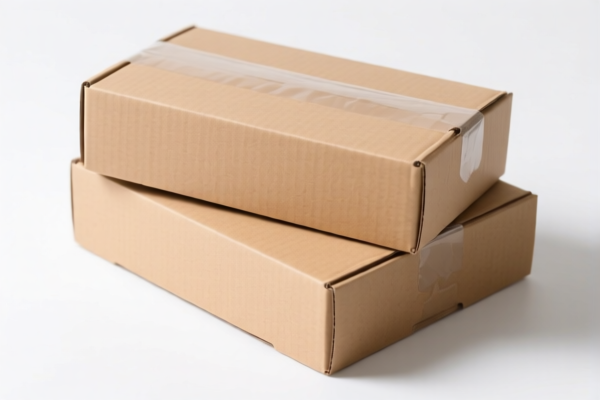
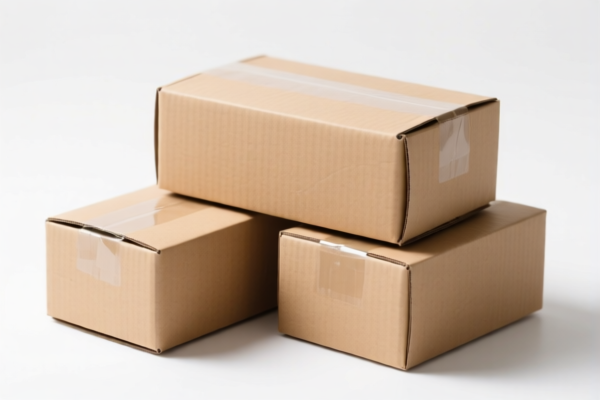
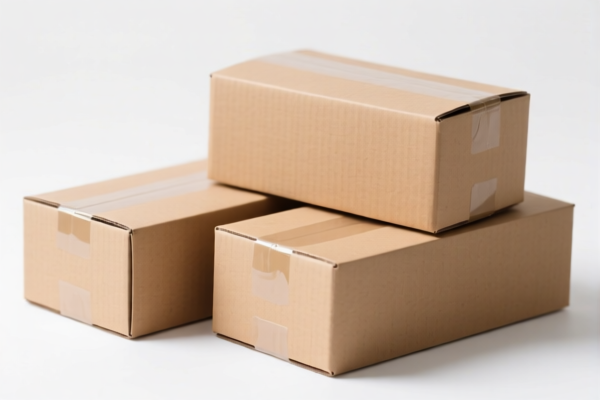
AI Analysis
🎁 Pulp Festival Theme Gift Box (Paper & Pulp Packaging)
🌐 HS Code Reference & Customs Clearance Guide | 2026 Latest Tariff Analysis | Professional Clearance Strategy
📌 I. Product Definition & Classification: What exactly is a "Pulp Festival Theme Gift Box"?
A "Pulp Festival Theme Gift Box" typically refers to packaging containers made primarily from paper, paperboard, cellulose wadding, or webs of cellulose fibers, often designed with decorative themes for holidays (Christmas, Lunar New Year, etc.).
In international trade, these are not classified under plastics or wood, but strictly under Chapter 48 (Paper and Paperboard). However, the exact HS Code depends on the material structure (corrugated vs. non-corrugated) and the specific application (food/beverage vs. general goods).
⚠️ Key Distinction:
- If the box is made of non-corrugated paper/paperboard (solid board) and is for sanitary food/beverage use → 4819.20.00.20
- If the box is made of rigid paperboard (standard rigid gift box) → 4819.50.40.40
- ⚠️ NOT Plastics: Do not classify as 3923 (Plastic articles) unless the primary material is plastic-lined.
- ⚠️ NOT Wood: Do not classify as 4410 (Particle Board) unless it is structural wooden board, which gift boxes rarely are.
📦 II. HS Code Classification Details (2026 Latest Tariff Authority Match)
Based on the provided , the "Pulp Festival Theme Gift Box" falls into two primary categories depending on its specific construction:
| HS Code | Product Description | Application Scenario | Material Type |
|---|---|---|---|
4819.20.00.20 |
Folding cartons, boxes and cases, of non-corrugated paper or paperboard: Sanitary food and beverage containers | Takeaway food boxes, cup holders, sanitary packaging for festivals | Non-corrugated Paper |
4819.50.40.40 |
Other packing containers, including record sleeves: Other: Rigid boxes and cartons | Standard rigid gift boxes, luxury packaging, cosmetic boxes, non-food gifts | Rigid Paperboard |
🔍 Critical Note:
- If your "Pulp Box" is a flexible folding carton used for food safety (e.g., holiday cookies in sanitary packaging), use 4819.20.00.20.
- If it is a hard, rigid box (like a jewelry or perfume gift box) used for general goods, use 4819.50.40.40.
- Exclude: Plastic boxes (3923) and Particle Board (4410) as they are irrelevant to standard paper/pulp gift boxes.
💰 III. 2026 Latest Tariff Rate Details (Including Additional Taxes & Policy Add-ons)
✅ Applicable Country: United States (US)
✅ Origin: China (CN)
✅ Effective Date: 2025/2026 (Post-2025 Policy)
🎯 1. 4819.20.00.20 —— Sanitary Food & Beverage Containers (Non-Corrugated)
| Item | Detail |
|---|---|
| Base Tariff | 0.0% (Ad Valorem) |
| Additional Tariff (Section 301 / China Specific) | +25.0% |
| Total Tax Rate | 25.0% |
| Tax Calculation | CIF Value × 25% |
| De Minimis Exemption | ❌ Not Applicable (High risk of scrutiny for packaging) |
| Legal Basis Path | USITC:4819.20.00.20 → Section 301: 25% surcharge on Chinese origin goods |
📌 Explanation:
- Although the base duty is 0%, the 25% additional tariff applies due to the China origin status under Section 301.
- This is a pure paper product, so it does not benefit from the lower 7.5% or 10% tiers sometimes seen for other categories.
🎯 2. 4819.50.40.40 —— Rigid Boxes and Cartons
| Item | Detail |
|---|---|
| Base Tariff | 0.0% (Ad Valorem) |
| Additional Tariff (Section 301 / China Specific) | +25.0% |
| Total Tax Rate | 25.0% |
| Tax Calculation | CIF Value × 25% |
| De Minimis Exemption | ❌ Not Applicable |
| Legal Basis Path | USITC:4819.50.40.40 → Section 301: 25% surcharge on Chinese origin goods |
📌 Explanation:
- Like the sanitary containers, rigid paper gift boxes carry a 0% base duty but face the full 25% additional tariff.
- Common Mistake: Some importers try to classify these under "Plastics" (3923) to see if rates differ, but if the primary material is paper, this is misclassification and will lead to penalties.
🛠️ IV. Customs Clearance Practical Advice (Pitfall Avoidance Guide)
✅ 1. Required Documentation Checklist (Mandatory)
| Document | Mandatory | Description |
|---|---|---|
| ✅ Commercial Invoice | ✔️ | Must clearly state "Paper Gift Box" or "Carton", not vague terms like "Packaging Material". |
| ✅ Packing List | ✔️ | Detail the weight and volume; ensure it matches the declared HS Code (paper vs. plastic). |
| ✅ Product Photos | ✔️ | Show the material texture (paper fibers) to prove it is not plastic-coated (unless intended). |
| ✅ Material Declaration | ✔️ | Specify: "100% Recycled Paperboard" or "Solid Bleached Sulfate Paper". Avoid "Pulp Board" without clarification. |
| ✅ ISF (10+2) | ✔️ | File 24 hours before loading. Incorrect HS Code in ISF leads to $5,000+ fines per violation. |
✅ 2. Declaration Tips (Key Mnemonics)
🔥 “Paper for Food, Box for Goods; Both 25% Tariff, Don’t Get Looped!”
| Scenario | Correct Declaration | Wrong Approach |
|---|---|---|
| Food Gift Boxes | 4819.20.00.20 (Sanitary) |
Declare as "Cartons" (vague) → Audit Risk |
| Luxury Rigid Boxes | 4819.50.40.40 (Rigid) |
Declare as "Plastic Boxes" (3923) → Fraud Risk |
| Corrugated Boxes | Not in Data | (Usually 4819.40/50, but stick to provided data: If rigid/non-corrugated, use above) |
| Wooden Crates | Not Gift Boxes | Do not use 4410.11.00.60 (Particle Board) for gift boxes unless structural |
⚠️ Warning:
- Do NOT use3923.10.20.00or3923.10.90.00(Plastic Boxes) unless the box is 100% Plastic. Even a thin plastic lining on paper usually keeps it in Chapter 48.
- Do NOT use4410.11.00.60(Particle Board) for gift boxes. Particle board is for construction/furniture, not thin packaging.
✅ 3. Special Handling Cases
| Situation | Handling Advice |
|---|---|
| Hybrid Materials (Paper + Plastic Window) | If plastic window > 50% by surface area, may shift to Chapter 39. Consult pre-ruling. |
| Food Contact Surface | Must provide FDA Complyance Statement for 4819.20.00.20. |
| Holiday Season Surge | Customs backlog is high during Dec/Jan. File ISF early. |
| Anti-Dumping/Safeguard | Paper products from China are generally not subject to anti-dumping, but Section 301 (25%) applies. |
🌍 V. Global Market Clearance Comparison (2026 Latest)
| Country/Region | Recommended HS Code | Tariff Rate | Certification Required | Notes |
|---|---|---|---|---|
| 🇺🇸 USA | 4819.20.00.20 / 4819.50.40.40 |
25.0% | FDA (if food) | High tariff due to 301 List. |
| 🇨🇳 China (Import) | 4819.20 / 4819.50 |
5-10% | N/A | Low import tariff. |
| 🇪🇺 EU | 4819.20 / 4819.50 |
6-10% | FSC/PEFC (Sustainability) | Eco-labels increasingly important. |
| 🇬🇧 UK | 4819.20 / 4819.50 |
6-10% | FSC/PEFC | Post-Brexit rules align with EU. |
| 🇨🇦 Canada | 4819.20 / 4819.50 |
5-10% | FSC/PEFC | Similar to US tariff structure. |
📌 Conclusion:
- The US market is the most expensive for Chinese paper gift boxes due to the flat 25% additional tariff.
- EU/UK focus more on sustainability certifications (FSC) than tariffs.
- No De Minimis Exemption: Even small shipments of gift boxes are subject to the 25% duty.
📌 VI. Common Mistakes & Pitfalls (Lessons Learned)
❌ Mistake 1: Classifying Paper Gift Boxes under Plastics (3923)
👉 Consequence: Misclassification penalty + potential fraud charges if discovered.
👉 Correct: Use 4819 series.
❌ Mistake 2: Using Particle Board (4410) for Gift Boxes
👉 Consequence: Wrong HS Code. Particle board is thick, heavy, and used for furniture, not packaging.
👉 Correct: Use 4819 for paper/pulp.
❌ Mistake 3: Ignoring Food Contact Regulations for 4819.20.00.20
👉 Consequence: FDA Hold / Refusal of Entry if no compliance docs.
👉 Correct: Attach FDA compliance letter for sanitary food containers.
❌ Mistake 4: Underestimating Section 301 Tariffs
👉 Consequence: Unexpected $2,500 duty on a $10,000 shipment.
👉 Correct: Budget for 25% extra duty in cost calculations.
✅ Correct Declaration Example:
"Paper Gift Box, Rigid, Non-Corrugated, Recycled Cardboard, for Holiday Cookies, China Origin"
→ HS: 4819.20.00.20 | Tax: 25%
🎯 VII. Conclusion: Professional Declaration, Save Costs, Ensure Compliance!
🎯 Remember the Golden Rules:
🔹 “Paper is 4819, Plastic is 3923, Wood is 4410; Pick the Right Chapter, Avoid the Penalty!”
🔹 “25% Tariff is Fixed for Chinese Paper Boxes; Plan Your Margin Accordingly!”
🔹 “Food Boxes Need FDA, Rigid Boxes Need Rigidity Proof; Docs Make the Clearance!”
📌 Pro Tip:
If you are shipping to the US, consider third-party packaging in Vietnam or Mexico (if applicable) to avoid Section 301 tariffs. However, ensure substantial transformation occurs to change origin.
📣 Immediate Action:
📞 Verify Material Composition (Paper vs. Plastic)
📋 Select Correct HS Code (4819.20.00.20or4819.50.40.40)
📄 Prepare FDA Docs (if food)
🚀 Ensure Smooth Clearance, Avoid Delays, Maximize Profit!
✨ Professional Customs Clearance Starts with Accurate Classification!
💼 Your 25% Tariff is Predictable; Your Compliance is Not!
Customer Reviews
About HS Code Classification
The Harmonized System (HS) is an internationally standardized nomenclature developed by the World Customs Organization (WCO) to classify traded products. Over 200 countries use the HS system as the basis for customs tariffs, trade statistics, and import/export regulations.
Each HS code follows a hierarchical structure:
- Chapter (2 digits) — Broad category of goods (e.g., Chapter 84: Machinery and Mechanical Appliances)
- Heading (4 digits) — More specific grouping within the chapter
- Subheading (6 digits) — Internationally standardized breakdown, used by all WCO member countries
- National subdivisions (8-10 digits) — Country-specific extensions for further classification, such as US HTSUS 10-digit codes
Correct HS code classification is essential for smooth customs clearance, accurate duty payment, and compliance with trade regulations. Misclassification can lead to customs delays, overpayment of duties, or penalties.
When importing from CN to US, the applicable tariff rates may include:
- Most-Favored-Nation (MFN) rate — The standard duty rate applied to WTO members
- General rate — Applied to countries without trade agreements
- Trade remedy duties — Additional tariffs such as Section 301 (anti-dumping), Section 232 (national security), or countervailing duties
The information provided on this page is for reference purposes only. For official classification, please consult with your local customs authority or a licensed customs broker.