Pulp Food Tray
CN → US| HS Code | Tariff Rate | Origin | Destination | Doc |
|---|---|---|---|---|
| 4822900000 | 35.0% | CN | US | Official Doc |
| 4823700020 | 35.0% | CN | US | Official Doc |
| 4819502000 | 35.0% | CN | US | Official Doc |
| 4823700040 | 35.0% | CN | US | Official Doc |
| 4819504060 | 35.0% | CN | US | Official Doc |
Product Images
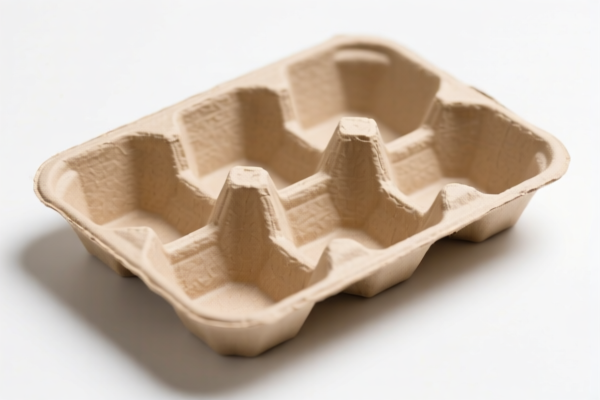
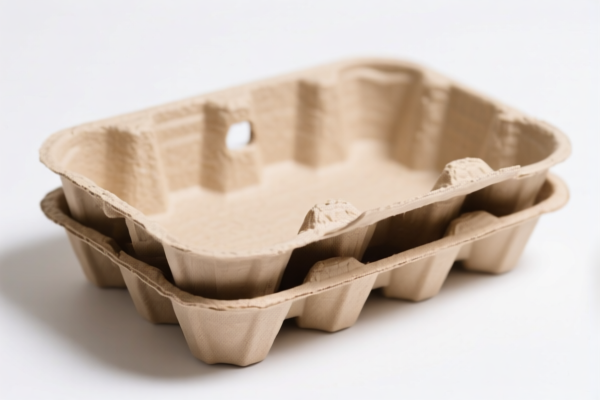
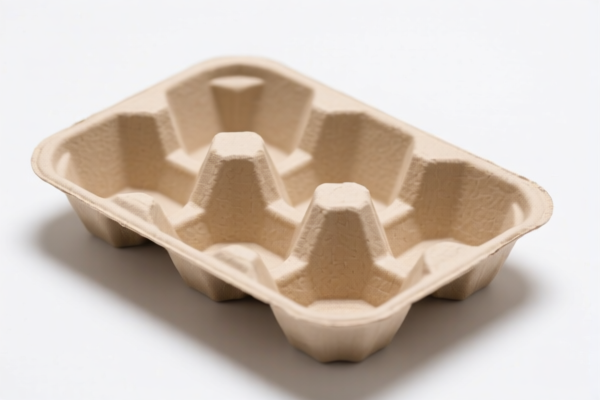
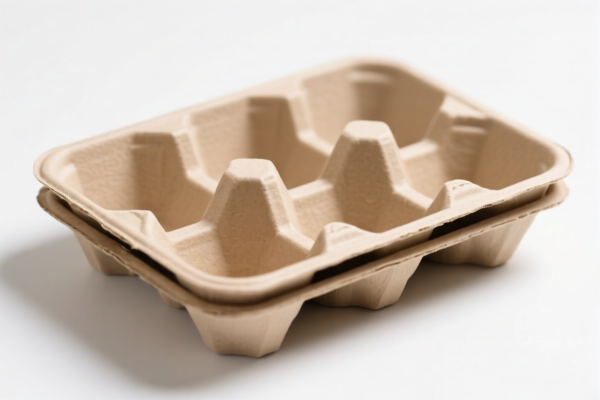
AI Analysis
📦 Pulp Food Tray (Molded Fiber Packaging)
🌐 HS Code Reference & Customs Clearance Guide | 2026 Latest Tariff Analysis | Professional Entry Strategy
📌 I. Product Definition & Classification: What Exactly is a "Pulp Food Tray"?
Molded pulp food trays are sustainable, eco-friendly packaging solutions widely used in the food and beverage industry. They are primarily made from recycled paper pulp or plant fibers, molded into specific shapes. In international trade, the classification depends heavily on the specific function (support vs. containment) and the material composition details.
⚠️ Key Distinction Point:
- If the item is primarily a structural support or pallet (holding other goods) → Look at 4822.90.00.00 or 4823.70.00.40.
- If the item is a dishware or molded container (direct food contact, plate/bowl shape) → Look at 4823.70.00.20.
- If the item is a hygienic container for food/drink (box, carton, or cup shape) → Look at 4819.50.20.00 or 4819.50.40.60.
📦 II. HS Code Classification Matrix (2026 Latest Tariff Authority)
| HS Code | Product Description | Applicable Scenario | Form Factor |
|---|---|---|---|
4822.90.00.00 |
Pulp Trays: Other (Support/承载物) | Industrial pulp pallets, heavy-duty support trays, non-food structural carriers | Structural Support |
4823.70.00.20 |
Pulp Trays: Molded Pulp (Dishware) | Molded pulp plates, bowls, egg cartons, direct food-contact trays | Dishware/Vessel |
4819.50.20.00 |
Pulp Trays: Paper (Food/Bev Hygiene Container) | Hygienic food boxes, take-out containers, drink carriers | Hygienic Container |
4823.70.00.40 |
Pulp Trays: Pulp (Molded Products) | General molded pulp items, customized industrial or commercial molded parts | General Molded Product |
4819.50.40.60 |
Pulp Trays: Pulp (Paper Packaging Container) | Paper-based packaging containers, pulp boxes for retail or distribution | Packaging Container |
🔍 Important Reminder:
- 4823.70.00.20 is the most common for direct food contact molded trays (like egg cartons or fruit trays).
- 4819.50.x0.00 series applies if the product is classified as a paper packaging container rather than just a molded pulp item.
- 4822.90.00.00 is for pallets/supports made of pulp, not necessarily for direct food consumption but for transport support.
💰 III. 2026 Latest Tariff Rate Breakdown (Including Surtaxes & Policy Add-ons)
✅ Applicable Country: United States (US)
✅ Origin: China (CN)
✅ Effective Date: 2025 November 10 onwards
🎯 1. Universal Rate for All Listed HS Codes
| Item | Content |
|---|---|
| Base Tariff | 0.0% (Ad Valorem) |
| Section 301 Surtax (USITC) | +25.0% |
| Section 122 Tariff (IEEPA) | +10.0% |
| Total Effective Rate | 35.0% |
| Tax Calculation | CIF Value × 35% |
| De Minimis Eligibility | ❌ NO (Deny de minimis) |
| Legal Basis Path | USITC:301 → IEEPA:122 → HS:4822/4823/4819 |
📌 Explanation:
- The Base Tariff is 0% for most molded pulp products under these codes.
- However, due to Section 301, a 25% surtax is applied to Chinese-origin goods.
- Additionally, under Section 122 (International Emergency Economic Powers Act), a further 10% surtax is levied on certain imports from China.
- Total Rate = 35%. This is a high tariff burden that must be factored into pricing strategies.
- No De Minimis Exemption: Small shipments (under $800) do not get tax-free entry for these goods.
🛠️ IV. Customs Clearance Practical Advice (Pitfall Avoidance Guide)
✅ 1. Required Documentation Checklist
| Document | Required | Notes |
|---|---|---|
| ✅ Product Spec Sheet | ✔️ | Must specify material (e.g., recycled pulp), weight, dimensions. |
| ✅ Material Composition | ✔️ | Clarify if it's "molded pulp" vs. "paperboard" to distinguish between 4823 and 4819. |
| ✅ Product Photos | ✔️ | Show the item in use (e.g., holding eggs or fruit) to prove "tray" function. |
| ✅ Commercial Invoice | ✔️ | Must clearly state "Pulp Food Tray" and correct HS Code. |
| ✅ Packing List | ✔️ | Detail weight and volume per carton. |
| ✅ Certification (if any) | ✔️ | FDA compliance for food contact (if applicable) strengthens classification as 4823.70.00.20. |
✅ 2. Declaration Tips (Key Mantras)
🔥 “Function Dictates Code: Molded = 4823, Packaged = 4819, Support = 4822”
| Scenario | Correct Declaration | Wrong Declaration | Consequence of Error |
|---|---|---|---|
| Molded Pulp Egg/Fruit Tray | 4823.70.00.20 (Molded Pulp Dishware) |
4819.50.20.00 (Paper Container) |
May trigger additional scrutiny; rate is same (35%) but risk of re-classification. |
| Pulp Box for Takeout | 4819.50.20.00 (Hygienic Container) |
4823.70.00.40 (General Molded) |
Same rate (35%), but 4819 is more accurate for "container" form. |
| Pulp Pallet/Support Base | 4822.90.00.00 (Support Carrier) |
4823.70.00.20 (Dishware) |
Incorrect; 4822 is for support, not food vessels. |
| Generic Molded Pulp Item | 4823.70.00.40 (Molded Product) |
4819.50.40.60 (Packaging) |
Risk of misclassification if not clearly a "packaging container". |
✅ 3. Special Handling Scenarios
| Scenario | Handling Advice |
|---|---|
| Food-Contact Surface | If the tray holds food directly, emphasize "Molded Pulp" and "Dishware" in description to support 4823.70.00.20. |
| Bundled with Other Goods | Do not split the shipment. Declare as a complete unit. Splitting may lead to component-level classification and higher complexity. |
| Recycled Content | Highlighting "100% Recycled Pulp" does not change the tariff rate (still 35%), but it may aid in customs valuation and regulatory compliance. |
🌍 V. Global Market Customs Comparison (2026 Latest)
| Country/Region | Recommended HS Code | Tariff Rate | Certification | Notes |
|---|---|---|---|---|
| 🇺🇸 USA | 4823.70.00.20 / 4819.50.20.00 |
35% (0% Base + 25% Sec 301 + 10% Sec 122) | FDA (if food contact) | Highest cost market due to surtaxes. |
| 🇨🇳 China | 4823.70.00.20 |
5-10% | None | Low import duty for domestic production. |
| 🇪🇺 EU | 4823.70.00.20 |
0% (General) | EN Standards | No surtaxes. Favorable for eco-friendly packaging. |
| 🇬🇧 UK | 4823.70.00.20 |
0-5% | UKCA | Post-Brexit trade agreements may apply. |
| 🇨🇦 Canada | 4823.70.00.20 |
0% (Under CUSMA) | None | Tariff-free for US/Mexico origin goods. |
📌 Conclusion:
- The USA is the most expensive market for pulp trays due to the 35% effective tariff.
- Europe and Canada offer significantly better tariff conditions.
- Consider supply chain diversification (e.g., producing in Southeast Asia or Mexico) to mitigate US tariffs, if feasible.
📌 VI. Common Mistakes & Pitfalls (Blood & Tears Lessons)
❌ Mistake 1: Declaring "Pulp Tray" as "Plastic Tray"
👉 Consequence: HS Code mismatch → Severe penalties + Re-inspection. Pulp is paper-based, not plastic (Chapter 39).
❌ Mistake 2: Ignoring Section 122 & 301 Surtaxes
👉 Consequence: Underpaying 35% tax → Customs seizure, fines, and back-taxes. The 0% base rate is misleading.
❌ Mistake 3: Using "De Minimis" for Small Shipments
👉 Consequence: Denied entry. These goods are not eligible for $800 exemption. Must declare formally.
❌ Mistake 4: Vague Description ("Paper Box")
👉 Consequence: Customs may classify as "Other Paper Packaging" with different codes, leading to audit delays. Always specify "Molded Pulp".
✅ Correct Practice:
"Molded Pulp Food Tray, Recycled Paper, Eco-Friendly, For Fruit/Egg Packaging, Model XYZ, Compliant with FDA Standards"
🎯 VII. Conclusion: Professional Declaration Saves Money!
🎯 Remember the Mantra:
🔹 "Base 0%, But Pay 35%!" (Don't be fooled by the 0% base rate).
🔹 "Molded is 4823, Packaged is 4819, Support is 4822."
🔹 "De Minimis is a Trap – Declare Properly!"
📌 Pro Tip:
If your pulp trays are originating from Vietnam, Thailand, or Mexico, you may avoid the US surtaxes.
Consider Advanced Ruling (APA) from US Customs to confirm the correct HS Code and tariff applicability before shipping.
📣 Immediate Action:
📞 Contact a licensed customs broker + Provide product photos + Apply for HS Code Pre-Ruling
🚀 Ensure smooth customs clearance, avoid surprises, and protect your margins!
✨ Professional Customs Clearance Starts with Precise Classification!
💼 Every Percent Saved is Pure Profit!
Customer Reviews
About HS Code Classification
The Harmonized System (HS) is an internationally standardized nomenclature developed by the World Customs Organization (WCO) to classify traded products. Over 200 countries use the HS system as the basis for customs tariffs, trade statistics, and import/export regulations.
Each HS code follows a hierarchical structure:
- Chapter (2 digits) — Broad category of goods (e.g., Chapter 84: Machinery and Mechanical Appliances)
- Heading (4 digits) — More specific grouping within the chapter
- Subheading (6 digits) — Internationally standardized breakdown, used by all WCO member countries
- National subdivisions (8-10 digits) — Country-specific extensions for further classification, such as US HTSUS 10-digit codes
Correct HS code classification is essential for smooth customs clearance, accurate duty payment, and compliance with trade regulations. Misclassification can lead to customs delays, overpayment of duties, or penalties.
When importing from CN to US, the applicable tariff rates may include:
- Most-Favored-Nation (MFN) rate — The standard duty rate applied to WTO members
- General rate — Applied to countries without trade agreements
- Trade remedy duties — Additional tariffs such as Section 301 (anti-dumping), Section 232 (national security), or countervailing duties
The information provided on this page is for reference purposes only. For official classification, please consult with your local customs authority or a licensed customs broker.