Pulp Home Decor
CN → US| HS Code | Tariff Rate | Origin | Destination | Doc |
|---|---|---|---|---|
| 3926400090 | 15.3% | CN | US | Official Doc |
| 4823700040 | 35.0% | CN | US | Official Doc |
| 4823901000 | 35.0% | CN | US | Official Doc |
| 3926400010 | 15.3% | CN | US | Official Doc |
| 4823700040 | 35.0% | CN | US | Official Doc |
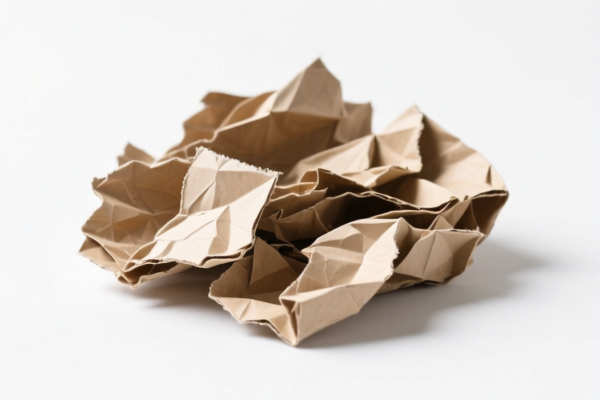
Product Images



AI Analysis
🎄 Pulp Home Decor (Paper Pulp Decorations)
🌐 HS Code Reference & Customs Clearance Guide | 2026 Latest Tariff Analysis | Professional Clearance Strategy
📌 I. Product Definition & Classification: Do You Really Understand "Pulp Home Decor"?
Pulp Home Decor generally refers to decorative items made from paper pulp, including molded shapes, figurines, holiday ornaments, and thematic decorations. In international trade, the classification hinges on two critical factors:
1. Material Composition: Is it purely paper/pulp, or does it involve plastic coatings, structural supports, or composite materials?
2. Form & Function: Is it a finished decorative article, or is it a raw manufactured paper product?
⚠️ Key Distinction Point:
- If the item is primarily a decorative accessory (statues, figurines, ornaments) and the material is inferred as paper-based, it may fall under Chapter 39 (Plastics/General Articles) or Chapter 48 (Paper Products) depending on specific manufacturing processes and legal interpretations.
- Note on Ambiguity: Customs authorities often debate whether molded pulp decorations are "plastic-like articles" (HS 3926) or "paper pulp articles" (HS 4823). The data provided suggests multiple potential classifications with vastly different tax implications.
📦 II. HS Code Classification Details (2026 Latest Tariff Authorities)
Based on the provided data, here are the four specific HS Codes identified for "Pulp Home Decor":
| HS Code | Product Description | Basis for Classification | Key Characteristics |
|---|---|---|---|
3926.40.00.10 |
Statues and Other Decorative Articles | Inferred as plastic or other materials based on common sense for decorative items | Shape fits "decorative articles"; assumes non-paper structural integrity or coating |
3926.40.00.90 |
Other Decorative Articles | Material inferred as paper, but categorized under general decorative articles | Matches "other decorative articles"; likely a fallback for ambiguous paper-plastic composites |
4823.70.00.40 |
Other Paper Pulp Molds | Material is explicitly paper pulp; form is molded/suppressed | Fits "other" category for paper pulp molded products; high tariff due to "Add-on" duties |
4823.90.10.00 |
Other Paper Articles, Made of Paper Pulp | Material is paper pulp; form is other paper articles | Strictly "paper pulp" material; fits "other paper articles" |
🔍 Critical Warning:
- HS 3926 vs. HS 4823: The difference is NOT just material. It’s about legal interpretation.
- HS 3926.40.00.x0: Often used for decorative items that look like plastic or are treated as "general articles" regardless of being paper-based, potentially due to manufacturing processes that mimic plastic.
- HS 4823.70/90: Strictly for paper pulp products. If you declare this, you are explicitly admitting it’s a paper product, not a plastic/composite one.
💰 III. 2026 Latest Tariff Rate Breakdown (Including Surcharges & Policy Add-ons)
✅ Applicable Country: United States (US)
✅ Country of Origin: China (CN)
✅ Effective Date: 2025-11-10 onwards (including subsequent imports)
🎯 1. 3926.40.00.10 & 3926.40.00.90 — Decorative Articles (Statues/Other)
| Item | Detail |
|---|---|
| Base Duty Rate | 5.3% (ad valorem) |
| Section 301 Add-on Duty | 0.0% |
| Section 122 Duty (IEEPA) | +10% (for China-origin goods) |
| Total Duty Rate | 15.3% |
| Tax Calculation | CIF Value × 15.3% |
| De Minimis Exemption | ❌ Not Eligible (deny_de_minimis) |
| Legal Basis Path | IEEPA:9903.01.25 → USITC:3926.40.00.x0 → FOOTNOTE:122 |
📌 Explanation:
- Why 15.3%?
- Base rate for "Statues/Decorations" under Chapter 39 is 5.3%.
- No Section 301 duty (0%) applies to this specific sub-heading.
- Section 122 (10%) applies due to China origin.
- Advantage: This is the LOWEST tariff option among the four codes provided.
- Risk: Requires justification that the item is not strictly a "paper pulp molded article" under Chapter 48.
🎯 2. 4823.70.00.40 & 4823.90.10.00 — Paper Pulp Products
| Item | Detail |
|---|---|
| Base Duty Rate | 0.0% (ad valorem) |
| Section 301 Add-on Duty | +25.0% |
| Section 122 Duty (IEEPA) | +10% |
| Total Duty Rate | 35.0% |
| Tax Calculation | CIF Value × 35.0% |
| De Minimis Exemption | ❌ Not Eligible (deny_de_minimis) |
| Legal Basis Path | IEEPA:9901.25 → IEEPA:9903.01.24 → USITC:4823.70.00.40 / 4823.90.10.00 → FOOTNOTE:301+122 |
📌 Explanation:
- Why 35.0%?
- Base rate for paper pulp articles is 0%.
- Section 301 (25%) applies heavily to Chinese paper products.
- Section 122 (10%) adds another 10%.
- Disadvantage: This is the HIGHEST tariff option.
- Risk: If you declare as "Pulp," you trigger Section 301. If you declare as "Decorative Article" (Ch39), you avoid Section 301 but face higher base duty + Section 122.
🛠️ IV. Customs Clearance Practical Advice (Real-World Pitfall Avoidance)
✅ 1. Preparation Checklist (All Required)
| Document | Required? | Notes |
|---|---|---|
| ✅ Product Specification Sheet | ✔️ | Must clarify material: "Paper Pulp" vs. "Paper-based Composite" |
| ✅ Material Composition Report | ✔️ | Detailed breakdown: % paper, % binding agents, % coatings |
| ✅ Product Photos (with labeling) | ✔️ | Show texture, finish, and any plastic components |
| ✅ Commercial Invoice | ✔️ | Use precise description: "Pulp-based Decorative Figurine" |
| ✅ Packing List | ✔️ | Confirm no mixed materials that complicate classification |
| ✅ Origin Certificate (CO) | ✔️ | Essential for applying Section 122/301 rules |
| ✅ Third-party Test Report | ✔️ | If claiming plastic-like properties, provide material tests |
✅ 2. Declaration Strategy (Critical Tips)
🔥 "Material Defines Duty, Description Defines Risk!"
| Scenario | Recommended HS Code | Risk Level | Reason |
|---|---|---|---|
| Pure Paper Pulp Molded Decor | 4823.70.00.40 / 4823.90.10.00 |
⚠️ High Cost | 35% total duty. But accurate if purely paper. |
| Decorative Item with Plastic Coating/Frame | 3926.40.00.10 / 3926.40.00.90 |
✅ Lower Cost | 15.3% total duty. Better for cost-saving if legally justifiable. |
| Ambiguous "Paper-like" Plastic | 3926.40.00.10 |
✅ Lower Cost | Often accepted if item has structural rigidity similar to plastic. |
| Mixed Materials (e.g., Pulp + Wire) | 3926.40.00.10 |
⚠️ Moderate | May still fall under "Decorative Article" if plastic/metal is minor. |
📌 Strategic Advice:
- Cost-Driven Classification: If the product allows, declare under HS 3926.40.00.x0 to save 19.7% in duties (15.3% vs 35.0%).
- Compliance-Driven Classification: If the product is 100% paper pulp with no plastic elements, you must declare under HS 4823.70.00.40 to avoid misdeclaration penalties.
✅ 3. Special Cases
| Situation | Handling Advice |
|---|---|
| Pulp Decor with Plastic Paint | Still likely HS 4823 if paper is the primary material. Paint doesn't change classification. |
| Pulp Decor with Plastic Frame | May qualify for HS 3926 if the frame is structural. |
| Small Items (De Minimis) | ❌ Not Eligible. Both 15.3% and 35% exceed the de minimis threshold. |
| Gift Items | No special tariff. Classified by material/function, not purpose. |
🌍 V. Global Market Comparison (2026 Latest)
| Country/Region | Recommended HS Code | Total Duty | Certification Required | Notes |
|---|---|---|---|---|
| 🇺🇸 USA | 3926.40.00.10 |
15.3% | None | Best for cost. Avoid 4823 (35%). |
| 🇨🇳 China | 4823.70.00.40 |
~5-10% | CCC (if applicable) | Lower base duty, no Section 301/122. |
| 🇪🇺 EU | 4823.70.00.00 |
~0-4% | CE (if electrical) | No Section 301/122. |
| 🇬🇧 UK | 4823.70.00.00 |
~0-5% | UKCA | Post-Brexit alignment with EU. |
| 🇨🇦 Canada | 4823.70.00.00 |
~5% | None | No Section 301. |
📌 Conclusion:
- USA is the only market with punitive Section 301 + Section 122 duties.
- Cost Optimization is Critical: Misclassifying as3926when it's pure4823can lead to penalties + back duties.
- Recommendation: If possible, consult a customs broker to argue for3926.40.00.10if the product has any plastic-like characteristics.
📌 VI. Common Mistakes & Pitfalls (Lessons Learned)
❌ Mistake 1: Declaring "Pulp Decor" as 3926 when it's 100% paper.
👉 Consequence: Customs audit → 35% duty + fines + seizure.
❌ Mistake 2: Declaring "Pulp Decor" as 4823 when it has a plastic frame.
👉 Consequence: Overpayment of 19.7% in duties unnecessarily.
❌ Mistake 3: Assuming De Minimis exemption applies.
👉 Consequence: All values under $800 are taxable for China-origin goods under Section 122.
❌ Mistake 4: Using vague descriptions like "Home Decor" without material details.
👉 Consequence: Customs holds shipment for material verification → Delays.
✅ Correct Approach:
"Paper Pulp Molded Decorative Figurine, 10cm, Brown Finish, No Plastic Coating" → HS 4823.70.00.40
"Decorative Statue, Paper-based Composite, Plastic-like Finish" → HS 3926.40.00.10
🎯 VII. Conclusion: Professional Declaration, Save Money, Avoid Risks!
🎯 Remember the Rule of Thumb:
🔹 "Material First, Then Form. Paper = 35%, Plastic/Decor = 15.3%."
🔹 "If you can justify it as 'Decorative Article' under Ch39, you save nearly 20%."
🔹 "But never lie about material. Penalties exceed 200%."
📌 Pro Tip:
- If your pulp decor has any plastic components (paint, frame, lining), strongly consider HS 3926.40.00.10.
- If it’s pure paper pulp, accept the 35% duty or explore supply chain shifts (e.g., third-country assembly if feasible).
📣 Immediate Action:
📞 Contact a Licensed Customs Broker
📄 Submit Product Images + Material Spec
🚀 Request Pre-Ruling for HS Code 3926.40.00.10
✨ Professional Clearance Starts with Precise Classification!
💼 Every Penny Saved is Pure Profit!
Customer Reviews
About HS Code Classification
The Harmonized System (HS) is an internationally standardized nomenclature developed by the World Customs Organization (WCO) to classify traded products. Over 200 countries use the HS system as the basis for customs tariffs, trade statistics, and import/export regulations.
Each HS code follows a hierarchical structure:
- Chapter (2 digits) — Broad category of goods (e.g., Chapter 84: Machinery and Mechanical Appliances)
- Heading (4 digits) — More specific grouping within the chapter
- Subheading (6 digits) — Internationally standardized breakdown, used by all WCO member countries
- National subdivisions (8-10 digits) — Country-specific extensions for further classification, such as US HTSUS 10-digit codes
Correct HS code classification is essential for smooth customs clearance, accurate duty payment, and compliance with trade regulations. Misclassification can lead to customs delays, overpayment of duties, or penalties.
When importing from CN to US, the applicable tariff rates may include:
- Most-Favored-Nation (MFN) rate — The standard duty rate applied to WTO members
- General rate — Applied to countries without trade agreements
- Trade remedy duties — Additional tariffs such as Section 301 (anti-dumping), Section 232 (national security), or countervailing duties
The information provided on this page is for reference purposes only. For official classification, please consult with your local customs authority or a licensed customs broker.