Pulp Making Machinery
CN → US| HS Code | Tariff Rate | Origin | Destination | Doc |
|---|---|---|---|---|
| 4706910000 | 35.0% | CN | US | Official Doc |
| 4705000000 | 35.0% | CN | US | Official Doc |
| 4706930100 | 35.0% | CN | US | Official Doc |
| 4701000000 | 10.0% | CN | US | Official Doc |
Product Images
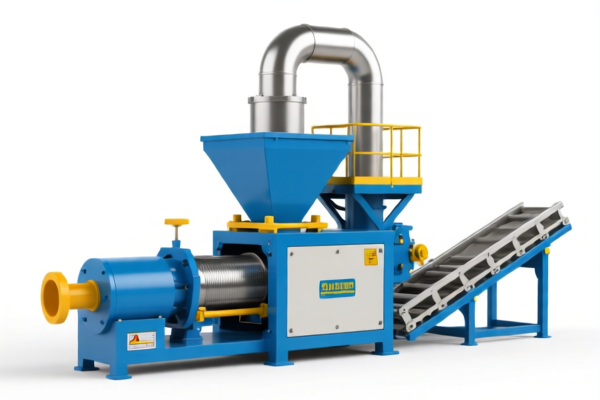
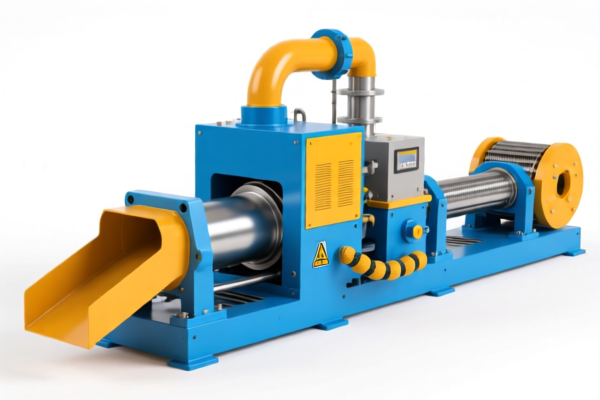
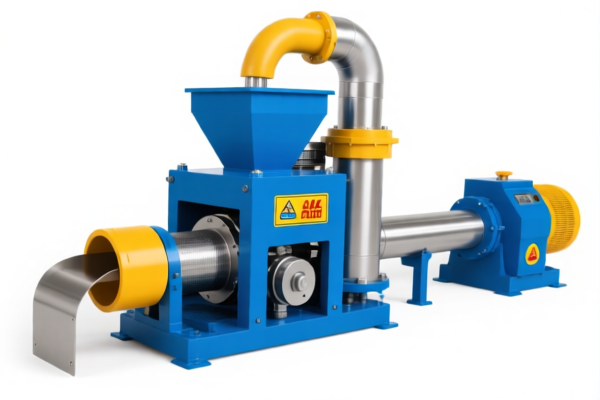
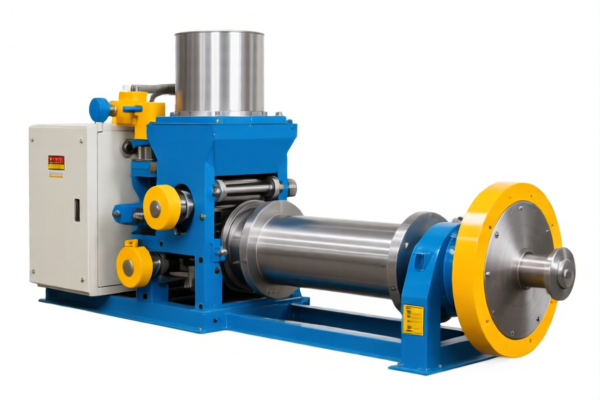
AI Analysis
🏭 Pulp Making Machinery (Paper Making Equipment)
🌐 HS Code Reference & Customs Clearance Guide | 2026 Latest Tariff Analysis | Professional Clearance Strategy
📌 I. Product Definition & Classification: Do You Truly Understand "Pulp Making Machinery"?
"Pulp Making Machinery" refers to industrial equipment used in the papermaking process to break down raw materials (such as wood chips, waste paper, or non-wood fibers) into cellulose fibers (pulp). In international trade, confusion often arises between the machinery itself and the pulp produced by this machinery.
The provided data focuses on Pulp Products (the output) rather than the machinery (the tool), which is a critical distinction for customs declaration. However, based on the provided <DATA>, we must analyze how terms like "Mechanical Pulp" and "Printing Pulp" are classified under specific HS Codes, as these are often associated with the output of such machinery.
⚠️ Key Distinction:
- Machinery (e.g., Defibrators, Pulpers, Refiners): Typically falls under Chapter 84 (e.g., 8479.89).
- Pulp (The material produced): Falls under Chapter 47.The provided
<DATA>exclusively lists Pulp Products (HS Codes in the 47xx series). If you are importing the actual machines, these codes are INCORRECT. If you are importing Pulp produced by such machinery, the following analysis applies.
📦 II. HS Code Classification Details (Based on Provided Data)
The provided data indicates a high correlation between the term "Mechanical Pulp" and specific subheadings under Chapter 47. Below are the matched HS Codes, summaries, and tax details exactly as provided.
| HS Code | Product Description | Summary of Match Logic | Total Tax Rate | Tax Detail Breakdown |
|---|---|---|---|---|
4706.91.00.00 |
Mechanical Pulp (Paper Pulp) | Match Success: The term "Mechanical Pulp" in the product name fully matches the classification explanation. The attribute "Printing" belongs to its use/form, which conflicts with neither the material category ("pulp made from waste paper, paperboard, or other fibrous cellulose materials"). | 35.0% | Base Tariff: 0.0% Add-on Tariff: 25.0% Section 122 Tariff: 10% |
4705.00.00.00 |
Mechanical Pulp (General) | Match Success: The product "Printing Mechanical Pulp" belongs to the pulp material category in terms of material and conforms to the process characteristics of "mechanical pulping," with consistent form and use. | 35.0% | Base Tariff: 0.0% Add-on Tariff: 25.0% Section 122 Tariff: 10% |
4706.93.01.00 |
Recycled Mechanical Pulp | Match Success: Inferring from the name "Printing Mechanical Pulp," its material is cellulose material (pulp), fitting the material attribute of recycled fiber pulp; its "mechanical" process feature is consistent with the process requirements in the classification explanation. | 35.0% | Base Tariff: 0.0% Add-on Tariff: 25.0% Section 122 Tariff: 10% |
4701.00.00.00 |
Mechanical Wood Pulp | Match Success: The term "Pulp" in the product name is consistent in form with "Mechanical Wood Pulp" in the classification, and "Printing Mechanical Pulp" is a specific use/grade of mechanical wood pulp, with no material conflict. | 10.0% | Base Tariff: 0.0% Add-on Tariff: 0.0% Section 122 Tariff: 10% |
🔍 Critical Observation:
- Three of the four matched codes (4706.91,4705.00,4706.93) attract a Total Tax of 35%.
- One code (4701.00) attracts a Total Tax of 10%.
- All codes include a Section 122 Tariff of 10% and a 25% Add-on Tariff (except4701).
💰 III. 2026 Latest Tariff Rate Details (Including Surtaxes & Policy Add-ons)
✅ Applicable Country: USA (Implied by "Section 122" and "Add-on Tariff" structure typical of US-China trade actions)
✅ Origin: China (Implied by the high surtax rates)
✅ Note: "Section 122" typically refers to specific US trade remedies or Section 301/232 related duties depending on the year's specific enforcement lists. The data explicitly lists these components.
🎯 1. 4706.91.00.00 & 4705.00.00.00 & 4706.93.01.00 —— Mechanical Pulp & Recycled Pulp
| Item | Content |
|---|---|
| Base Tariff | 0% (ad valorem) |
| Add-on Tariff | +25% (Standard high-tier surtax) |
| Section 122 Tariff | +10% (Specific policy surtax) |
| Total Tax Rate | 35.0% |
| Tax Calculation | CIF Value × 35% |
| De Minimis Exemption | ❌ Not Applicable (High value/strategic material) |
| Legal Basis Path | Section 122: 10% → Add-on: 25% → HS Code Match |
📌 Explanation:
- These codes represent pulp where mechanical processing is combined with specific material attributes (like recycled content or specific waste paper origins).
- The 35% total rate is significantly higher than standard import duties, reflecting trade friction policies.
- "Section 122" here acts as an additional layer on top of the standard 25% add-on.
🎯 2. 4701.00.00.00 —— Mechanical Wood Pulp
| Item | Content |
|---|---|
| Base Tariff | 0% (ad valorem) |
| Add-on Tariff | 0% (Exempted or Lower Tier) |
| Section 122 Tariff | +10% |
| Total Tax Rate | 10.0% |
| Tax Calculation | CIF Value × 10% |
| De Minimis Exemption | ❌ Not Applicable |
| Legal Basis Path | Section 122: 10% → HS Code Match |
📌 Note:
- This is the only code in the provided data with a lower total tax rate (10%).
- It benefits from a 0% Add-on Tariff, suggesting that pure "Mechanical Wood Pulp" (4701) may be treated more favorably than "Recycled" or "Other" mechanical pulps (4706/4705).
- Key Advantage: If your product can be legitimately classified as "Mechanical Wood Pulp" (4701.00.00.00) rather than recycled or mixed pulp, you save 25% in taxes compared to the other options.
🛠️ IV. Customs Clearance Practical Advice (Real-World Pitfall Guide)
✅ 1. Preparation Checklist (Essential Documents)
| Document | Required? | Description |
|---|---|---|
| ✅ Product Specification Sheet | ✔️ | Must clearly state: Pulp Type (Mechanical/Chemical), Raw Material (Wood/Waste Paper), Process (Mechanical Grinding), Bleached/Unbleached. |
| ✅ Certificate of Origin (CO) | ✔️ | Essential for determining eligibility for any potential preferential rates (though current data shows high surtaxes). |
| ✅ Commercial Invoice | ✔️ | Must accurately reflect the HS Code and Declared Value. Do not under-invoice. |
| ✅ Bill of Lading (B/L) | ✔️ | Standard shipping document. |
| ✅ Test Report / Lab Analysis | ✔️ | Crucial! To distinguish between 4701 (Wood Pulp) and 4706 (Waste Paper Pulp). Chemical composition and fiber origin analysis may be required. |
| ✅ Import License | ✔️ | Check if any specific permits are needed for waste paper/pulp imports. |
✅ 2. Declaration Strategy (Key Mantra)
🔥 "Correct Material, Correct HS, Tax Saves 25%!"
| Scenario | Correct Declaration | Incorrect Action | Consequence |
|---|---|---|---|
| Pure Mechanical Wood Pulp | 4701.00.00.00 |
Misdeclare as "Recycled Pulp" | Pays 35% instead of 10% (Unnecessary cost!) |
| Recycled Mechanical Pulp | 4706.93.01.00 |
Misdeclare as "Wood Pulp" | Audit Risk/penalty for false declaration |
| Pulp Making Machinery (Equipment) | 84xx Series (e.g., 8479) | Using 47xx Series | Severe Error! 47xx is for material, not machines. Machine duties differ completely. |
| Mixed Pulp (Chemical + Mechanical) | Check specific subheading | Generic "Pulp" | Customs may reclassify to highest duty rate. |
✅ 3. Special Circumstances Handling
| Situation | Handling Advice |
|---|---|
| OEM/Custom Pulp | Provide detailed chemical and physical specs. If it's "Printing Mechanical Pulp," ensure it meets the definition for 4705 or 4706 as appropriate. |
| Bale/Bundle Packaging | Ensure weight and quantity are accurate. Customs may verify against the number of bales. |
| Origin Verification | If claiming 4701 for lower tax, be prepared to prove the raw material is wood, not waste paper. |
| Waste Paper Pulp | Strictly governed. Ensure it meets environmental standards for import. 4706 is common here. |
🌍 V. Global Major Market Clearance Comparison (2026 Latest)
| Country/Region | Recommended HS Code (For Pulp) | Tariff Estimate | Certification/Remarks |
|---|---|---|---|
| 🇺🇸 USA | 4701.00.00.00 (Wood) or 4706 (Recycled) |
10% (Wood) / 35% (Recycled) | High surtaxes apply. Strict anti-dumping/countervailing duties may apply depending on origin. |
| 🇨🇳 China | 4701 / 4705 / 4706 |
Varies (0-10%) | Import of waste paper is highly restricted/banned. Ensure product is not classified as "solid waste." |
| 🇪🇺 EU | 4701 / 4705 |
0-2% | Generally low base duties. Check for ESG compliance and sustainability certifications. |
| 🇯🇵 Japan | 4701 / 4705 |
0-1.5% | Low tariffs. High quality standards for paper grade. |
📌 Conclusion:
- USA has the most complex tax structure due to add-ons and Section 122 tariffs.
- Choosing4701over4706/4705can save 25% in US duties if the product qualifies as pure mechanical wood pulp.
- Never declare machinery as pulp – this is a major red flag for customs.
📌 VI. Common Mistakes & Pitfall Guide (Lessons Learned)
❌ Mistake 1: Confusing Pulp Making Machinery with Pulp
👉 Consequence: Declaring a $100,000 machine as $10,000 of pulp → Severe fraud penalty, seizure, and legal action.
✅ Correct: Machinery → Chapter 84; Pulp → Chapter 47.
❌ Mistake 2: Misclassifying Recycled Pulp as Wood Pulp (4701)
👉 Consequence: Paying 10% instead of 35% → Back taxes, fines, and loss of import privileges.
✅ Correct: Use lab tests to verify fiber source. If from waste paper, use 4706.
❌ Mistake 3: Ignoring Section 122 and Add-on Tariffs
👉 Consequence: Budget miscalculation. Assuming 0% base duty means 0% total tax.
✅ Correct: Always calculate Base + Add-on + Section 122.
❌ Mistake 4: Vague Product Description
👉 Consequence: Customs holds shipment for classification review → Delays and demurrage fees.
✅ Correct: Use precise terms: "Mechanical Wood Pulp, Bleached, for Printing Paper" vs. "Mechanical Pulp from Recycled Newspaper."
🎯 VII. Conclusion: Professional Declaration, Cost Saving, Efficiency!
🎯 Remember the Mantra:
🔹 "Pulp is Material, Machine is Equipment. Don't mix them!"
🔹 "Wood Pulp (4701) pays 10%, Recycled (4706) pays 35%. Know your source!"
🔹 "Tax = Base + 25% Add-on + 10% Sec122. Calculate all!"
📌 Pro Tip:
If you are importing Pulp Making Machinery, please refer to Chapter 84 (e.g., 8479.89). The provided data only covers Pulp Products. For machinery, consult a customs broker for accurate HS codes in the 84xx range, which typically have different tariff structures (often lower base rates but subject to different anti-dumping duties depending on the country).
📣 Immediate Action:
📞 Contact a Professional Customs Broker + Provide Product Photos & Specs + Apply for Advance Ruling (if needed)
🚀 Ensure Smooth Clearance, Avoid High Taxes, Maximize Profit!
✨ Professional Clearance Starts with Accurate Classification!
💼 Every Dollar in Tariffs is Worth Precise Calculation!
Customer Reviews
About HS Code Classification
The Harmonized System (HS) is an internationally standardized nomenclature developed by the World Customs Organization (WCO) to classify traded products. Over 200 countries use the HS system as the basis for customs tariffs, trade statistics, and import/export regulations.
Each HS code follows a hierarchical structure:
- Chapter (2 digits) — Broad category of goods (e.g., Chapter 84: Machinery and Mechanical Appliances)
- Heading (4 digits) — More specific grouping within the chapter
- Subheading (6 digits) — Internationally standardized breakdown, used by all WCO member countries
- National subdivisions (8-10 digits) — Country-specific extensions for further classification, such as US HTSUS 10-digit codes
Correct HS code classification is essential for smooth customs clearance, accurate duty payment, and compliance with trade regulations. Misclassification can lead to customs delays, overpayment of duties, or penalties.
When importing from CN to US, the applicable tariff rates may include:
- Most-Favored-Nation (MFN) rate — The standard duty rate applied to WTO members
- General rate — Applied to countries without trade agreements
- Trade remedy duties — Additional tariffs such as Section 301 (anti-dumping), Section 232 (national security), or countervailing duties
The information provided on this page is for reference purposes only. For official classification, please consult with your local customs authority or a licensed customs broker.