Pulp Spool (Custom Size)
CN → US| HS Code | Tariff Rate | Origin | Destination | Doc |
|---|---|---|---|---|
| 4415109000 | 45.7% | CN | US | Official Doc |
| 4415103000 | 35.0% | CN | US | Official Doc |
| 3923400050 | 40.3% | CN | US | Official Doc |
| 3923900080 | 38.0% | CN | US | Official Doc |
| 4822900000 | 35.0% | CN | US | Official Doc |
| 4822100000 | 35.0% | CN | US | Official Doc |
Product Images


AI Analysis
🧵 Pulp Spool (Custom Size) – The Ultimate 2026 Classification & Taxation Guide
🌐 HS Code Reference & Clearance Strategy | 2026 Tariff Breakdown | Professional Customs Protocol
📌 I. Product Definition: What is a "Pulp Spool"?
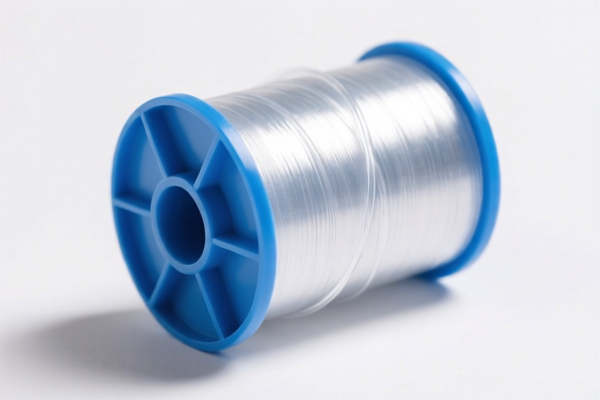
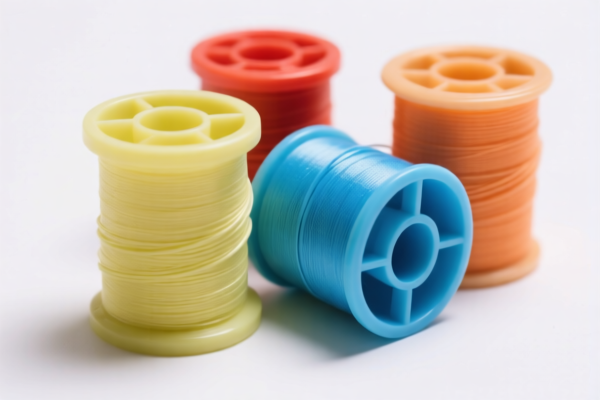
A Pulp Spool (often called a "Bobbin" or "Crewel Spool") is a cylindrical core used primarily for winding textile yarns, threads, or cables during manufacturing, storage, and transport.
When specified as "Custom Size", it indicates a non-standard dimension tailored to specific industrial machinery or logistical needs. Crucially, in HS classification, the material determines the code, not the size. Since these are made of paper pulp, paper, or paperboard, they fall strictly under Chapter 48.
⚠️ Critical Distinction:
- If the spool is for textile yarn (e.g., sewing thread, industrial thread) → 4822.10.00.00
- If the spool is for general use (e.g., cable, ribbon, non-textile) → 4822.90.00.00
- Note: Plastic spools (3923.40/3923.90) or Wooden crates (4415.10) are distinct and do NOT apply here.
📦 II. HS Code Classification Matrix (2026 Official Tariff)
| HS Code | Product Description | Material | Specific Use Case | Customs Category |
| :--- | :--- | :--- | :--- :--- |
| 4822.10.00.00 | Bobbins, spools, cops... of paper pulp/paper | Paper Pulp / Paper | Winding Textile Yarn | Textile Support |
| 4822.90.00.00 | Bobbins, spools, cops... of paper pulp/paper | Paper Pulp / Paper | Other Uses (Cable, Ribbon, etc.) | General Packaging |
🔍 Key Insight:
The term "Custom Size" does not create a new HS Code. It remains a4822subheading. The only differentiator is the end-use. If the spool is specifically designed for the textile industry (winding yarn), it gets4822.10.00.00. If it is for general industrial support (e.g., holding cables or generic threads), it defaults to4822.90.00.00.
💰 III. 2026 Tariff Rate Breakdown (China Export to US Context)
✅ Applicable Market: USA (Import from China)
✅ Product Type: Pulp Spools (Custom Size)
✅ Policy Status: 2026 Import Regime
🎯 Scenario A: Textile Yarn Spools (4822.10.00.00)
| Item | Detail |
|---|---|
| Product | Pulp Spools for winding textile yarn |
| HS Code | 4822.10.00.00 |
| Base Duty (MFN) | 0.0% |
| Section 301 "Section 25" Duty | +25.0% (China-specific surcharge) |
| Total Tariff Rate | 25.0% |
| Tax Calculation | CIF Value × 25% |
| De Minimis Exemption | ❌ No (High volume/Commercial) |
📌 Interpretation:
- While the base tariff for Chinese paper products is often 0%, the Section 301 additional tariff of 25% applies aggressively. - Total Cost Impact: For every $100,000 of spools, you pay $25,000 in additional duties. - Why? This falls under "Other" in the Section 301 list targeting Chinese manufacturing inputs.
🎯 Scenario B: General Purpose Spools (4822.90.00.00)
| Item | Detail |
|---|---|
| Product | Other Pulp Spools (Non-textile) |
| HS Code | 4822.90.00.00 |
| Base Duty (MFN) | 0.0% |
| Section 301 "Section 25" Duty | +25.0% |
| Total Tariff Rate | 25.0% |
| Tax Calculation | CIF Value × 25% |
| De Minimis Exemption | ❌ No |
📌 Interpretation:
- Even if not for textiles, paper spools are subject to the same 25% surcharge. - There is no distinction in tariff impact between4822.10and4822.90for Section 301 purposes; both attract the full 25%.
🛠️ IV. Customs Clearance & Operational Advice (2026)
✅ 1. Documentation Checklist (Must-Haves)
| Document | Requirement | Why It Matters |
|---|---|---|
| Commercial Invoice | Must state "Custom Size" explicitly | Prevents misclassification as "Standard" stock. |
| Product Spec Sheet | Include diameter, length, and End-Use | Proves if it's for "Textile Yarn" vs. "General". |
| Bill of Materials (BOM) | Confirm Paper Pulp composition | Ensures it stays in Chapter 48, not Chapter 39 (Plastic). |
| Packing List | Detail carton counts and weights | Vital for calculating duty on CIF basis. |
| Material Safety Data | Non-toxic, recycled content proof | Some jurisdictions require environmental compliance. |
✅ 2. Classification Strategy: "The End-Use Rule"
🔥 Golden Rule: "Don't Guess the Size, Prove the Use!"
| Situation | Correct HS Code | Risk if Wrong |
|---|---|---|
| Spools sold to Textile Mills | 4822.10.00.00 |
✅ Correct (25% total) |
| Spools sold to Cable Manufacturers | 4822.90.00.00 |
✅ Correct (25% total) |
| Spools sold to Generic Retail | 4822.90.00.00 |
✅ Correct (25% total) |
| Mistake: Claiming Plastic instead of Paper | 3923.40.00.50 |
❌ 28% Tax (Higher base) + Risk of Fraud |
| Mistake: Claiming Wooden Crate | 4415.10.90.00 |
❌ 35.7% Tax (10.7% base + 25%) |
⚠️ Warning: Do NOT classify these as "Plastic" (3923) or "Wood" (4415) unless the material is actually different. Misdeclaring material leads to seizure and massive fines.
✅ 3. Special Considerations for "Custom Size"
- No Special Duty Reduction: "Custom" does not qualify for "Sample" or "De Minimis" exemptions. It is treated as a commercial good.
- Material Proof: Since the tax difference between Paper (0% base) and Plastic (0-3% base) is minimal, but the Section 301 hits both, ensure the material composition is 100% paper to avoid confusion with plastic spools (which also carry 25% + base tax).
- Packaging: If the spools are packed in wooden crates (HS 4415) or plastic boxes (HS 3923), those outer packings are taxed separately (see
4415.10.90.00at 35.7% or3923.90.00.80at 28.0%).
🌍 V. Global Comparison & Strategic Tips
| Market | HS Code | Base Duty | Section 301 | Total (China Origin) | Strategic Note |
|---|---|---|---|---|---|
| 🇺🇸 USA | 4822.10.00.00 |
0% | +25% | 25.0% | High barrier. Consider 3rd country assembly. |
| 🇨🇳 China | 4822.10.00.00 |
0% | N/A | 0.0% | Domestic trade is free. |
| 🇪🇺 EU | 4822.10.00.00 |
0-3% | N/A | ~3.0% | Lower tariffs. Check EPR compliance. |
| 🇯🇵 Japan | 4822.10.00.00 |
0% | N/A | 0.0% | Very favorable for paper goods. |
📌 Strategic Conclusion:
The US market is the most expensive for Pulp Spools due to the flat 25% Section 301 tax. If your customer is in the US, consider: 1. Supplier Diversification: Source from Vietnam or Thailand (subject to different trade rules). 2. Packaging Optimization: Avoid including wooden crates (35.7%) in the value if not necessary. Ship in bulk to reduce packaging weight.
🎯 VI. Common Pitfalls & "Don't Do This" List
❌ Pitfall 1: Confusing Pulp Spools with Plastic Bobs
👉 Result: If you ship paper but label as plastic (3923), you might get a 28% tax, but if inspected, you face fraud penalties.
✅ Fix: Clearly label as "Paper Pulp Spool" on the invoice.
❌ Pitfall 2: Including Wooden Crates in the spool value
👉 Result: Wooden crates (4415.10.90.00) attract 35.7% (10.7% + 25%).
✅ Fix: Ship spools in corrugated cardboard (if possible) or separate the crate declaration.
❌ Pitfall 3: Ignoring the "Textile" vs. "General" distinction
👉 Result: While tax is the same (25%) now, customs agents scrutinize 4822.10 more heavily.
✅ Fix: Provide a Certificate of Use stating the end application.
📌 VII. Final Verdict: Action Plan
🚀 For 2026 Export of Pulp Spools (Custom Size):
- Confirm Material: 100% Paper Pulp.
- Define End-Use: Textile (4822.10) or General (4822.90).
- Calculate Duty: 25.0% total for US imports (0% base + 25% surcharge).
- Avoid Wooden Packaging: If possible, use cardboard to save the 35.7% crate tax.
- Prepare Docs: Spec sheet + Invoice + Material Proof.
🔹 Pro Tip: If you are shipping Custom Size spools for Textile Yarn, ensure your customer knows that no duty-free exemption exists for paper spools in the US. Factor the 25% cost into your pricing immediately.
✨ Precision in Classification = Profit in the Pocket!
💼 Don't let "Custom Size" become a "Custom Cost."
📞 Consult a Licensed Broker before the first container leaves the factory!
Customer Reviews
About HS Code Classification
The Harmonized System (HS) is an internationally standardized nomenclature developed by the World Customs Organization (WCO) to classify traded products. Over 200 countries use the HS system as the basis for customs tariffs, trade statistics, and import/export regulations.
Each HS code follows a hierarchical structure:
- Chapter (2 digits) — Broad category of goods (e.g., Chapter 84: Machinery and Mechanical Appliances)
- Heading (4 digits) — More specific grouping within the chapter
- Subheading (6 digits) — Internationally standardized breakdown, used by all WCO member countries
- National subdivisions (8-10 digits) — Country-specific extensions for further classification, such as US HTSUS 10-digit codes
Correct HS code classification is essential for smooth customs clearance, accurate duty payment, and compliance with trade regulations. Misclassification can lead to customs delays, overpayment of duties, or penalties.
When importing from CN to US, the applicable tariff rates may include:
- Most-Favored-Nation (MFN) rate — The standard duty rate applied to WTO members
- General rate — Applied to countries without trade agreements
- Trade remedy duties — Additional tariffs such as Section 301 (anti-dumping), Section 232 (national security), or countervailing duties
The information provided on this page is for reference purposes only. For official classification, please consult with your local customs authority or a licensed customs broker.