Pulp Tableware
CN → US| HS Code | Tariff Rate | Origin | Destination | Doc |
|---|---|---|---|---|
| 4823610020 | 35.0% | CN | US | Official Doc |
| 4823610040 | 35.0% | CN | US | Official Doc |
| 4823690020 | 35.0% | CN | US | Official Doc |
| 4819502000 | 35.0% | CN | US | Official Doc |
| 4823610020 | 35.0% | CN | US | Official Doc |
Product Images
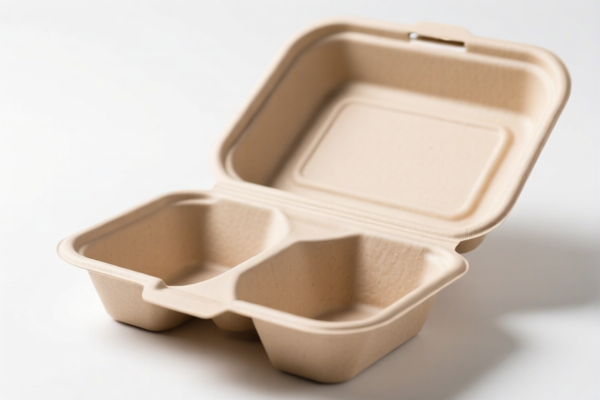
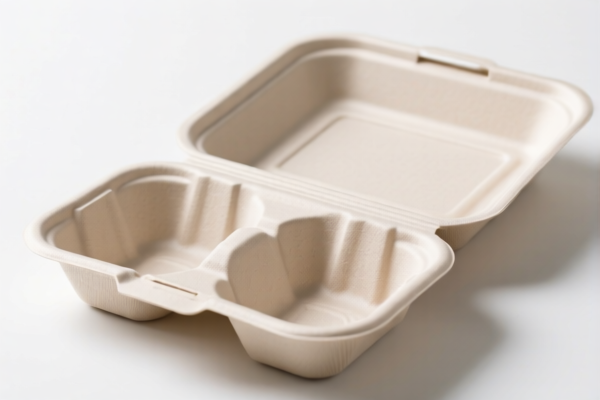
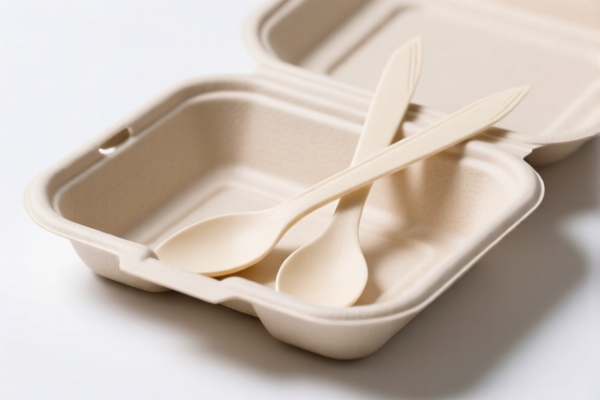
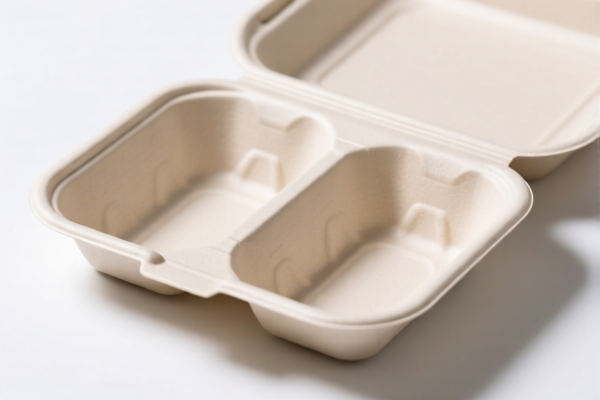
AI Analysis
🌿 Pulp Tableware (Bamboo & Paper Fiber)
🌐 HS Code Reference & Customs Clearance Guide | 2026 Latest Tariff Analysis | Professional Clearance Strategy
📌 1. Product Definition & Classification: What is "Pulp Tableware"?
Pulp tableware refers to disposable or semi-disposable food service items made from plant fibers (such as bamboo fiber, bagasse, or paper pulp). In international trade, these items are primarily classified under Chapter 48 (Paper and paperboard), specifically focusing on Articles of paper pulp, paper, or纸板.
The classification depends heavily on the material composition and specific form: * Bamboo Fiber Pulp Tableware: Made from bamboo pulp, often marketed as "eco-friendly." Classified under heading 4823 (Other articles of paper pulp, paper or纸板, cut to size or shape). * Paper Plate/Bowl Sets: Standard paper-based disposable tableware. Also falls under 4823 or potentially 4819 (Cartons, boxes, cases, bags, and other packing containers) depending on packaging intent, but typically 4823 for individual serving items.
⚠️ Key Distinction:
- If the product is individual items (plates, cups, bowls) intended for single use → 4823.
- If the product is a packaged set clearly defined as a "set" → May fall under 4823.69 or 4819.50 depending on the primary character and specific national tariff schedule interpretation.
- Material Matters: "Bamboo fiber" is still classified as paper pulp for HS Code purposes (Heading 4823), not as a separate textile or wooden product.
📦 2. HS Code Classification Details (2026 Latest Tariff Alignment)
Based on the provided data, the following HS Codes are relevant for Pulp Tableware exported to the United States from China:
| HS Code | Product Description | Key Characteristics | Form/Usage |
|---|---|---|---|
4823.61.00.20 |
Bamboo Fiber Pulp Tableware | Material: Bamboo fiber Form: Paper-like tableware |
Cups, round nested food containers |
4823.61.00.40 |
Bamboo Fiber Pulp Tableware | Material: Bamboo fiber Form: Paper-like tableware |
Trays, plates, saucers, cups, and similar articles |
4823.69.00.20 |
Paper Tableware Sets | Material: Paper Form: Tableware sets |
Sets of paper plates/bowls, falls under paper vessels |
4819.50.20.00 |
Paper Food Trays/Dishes | Material: Paper Form: Food trays |
Packaging/containers for food hygiene, often bulk or pre-packaged |
4823.61.00.20 |
Paper Tableware Sets | Material: Paper Form: Tableware |
Sets including cups, plates, etc., paper/board vessels |
🔍 Critical Note:
- 4823.61 specifically covers cups, bowls, plates, and similar articles of paper pulp.
- 4823.69 covers other articles of paper pulp (e.g., specialized sets or less common shapes).
- 4819.50 is often used for packaging or hygienic containers, but if the item is clearly "tableware" (for eating), 4823 is more precise. However, some customs brokers may use 4819.50.20.00 for "paper food dishes" if they are considered "packing containers" for takeout.
- Bamboo fiber is not a separate HS code; it is treated as paper pulp (4823).
💰 3. 2026 Latest Tariff Rate Breakdown (Including Additional Duties & Policy Surcharges)
✅ Applicable Country: United States (US)
✅ Country of Origin: China (CN)
✅ Effective Date: From November 10, 2025, and subsequent imports
🎯 1. All Listed HS Codes (4823.61.00.20, 4823.61.00.40, 4823.69.00.20, 4819.50.20.00)
| Item | Content |
|---|---|
| Base Tariff Rate | 0% (ad valorem) |
| Section 301 Additional Tariff | +25% (Under USITC Footnote 9903.88.01) |
| Section 122 Tariff (IEEPA) | +10% (Against Chinese products, effective from Nov 10, 2025) |
| Total Tariff Rate | 35% |
| Tax Calculation | CIF Value × 35% |
| De Minimis Exemption | ❌ Not Eligible (deny_de_minimis) |
| Legal Basis Path | IEEPA:9903.01.25 → IEEPA:9903.01.24 → USITC:4823.61.00.20 → FOOTNOTE:9903.88.01 |
📌 Explanation:
- "Section 301 Additional Tariff 25%": This is the standard 25% tariff imposed on many Chinese goods under the US Trade Act of 1974, Section 301.
- "Section 122 Tariff 10%": This refers to additional tariffs imposed under the International Emergency Economic Powers Act (IEEPA) or specific trade actions targeting Chinese imports. In this context, it adds another 10% on top of the base and Section 301 rates.
- Total 35%: This is a very high tariff rate for disposable tableware. It significantly impacts the landed cost.
- No De Minimis: Even for small packages (under $800), these goods are not exempt from tariffs if classified under these HS codes.
🛠️ 4. Customs Clearance Practical Advice (Avoiding Pitfalls)
✅ 1. Required Documentation Checklist
| Document | Required | Notes |
|---|---|---|
| ✅ Product Specification Sheet | ✔️ | Must specify material (e.g., "100% Bamboo Pulp" or "Paper Pulp"), weight, dimensions. |
| ✅ Product Photos (Clear) | ✔️ | Show item shape, packaging, and any "Biodegradable/Compostable" labels. |
| ✅ Commercial Invoice | ✔️ | Must clearly describe item as "Paper Tableware" or "Bamboo Fiber Plates," not just "Food Container." |
| ✅ Packing List | ✔️ | Detail quantity per carton, gross/net weight. |
| ✅ Certificate of Origin (CO) | ✔️ | Essential for proving China origin, which triggers the 35% tariff. |
| ✅ FDA Compliance (if applicable) | ✔️ | If marketed as food-contact safe, provide FDA compliance statement or test report. |
| ✅ Biodegradability Certification | ✔️ | Optional but helpful for marketing; does not change HS code. |
✅ 2. Declaration Tips (Crucial for Avoiding Delays)
🔥 "Describe Material, Not Just 'Eco-Friendly'!"
| Scenario | Correct Declaration | Wrong Declaration |
|---|---|---|
| Bamboo Fiber Plates | "Paper Tableware, Made from Bamboo Pulp, HS 4823.61.00.20" | "Eco-friendly Plates" → Too vague, risk of reclassification |
| Paper Cup Sets | "Paper Tableware Set, Cups & Saucers, HS 4823.61.00.40" | "Cups" → May be misclassified as other paper goods |
| Takeout Boxes | "Paper Food Tray, HS 4819.50.20.00" | "Cardboard Box" → If it's a plate, use 4823 |
✅ 3. Special Considerations
| Situation | Handling Advice |
|---|---|
| Mixed Materials | If the tableware has a plastic coating or liner, it may no longer qualify for 4823. It could be classified under Chapter 39 (Plastics) or Chapter 48/39 composite, which may have different tariffs. Disclose clearly! |
| "Bamboo" Mislabeling | Never label as "Wooden Tableware" (Chapter 44). Bamboo is grass, not wood. Using "Bamboo Fiber" is acceptable as it refers to the pulp process. |
| Set vs. Individual | If sold as a "set" (e.g., plate + cup + fork), ensure the HS code covers the primary item. 4823.69.00.20 is used for "sets" in the data. |
| Origin Marking | All items must be marked "Made in China" for proper customs identification. |
🌍 5. Global Market Comparison (2026 Update)
| Country/Region | Recommended HS Code | Tariff (China Origin) | Certifications | Notes |
|---|---|---|---|---|
| 🇺🇸 USA | 4823.61.00.20 / 4823.61.00.40 |
35% (0% base + 25% Sec 301 + 10% Sec 122) | FDA, BPI (Compostable) | High tariff risk. De Minimis does not apply. |
| 🇨🇳 China | 4823.61.00.20 |
~5-10% (Import Duty) | None specific for import | Domestic consumption is low for bamboo pulp vs. local paper. |
| 🇪🇺 EU | 4823.69.00 |
6.5% | EN 13432 (Compostable) | No Section 301 tariffs. Lower rate than US. |
| 🇬🇧 UK | 4823.69.00 |
6.5% | UKCA, EN 13432 | Post-Brexit rules apply. |
| 🇯🇵 Japan | 4823.69.00 |
7.0% | JIS Standards | Strict food safety regulations. |
📌 Conclusion:
- The US market is the most expensive due to the 35% total tariff.
- For US imports, consider supply chain diversification (e.g., sourcing from Vietnam or India if possible) to avoid Chinese origin tariffs.
- Ensure accurate material description to prevent misclassification penalties.
📌 6. Common Mistakes & Pitfalls (Learn from Others' Mistakes)
❌ Mistake 1: Labeling as "Wooden Plates"
👉 Result: Incorrect classification (Chapter 44), potential penalty, and delay. Bamboo is not wood.
✅ Fix: Use "Bamboo Pulp" or "Paper Pulp."
❌ Mistake 2: Ignoring the Plastic Coating
👉 Result: If the plate has a PLA or PE lining, it may be classified as a plastic product (Chapter 39), which could have different tariffs (sometimes higher or lower) and requires different certifications.
✅ Fix: Disclose coating material and seek pre-classification if unsure.
❌ Mistake 3: Assuming "De Minimis" Applies
👉 Result: Small shipments under $800 are still subject to the 35% tariff if correctly classified under these HS codes.
✅ Fix: Budget for the full 35% tariff regardless of shipment size.
❌ Mistake 4: Vague Product Description
👉 Result: Customs may assign a higher default tariff or require additional inspection.
✅ Fix: Use precise terms: "Disposable Paper Tableware, Bamboo Fiber, HS 4823.61.00.20."
🎯 7. Conclusion: Smart Clearance for Pulp Tableware
🎯 Key Takeaways:
🔹 "Bamboo Fiber = Paper Pulp (4823)" – Don't be misled by marketing terms.
🔹 "35% Tariff is Real" – Budget for Section 301 + Section 122 surcharges.
🔹 "De Minimis is Not Your Friend" – No tariff exemption for small packages.
🔹 "Describe Precisely" – Avoid vague terms like "Eco-friendly" without specifying material.
📌 Pro Tip:
If you are exporting to the US, consider obtaining a Binding Ruling from US Customs and Border Protection (CBP) for your specific product. This provides legal certainty on the HS Code and tariff rate, protecting you from future retroactive duties.
📣 Action Plan:
📞 Contact a Licensed Customs Broker to verify the exact HS Code for your specific product formulation (especially if coated).
📄 Prepare Clear Product Documentation (Specs, Photos, Material Breakdown).
💰 Factor in the 35% Tariff in your pricing strategy.
✨ Accurate Classification Saves Money!
💼 Every percentage point of tariff counts!
Customer Reviews
About HS Code Classification
The Harmonized System (HS) is an internationally standardized nomenclature developed by the World Customs Organization (WCO) to classify traded products. Over 200 countries use the HS system as the basis for customs tariffs, trade statistics, and import/export regulations.
Each HS code follows a hierarchical structure:
- Chapter (2 digits) — Broad category of goods (e.g., Chapter 84: Machinery and Mechanical Appliances)
- Heading (4 digits) — More specific grouping within the chapter
- Subheading (6 digits) — Internationally standardized breakdown, used by all WCO member countries
- National subdivisions (8-10 digits) — Country-specific extensions for further classification, such as US HTSUS 10-digit codes
Correct HS code classification is essential for smooth customs clearance, accurate duty payment, and compliance with trade regulations. Misclassification can lead to customs delays, overpayment of duties, or penalties.
When importing from CN to US, the applicable tariff rates may include:
- Most-Favored-Nation (MFN) rate — The standard duty rate applied to WTO members
- General rate — Applied to countries without trade agreements
- Trade remedy duties — Additional tariffs such as Section 301 (anti-dumping), Section 232 (national security), or countervailing duties
The information provided on this page is for reference purposes only. For official classification, please consult with your local customs authority or a licensed customs broker.