Pulp Tableware Set
CN → US| HS Code | Tariff Rate | Origin | Destination | Doc |
|---|---|---|---|---|
| 4823700020 | 35.0% | CN | US | Official Doc |
| 4823690020 | 35.0% | CN | US | Official Doc |
Product Images
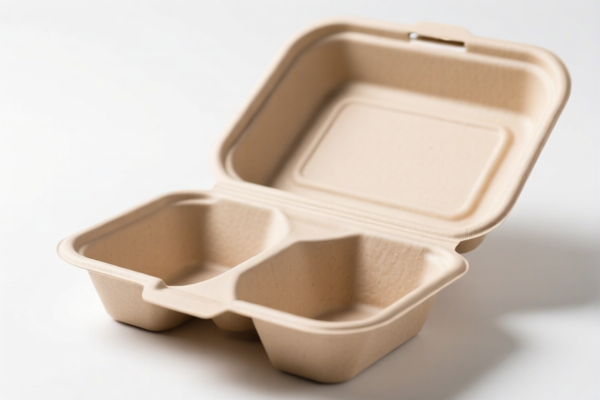
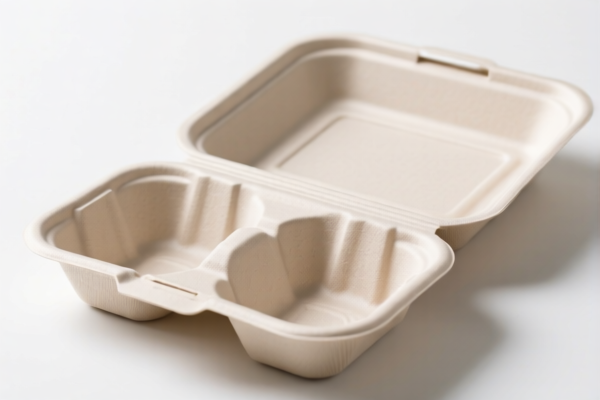
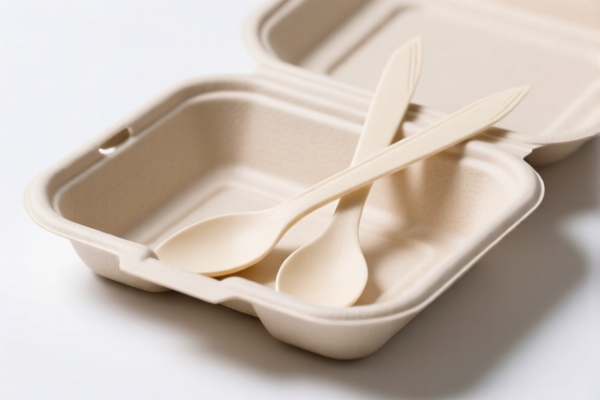
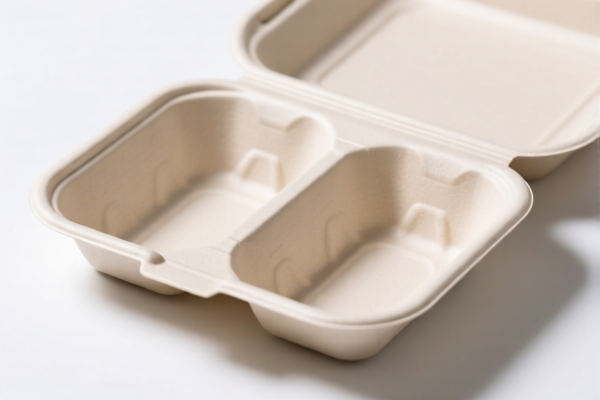
AI Analysis
🍽️ Pulp Tableware Set (Molded Fiber & Paper Cups)
🌐 HS Code Reference & Customs Clearance Guide | 2026 Latest Tariff Analysis | Professional Strategy for Molded Fiber Products
📌 I. Product Definition & Classification: What Exactly is "Pulp Tableware"?
Pulp Tableware Sets refer to disposable tableware items manufactured from paper pulp, cellulose wadding, or webs of cellulose fibers. These products are typically molded or pressed into shape. In international trade, they are primarily categorized into two distinct sub-groups based on their specific form and function:
- Molded/Pressed Articles (e.g., Plates, Bowls, Cups): Items formed through a molding process from paper pulp.
- Cut-to-Shape Containers (e.g., Nested Food Containers): Trays, dishes, or round containers cut from paperboard or cellulose webs.
⚠️ Key Distinction Point:
- If the item is a rigid, molded structure (like a plate or bowl) made from pulp → It falls under 4823.70.
- If the item is a cup or a round nested food container (like a coffee cup or a clamshell container) made from paper/paperboard → It falls under 4823.69.
📦 II. HS Code Classification Details (2026 Latest Tariff Authority Comparison)
| HS Code | Product Description | Applicable Scenario | Material/Structure |
|---|---|---|---|
4823.70.00.20 |
Molded or pressed articles of paper pulp (Plates, bowls, cups) | Rigid molded plates, soup bowls, ice cream cups | ✅ Molded Pulp |
4823.69.00.20 |
Trays, dishes, plates, cups, and the like of paper/paperboard: Cups and round nested food containers | Disposable coffee cups, nested takeout containers, paper plates cut to shape | ✅ Cut-to-Shape Paperboard |
🔍 Critical Reminder:
- Do not mix "Molded Pulp Plates" (4823.70) with "Paper Cups/Nested Containers" (4823.69). Although both are "tableware," their manufacturing processes (Molding vs. Cutting/Pressing) dictate different HS codes. - If your product is a Set, ensure the principal component determines the classification. However, for customs declaration efficiency, it is often safer to split the set into its constituent parts if they fall under different sub-headings, or declare the most significant item. In this data set, we treat them as distinct tariff lines.
💰 III. 2026 Latest Tariff Rate Breakdown (Including Surtaxes)
✅ Applicable Country: United States (US)
✅ Origin: China (CN)
✅ Effective Date: Current policy applies
🎯 1. 4823.70.00.20 —— Molded or Pressed Articles of Paper Pulp (Plates, Bowls, Cups)
| Item | Content |
|---|---|
| Base Tariff | 0.0% (ad valorem) |
| Section 301 Surcharge | +25.0% |
| Total Tax Rate | 25.0% |
| Tax Calculation | CIF Value × 25.0% |
| De Minimis Eligibility | ❌ Not Applicable (Usually < $800, but verify specific carrier rules; generally, Section 301 goods are scrutinized) |
| Legal Basis | USITC HTSUS 4823.70.00.20 + Section 301 List 4A |
📌 Explanation:
- Base Rate 0%: Paper pulp products generally have a low base duty.
- 25% Surcharge: This is the critical cost driver. Products under 4823.70 are subject to the 25% Section 301 tariff.
- Total Cost Impact: For every $10,000 CIF value, you must pay $2,500 in tariffs.
🎯 2. 4823.69.00.20 —— Cups and Round Nested Food Containers (Paper/Paperboard)
| Item | Content |
|---|---|
| Base Tariff | 0.0% (ad valorem) |
| Section 301 Surcharge | +25.0% |
| Total Tax Rate | 25.0% |
| Tax Calculation | CIF Value × 25.0% |
| De Minimis Eligibility | ❌ Not Applicable |
| Legal Basis | USITC HTSUS 4823.69.00.20 + Section 301 List 4A |
📌 Explanation:
- Base Rate 0%: Similar to pulp articles, the base duty is minimal.
- 25% Surcharge: Items classified as "Cups and round nested food containers" also fall under the 25% Section 301 tariff.
- Total Cost Impact: Same as above, a 25% flat rate on the CIF value.
🛠️ IV. Customs Clearance Practical Advice (Real-World Pitfall Guide)
✅ 1. Essential Documentation Checklist (Non-Negotiable)
| Document | Required | Notes |
|---|---|---|
| ✅ Product Specification Sheet | ✔️ | Must detail material (e.g., "100% recycled paper pulp"), weight, and dimensions. |
| ✅ High-Resolution Photos | ✔️ | Show the product clearly as "Molded" vs. "Cut/Pressed". Distinguish between a rigid plate (4823.70) and a cup/container (4823.69). |
| ✅ Commercial Invoice | ✔️ | Clearly state "Pulp Tableware" or "Paper Cup". Do NOT use vague terms like "Packaging Material" if used for food. |
| ✅ FDA Compliance Certificate | ✔️ | CRITICAL: Since these are "Tableware," they are Food Contact Materials. Must confirm FDA compliance for safety. |
| ✅ Material Safety Data Sheet (MSDS) | ✔️ | If the pulp is treated with coatings (e.g., PLA lining for waterproofing), disclose this. |
✅ 2. Declaration Tips (Key Mantras)
🔥 "Be Specific: 'Molded Pulp' vs. 'Paper Cup'! Don't Generalize!"
| Scenario | Correct Declaration | Incorrect Declaration |
|---|---|---|
| Rigid, molded plate/bowl | 4823.70.00.20 "Molded paper pulp plate" |
"Paper product" (Too vague → Audit risk) |
| Disposable coffee cup | 4823.69.00.20 "Paper cup for beverages" |
"Packaging material" (Wrong HTS → 25% penalty + reclassification) |
| Nested food container (clamshell) | 4823.69.00.20 "Round nested food container" |
"Plastic container" (If it's paper-based, this is fraud; if plastic, different code) |
| Set containing both | Declare separately or by principal component | "Tableware Set" (Vague → Likely to be split by CBP, causing delays) |
✅ 3. Special Considerations for Food Contact
| Issue | Recommendation |
|---|---|
| Food Safety (FDA) | Ensure all pulp/tableware items are FDA-compliant for direct food contact. Non-compliant items will be rejected or destroyed. |
| Coatings/Linings | If the pulp is coated with PLA (Polylactic Acid) or PE to make it waterproof, declare the base material (Paper/Pulp) but specify the coating in specs. Do not classify as "Plastic" (3926) unless the plastic is the essential character. |
| Biodegradability Claims | Avoid unverified marketing claims like "100% Compostable" on the HS Code level. Use technical terms like "Cellulose Wadding" in the commercial invoice. |
🌍 V. Global Market Comparison (2026 Snapshot)
| Market | Recommended HS Code | Base Duty | Surcharge | Total Effective Duty | Notes |
|---|---|---|---|---|---|
| 🇺🇸 USA | 4823.70.00.20 or 4823.69.00.20 |
0% | +25% | 25% | High tariff burden. Strategy: Optimize CIF value, ensure accurate classification to avoid penalties. |
| 🇨🇳 China | 4823.70.00.00 / 4823.69.00.00 |
~10-15% | 0% | ~10-15% | Lower base duty, no Section 301. |
| 🇪🇺 EU | 4823.70 / 4823.69 |
0-2% | 0% | 0-2% | No surcharges. Focus on EPR (Extended Producer Responsibility) packaging regulations. |
| 🇬🇧 UK | 4823.70 / 4823.69 |
0-5% | 0% | 0-5% | Post-Brexit rules apply. Check UK Trade Tariff. |
📌 Conclusion:
- The USA is the most challenging market due to the 25% Section 301 tariff.
- China, EU, and UK have significantly lower duties, but stricter environmental packaging regulations (EPR).
📌 VI. Common Mistakes & Pitfall Guide (Lessons from Blood and Tears)
❌ Mistake 1: Classifying "Molded Pulp Plates" as "Plastic Containers" (3926.90)
👉 Consequence: Incorrect classification. If caught, fines + back taxes. Also, plastic items may face different environmental taxes.
❌ Mistake 2: Ignoring the "Food Contact" aspect
👉 Consequence: FDA holds the shipment at port. Result: Return or Destruction. Cost > Value of goods.
❌ Mistake 3: Using "Packaging Material" for Tableware
👉 Consequence: CBP may reclassify as "Tableware" (4823) anyway, but the lack of specificity leads to audits and delays.
❌ Mistake 4: Assuming "Set" gets one code automatically
👉 Consequence: If the set contains 80% cups (4823.69) and 20% plates (4823.70), declaring one code for the whole set can lead to disputes. Best Practice: Declare the predominant item or split the line items.
✅ Correct Approach:
"Molded Paper Pulp Plate, Food Grade, FDA Compliant, 7-inch, White, Model XYZ"
OR
"Disposable Paper Cup, 12oz, Single Wall, FDA Approved, Brown"
🎯 VII. Conclusion: Professional Declaration, Cost Efficiency, and Compliance!
🎯 Remember the Mantra:
🔹 "Pulp is Molded (
70), Paper is Cut (69). Both Face 25% in the US!"
🔹 "Food Contact Needs FDA, No FDA Means No Entry!"
🔹 "Don't Guess the Code, Prove the Material!"
📌 Pro Tip:
If you are exporting to the USA, consider:
1. Accurate HS Code Pre-Ruling: Apply for a binding ruling from CBP if your product is ambiguous (e.g., is it a "nested container" or a "molded article"?).
2. Supply Chain Diversification: If margins are tight, evaluate if production can be sourced from non-China origins to avoid the 25% surcharge.
3. FDA Registration: Ensure the manufacturer is FDA-registered and the products are compliant before shipping.
📣 Immediate Action:
📞 Contact your customs broker now.
📸 Provide clear photos and material specs.
🚀 Secure your FDA compliance and HS Code classification before the first container loads!
✨ Professional Customs Clearance Starts with Accurate Classification!
💼 Your Profit Margin is Protected by Precision!
Customer Reviews
About HS Code Classification
The Harmonized System (HS) is an internationally standardized nomenclature developed by the World Customs Organization (WCO) to classify traded products. Over 200 countries use the HS system as the basis for customs tariffs, trade statistics, and import/export regulations.
Each HS code follows a hierarchical structure:
- Chapter (2 digits) — Broad category of goods (e.g., Chapter 84: Machinery and Mechanical Appliances)
- Heading (4 digits) — More specific grouping within the chapter
- Subheading (6 digits) — Internationally standardized breakdown, used by all WCO member countries
- National subdivisions (8-10 digits) — Country-specific extensions for further classification, such as US HTSUS 10-digit codes
Correct HS code classification is essential for smooth customs clearance, accurate duty payment, and compliance with trade regulations. Misclassification can lead to customs delays, overpayment of duties, or penalties.
When importing from CN to US, the applicable tariff rates may include:
- Most-Favored-Nation (MFN) rate — The standard duty rate applied to WTO members
- General rate — Applied to countries without trade agreements
- Trade remedy duties — Additional tariffs such as Section 301 (anti-dumping), Section 232 (national security), or countervailing duties
The information provided on this page is for reference purposes only. For official classification, please consult with your local customs authority or a licensed customs broker.