Pulp Viscosity Modifier
CN → US| HS Code | Tariff Rate | Origin | Destination | Doc |
|---|---|---|---|---|
| 3911909110 | 41.5% | CN | US | Official Doc |
| 3911902500 | 41.1% | CN | US | Official Doc |
| 3402399050 | 38.7% | CN | US | Official Doc |
| 3402499000 | 38.7% | CN | US | Official Doc |
| 3809921000 | 41.5% | CN | US | Official Doc |
| 3809925000 | 41.0% | CN | US | Official Doc |
Product Images

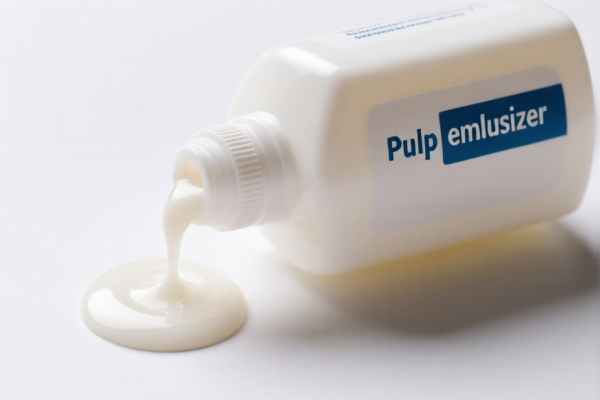
AI Analysis
🌿 Pulp Viscosity Modifier (Pulp Viscosity Adjuster)
🌐 HS Code Classification & Customs Clearance Guide | 2026 Updated Tariff Analysis | Professional Trade Strategy
📌 One, Product Definition & Classification: What Exactly Is a Pulp Viscosity Modifier?
A Pulp Viscosity Modifier is a chemical formulation used in the paper and pulp industry to control the viscosity (flow resistance) of pulp suspensions during papermaking. It ensures consistent fiber dispersion, improves sheet formation, and enhances the efficiency of the paper machine.
⚠️ Key Distinction:
- If the product is used in papermaking and contains aromatic or modified aromatic substances (≥5% by weight) → HS Code 3809.92.10.00
- If the product is used in papermaking but does not contain ≥5% aromatic substances → HS Code 3809.92.50.00✅ Important Note:
These modifiers are not classified under heading 3401 (soap, detergents) or 3402 (surface-active agents), because they are specialized industrial additives, not general cleaning agents.
📦 Two, HS Code Classification Details (2026 Updated Tariff Authority)
| HS Code | Product Description | Industry Use | Contains ≥5% Aromatic/Modified Aromatic? |
|---|---|---|---|
3809.92.10.00 |
Finishing agents, dye carriers, and other preparations for paper industry; containing 5% or more by weight of aromatic or modified aromatic substances | Papermaking, pulp processing, sheet formation | ✅ Yes |
3809.92.50.00 |
Finishing agents, dye carriers, and other preparations for paper industry; other (not containing ≥5% aromatic substances) | Papermaking, pulp processing, coating applications | ❌ No |
🔍 Critical Insight:
- The presence of aromatic or modified aromatic compounds is the deciding factor in classification. - Even if the product is a "viscosity modifier," if it contains ≥5% aromatic substances, it must be classified under 3809.92.10.00, not 3809.92.50.00.
💰 Three, 2026 Updated Tariff Rate Breakdown (With附加 Taxes & Policy Add-ons)
✅ Applicable Country: United States (US)
✅ Origin: China (CN)
✅ Effective Date: November 10, 2025 (and onward)
🎯 1. 3809.92.10.00 — For Paper Industry, ≥5% Aromatic/Modified Aromatic Substances
| Item | Detail |
|---|---|
| Base Tariff | 6.5% (ad valorem) |
| USITC Additional Duty | +25.0% (under Section 301, U.S. Trade Act) |
| IEEPA Additional Duty | +10.0% (International Emergency Economic Powers Act) |
| Total Effective Duty | 31.5% |
| Tax Calculation | CIF Value × 31.5% |
| De Minimis Threshold | ❌ Not applicable (denied) |
| Legal Basis Path | IEEPA:9903.01.25 → USITC:3809.92.10.00 → FOOTNOTE:9903.88.01 |
📌 Explanation:
- The 6.5% base tariff is standard for this chemical category. - The +25% USITC duty is from the Section 301 tariffs on Chinese-made industrial chemicals. - The +10% IEEPA duty is a broad-based additional tariff on goods from China, applicable to most non-essential industrial inputs. - Total: 31.5% — Highly penalizing for Chinese-origin products.
🎯 2. 3809.92.50.00 — For Paper Industry, <5% Aromatic/Modified Aromatic Substances
| Item | Detail |
|---|---|
| Base Tariff | 6.0% (ad valorem) |
| USITC Additional Duty | +25.0% |
| IEEPA Additional Duty | +10.0% |
| Total Effective Duty | 31.0% |
| Tax Calculation | CIF Value × 31.0% |
| De Minimis Threshold | ❌ Not applicable |
| Legal Basis Path | IEEPA:9903.01.25 → USITC:3809.92.50.00 → FOOTNOTE:9903.88.01 |
📌 Note:
- Despite lower base tariff (6.0% vs 6.5%), the total duty is still 31.0% due to the same USITC + IEEPA add-ons. - The only difference is the base rate, not the additional duties.
🛠️ Four, Customs Clearance Best Practices (Real-World Tips)
✅ 1. Required Documentation (Must-Have)
| Document | Required? | Notes |
|---|---|---|
| ✅ Product Specification Sheet | ✔️ | Must include chemical composition, aromatic substance content, pH, viscosity range |
| ✅ Material Safety Data Sheet (MSDS/SDS) | ✔️ | Required for safety and classification |
| ✅ Certificate of Analysis (CoA) | ✔️ | Proves aromatic content <5% or ≥5% |
| ✅ Commercial Invoice | ✔️ | Clearly states: "Pulp Viscosity Modifier, for Paper Industry, [Aromatic Content]" |
| ✅ Bill of Lading (BOL) | ✔️ | Full shipment details |
| ✅ Certificate of Origin (CO) | ✔️ | Critical for tariff eligibility |
| ✅ Packaging & Labeling Info | ✔️ | Must match invoice and CoA |
✅ 2.申报技巧 (Declaration Tips)
🔥 "Aromatic Content Decides the Code – Not the Name!"
| Scenario | Correct HS Code | Wrong Approach |
|---|---|---|
| Contains 6% benzene derivative | 3809.92.10.00 |
Mistakenly use 3809.92.50.00 → Underpayment |
| Contains 4% aromatic compounds | 3809.92.50.00 |
Use 3809.92.10.00 → Overpayment |
| Labelled as "Pulp Additive" | Use exact HS Code | Avoid vague terms like "chemical" or "modifier" |
| Used in non-paper industries (e.g., textiles) | Not eligible for this code | Must be paper-specific |
✅ 3. Special Cases & Risk Mitigation
| Situation | Recommended Action |
|---|---|
| Uncertain aromatic content | Get a lab test before shipment |
| OEM or custom formulation | Provide formulation details and CoA |
| Import from Vietnam/Mexico | Apply for IEEPA exemption — may qualify for 0% duty |
| Used in recycled paper | Still qualifies — no exemption unless origin changes |
| Mixed with water/solvents | Calculate dry weight of active ingredients for aromatic % |
🌍 Five, Global Customs Comparison (2026 Update)
| Country/Region | Recommended HS Code | Tariff | Certification Required | Notes |
|---|---|---|---|---|
| 🇺🇸 United States | 3809.92.10.00 or 3809.92.50.00 |
31.5% / 31.0% | None (but CoA essential) | High risk, no de minimis |
| 🇨🇳 China | 3809.92.10.00 / 3809.92.50.00 |
0% | None (domestic) | No additional duties |
| 🇪🇺 European Union | 3809.92.10.00 / 3809.92.50.00 |
0% (if CE/REACH compliant) | REACH, CLP | No additional tariffs |
| 🇦🇺 Australia | 3809.92.10.00 / 3809.92.50.00 |
0% | RCM | No extra charges |
| 🇯🇵 Japan | 3809.92.10.00 / 3809.92.50.00 |
0% | PSE | No additional duties |
📌 Conclusion:
- The U.S. is the only market imposing high附加 taxes on pulp viscosity modifiers. - China-origin products face 31%+ effective duty — extremely costly. - Shift production to Vietnam, Mexico, or Thailand to avoid IEEPA/USITC tariffs.
📌 Six, Common Mistakes & Pitfalls (Learn from Others’ Errors)
❌ Mistake 1: Assuming "modifier" = "non-aromatic"
👉 Result: Misclassified as 3809.92.50.00 when aromatic content is ≥5% → Underpaid duty → penalties & audits
❌ Mistake 2: Not testing aromatic content
👉 Result: Incorrect CoA → seizure or delay at U.S. port
❌ Mistake 3: Using generic name like "chemical additive"
👉 Result: Customs cannot verify use → refusal or reclassification
❌ Mistake 4: Shipping from China without origin proof
👉 Result: Automatic 31.5% duty applied — no appeal
✅ Correct Practice:
"Pulp Viscosity Modifier, 5.2% Aromatic Content, for Papermaking, Formulated with Modified Aromatic Resins, CoA Attached, Origin: China, HS: 3809.92.10.00"
🎯 Seven, Final Verdict: Precision Wins in Global Trade
🎯 Remember the Golden Rule:
🔹 "If it’s used in paper and contains ≥5% aromatic substances, it’s 3809.92.10.00 — no exceptions!"
🔹 "The name doesn’t matter — the chemistry does!"
📌 Pro Tip:
If your product is originating from Vietnam, Mexico, or Thailand, apply for IEEPA exemption — you may qualify for 0% duty on pulp additives.
📣 Take Action Now:
📞 Contact a licensed customs broker + get a pre-ruling (Advance Ruling) for your product
🚀 Avoid delays, penalties, and massive tax bills — declare with confidence!
✨ Smart Trade Starts with Smart Classification!
💼 Your product’s fate is written in the HS Code — make it work for you!
Customer Reviews
About HS Code Classification
The Harmonized System (HS) is an internationally standardized nomenclature developed by the World Customs Organization (WCO) to classify traded products. Over 200 countries use the HS system as the basis for customs tariffs, trade statistics, and import/export regulations.
Each HS code follows a hierarchical structure:
- Chapter (2 digits) — Broad category of goods (e.g., Chapter 84: Machinery and Mechanical Appliances)
- Heading (4 digits) — More specific grouping within the chapter
- Subheading (6 digits) — Internationally standardized breakdown, used by all WCO member countries
- National subdivisions (8-10 digits) — Country-specific extensions for further classification, such as US HTSUS 10-digit codes
Correct HS code classification is essential for smooth customs clearance, accurate duty payment, and compliance with trade regulations. Misclassification can lead to customs delays, overpayment of duties, or penalties.
When importing from CN to US, the applicable tariff rates may include:
- Most-Favored-Nation (MFN) rate — The standard duty rate applied to WTO members
- General rate — Applied to countries without trade agreements
- Trade remedy duties — Additional tariffs such as Section 301 (anti-dumping), Section 232 (national security), or countervailing duties
The information provided on this page is for reference purposes only. For official classification, please consult with your local customs authority or a licensed customs broker.