Pump for liquids
CN → US| HS Code | Tariff Rate | Origin | Destination | Doc |
|---|---|---|---|---|
| 8413200000 | 35.0% | CN | US | Official Doc |
| 8413810030 | 35.0% | CN | US | Official Doc |
| 8414200000 | 38.7% | CN | US | Official Doc |
| 8414100000 | 37.5% | CN | US | Official Doc |
| 8413200000 | 35.0% | CN | US | Official Doc |
Product Images
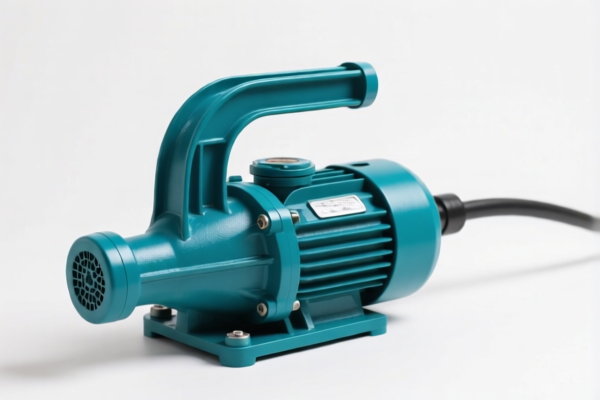
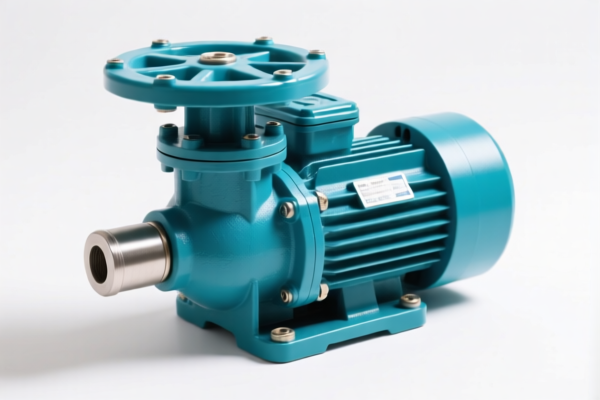
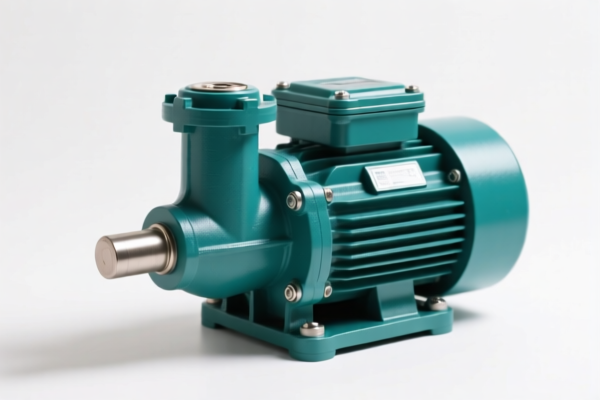
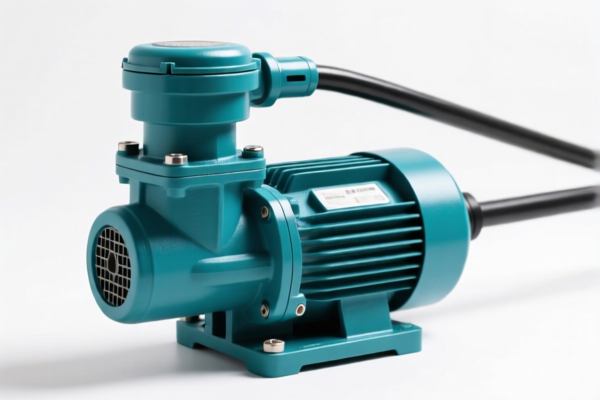
AI Analysis
🌀 Pumps for Liquids (Liquid Transfer & Pressure Devices)
🌐 HS Code Reference & Customs Clearance Guide | 2026 Latest Tariff Analysis | Professional Clearance Strategy
📌 I. Product Definition & Classification: Do You Really Understand "Pumps"?
In international trade, "Pumps for liquids" is a broad category covering devices that move, lift, or pressurize fluids. The correct classification depends heavily on the specific function (e.g., moving air vs. vacuum, handling liquids vs. gases) and the mechanism.
Liquid Pumps (8413 Series): Devices specifically designed to move liquid media. This is the most common category for water pumps, oil pumps, chemical pumps, etc.
Air/Vacuum Pumps (8414 Series): Devices designed to move air (fans, blowers) or create a vacuum. While sometimes confused, these are legally distinct from liquid pumps in the HTSUS.
⚠️ Key Distinction Point:
- If the device moves liquids (water, oil, chemicals) → Look to Chapter 8413.
- If the device moves air/gas or creates a vacuum → Look to Chapter 8414.
- Do not mix them up! Misclassifying a liquid pump as an air pump can lead to significant duty errors because the base tariffs differ.
📦 II. HS Code Classification Details (2026 Latest Tariff Authority Comparison)
Based on the provided data, here are the valid HS Codes for "Pumps for liquids" and related devices, with their tax implications.
| HS Code | Product Description | Core Function Match | Material/Form Conflict | Total Tax Rate (CN Origin) |
|---|---|---|---|---|
8413.20.00.00 |
Liquid Pumps (General) | High: Direct match for liquid transfer | None | 35.0% |
8413.81.00.30 |
Liquid Lifters / Specialized Liquid Pumps | High: Core function matches liquid lifting/pumping | None | 35.0% |
8414.20.00.00 |
Air Pumps / Blowers | Moderate: Moves fluid, but air, not liquid | None | 38.7% |
8414.10.00.00 |
Vacuum Pumps | Moderate: Upper-level category inclusion, no conflict | None | 37.5% |
8413.20.00.00 |
Liquid Pumps (General/Default) | High: No obvious conflict, default fallback | None | 35.0% |
🔍 Critical Reminder:
-8413codes are for liquid pumps.
-8414codes are for air/gas pumps or vacuums.
- Even though all are "pumps," the HTSUS separates them by the state of matter they move. A "liquid pump" misclassified as an "air pump" (8414) will incur a higher base tariff (3.7% vs 0%).
💰 III. 2026 Latest Tariff Rate Breakdown (Including Surtaxes & Policy Add-ons)
✅ Applicable Country: United States (US)
✅ Origin: China (CN)
✅ Effective Date: Post-2025 (Includes 301 Tariffs & IEEPA Section 172/122 Clauses)
🎯 1. 8413.20.00.00 & 8413.81.00.30 —— Liquid Pumps
These codes share the same tax structure. They are the standard choices for water, oil, and chemical transfer pumps.
| Item | Detail |
|---|---|
| Base Tariff (MFN) | 0.0% (Ad Valorem) |
| Section 301 Surtax | +25.0% |
| Section 122 Tariff (122 Clause) | +10.0% |
| Total Effective Rate | 35.0% |
| Tax Calculation | CIF Value × 35% |
| De Minimis Exemption | ❌ Not Applicable (Denied) |
| Legal Authority Path | 301 Tariff → Section 122 → USITC:8413.20.00.00 |
📌 Explanation:
- Base Tariff is 0%: This is favorable for liquid pumps compared to air pumps.
- Total 35%: The combination of the 25% Section 301 tariff and the 10% Section 122 tariff results in a high cumulative duty.
- Why 122 Clause?: Recent trade actions have imposed additional tariffs on specific Chinese manufacturing inputs, including certain pumps.
🎯 2. 8414.20.00.00 —— Air Pumps / Blowers
If your "pump" is actually designed to move air (e.g., tire inflators, HVAC blowers), it falls here. Note the higher base rate.
| Item | Detail |
|---|---|
| Base Tariff (MFN) | 3.7% (Ad Valorem) |
| Section 301 Surtax | +25.0% |
| Section 122 Tariff (122 Clause) | +10.0% |
| Total Effective Rate | 38.7% |
| Tax Calculation | CIF Value × 38.7% |
| De Minimis Exemption | ❌ Not Applicable |
| Legal Authority Path | 301 Tariff → Section 122 → USITC:8414.20.00.00 |
📌 Warning:
- Even though it's an "air pump," if you are exporting a liquid pump, do not use this code.
- Using8414for a liquid pump is a classification error that may trigger customs audits or penalties.
🎯 3. 8414.10.00.00 —— Vacuum Pumps
Vacuum pumps are functionally related but classified separately. They are often considered an "upper-level" category in functional descriptions but have their own HTSUS line.
| Item | Detail |
|---|---|
| Base Tariff (MFN) | 2.5% (Ad Valorem) |
| Section 301 Surtax | +25.0% |
| Section 122 Tariff (122 Clause) | +10.0% |
| Total Effective Rate | 37.5% |
| Tax Calculation | CIF Value × 37.5% |
| De Minimis Exemption | ❌ Not Applicable |
| Legal Authority Path | 301 Tariff → Section 122 → USITC:8414.10.00.00 |
📌 Note:
- Vacuum pumps have a higher base tariff (2.5%) than liquid pumps (0%), making them slightly more expensive in duty burden.
- Ensure the product is truly a vacuum pump (creating negative pressure) and not a liquid transfer pump.
🛠️ IV. Customs Clearance Practical Advice (Avoid Pitfalls)
✅ 1. Required Documentation Checklist
| Document | Required? | Description |
|---|---|---|
| ✅ Product Specification Sheet | ✔️ | Must state: Fluid type (liquid/gas), Flow rate, Pressure, Power, Voltage. |
| ✅ Technical Drawing / Schematic | ✔️ | To distinguish between liquid pump (8413) and air/vacuum pump (8414). |
| ✅ Product Photos | ✔️ | Clear images of nameplate, ports, and internal components if possible. |
| ✅ Commercial Invoice | ✔️ | Must describe goods as "Liquid Pump" or "Vacuum Pump," not just "Pump." |
| ✅ Packing List | ✔️ | Details of contents to prove it's a single unit if sold as a kit. |
✅ 2. Declaration Tips (Golden Rules)
🔥 "Define the Medium: Liquid = 8413, Air/Vacuum = 8414. Be Precise!"
| Scenario | Correct HS Code | Common Mistake | Consequence |
|---|---|---|---|
| Water Pump / Oil Pump | 8413.20.00.00 |
Misclassified as Air Pump | Overpaying 3.7% base duty + potential penalties |
| Vacuum Pump for Packaging | 8414.10.00.00 |
Misclassified as Liquid Pump | Underpaying base duty; customs will assess back taxes |
| Blower / Fan | 8414.20.00.00 |
Misclassified as Liquid Pump | Underpaying base duty; audit risk |
| Generic "Pump" in Description | ❌ Avoid | Vague description | Customs Holds, delays, and mandatory reclassification |
✅ 3. Special Cases
| Case | Handling Advice |
|---|---|
| Multi-purpose Pump | If it can handle both liquid and gas, declare based on primary intended use. Provide evidence (manuals, marketing). |
| Pump Kits | If sold with hoses/mounts, declare as a single unit under the pump's HS Code. Do not split. |
| Parts Only | If only importing impellers or casings, classification may change (e.g., 8413.91). Ensure "complete pump" status. |
🌍 V. Global Market Clearance Comparison (2026 Latest)
| Country/Region | Recommended HS Code | Tariff (China Origin) | Certification | Remarks |
|---|---|---|---|---|
| 🇺🇸 USA | 8413.20.00.00 |
35.0% (Liquid) | FCC/UL (if electric) | High surtax due to 301 & 122 |
| 🇨🇳 China | 8413.20.00.00 |
~8-10% | CCC | No US-style surtaxes |
| 🇪🇺 EU | 8413.70 (Typical) |
0-2.7% | CE | No Section 301/122 |
| 🇬🇧 UK | 8413.70 |
0-2.7% | UKCA | Post-Brexit alignment with EU |
| 🇯🇵 Japan | 8413.20 |
0-3.5% | PSE | No additional surtaxes |
📌 Conclusion:
- The USA imposes the highest duty burden on Chinese-manufactured pumps due to Section 301 (25%) and Section 122 (10%).
- Liquid pumps (8413) have a 0% base tariff, making them slightly more competitive than air pumps (8414, 3.7% base).
- Always prioritize accurate functional description to avoid misclassification penalties.
📌 VI. Common Errors & Pitfall Guide (Lessons Learned)
❌ Mistake 1: Describing all pumps as "Pump" without specifying "Liquid" or "Air."
👉 Result: Customs may default to the highest duty code or hold the shipment for further review.
❌ Mistake 2: Using 8414 for a liquid pump to avoid the 25% tariff.
👉 Result: Both 8413 and 8414 are subject to the 25% Section 301 tariff. This is a fraud risk.
❌ Mistake 3: Ignoring the "122 Clause" tariff.
👉 Result: The 10% surtax applies to both 8413 and 8414 categories for Chinese goods. Budget accordingly.
❌ Mistake 4: Treating vacuum pumps as liquid pumps.
👉 Result: Vacuum pumps have a 2.5% base tariff vs. 0% for liquid pumps. Misclassification leads to underpayment and back taxes.
✅ Correct Practice:
"Air Compressor, Liquid Transfer Pump, Vacuum Pump for Packaging"
Use specific, functional descriptions in the commercial invoice and shipping documents.
🎯 VII. Conclusion: Precise Classification Saves Money!
🎯 Remember the Mantra:
🔹 "Liquid goes to 8413 (0% base). Air/Vacuum goes to 8414 (2.5-3.7% base). Both get 25% + 10% surtax."
🔹 "35% Total for Liquids, 37.5-38.7% for Air/Vacuum. Don't guess, classify right!"
📌 Pro Tip:
If your pumps are assembled in Vietnam, Mexico, or Malaysia, you may qualify for exemptions from US surtaxes (check specific rules of origin).
Recommend applying for an Advance Ruling (Harbor Maintenance Trust / CBP Ruling) to confirm the HS Code before shipment.
📣 Immediate Action:
📞 Contact a licensed customs broker + Provide technical specs + Verify origin country.
🚀 Ensure your pumps clear US customs smoothly, minimize duty costs, and maximize profit margins!
✨ Professional clearance starts with accurate classification!
💼 Every cent in duty is a cent of profit lost. Calculate precisely!
Customer Reviews
About HS Code Classification
The Harmonized System (HS) is an internationally standardized nomenclature developed by the World Customs Organization (WCO) to classify traded products. Over 200 countries use the HS system as the basis for customs tariffs, trade statistics, and import/export regulations.
Each HS code follows a hierarchical structure:
- Chapter (2 digits) — Broad category of goods (e.g., Chapter 84: Machinery and Mechanical Appliances)
- Heading (4 digits) — More specific grouping within the chapter
- Subheading (6 digits) — Internationally standardized breakdown, used by all WCO member countries
- National subdivisions (8-10 digits) — Country-specific extensions for further classification, such as US HTSUS 10-digit codes
Correct HS code classification is essential for smooth customs clearance, accurate duty payment, and compliance with trade regulations. Misclassification can lead to customs delays, overpayment of duties, or penalties.
When importing from CN to US, the applicable tariff rates may include:
- Most-Favored-Nation (MFN) rate — The standard duty rate applied to WTO members
- General rate — Applied to countries without trade agreements
- Trade remedy duties — Additional tariffs such as Section 301 (anti-dumping), Section 232 (national security), or countervailing duties
The information provided on this page is for reference purposes only. For official classification, please consult with your local customs authority or a licensed customs broker.