Punch Card Test Paper
CN → US| HS Code | Tariff Rate | Origin | Destination | Doc |
|---|---|---|---|---|
| 4814900200 | 17.5% | CN | US | Official Doc |
| 4823903100 | 35.0% | CN | US | Official Doc |
| 4823906700 | 35.0% | CN | US | Official Doc |
| 4811904090 | 35.0% | CN | US | Official Doc |
| 4811906090 | 35.0% | CN | US | Official Doc |
Product Images
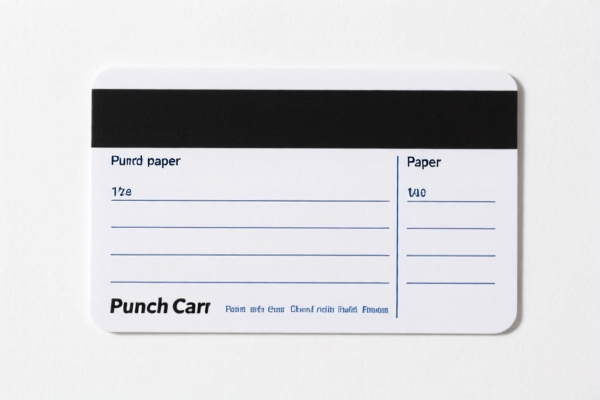
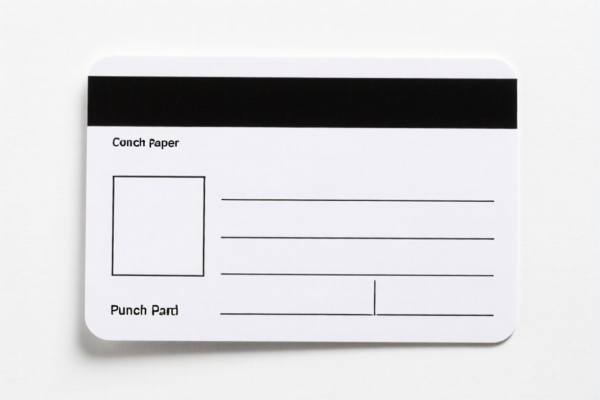
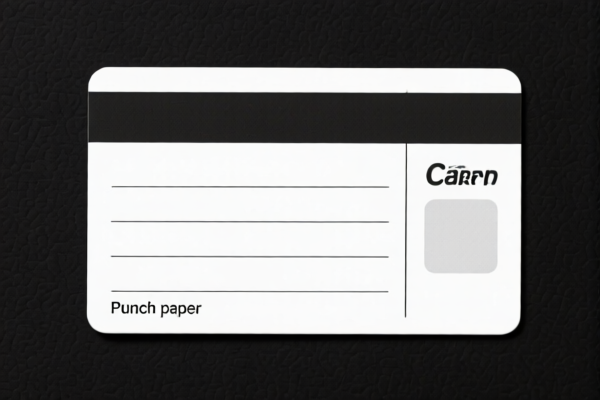
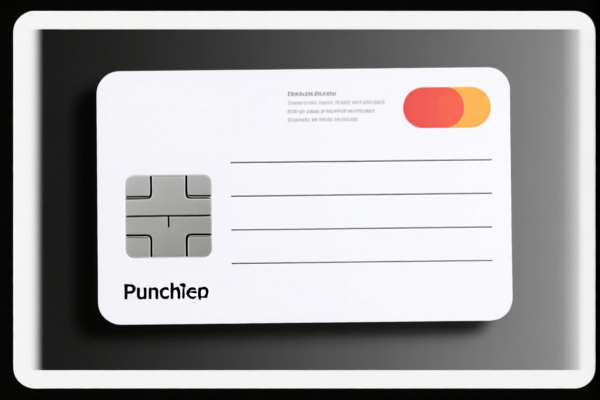
AI Analysis
🖨️ Punch Card Test Paper (Punched Card Stock)
🌐 HS Code Reference & Customs Clearance Guide | 2026 Latest Tariff Analysis | Professional Clearance Strategy
📌 I. Product Definition & Classification: Do You Truly Understand "Punch Card Test Paper"?
Punch Card Test Paper, often referred to as "Punch Card Stock" or "Coding Paper," is a specialized paper product used primarily for coding, sorting, or testing purposes in data processing, accounting, or manufacturing environments. In international trade, its classification hinges heavily on two factors: 1. Material Composition: Is it standard paper, coated paper, or made from specific fibers (like cotton)? 2. State/Form: Is it rolled, sheeted, or pre-punched?
⚠️ Key Distinction Point:
- If the material is standard wood-pulp paper and not coated → It typically falls under general paper categories (e.g., 4811 or 4814).
- If the material is coated, treated, or made from cotton/rag → It may fall under 4823 (Other paper, paperboard, cellulose wads and webs) or specific coated paper subheads (e.g., 4811 or 4823).
- "Roll" vs. "Sheet": The summary explicitly mentions "Roll" (卷), which influences the classification toward rolled goods or specific paper formats.
📦 II. HS Code Classification Details (2026 Latest Tariff Authority Mapping)
Based on the provided data, here are the matched HS Codes, their justifications, and associated tax rates. Note that all listed items involve significant additional tariffs for Chinese-origin goods entering the US market.
| HS Code | Product Description & Justification | Total Tax Rate | Tax Detail Breakdown |
|---|---|---|---|
4814.90.02.00 |
Paper Window Panes / Paper Coverings 🔹 Justification: The product name contains "Paper" (纸), matching the material attribute of paper-based window liners or transparent sheets. The form "Roll" (卷) is a common shape for paper coverings. It is inferred as a "Other" category item under 4814. 🔸 Conflict Check: No material conflict. ✅ Best Fit For: Thin paper sheets/rolls used as liners or protective covers. |
17.5% | - Base Tariff: 0.0% - Additional Tariff (301): 7.5% - 122 Clause Tariff: 10% |
4823.90.31.00 |
Punch Cards / Paper Stock 🔹 Justification: Material inferred as cotton paper (cellulose fiber), form is rolled, and purpose matches "punched cards for punch machines." No material conflict. 🔸 Key Feature: Specifically mentions "Punch Card" (打孔卡) functionality. ✅ Best Fit For: Actual punch cards or paper stock intended for punch card machines. |
35.0% | - Base Tariff: 0.0% - Additional Tariff (301): 25.0% - 122 Clause Tariff: 10% |
4823.90.67.00 |
Other Paper/Cellulose Webs 🔹 Justification: Inferred material is cellulose fiber (cotton paper), form is "Roll." Fits under "Other paper, paperboard, cellulose wads, and webs of cellulose fibers" in coated paper/subheading contexts. No material conflict. ✅ Best Fit For: Generic cotton paper rolls if not specifically "punch cards" but other coated/processed paper. |
35.0% | - Base Tariff: 0.0% - Additional Tariff (301): 25.0% - 122 Clause Tariff: 10% |
4811.90.40.90 |
Other Coated/Processed Paper Rolls 🔹 Justification: Material "Cotton Paper" (棉纸) matches cellulose/class. Form "Roll" matches. Fits "Other paper products" under 4811 (paper treated, coated, etc.). ✅ Best Fit For: Treated or coated cotton paper rolls not otherwise specified. |
35.0% | - Base Tariff: 0.0% - Additional Tariff (301): 25.0% - 122 Clause Tariff: 10% |
4811.90.60.90 |
Other Coated Paper Rolls (Non-Toilet/Sanit) 🔹 Justification: Material "Cotton Paper" → Cellulose. Form "Roll." Fits coated/processed paper category. Excludes toilet/sanitary paper. ✅ Best Fit For: Coated paper rolls for industrial or office use. |
35.0% | - Base Tariff: 0.0% - Additional Tariff (301): 25.0% - 122 Clause Tariff: 10% |
🔍 Critical Observation:
- HS Code4814.90.02.00is significantly cheaper (17.5% total) compared to the others (35% total).
- This applies if the product can be argued as a "paper covering" or "transparent sheet" rather than "punch card stock" or "coated paper."
- However, if the product is explicitly used as Punch Cards (for data processing), Customs may scrutinize4823.90.31.00as the more accurate functional description, despite the higher tax.
💰 III. 2026 Latest Tariff Rate Detailed Explanation (Including Additional Duties & Policy Surcharges)
✅ Applicable Country: United States (US)
✅ Country of Origin: China (CN)
✅ Effective Date: From November 10, 2025 (and subsequent imports)
🎯 1. 4814.90.02.00 —— Paper Window Liners / Paper Coverings (Lowest Risk/Tax)
| Item | Content |
|---|---|
| Base Tariff | 0% (ad valorem) |
| USITC Additional Tariff (Section 301) | +7.5% |
| 122 Clause Tariff | +10% |
| Total Tariff | 17.5% |
| Tax Calculation | CIF Value × 17.5% |
| De Minimis Eligibility | ❌ No (deny_de_minimis) |
| Legal Basis Path | USITC:4814.90.02.00 → Section 301 Footnote → 122 Clause |
📌 Explanation:
- This is the most cost-effective classification for "paper rolls" if the product can be reasonably described as a "paper covering" or "liner" rather than a specialized "punch card."
- The 7.5% is the reduced Section 301 rate (from 25%) for certain paper products or specific exclusions, while the 122 Clause adds a mandatory 10%.
🎯 2. 4823.90.31.00 – 4823.90.67.00 – 4811.90.40.90 – 4811.90.60.90 —— Coated/Processed Paper & Punch Cards (Standard High Tax)
| Item | Content |
|---|---|
| Base Tariff | 0% |
| USITC Additional Tariff (Section 301) | +25% |
| 122 Clause Tariff | +10% |
| Total Tariff | 35.0% |
| Tax Calculation | CIF Value × 35.0% |
| De Minimis Eligibility | ❌ No (deny_de_minimis) |
| Legal Basis Path | USITC:4823.xxxx.xxxx or USITC:4811.xxxx.xxxx → Section 301 Standard Rate → 122 Clause |
📌 Explanation:
- These HS Codes fall under the standard 25% Section 301 tariff for Chinese-origin goods, plus the 122 Clause 10%.
-4823.90.31.00is highly specific to punch cards. If Customs determines your product is primarily used for punch card machines, this is the most legally accurate description, despite the higher cost.
-4811.xxxx.xxxxcodes are for coated/processed paper. If your "cotton paper" is coated or treated, these apply.
🛠️ IV. Customs Clearance Practical Advice (Real-World Pitfall Avoidance Guide)
✅ 1. Documentation Checklist (Non-Negotiable)
| Document | Required | Explanation |
|---|---|---|
| ✅ Product Specification Sheet | ✔️ | Must clearly state: Material (e.g., 100% Cotton, Wood Pulp), Dimensions, Roll Diameter, Thickness. |
| ✅ Usage Description | ✔️ | Explicitly state: "For coding/sorting," "Not for punch card machines," or "Used as paper liner." Crucial for distinguishing between 4814 (17.5%) and 4823 (35%). |
| ✅ Product Photos | ✔️ | Show the roll, label, and any perforations/punch holes. If no holes, emphasize "Unpunched Stock." |
| ✅ Commercial Invoice | ✔️ | Use precise English description: e.g., "Cotton Paper Rolls for Industrial Coding" instead of vague "Paper." |
| ✅ Bill of Lading | ✔️ | Ensure weight and package count match invoice. |
| ✅ Origin Certificate | ✔️ | Confirm CN origin to apply correct tariffs. |
✅ 2. Declaration Strategy (Key Mnemonics)
🔥 "Material First, Function Second; Describe as Cover, Not as Card!"
| Scenario | Recommended Declaration | Risk |
|---|---|---|
| Product is thin paper rolls, not pre-punched | 4814.90.02.00Desc: "Paper Rolls for Window Liner/Protection" |
✅ Low Risk, 17.5% Tax |
| Product is pre-punched cards for data machines | 4823.90.31.00Desc: "Punch Cards for Data Processing" |
⚠️ Higher Tax, 35% |
| Product is coated cotton paper rolls | 4811.90.60.90Desc: "Coated Cotton Paper Rolls" |
⚠️ Higher Tax, 35% |
| Product is generic paper rolls | 4814.90.02.00Desc: "Paper Rolls" |
✅ Lower Tax, 17.5% |
📌 Strategic Tip:
- If the product is not specifically designed for punch card machines (e.g., it's just plain paper rolls used for coding via manual marking), argue for4814.90.02.00by emphasizing its material and "roll" form as a "paper covering" or "general paper product."
- Avoid using the word "Punch Card" in the English description unless it is functionally and structurally a punch card. Use "Coding Paper," "Data Stock," or "Paper Rolls" instead.
✅ 3. Special Case Handling
| Situation | Advice |
|---|---|
| Cotton vs. Wood Pulp | If material is 100% cotton, Customs may lean toward 4823 or 4811. If it's mixed or wood pulp, 4814 is safer. |
| Pre-Punched vs. Blank Rolls | Pre-punched = High scrutiny for 4823.90.31.00. Blank rolls = Argue for 4814.90.02.00 as "unprocessed/semi-processed paper." |
| Coated Paper | If the paper has a coating (glossy, treated), it falls under 4811 (35%). Do not claim 4814 if it's coated. |
🌍 V. Global Market Comparison (2026 Latest)
| Country/Region | Recommended HS Code | Total Tariff (China Origin) | Notes |
|---|---|---|---|
| 🇺🇸 USA | 4814.90.02.00 |
17.5% | Best case scenario. |
| 🇺🇸 USA | 4823.90.31.00 |
35.0% | If classified as punch cards. |
| 🇨🇳 China | 4814.90.02.00 |
~10-13% | Import tariff + VAT. No 301/122. |
| 🇪🇺 EU | 4814.90.02.00 |
~6.5% | Standard paper tariff. No trade war tariffs. |
| 🇬🇧 UK | 4814.90.02.00 |
~5% | Post-Brexit standard rates. |
📌 Conclusion:
- The US market has a 17.5% vs. 35% tax split depending on precise classification.
- EU and UK do not impose Section 301 or 122 Clause tariffs, making export non-US markets significantly cheaper.
📌 VI. Common Mistakes & Pitfalls (Lessons Learned)
❌ Mistake 1: Using "Punch Card" in the description for blank paper rolls
👉 Consequence: Customs may reclassify as 4823.90.31.00 → 35% tax + penalties.
✅ Fix: Use "Coding Paper Rolls" or "Paper Stock for Manual Coding."
❌ Mistake 2: Ignoring the "122 Clause"
👉 Consequence: Even if base tax is 0%, the 10% 122 Clause applies to all Chinese paper goods.
✅ Fix: Always include 10% in cost calculations for US imports.
❌ Mistake 3: Misidentifying Material (Cotton vs. Wood)
👉 Consequence: Cotton paper may be classified under different subheadings than wood pulp, affecting which "Additional Tariff" applies.
✅ Fix: Provide lab test reports for fiber composition if requested.
✅ Correct Practice:
"Cotton Paper Rolls, 24" Width, Blank, for Industrial Coding/Sorting, Not for Punch Machine Use"
🎯 VII. Conclusion: Precision Classification Saves Money!
🎯 Key Takeaway:
🔹 "For US Imports: Argue for
4814.90.02.00(17.5%) by emphasizing 'Paper Roll/Covering' over 'Punch Card'."
🔹 "If it's truly a punch card, expect 35%. Do not fake the description."
🔹 "Always factor in the 10% 122 Clause Tariff."
📌 Pro Tip:
If you are exporting to the US, consider pre-classification rulings from CBP (Customs and Border Protection) for large volumes. This provides legal certainty on whether your "Punch Card Test Paper" qualifies for the lower 17.5% rate.
📣 Immediate Action:
📞 Consult with a licensed US Customs Broker.
📄 Submit a Binding Ruling Request to CBP with product images and specs.
🚀 Optimize your tax burden by getting the HS Code right from day one!
✨ Professional Classification, Smooth Clearance, Maximized Profit!
💼 Every Percentage Point Matters in Global Trade!
Customer Reviews
About HS Code Classification
The Harmonized System (HS) is an internationally standardized nomenclature developed by the World Customs Organization (WCO) to classify traded products. Over 200 countries use the HS system as the basis for customs tariffs, trade statistics, and import/export regulations.
Each HS code follows a hierarchical structure:
- Chapter (2 digits) — Broad category of goods (e.g., Chapter 84: Machinery and Mechanical Appliances)
- Heading (4 digits) — More specific grouping within the chapter
- Subheading (6 digits) — Internationally standardized breakdown, used by all WCO member countries
- National subdivisions (8-10 digits) — Country-specific extensions for further classification, such as US HTSUS 10-digit codes
Correct HS code classification is essential for smooth customs clearance, accurate duty payment, and compliance with trade regulations. Misclassification can lead to customs delays, overpayment of duties, or penalties.
When importing from CN to US, the applicable tariff rates may include:
- Most-Favored-Nation (MFN) rate — The standard duty rate applied to WTO members
- General rate — Applied to countries without trade agreements
- Trade remedy duties — Additional tariffs such as Section 301 (anti-dumping), Section 232 (national security), or countervailing duties
The information provided on this page is for reference purposes only. For official classification, please consult with your local customs authority or a licensed customs broker.