Punched Card Positioning Paper
CN → US| HS Code | Tariff Rate | Origin | Destination | Doc |
|---|---|---|---|---|
| 4823903100 | 35.0% | CN | US | Official Doc |
| 4823400000 | 35.0% | CN | US | Official Doc |
| 4821904000 | 35.0% | CN | US | Official Doc |
| 4821902000 | 35.0% | CN | US | Official Doc |
| 4811412100 | 35.0% | CN | US | Official Doc |
Product Images
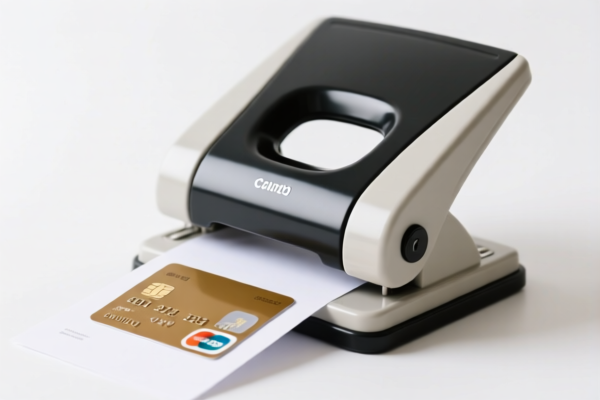
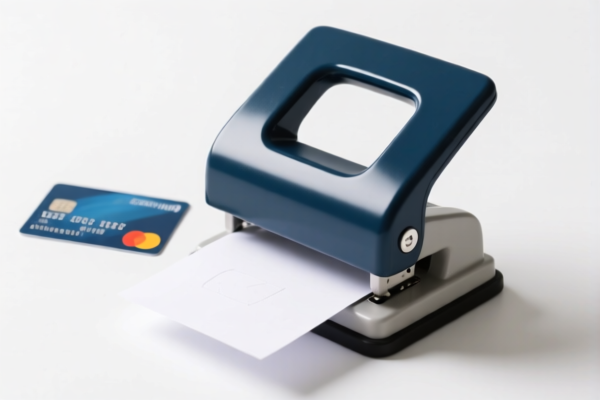
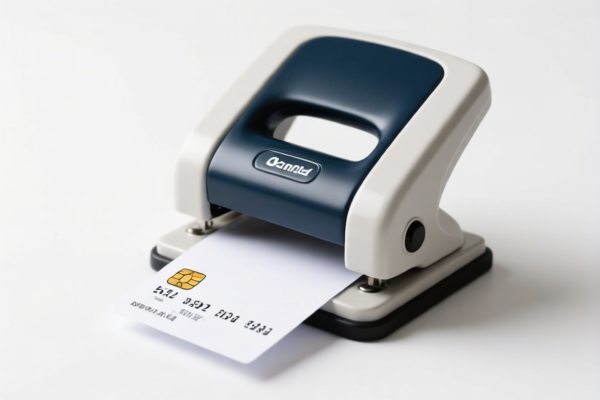
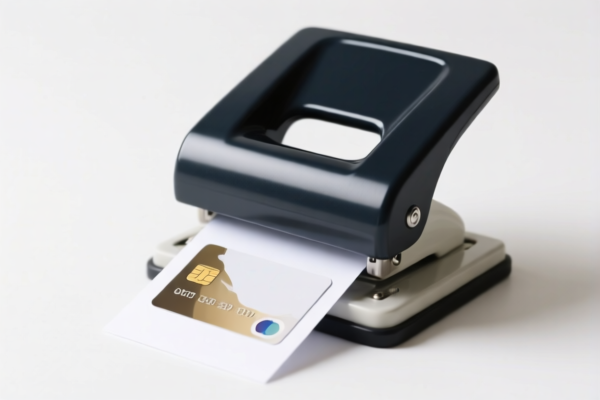
AI Analysis
🃏 Punched Card Positioning Paper (定位纸/打孔卡片)
🌐 HS Code Reference & Customs Clearance Guide | 2026 Latest Tariff Analysis | Strategic Compliance Strategy
📌 I. Product Definition & Classification: Do You Really Understand "Punched Card Positioning Paper"?
Punched Card Positioning Paper is a specialized paper product used primarily as a consumable for punch machines or as a guide/template for creating precise holes in cards, tickets, or other cardstock materials. In international trade, its classification depends heavily on its specific function and structural integrity.
It is generally categorized under Chapter 48 (Paper and Paperboard) because its core material is paper, but its specific subheading varies based on whether it serves as a simple label, a technical part of a punching mechanism, or a generic paper good.
⚠️ Key Distinction Point:
- If viewed as a tool/consumable for a machine (punching), it may fall under technical paper goods (4823).
- If viewed as a labeled/formatted sheet with punched holes, it may fall under printed paper goods (4821).
- If it has coated/adhesive properties for positioning, it may be classified as specialty paper (4811).
📦 II. HS Code Classification Details (2026 Latest Tariff Authority Comparison)
Based on the provided data, here are the five most probable HS Code classifications, ranked by logical match strength:
| HS Code | Product Description | Application Scenario | Matching Logic from Data |
|---|---|---|---|
4823.90.31.00 |
Paper articles other than those of heading 48.01 to 48.09; Punched cards / Punches | Consumables for punch machines; positioning guides | ✅ Best Match: Explicitly mentions "used for punch machines" and "positioning paper." |
4823.40.00.00 |
Paper, paperboard, cellulose wadding or webs of cellulose fibers, cut to size or shape (incl. patterns); Paper discs & leaves | Generic punched paper shapes; card-like forms | ✅ Strong Match: "Card" shape matches "discs/leaves"; no material conflict. |
4821.90.40.00 |
Artificial calibration paper, labels, etc. | Labeled cards; paper goods used as identifiers | ✅ Reasonable Inference: "Card" form fits "labels/paper goods"; categorized under "Other." |
4821.90.20.00 |
Labels; Paper/Board labels | Positioning sheets used as labels or carriers | ✅ Logical Match: "Paper" material fits; "Card/Positioning Paper" seen as a label carrier. |
4811.41.21.00 |
Paper coated with adhesive or decalcomania paper | Coated positioning paper; decorative/functional paper | ✅ Plausible: "Positioning" implies coating/adhesive properties; fits coated paper logic. |
🔍 Critical Reminder:
- The term "Punched Card" in HS terminology historically referred to data storage (Ch 85), but modern "Positioning Paper" for mechanical punching is a Paper Good (Ch 48).
- Do NOT confuse with electronic punched cards (obsolete) or plastic punch cards. This is Paper.
- Customs may challenge the classification if the product is merely "paper with holes" without a specific industrial function.
💰 III. 2026 Latest Tariff Rate Details (Including Surcharges & Policy Add-ons)
✅ Applicable Country: United States (US)
✅ Country of Origin: China (CN)
✅ Effective Date: From November 10, 2025 (and subsequent imports)
🎯 1. All Listed HS Codes (4823.90.31.00, 4823.40.00.00, 4821.90.40.00, 4821.90.20.00, 4811.41.21.00)
All five HS Codes provided share the same tariff structure according to the data:
| Item | Content |
|---|---|
| Base Tariff Rate | 0% (ad valorem) |
| USITC Additional Tariff (Section 301) | +25% (Footnote 9903.88.01 / Section 301 List 4) |
| IEEPA Additional Tariff | +10% (Targeting China/HK products, effective Nov 10, 2025) |
| Total Tariff Rate | 35.0% |
| Tax Calculation | CIF Value × 35% |
| De Minimis Exemption Eligibility | ❌ NOT Eligible (deny_de_minimis) |
| Legal Basis Path | IEEPA:9903.01.25 → IEEPA:9903.01.24 → USITC: [Specific HS Code] → FOOTNOTE:9903.88.01 |
📌 Explanation:
- "USITC Additional Tariff 25%": Imposed under Section 301 of the Trade Act of 1974 against Chinese goods.
- "IEEPA 10%": Additional tariff under the International Emergency Economic Powers Act targeting specific Chinese imports.
- Combined 35%: This is a high tariff for a simple paper product. Importers must factor this into cost calculations.
- No De Minimis: Values below $800 cannot be exempted from these tariffs. Full duty applies from the first item.
🛠️ IV. Customs Clearance Practical Advice (Real-World Pitfall Avoidance Guide)
✅ 1. Required Documentation Checklist (Mandatory)
| Document | Required | Explanation |
|---|---|---|
| ✅ Product Specification Sheet | ✔️ | Must define material (paper type), dimensions, hole patterns, and intended use (e.g., "for industrial punch machine"). |
| ✅ Product Photos (Clear) | ✔️ | Show the "positioning" feature, holes, and any text/printing. Distinguish between blank paper and pre-printed cards. |
| ✅ Commercial Invoice | ✔️ | Clearly state: "Punched Card Positioning Paper, Paper Material, for Use in Punching Machines." Avoid vague terms like "Gift Card." |
| ✅ Packing List | ✔️ | Detail weight, quantity, and packaging to prevent volume/weight discrepancies. |
| ✅ Origin Certificate (CO) | ✔️ | Required to confirm China origin for tariff calculation. |
✅ 2. Declaration Tips (Key Mnemonics)
🔥 "Paper Material, Machine Use, Declare 4823, Avoid 4821 Dispute!"
| Scenario | Correct Declaration | Wrong Practice |
|---|---|---|
| Used as a consumable/tool for a punch machine | 4823.90.31.00 |
Misdeclare as "Paper Sheets" → Risk of audit |
| Generic punched paper sheets with no specific function | 4823.40.00.00 |
Misdeclare as "Labels" → Discrepancy in purpose |
| Pre-printed labeled cards for identification | 4821.90.40.00 |
Misdeclare as "Mechanical Parts" → Incorrect Chapter |
| Coated/adhesive positioning paper | 4811.41.21.00 |
Misdeclare as plain paper → Missing coating disclosure |
📌 Advice:
- Emphasize the "Positioning" and "Punching" function in the description.
- If the product is merely "paper with holes," 4823.40.00.00 is safer.
- If it is a template for punching, 4823.90.31.00 is most accurate.
✅ 3. Special Case Handling
| Situation | Handling Suggestion |
|---|---|
| OEM Custom Positioning Paper | Provide client design files; prove it's a custom industrial consumable, not a general retail product. |
| Packaged with Punch Machine | If sold as an accessory, it may be classified under the machine (Ch 84), but standalone, it's Ch 48. Declare separately. |
| Non-Paper Materials? | If the "card" is plastic or PVC, HS Codes above are WRONG. It would fall under Ch 39 (Plastics). Confirm material! |
| Small Quantity Samples | Still subject to 35% tariff. No de minimis exemption. Budget accordingly. |
🌍 V. Global Market Comparison (2026 Latest)
| Country/Region | Recommended HS Code | Tariff Rate | Certification/Note |
|---|---|---|---|
| 🇺🇸 USA | 4823.90.31.00 |
35% (China Origin) | Section 301 + IEEPA apply. No de minimis. |
| 🇨🇳 China | 4823.90.31.00 |
0% - 5% (Import Duty) | No additional surcharges for domestic use. |
| 🇪🇺 EU | 4823.90.31.00 |
0% (MFN) | CE marking not required for paper. |
| 🇬🇧 UK | 4823.90.31.00 |
0% - 2% | Post-Brexit rules apply; check UK Tariff. |
| 🇦🇺 Australia | 4823.90.31.00 |
5% | No major surcharges. |
📌 Conclusion:
- USA is the only major market imposing significant surcharges (35%) on these paper goods from China.
- EU, UK, and Australia offer much more favorable rates (0-5%), making them potentially more cost-effective markets for these products.
- China Origin triggers the 35% duty in the US regardless of the specific subheading within the provided list.
📌 VI. Common Errors & Pitfall Guide (Lessons from Blood & Tears)
❌ Error 1: Declaring as "Plastic Cards" or "PVC Cards" when it's Paper
👉 Consequence: Misclassification → HS Code should be Ch 39, not Ch 48 → Penalty + Back Tax.
❌ Error 2: Claiming "De Minimis" for small shipments to the US
👉 Consequence: 35% tariff applies to every unit. No $800 exemption. Unexpected high cost.
❌ Error 3: Vague description: "Paper Cards"
👉 Consequence: Customs uncertainty → Delayed clearance → Storage fees & Demurrage.
❌ Error 4: Ignoring the "Positioning" Function
👉 Consequence: May be classified as generic paper (4823.40.00.00) but lack functional proof → Audit Risk.
✅ Correct Declaration Example:
"Punched Card Positioning Paper, Paper Material, Used as Template for Industrial Punching Machines, Non-Adhesive, Size: 10x10cm, Model: POS-PAP-01"
🎯 VII. Conclusion: Precise Classification Saves Money!
🎯 Remember the Mnemonic:
🔹 "Paper Material, Machine Tool, 35% Tariff, No Exemption, Declare Function Clear!"
🔹 "US Market: 35% Pain, EU/UK Market: 0% Gain, Shift Strategy If Needed!"
📌 Pro Tip:
If you are importing into the USA, consider:
1. Value Engineering: Can you reduce packaging weight to lower CIF value?
2. Alternative Origin: Source positioning paper from Vietnam or Thailand (check Rules of Origin) to potentially avoid Section 301 tariffs (though IEEPA may still apply).
3. Advance Ruling: Apply for an ISF (Importer Security Filing) and consider a Pre-Ruling from CBP to confirm the correct HS Code among the 4823/4821 options.
📣 Immediate Action Required:
📞 Contact a professional customs broker
📤 Provide product photos + specification sheet
🚀 Avoid 35% Surprise Tariffs, Ensure Smooth Clearance!
✨ Professional Clearance Starts with Accurate Classification!
💼 Every Percent Saved is Pure Profit!
Customer Reviews
About HS Code Classification
The Harmonized System (HS) is an internationally standardized nomenclature developed by the World Customs Organization (WCO) to classify traded products. Over 200 countries use the HS system as the basis for customs tariffs, trade statistics, and import/export regulations.
Each HS code follows a hierarchical structure:
- Chapter (2 digits) — Broad category of goods (e.g., Chapter 84: Machinery and Mechanical Appliances)
- Heading (4 digits) — More specific grouping within the chapter
- Subheading (6 digits) — Internationally standardized breakdown, used by all WCO member countries
- National subdivisions (8-10 digits) — Country-specific extensions for further classification, such as US HTSUS 10-digit codes
Correct HS code classification is essential for smooth customs clearance, accurate duty payment, and compliance with trade regulations. Misclassification can lead to customs delays, overpayment of duties, or penalties.
When importing from CN to US, the applicable tariff rates may include:
- Most-Favored-Nation (MFN) rate — The standard duty rate applied to WTO members
- General rate — Applied to countries without trade agreements
- Trade remedy duties — Additional tariffs such as Section 301 (anti-dumping), Section 232 (national security), or countervailing duties
The information provided on this page is for reference purposes only. For official classification, please consult with your local customs authority or a licensed customs broker.