Puncture proof inner liner for rubber tires
CN → US| HS Code | Tariff Rate | Origin | Destination | Doc |
|---|---|---|---|---|
| 4013905010 | 38.7% | CN | US | Official Doc |
| 4016996010 | 37.5% | CN | US | Official Doc |
| 4013905050 | 38.7% | CN | US | Official Doc |
| 4016996050 | 37.5% | CN | US | Official Doc |
| 4012909000 | 37.7% | CN | US | Official Doc |
Product Images
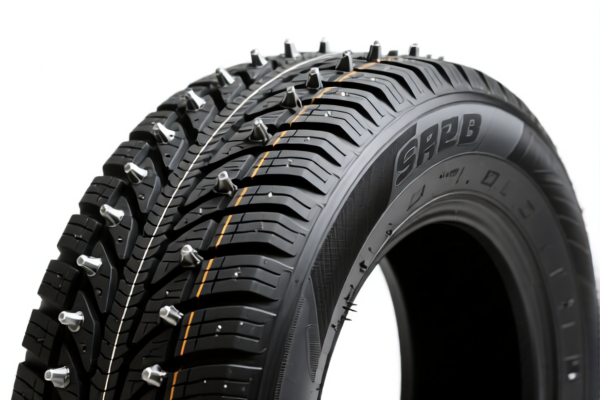
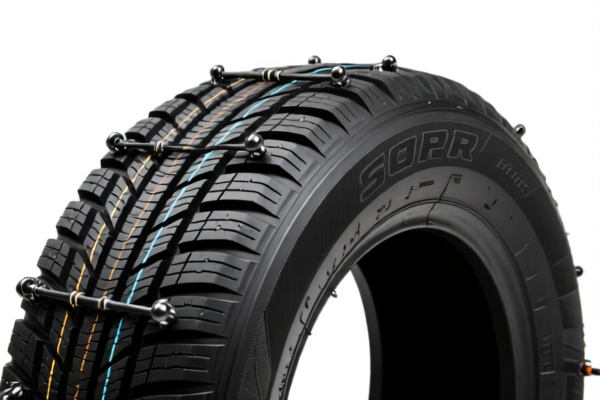
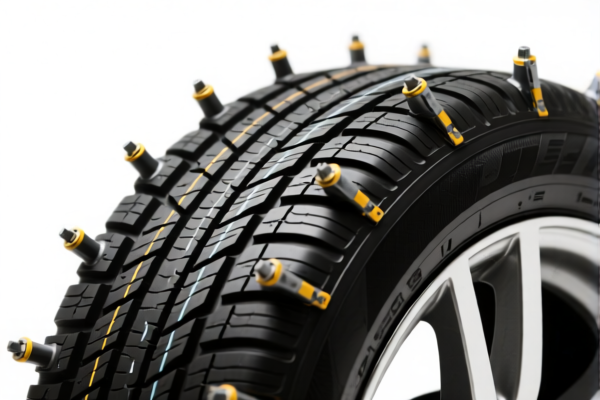
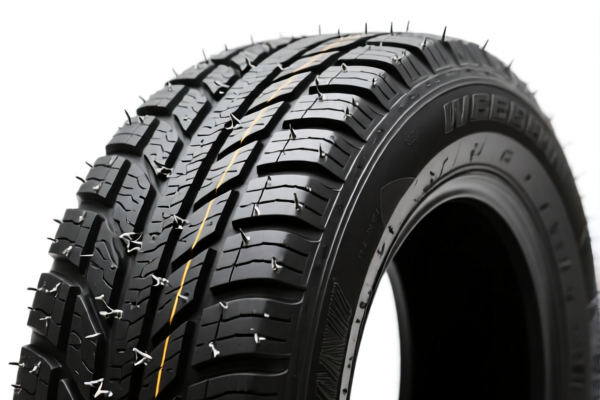
AI Analysis
🛞 Puncture Proof Inner Liner for Rubber Tires
🌐 HS Code Reference & Customs Clearance Guide | 2026 Latest Tariff Analysis | Professional Entry Strategy
📌 I. Product Definition & Classification: Do You Truly Understand the "Puncture Proof Inner Liner"?
The Puncture Proof Inner Liner is a critical safety component designed to prevent air loss in rubber tires caused by punctures (nails, glass, sharp debris). In international trade, its classification depends heavily on its material composition, state of vulcanization, and functional role within the tire system.
It is generally categorized under Chapter 40 (Rubber and Articles Thereof). The key distinction lies in whether it is classified as a part of an inner tube (Ch 4013) or as a general vulcanized rubber article (Ch 4016/4012).
⚠️ Key Distinction Point:
- If the product is considered an auxiliary/attached part of an inner tube or specifically for tire casing replacement → 4013 or 4012
- If the product is a general vulcanized rubber sheet/liner used as a protective layer → 4016
- Note: All entries below apply to Chinese Origin (CN) imports into the USA (US), reflecting the highest current tariff burden due to Section 301 and IEEPA measures.
📦 II. HS Code Classification Details (2026 Latest Tariff Authority Reference)
| HS Code | Product Description | Applicable Scenario | Tax Rate Breakdown |
|---|---|---|---|
4013.90.50.10 |
Puncture-proof inner liner, rubber material, in the form of a liner, for tire accessories | Considered a specific tire accessory/part | 38.7% |
4016.99.60.10 |
Puncture-proof inner liner, vulcanized rubber material, in the form of a liner, for tire accessories | Classified as other vulcanized rubber articles | 37.5% |
4013.90.50.50 |
Puncture-proof inner liner, rubber material, inner liner form, belongs to auxiliary/attached parts of inner tubes | Treated as an inner tube accessory | 38.7% |
4016.99.60.50 |
Puncture-proof inner liner, rubber material, inner liner form, belongs to other vulcanized rubber articles | Classified as general vulcanized rubber goods | 37.5% |
4012.90.90.00 |
Puncture-proof inner liner, rubber material, inner liner form, belongs to other tire treads and sidewalls | Classified under tire treads/sidewalls category | 37.7% |
🔍 Important Reminder:
- 4013 codes generally apply when the item is viewed as an integral part of the tire assembly (like an inner tube part).
- 4016 codes apply when viewed as a standalone vulcanized rubber product.
- 4012 is a less common but possible classification if deemed a replacement tread-like structure.
- All rates include US Base Duty + 25% Section 301 Tariff + 10% IEEPA Additional Duty.
💰 III. 2026 Latest Tariff Rate Explanation (Including Surcharges & Policy Add-ons)
✅ Applicable Country: United States (US)
✅ Origin: China (CN)
✅ Effective Date: From November 10, 2025 (including subsequent imports)
🎯 1. 4013.90.50.10 & 4013.90.50.50 —— Rubber Tire Parts (Inner Tube Accessories)
| Item | Content |
|---|---|
| Base Duty Rate | 3.7% (ad valorem) |
| Section 301 Surcharge (USITC) | +25.0% (Due to Trade Enhancing Act Section 301) |
| IEEPA Additional Duty | +10.0% (Targeting Chinese/HH Products, effective Nov 2025) |
| Total Effective Tax Rate | 38.7% |
| Tax Calculation | CIF Value × 38.7% |
| De Minimis Exemption Eligible? | ❌ No (deny_de_minimis) |
| Legal Basis Path | IEEPA:9903.01.25 → USITC:4013.90.50.10/50.50 → FOOTNOTE:301 |
📌 Explanation:
- The Base Duty of 3.7% is the standard MFN rate for rubber tire parts.
- The 25% Section 301 tariff is the primary punitive duty on Chinese rubber goods.
- The 10% IEEPA duty is an additional layer applied to specific Chinese-origin items.
- Total 38.7% makes this a high-cost import, significantly impacting profit margins.
🎯 2. 4016.99.60.10 & 4016.99.60.50 —— Other Vulcanized Rubber Articles
| Item | Content |
|---|---|
| Base Duty Rate | 2.5% (ad valorem) |
| Section 301 Surcharge (USITC) | +25.0% |
| IEEPA Additional Duty | +10.0% |
| Total Effective Tax Rate | 37.5% |
| Tax Calculation | CIF Value × 37.5% |
| De Minimis Exemption Eligible? | ❌ No (deny_de_minimis) |
| Legal Basis Path | IEEPA:9903.01.25 → USITC:4016.99.60.10/50 → FOOTNOTE:301 |
📌 Note:
- These codes fall under "Other articles of vulcanized rubber other than hard rubber."
- Although the base duty is lower (2.5% vs 3.7%), the surcharges remain the same, resulting in a 37.5% total rate.
- This is the lowest possible tax rate among the listed options.
🎯 3. 4012.90.90.00 —— Other Tire Treads and Sidewalls
| Item | Content |
|---|---|
| Base Duty Rate | 2.7% (ad valorem) |
| Section 301 Surcharge (USITC) | +25.0% |
| IEEPA Additional Duty | +10.0% |
| Total Effective Tax Rate | 37.7% |
| Tax Calculation | CIF Value × 37.7% |
| De Minimis Exemption Eligible? | ❌ No (deny_de_minimis) |
| Legal Basis Path | IEEPA:9903.01.25 → USITC:4012.90.90.00 → FOOTNOTE:301 |
📌 Note:
- If customs authorities view the puncture liner as a "replacement tread" or structural tire component, this code may apply.
- Total rate is 37.7%, sandwiched between the 4013 and 4016 options.
🛠️ IV. Customs Clearance Practical Advice (Real-World Pitfall Avoidance)
✅ 1. Required Documentation Checklist (Non-Negotiable)
| Document | Mandatory? | Explanation |
|---|---|---|
| ✅ Product Specification Sheet | ✔️ | Must detail: Material (Vulcanized Rubber), Dimensions, Thickness, Puncture Resistance Rating (e.g., ASTM standards) |
| ✅ Material Composition Report | ✔️ | Confirm 100% rubber or compound ratio to justify Chapter 40 classification |
| ✅ Product Photos (Clear & Detailed) | ✔️ | Show installation method, label, and cross-section if possible |
| ✅ Commercial Invoice | ✔️ | Clearly state: "Puncture Proof Inner Liner for Rubber Tires" |
| ✅ Packing List | ✔️ | Indicate net/gross weight; ensure no mixed shipments with non-rubber items |
| ✅ Certificate of Origin (CO) | ✔️ | Required to confirm CN origin (triggers tariffs) |
| ✅ Test Report (Optional but Recommended) | ✔️ | Third-party lab report on puncture resistance and vulcanization status |
✅ 2. Declaration Tips (Key Mantra)
🔥 "Material First, Function Second, Name Precise, Tax Avoided!"
| Scenario | Correct Declaration | Wrong Practice |
|---|---|---|
| Vulcanized Rubber Liner | Use 4016.99.60.10 (Lowest rate: 37.5%) | Misdeclare as "Plastic Mat" → Rejection & Penalty |
| Inner Tube Accessory | Use 4013.90.50.10 (Rate: 38.7%) | Claim it's a "Part of Tire" (4011) → Incorrect Chapter |
| Mixed Shipment | Separate rubber liners from steel wires | Mix components → Customs may assess highest rate for all |
| OEM Custom Liners | Provide Client Design Specs | Generic "Rubber Sheet" → High scrutiny & delays |
✅ 3. Special Handling Cases
| Case | Handling Advice |
|---|---|
| High-End Smart Liners | If embedded with sensors/electronics, do NOT use Chapter 40. Re-classify under 8537/8542 (Electrical/Control) to potentially avoid 25% Section 301 if applicable, but ensure no rubber dominance overrides. |
| Pre-Cut vs. Roll Form | Pre-cut liners for specific tire sizes are more likely to be seen as "Parts" (4013). Rolls are more likely "Other Rubber Articles" (4016). Choose 4016 for lower tax if feasible. |
| Return/Replacement Goods | If returned due to defect, apply for MAWB (Returned Goods) relief to avoid re-tariffing. |
🌍 V. Global Market Comparison (2026 Latest)
| Country/Region | Recommended HS Code | Tariff (China Origin) | Certification Requirements | Notes |
|---|---|---|---|---|
| 🇺🇸 USA | 4016.99.60.10 |
37.5% | No specific mandatory cert, but ASTM F1816 recommended | Highest total rate due to Section 301 + IEEPA |
| 🇨🇳 China | 4016.99.60.10 |
2.5% | CCC (if for safety-critical auto parts) | No extra surcharges |
| 🇪🇺 EU | 4016.99.60.10 |
0% (if EORI compliant) | CE (if automotive component), RoHS | No Section 301 equivalent, but anti-dumping checks may occur |
| 🇯🇵 Japan | 4016.99.60.10 |
3.0% | JIS Standards | Moderate duty, no major surcharges |
📌 Conclusion:
- USA is the most expensive market for these goods due to the 37.5%-38.7% effective rate.
- EU and Japan are significantly cheaper, making them more competitive markets for Chinese rubber goods.
- Strategy: For US imports, optimize HS Code to 4016.99.60.10 to save 1.2% per unit compared to 4013 codes.
📌 VI. Common Mistakes & Pitfalls (Lessons Learned)
❌ Mistake 1: Declaring as "Plastic Tire Insert"
👉 Consequence: Misclassification under Chapter 39 → Penalty + Retreatment at 25-30% + Back Taxes!
❌ Mistake 2: Ignoring IEEPA 10% Surcharge
👉 Consequence: Underpaying duty by 10% → Customs Audit & Debt Collection!
❌ Mistake 3: Combining Rubber Liners with Metal Rims in One HS Code
👉 Consequence: Confusion → Delayed Clearance & Storage Fees!
❌ Mistake 4: Using "Inner Liner" without specifying "Vulcanized Rubber"
👉 Consequence: Customs asks for clarification → 3-7 Day Delay!
✅ Correct Action:
"Vulcanized Rubber Puncture-Proof Inner Liner, Non-Tire Building, For Aftermarket Tire Repair, Model XYZ, ASTM F1816 Certified"
🎯 VII. Conclusion: Precision in Classification Saves Money!
🎯 Remember the Mantra:
🔹 "Rubber First, Chapter 40, Avoid Plastic Mislabeling"
🔹 "4016 Wins (37.5%), 4013 Loses (38.7%), 4012 Stuck in Middle (37.7%)"
🔹 "US Market is Expensive, Plan for 37.5% Minimum!"
📌 Pro Tip:
If your product contains non-rubber components (e.g., fiberglass reinforcement > 50% by weight), consider Chapter 39 or 70 to potentially reduce tariffs, but ensure Rubber is the Essential Character to stay in Ch 40.
Apply for an Advance Ruling (AMA) from US Customs to lock in the 4016.99.60.10 classification before shipping!
📣 Immediate Action:
📞 Consult a Licensed Customs Broker
📄 Prepare Material Composition Reports
🚀 Secure Your Clearance Path Today!
✨ Professional Customs Clearance Starts with Accurate Classification!
💼 Every Percentage Point of Duty Counts!
Customer Reviews
About HS Code Classification
The Harmonized System (HS) is an internationally standardized nomenclature developed by the World Customs Organization (WCO) to classify traded products. Over 200 countries use the HS system as the basis for customs tariffs, trade statistics, and import/export regulations.
Each HS code follows a hierarchical structure:
- Chapter (2 digits) — Broad category of goods (e.g., Chapter 84: Machinery and Mechanical Appliances)
- Heading (4 digits) — More specific grouping within the chapter
- Subheading (6 digits) — Internationally standardized breakdown, used by all WCO member countries
- National subdivisions (8-10 digits) — Country-specific extensions for further classification, such as US HTSUS 10-digit codes
Correct HS code classification is essential for smooth customs clearance, accurate duty payment, and compliance with trade regulations. Misclassification can lead to customs delays, overpayment of duties, or penalties.
When importing from CN to US, the applicable tariff rates may include:
- Most-Favored-Nation (MFN) rate — The standard duty rate applied to WTO members
- General rate — Applied to countries without trade agreements
- Trade remedy duties — Additional tariffs such as Section 301 (anti-dumping), Section 232 (national security), or countervailing duties
The information provided on this page is for reference purposes only. For official classification, please consult with your local customs authority or a licensed customs broker.