Pure Cotton Plain Weave Fabric
CN → US| HS Code | Tariff Rate | Origin | Destination | Doc |
|---|---|---|---|---|
| 5309213055 | 41.9% | CN | US | Official Doc |
| 5309293055 | 35.0% | CN | US | Official Doc |
| 5210316020 | 47.2% | CN | US | Official Doc |
| 5208114020 | 44.0% | CN | US | Official Doc |
| 5208112020 | 42.0% | CN | US | Official Doc |
Product Images
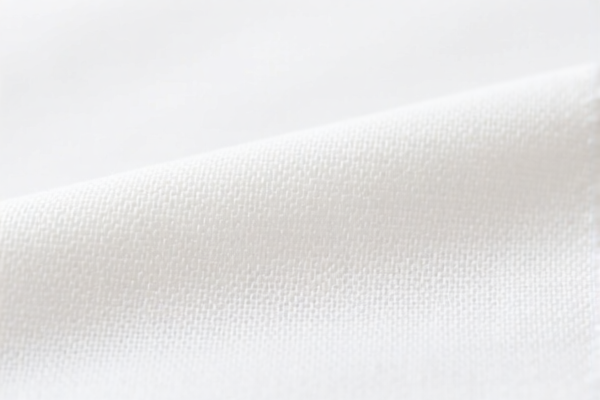
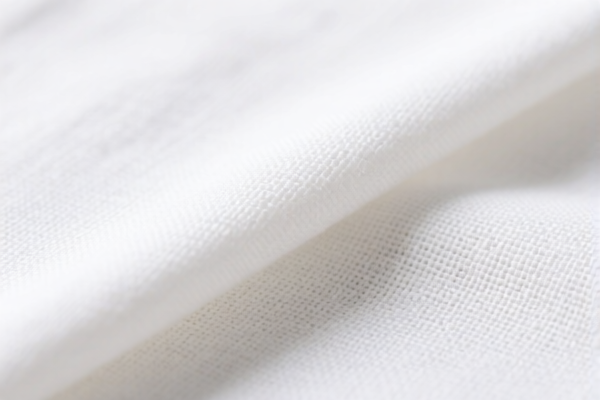
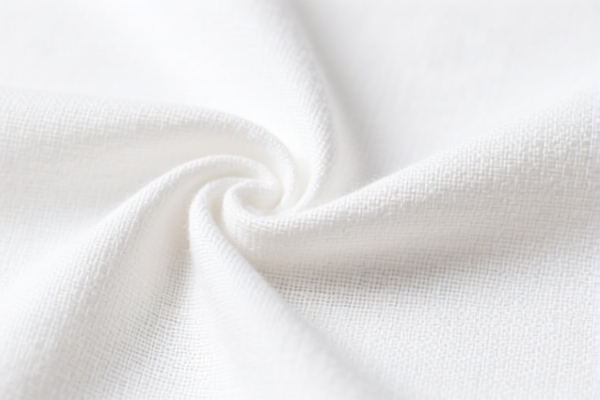
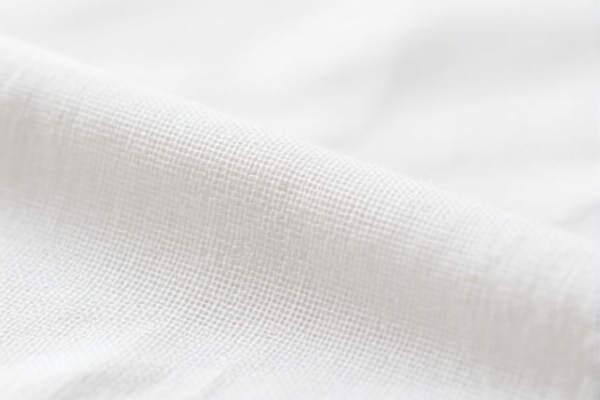
AI Analysis
🧵 Pure Cotton Plain Weave Fabric (Broadcloth/Muslin)
🌐 HS Code Reference & Customs Clearance Guide | 2026 Latest Tariff Analysis | Professional Entry Strategy
📌 I. Product Definition: What is "Pure Cotton Plain Weave Fabric"?
Pure Cotton Plain Weave Fabric refers to textile goods made from 100% cotton fibers, woven in a plain weave structure (over-one, under-one). In international trade, this category is often subdivided based on weight, finish, and specific yarn characteristics (e.g., "Broadcloth" vs. general "Muslin").
⚠️ Critical Distinction:
- 100% Cotton vs. Blends: If the fabric contains any synthetic or man-made fibers, it cannot be classified under pure cotton codes (Chapter 52) or pure linen codes (Chapter 53). It must fall under mixed fiber categories.
- Weave Structure: Plain weave is the most basic structure. Twill or satin weaves would fall under different subheadings.
- Weight/Thickness: "Plain Weave" can range from lightweight muslin to medium-weight broadcloth. The HS code often depends on the specific gram weight or finishing process, but for this analysis, we focus on the cotton and mixed scenarios provided in your data.
📦 II. HS Code Classification Details (2026 Latest Tariff Mapping)
Based on the provided data, the "Pure Cotton Plain Weave Fabric" falls into four main HS Codes, depending on the exact material composition and width/finish specifications.
| HS Code | Product Description (Summary) | Material Composition | Key Classification Logic |
|---|---|---|---|
5309.21.30.55 |
Plain Weave Fabric, matching Broadcloth form | Linen or Flax-based (Note: Conflict with "Cotton" name) | ⚠️ Warning: This code is for Linen/Flax. If your product is truly 100% Cotton, this code is incorrect. The summary says "matching broadcloth form," but the HS prefix 53 indicates Linen. Do not use for 100% Cotton. |
5309.29.30.55 |
Plain Weave, Cotton + Man-made Fibers, Not Pure Linen | Mixed: Cotton & Synthetic/Man-made | This code (53) is also technically for Linen blends. The description "Cotton + Man-made" suggests a misclassification in the provided summary or a specific mixed fiber category under Linen. Verify origin. If it's 100% Cotton, this is likely wrong. |
5210.31.60.20 |
Plain Weave, Corresponding to Plain & Fine Weave Varieties | Mixed: Likely Cotton + Synthetic (Chapter 52 is Cotton, but 5210 is for woven fabrics < 85g/m² or mixed) | This code fits Cotton fabrics that are either lightweight or mixed. "Plain & Fine Weave" aligns with the user input. |
5208.11.40.20 |
Cotton Woven Plain Weave Fabric, No Material Conflict | 100% Cotton | ✅ Best Fit for 100% Cotton. Code 5208 covers cotton woven fabrics of weight ≤ 200g/m². "No material conflict" confirms it is pure cotton. |
5208.11.20.20 |
Cotton Woven Fabric, Plain Form and Cloth Material Match | 100% Cotton | ✅ Best Fit for 100% Cotton. Similar to above, likely differs by weight (≤ 100g/m² vs ≤ 200g/m²) or bleaching status. |
🔍 Important Correction Note:
- Codes starting with 53 (5309.xxxx) are for Linen/Flax textiles.
- Codes starting with 52 (5208.xxxx,5210.xxxx) are for Cotton textiles.
- Since the user input is "Pure Cotton", you should primarily consider5208.11.40.20or5208.11.20.20.
- The first two codes (5309...) appear to be listed due to "Plain Weave" matching, but they are incorrect for 100% Cotton unless the product is actually a linen-cotton blend classified under linen. Risk Alert: Misclassifying cotton as linen can lead to severe customs penalties.
💰 III. 2026 Latest Tariff Rate Breakdown (Including Surtaxes & Policy Add-ons)
✅ Applicable Country: United States (US)
✅ Origin: China (CN)
✅ Effective Date: November 10, 2025 onwards (including subsequent imports)
🎯 1. 5309.21.30.55 —— Linen/Cotton Blend? (Misclassification Risk)
| Item | Content |
|---|---|
| Base Tariff | 6.9% (Ad Valorem) |
| USITC Surtax (Section 301) | +25% |
| IEEPA Surtax (Section 122) | +10% (Specific 122-Clause Tariff) |
| Total Rate | 41.9% |
| Tax Calculation | CIF Value × 41.9% |
| De Minimis Eligibility | ❌ No (High risk of rejection for small parcels) |
| Legal Path | Section 301: 846-31 → IEEPA: 122-Clause → HTSUS: 5309.21.30.55 |
📌 Explanation:
- This high rate applies if the goods are misclassified as Linen (53) or if they are a specific linen-cotton blend.
- Note: If your fabric is 100% Cotton, DO NOT USE THIS CODE. You will pay 41.9% on cotton, which is unnecessarily high compared to pure cotton codes (see below).
🎯 2. 5309.29.30.55 —— Mixed Fiber (Linen-Based)
| Item | Content |
|---|---|
| Base Tariff | 0.0% |
| USITC Surtax (Section 301) | +25% |
| IEEPA Surtax (Section 122) | +10% |
| Total Rate | 35.0% |
| Tax Calculation | CIF Value × 35.0% |
| De Minimis Eligibility | ❌ No |
| Legal Path | Section 301: 846-31 → IEEPA: 122-Clause → HTSUS: 5309.29.30.55 |
📌 Explanation:
- Lower base rate due to 0% MFN tariff for certain linen blends.
- Still includes the 35% total burden (25% + 10%).
- Verify Composition: If this is truly 100% Cotton, this code is wrong.
🎯 3. 5210.31.60.20 —— Cotton Woven (Mixed or Lightweight)
| Item | Content |
|---|---|
| Base Tariff | 12.2% |
| USITC Surtax (Section 301) | +25% |
| IEEPA Surtax (Section 122) | +10% |
| Total Rate | 47.2% |
| Tax Calculation | CIF Value × 47.2% |
| De Minimis Eligibility | ❌ No |
| Legal Path | Section 301: 846-31 → IEEPA: 122-Clause → HTSUS: 5210.31.60.20 |
📌 Explanation:
- Highest total rate (47.2%) among cotton options.
-5210often covers cotton fabrics woven with synthetic fibers (mixes) or very lightweight cotton.
- Use only if the fabric is not 100% cotton or is a specific lightweight blend.
🎯 4. 5208.11.40.20 & 5208.11.20.20 —— 100% Cotton Plain Weave (Recommended for Pure Cotton)
| Item | Content |
|---|---|
| Base Tariff | 9.0% (for .40) / 7.0% (for .20) |
| USITC Surtax (Section 301) | +25% |
| IEEPA Surtax (Section 122) | +10% |
| Total Rate | 44.0% (.40) / 42.0% (.20) |
| Tax Calculation | CIF Value × 44.0% or 42.0% |
| De Minimis Eligibility | ❌ No |
| Legal Path | Section 301: 846-31 → IEEPA: 122-Clause → HTSUS: 5208.11.xxxxx |
📌 Explanation:
- These are the correct codes for 100% Cotton.
-5208.11.20.20(42.0%) is likely for lighter fabrics (≤ 100g/m²).
-5208.11.40.20(44.0%) is likely for slightly heavier fabrics (≤ 200g/m²).
- Savings: Choosing the correct weight-based subcode can save 2% on the total tariff.
🛠️ IV. Customs Clearance Practical Advice (Battle-Tested Pitfall Guide)
✅ 1. Documentation Checklist (Mandatory)
| Document | Required | Description |
|---|---|---|
| ✅ Fabric Specification Sheet | ✔️ | Must specify: 100% Cotton, Plain Weave, Weight (g/m²), Width, Yarn Count (e.g., 40s/2). |
| ✅ Commercial Invoice | ✔️ | Clearly state: "100% Cotton Plain Weave Fabric, Not Linen." Avoid generic terms like "Broadcloth" if it implies Linen. |
| ✅ Packing List | ✔️ | Show net weight, gross weight, and number of rolls. |
| ✅ Certificate of Origin (CO) | ✔️ | Critical for proving China origin and applying correct Surtaxes. |
| ✅ Test Report | ✔️ | Fiber content analysis (e.g., from SGS, Intertek) proving 100% Cotton. |
✅ 2. Declaration Tips (Key Mnemonics)
🔥 "Cotton is 52, Linen is 53! Wrong Chapter = Wrong Fee!"
| Scenario | Correct Declaration | Wrong Practice | Consequence |
|---|---|---|---|
| 100% Cotton, ≤ 100g/m² | 5208.11.20.20 |
Using 5309 (Linen) |
Overpayment of tariff + Potential Misclassification Fine |
| 100% Cotton, ≤ 200g/m² | 5208.11.40.20 |
Using 5210 (Mixed) |
Slightly higher base rate, but manageable. |
| Cotton + Polyester Blend | 5210.xxxx or 5515.xxxx |
Using 5208 (Pure Cotton) |
Severe Misclassification, Penalties, Return of Goods |
| Linen (Flax) | 5309.21.30.55 |
Using 5208 (Cotton) |
Underpayment of Base Tariff (0-6% vs 12%+) |
✅ 3. Special Case Handling
| Situation | Recommendation |
|---|---|
| OEM Custom Fabric | Provide client’s tech pack showing 100% cotton fiber content. |
| Mixed Bundle (Cotton + Linen) | Split the shipment or declare accurately by volume/weight. Do not mix under one HS code. |
| "Broadcloth" Terminology | In trade, "Broadcloth" can be wool, cotton, or linen. Always specify fiber content in the description. |
| Small Parcel (De Minimis) | ❌ Not Eligible. All codes above have Section 301 + IEEPA surtaxes, exceeding the $800 de minimis threshold for China-origin goods. |
🌍 V. Global Market Comparison (2026 Update)
| Market | Recommended HS Code (100% Cotton) | Total Tariff (China Origin) | Notes |
|---|---|---|---|
| 🇺🇸 USA | 5208.11.20.20 or 5208.11.40.20 |
42.0% - 44.0% | Includes 25% (Sec 301) + 10% (Sec 122). |
| 🇨🇳 China | 5208.11.20.20 / 5208.11.40.20 |
~10-12% | Lower base tariff, no US surtaxes. |
| 🇪🇺 EU | 5208.11.20.20 / 5208.11.40.20 |
0-8% | No Section 301/122 equivalent. Verify EUR.1 for GSP if applicable. |
| 🇬🇧 UK | 5208.11.20.20 / 5208.11.40.20 |
0-8% | Post-Brexit tariff, generally favorable for cotton. |
| 🇦🇺 Australia | 5208.11.20.20 / 5208.11.40.20 |
5% | No major surtaxes on cotton fabric. |
📌 Conclusion:
- The US market is the most challenging due to Section 301 and IEEPA surtaxes.
- Accurate classification between5208(Cotton) and5309(Linen) is critical. Misclassifying cotton as linen (5309) might seem cheaper (41.9% vs 44%), but it is illegal and risks audits.
- For 100% Cotton,5208.11.20.20(42.0%) is the most cost-effective compliant option.
📌 VI. Common Errors & Pitfalls (Lessons Learned)
❌ Error 1: Using "Broadcloth" alone in the description
👉 Result: Customs may classify as Linen (5309) due to ambiguity, leading to 41.9% tariff.
👉 Fix: Specify "100% Cotton Plain Weave Fabric".
❌ Error 2: Confusing 5208 (Cotton ≤ 200g/m²) with 5210 (Cotton < 85g/m² or Mixed)
👉 Result: Incorrect base tariff. 5210 has a higher base rate (12.2%).
👉 Fix: Use 5208 for standard cotton fabrics ≤ 200g/m².
❌ Error 3: Assuming De Minimis applies
👉 Result: Packages seized because Section 301/122 taxes negate the $800 exemption.
👉 Fix: Always prepare for formal entry.
✅ Correct Declaration Example:
"100% Cotton Plain Weave Fabric, Bleached, 100g/m², Width 150cm, for Apparel Manufacturing, HS Code 5208.11.20.20"
🎯 VII. Conclusion: Precision in Classification Saves Money!
🎯 Key Takeaways:
🔹 Cotton = 52, Linen = 53. Don't mix them.
🔹 Total Tariff in US: ~42-47% for cotton.
🔹 Save 2%: Use5208.11.20.20(42%) if your fabric is lightweight.
🔹 Avoid Penalties: Provide fiber content certificates.
📌 Pro Tip:
If you are exporting 100% Cotton to the US, ensure your fabric weight is documented accurately. A difference of 10g/m² can shift you from 5208.11.20.20 to 5208.11.40.20 (42% vs 44%).
📣 Immediate Action:
📞 Consult a Licensed Customs Broker for pre-classification.
📄 Attach Fiber Test Reports to every shipment declaration.
🚀 Optimize Your HS Code to5208.11.20.20if possible to minimize the 42% tariff burden.
✨ Professional Customs Clearance Starts with Accurate Classification!
💼 Your Bottom Line Depends on the Decimal Point!
Customer Reviews
About HS Code Classification
The Harmonized System (HS) is an internationally standardized nomenclature developed by the World Customs Organization (WCO) to classify traded products. Over 200 countries use the HS system as the basis for customs tariffs, trade statistics, and import/export regulations.
Each HS code follows a hierarchical structure:
- Chapter (2 digits) — Broad category of goods (e.g., Chapter 84: Machinery and Mechanical Appliances)
- Heading (4 digits) — More specific grouping within the chapter
- Subheading (6 digits) — Internationally standardized breakdown, used by all WCO member countries
- National subdivisions (8-10 digits) — Country-specific extensions for further classification, such as US HTSUS 10-digit codes
Correct HS code classification is essential for smooth customs clearance, accurate duty payment, and compliance with trade regulations. Misclassification can lead to customs delays, overpayment of duties, or penalties.
When importing from CN to US, the applicable tariff rates may include:
- Most-Favored-Nation (MFN) rate — The standard duty rate applied to WTO members
- General rate — Applied to countries without trade agreements
- Trade remedy duties — Additional tariffs such as Section 301 (anti-dumping), Section 232 (national security), or countervailing duties
The information provided on this page is for reference purposes only. For official classification, please consult with your local customs authority or a licensed customs broker.