Purple Hot Water Bottle
CN → USProduct Images
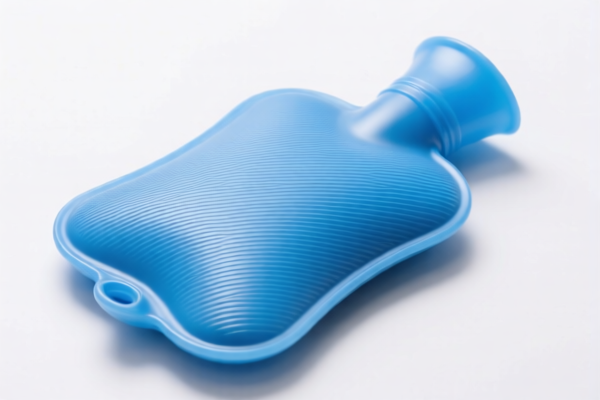
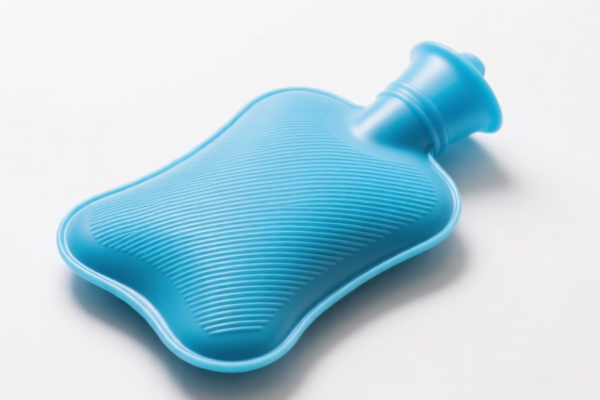
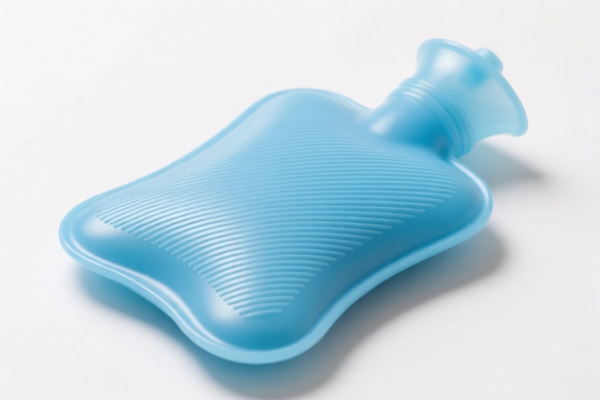
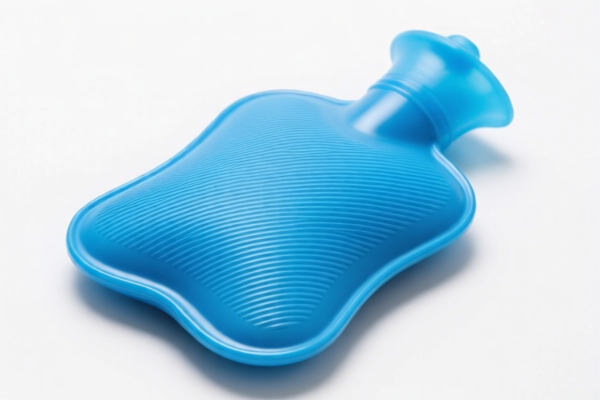
AI Analysis
🔥 Purple Hot Water Bottle (Thermal Water Bag)
🌐 HS Code Reference & Customs Clearance Guide | 2026 Latest Tariff Full Analysis | Professional Clearance Strategy
📌 I. Product Definition and Classification: Do You Really Understand "Hot Water Bottle"?
A purple hot water bottle is not just a simple rubber container; it is a thermal storage device used for personal comfort, medical therapy, or household heating. In international trade, its classification depends heavily on its material composition and intended use.
Key Distinctions: 1. Rubber/Latex Hot Water Bottles: Traditional rubber or latex bags, often enclosed in a knitted cover (wool/acrylic). These are generally classified under Chapter 40 (Rubber) or Chapter 96 (Articles of Plastics, if PVC) depending on the outer layer and material. 2. Plastic/PVC Hot Water Bottles: Made entirely of PVC or TPU, often with printed designs (like the "Purple" variant). These fall under Chapter 39 (Plastics). 3. Hot Water Bottle Covers: If sold separately, these are textile articles (Chapter 61/62). Note: If sold with the bottle, they are usually assessed together with the bottle as a set.
⚠️ Critical Classification Point:
- If the main material is rubber/latex (even with a plastic valve) → Chapter 40.
- If the main material is PVC/TPU (plastic) → Chapter 39.
- Most modern "purple" designs are PVC/TPU with printed patterns.
📦 II. HS Code Classification Details (2026 Latest Tariff Authority Comparison)
| HS Code | Product Description | Applicable Scenario | Material Type |
|---|---|---|---|
4009.12.00.00 |
Rubber hot water bottles, with or without fittings, of vulcanized rubber other than hard rubber | Traditional rubber bottles, often with knitted covers | ✅ Rubber |
3924.90.45.00 |
Tableware, kitchenware, other household articles and hygienic or toilet articles, of plastics: Hot water bottles | PVC/TPU plastic hot water bottles (most common for printed/purple designs) | ✅ Plastic |
3924.10.00.00 |
Tableware and kitchenware, of plastics | Some generic plastic containers misclassified here | ✅ Plastic |
6217.10.90.00 |
Other made-up clothing accessories | Hot water bottle covers only (if sold separately) | 🧶 Textile |
🔍 Key Reminder:
- 80-90% of modern "Purple" hot water bottles are PVC/TPU. Therefore,3924.90.45.00is the most likely HS Code.
- If the bottle is rubber (often with a valve), it falls under4009.12.00.00.
- Do not classify as "toys" or "decorations" if the primary function is thermal storage.
💰 III. 2026 Latest Tariff Rate Details (Including Surtaxes, Policy Surcharges)
✅ Applicable Country: United States (US)
✅ Country of Origin: China (CN)
✅ Effective Date: From November 10, 2025 (including subsequent imports)
🎯 1. 3924.90.45.00 —— Plastic Hot Water Bottles (Most Common for Purple/Printed Designs)
| Item | Content |
|---|---|
| Basic Tariff Rate | 0% (ad valorem) |
| USITC Surcharge | +25% (from USITC Footnote 9903.88.01, Section 301 Tariffs) |
| IEEPA Surcharge | +10% (China/Hong Kong products, from Nov 10, 2025) |
| Total Tariff Rate | 35% |
| Tax Calculation | CIF Value × 35% |
| De Minimis Eligibility | ❌ No (deny_de_minimis) |
| Legal Basis Path | IEEPA:9903.01.25 → IEEPA:9903.01.24 → USITC:3924.90.45.00 → FOOTNOTE:9903.88.01 |
📌 Explanation:
- "USITC Surcharge 25%" comes from the Section 301 Tariffs under the US Trade Act;
- "IEEPA 10%" is the International Emergency Economic Powers Act surcharge on Chinese products;
- Total 35%, which is a high tariff. Must be anticipated in advance!
🎯 2. 4009.12.00.00 —— Rubber Hot Water Bottles (Traditional)
| Item | Content |
|---|---|
| Basic Tariff Rate | 0% |
| USITC Surcharge | +25% |
| IEEPA Surcharge | +10% |
| Total Tariff Rate | 35% |
| Tax Calculation | CIF × 35% |
| De Minimis Eligibility | ❌ No |
| Legal Basis Path | IEEPA:9903.01.25 → IEEPA:9903.01.24 → USITC:4009.12.00.00 → FOOTNOTE:9903.88.01 |
📌 Note:
- Same tariff rate as plastic bottles;
- Even if made of natural rubber, if originating from China, the same surcharges apply.
🛠️ IV. Customs Clearance Practical Advice (Battle-tested Pitfall Avoidance Guide)
✅ 1. Document Checklist (None Missing)
| Material | Must Provide | Description |
|---|---|---|
| ✅ Product Specification Sheet | ✔️ | Includes material (PVC/Rubber), capacity, max temp, valve type |
| ✅ Material Safety Report | ✔️ | RoHS, REACH, Prop 65 (California), CPSIA (if for children) |
| ✅ Product Photos (with label) | ✔️ | Clear view of "Hot Water Bottle", material marking, warnings |
| ✅ Third-party Test Report | ✔️ | FDA (if food-contact adjacent), LFGB, SGS |
| ✅ Commercial Invoice | ✔️ | Clearly state "Hot Water Bottle for Personal/Therapeutic Use" |
| ✅ Packing List | ✔️ | Show if covers are included; avoid splitting if sold as a set |
✅ 2. Declaration Tips (Key Mnemonics)
🔥 "Material Determines HS, Plastic vs. Rubber, 35% Tax is the Truth!"
| Situation | Correct Declaration | Wrong Practice |
|---|---|---|
| PVC/TPU Bottle | 3924.90.45.00 |
Misreported as "Rubber" → Inspection Delay |
| Rubber Bottle | 4009.12.00.00 |
Misreported as "Plastic" → 35% Tax (Same, but Wrong Code) |
| Cover Only | 6217.10.90.00 |
Mixed in invoice without separate line → Valuation Risk |
| Set (Bottle + Cover) | Declare Main Item (Bottle) | Splitting into two items → 35% on both, Higher Total Tax |
✅ 3. Special Handling
| Situation | Handling Advice |
|---|---|
| Children's Hot Water Bottles | Must comply with CPSIA and ASTM F963. Labeling is critical. |
| Medical/Therapeutic Use | If claimed as "Medical Device," may require FDA Registration. Do not overstate medical claims unless certified. |
| Custom Printed Designs | Ensure patterns do not violate Trademark/Copyright. Provide authorization if using branded prints. |
| Bottle + Cover Sold Together | Declare as "Hot Water Bottle with Knitted Cover". The bottle determines the classification (Chapter 39/40). |
🌍 V. Global Major Markets Comparison (2026 Latest)
| Country/Region | Recommended HS Code | Tariff | Certification Requirements | Notes |
|---|---|---|---|---|
| 🇺🇸 USA | 3924.90.45.00 |
35% (China Origin) | Prop 65, CPSIA, RoHS | High tariff; strict material testing |
| 🇨🇳 China | 3924.90.45.00 |
0% | GB Standards | No additional surcharges |
| 🇪🇺 EU | 3924.90.45.00 |
0% (if under 1kg) | CE, REACH, LFGB | No additional surcharges |
| 🇬🇧 UK | 3924.90.45.00 |
0% | UKCA, REACH | Post-Brexit rules apply |
| 🇦🇺 Australia | 3924.90.45.00 |
5% | SAA, RC Label | Standard import tariff |
📌 Conclusion:
- USA is the only major market with high surcharges (35%) for Chinese-origin hot water bottles;
- EU/UK/Australia have low or zero tariffs, but strict chemical safety (REACH/LFGB) requirements;
- Material safety (non-toxic, BPA-free) is critical globally.
📌 VI. Common Errors & Pitfall Avoidance Guide (Blood & Tears Lessons)
❌ Error 1: Declaring PVC bottles as "Rubber" to avoid chemical tests
👉 Consequence: Customs reclassification + fines + detention for non-compliance with material safety standards.
❌ Error 2: Not listing "Hot Water Bottle" in the description, using "Plastic Bag"
👉 Consequence: Customs suspicion of undeclared goods → Delays + 200% penalty risk.
❌ Error 3: Omitting "Contains Rubber/Plastic" in declaration
👉 Consequence: Cannot assess chemical safety → Return/Destroy.
❌ Error 4: Declaring cover separately to avoid 35% tax
👉 Consequence: "Set" rule requires main item classification. 35% applies to the whole value.
✅ Correct Practice:
"Hot Water Bottle, PVC Material, 2L Capacity, Purple Color, with Knitted Wool Cover, for Personal Therapeutic Use, Non-Medical Device, RoHS & REACH Compliant"
🎯 VII. Conclusion: Professional Declaration, Save Time, Reduce Costs!
🎯 Remember the Mnemonic:
🔹 "PVC is 39, Rubber is 40, 35% Tax for USA, Set Declaration is the Law!"
🔹 "Material Safety is Key, Chemical Tests Pass First, Customs Clearance is Smooth!"
📌 Tips:
- If your hot water bottles are originating from Vietnam, Indonesia, or Thailand, you may apply for IEEPA Exemptions or Lower Tariffs;
- Suggest applying for Advance Ruling (Pre-classification) if unsure about material composition;
- For Children's Products, ensure CPSIA Compliance and Lead-Free Certification.
📣 Take Action Now:
📞 Contact Professional Customs Broker + Provide Material Certificates + Apply for Pre-classification
🚀 Let your Purple Hot Water Bottles Clear Customs Smoothly, Export Efficiently, and Maximize Profits!
✨ Professional Customs Clearance Starts with Accurate Classification!
💼 Every Cent of Your Cost Deserves Precise Calculation!
Customer Reviews
About HS Code Classification
The Harmonized System (HS) is an internationally standardized nomenclature developed by the World Customs Organization (WCO) to classify traded products. Over 200 countries use the HS system as the basis for customs tariffs, trade statistics, and import/export regulations.
Each HS code follows a hierarchical structure:
- Chapter (2 digits) — Broad category of goods (e.g., Chapter 84: Machinery and Mechanical Appliances)
- Heading (4 digits) — More specific grouping within the chapter
- Subheading (6 digits) — Internationally standardized breakdown, used by all WCO member countries
- National subdivisions (8-10 digits) — Country-specific extensions for further classification, such as US HTSUS 10-digit codes
Correct HS code classification is essential for smooth customs clearance, accurate duty payment, and compliance with trade regulations. Misclassification can lead to customs delays, overpayment of duties, or penalties.
When importing from CN to US, the applicable tariff rates may include:
- Most-Favored-Nation (MFN) rate — The standard duty rate applied to WTO members
- General rate — Applied to countries without trade agreements
- Trade remedy duties — Additional tariffs such as Section 301 (anti-dumping), Section 232 (national security), or countervailing duties
The information provided on this page is for reference purposes only. For official classification, please consult with your local customs authority or a licensed customs broker.