Push Pad
CN → US| HS Code | Tariff Rate | Origin | Destination | Doc |
|---|---|---|---|---|
| 9031909195 | 85.0% | CN | US | Official Doc |
| 9031909130 | 35.0% | CN | US | Official Doc |
| 8471602000 | 10.0% | CN | US | Official Doc |
| 8471609030 | 35.0% | CN | US | Official Doc |
Product Images

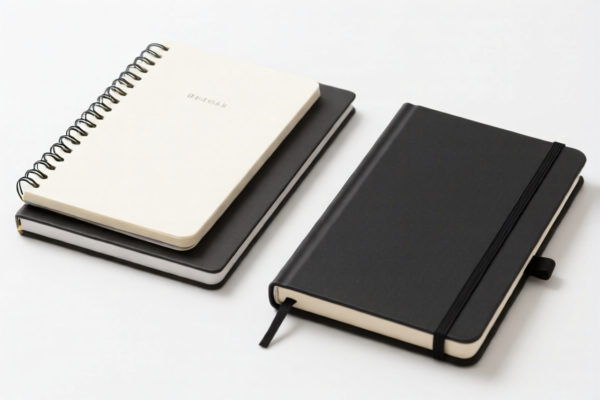
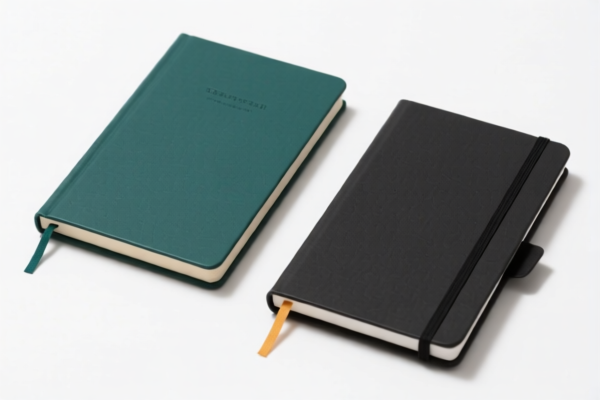
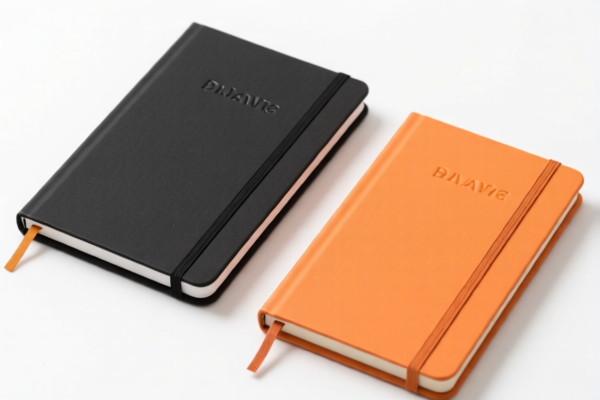
AI Analysis
👆 Push Pad (Touchpad / Input Device)
🌐 HS Code Reference & Customs Clearance Guide | 2026 Latest Tariff Analysis | Professional Entry Strategy 📌 I. Product Definition & Classification: What is a "Push Pad"?
In the context of international trade and HS Code classification, a "Push Pad" typically refers to an Input Unit for Automatic Data Processing (ADP) machines. This includes trackpads (laptops), touch pads (external input devices), or membrane-based input interfaces that transmit electrical signals to a computer.
It is NOT a display screen (monitor) nor a standalone sensor for measurement. It is a data entry device.
⚠️ Critical Distinction: - If the "Pad" is part of a keyboard assembly → It falls under Keyboards. - If the "Pad" is a separate input device (mouse/trackpad replacement) → It falls under Other Input Devices. - If the "Pad" is purely a mechanical switch without data processing interface → It might be classified elsewhere (but rarely the case for modern electronics).
📦 II. HS Code Classification Details (Based on Provided Data)
The provided data specifies two relevant HS Codes for "Push Pads" depending on their specific configuration and integration.
| HS Code | Product Description | Applicable Scenario | Tax Rate (China Origin to US) |
|---|---|---|---|
8471.60.20.00 |
Keyboards Input or output units for ADP machines: Other: Keyboards |
Push pads integrated into a keyboard unit (e.g., laptop trackpad, or a keyboard with an embedded touch pad). | 0.0% |
8471.60.90.30 |
Other Card Key and Magnetic Media Entry Devices Input or output units for ADP machines: Other: Other Card key and magnetic media entry devices |
Standalone input pads that do not fit the definition of a keyboard (e.g., specialized numeric pads, proprietary touch interfaces for industrial ADP systems). Note: The description in data is specific, but broadly covers "Other" input devices not specified as keyboards. | 25.0% |
🔍 Key Insight: -
8471.60.20.00is the most common code for laptop trackpads or keyboards with touch capabilities. It has 0% additional tariffs (base + Section 301 + IEEPA = 0%). -8471.60.90.30applies to standalone input units that are not keyboards. It attracts 25% total tax.
💰 III. 2026 Latest Tariff Rate Breakdown
✅ Applicable Country: United States (US)
✅ Origin: China (CN)
✅ Effective Date: Current policies (Section 301 & IEEPA)
🎯 1. 8471.60.20.00 – Keyboards (Including Integrated Touch Pads)
| Item | Detail |
|---|---|
| Base Tariff | 0.0% |
| Section 301 Tariff | 0.0% |
| IEEPA Tariff | 0.0% |
| Total Tax Rate | 0.0% |
| Tax Calculation | CIF Value × 0% = $0 |
| De Minimis Eligibility | ✅ Yes (Generally eligible for $800 de minimis exemption if under threshold) |
| Legal Basis | Harmonized Tariff Schedule of the United States (HTSUS) Chapter 84 |
📌 Explanation: - Keyboard-related input devices (including those with integrated touch pads) are classified under
8471.60.20.00. - Crucially, this code is EXEMPT from the 25% Section 301 tariffs and additional IEEPA surcharges that apply to many other electronics. - Result: 0% Total Duty. This is a highly favorable classification.
🎯 2. 8471.60.90.30 – Other Input Devices (Standalone Push Pads)
| Item | Detail |
|---|---|
| Base Tariff | 0.0% |
| Section 301 Tariff | 25.0% |
| IEEPA Tariff | 0.0% (Data shows total 25%, implying no extra IEEPA on top, or included in the 25%) |
| Total Tax Rate | 25.0% |
| Tax Calculation | CIF Value × 25% |
| De Minimis Eligibility | ❌ No (Section 301 goods are generally excluded from de minimis) |
| Legal Basis | HTSUS Chapter 84; USITC Footnotes |
📌 Explanation: - Standalone input devices not classified as keyboards fall under "Other." - These attract the full 25% Section 301 tariff. - Result: 25% Total Duty.
🛠️ IV. Customs Clearance Practical Advice
✅ 1. Preparation Checklist (Must-Have Documents)
| Document | Required? | Notes |
|---|---|---|
| Product Specification Sheet | ✔️ | Must clearly state if it is a keyboard or standalone input device. |
| Photos of Product | ✔️ | Show the device connected to a computer to prove it is an ADP input unit. |
| Part Number / Model Number | ✔️ | Helps customs verify against the HTSUS. |
| Commercial Invoice | ✔️ | Description must match HS Code (e.g., "Keyboard with Touchpad" vs. "External Touch Input Device"). |
| Packing List | ✔️ | Ensure quantities match invoice. |
✅ 2. Classification Strategy (The "How-To")
🔥 "Is it a Keyboard? Use 8471.60.20.00. Is it Standalone? Use 8471.60.90.30."
| Scenario | Correct HS Code | Tax Rate | Why? |
|---|---|---|---|
| Laptop Trackpad | 8471.60.20.00 |
0.0% | Integrated with the laptop (a complete ADP machine) or sold as part of a keyboard assembly. |
| External Keyboard with Touchpad | 8471.60.20.00 |
0.0% | The touchpad is an integral part of the keyboard unit. |
| Standalone Touch Mouse/Pad | 8471.60.90.30 |
25.0% | It is an input device but not a keyboard. |
| Mechanical Push Button Panel | Not in Data | N/A | If it lacks data processing interface, it may not be Chapter 84. But for electronic "Push Pads," Chapter 84 applies. |
✅ 3. Common Pitfalls & How to Avoid Them
❌ Mistake 1: Classifying a standalone touchpad as "Keyboard" to avoid tariffs.
👉 Risk: Customs will reject if the product is clearly not a keyboard. Penalty: 25% back duty + fines.
👉 Fix: If it’s not a keyboard, use 8471.60.90.30.
❌ Mistake 2: Mislabeling a keyboard as "Other Input Device."
👉 Risk: Unnecessary 25% tax payment.
👉 Fix: If the device has keys, classify as 8471.60.20.00 (0% tax).
❌ Mistake 3: Ignoring "Origin" rules.
👉 Risk: If the product is made in Vietnam/Mexico, tariffs may be 0% even for 8471.60.90.30.
👉 Fix: Always confirm Country of Origin. If not China, tariffs may not apply.
🌍 V. Market Comparison (2026)
| Market | HS Code (Similar) | Tariff (China Origin) | Notes |
|---|---|---|---|
| 🇺🇸 USA | 8471.60.20.00 |
0.0% | Keyboards/Touchpads exempt from 301 tariffs. |
| 🇺🇸 USA | 8471.60.90.30 |
25.0% | Standalone input devices taxed. |
| 🇪🇺 EU | 8471.60.90 | 0.0% - 1.4% | Generally low duty, no Section 301. |
| 🇨🇳 China | 8471.60.90 | 0.0% | Import duty is 0%. |
📌 Conclusion:
- The USA is the only major market with significant tariffs on electronics.
- Strategy: If your product can be classified as a Keyboard (8471.60.20.00), you save 25%.
- Ensure your product design or marketing description supports this classification (e.g., "Keyboard with Integrated Touchpad").
📌 VI. Final Recommendations
- Audit Your Product: Is it a keyboard? If yes, use
8471.60.20.00(0% tax). - Documentation: Clearly describe the product as "Input Device for ADP Machine" on the commercial invoice.
- Origin Check: If you can source from a non-China country, tariffs may be eliminated entirely.
- Consult a Broker: For standalone pads, verify if they truly fall under
8471.60.90.30or if a more specific code exists that may be exempt.
🎯 Bottom Line:
🔹 Keyboard with Touchpad =
8471.60.20.00= 0% Tax
🔹 Standalone Touch Pad =8471.60.90.30= 25% Tax
✨ Smart Classification = Maximized Profit
💼 Don’t pay 25% if you can pay 0%!
Customer Reviews
About HS Code Classification
The Harmonized System (HS) is an internationally standardized nomenclature developed by the World Customs Organization (WCO) to classify traded products. Over 200 countries use the HS system as the basis for customs tariffs, trade statistics, and import/export regulations.
Each HS code follows a hierarchical structure:
- Chapter (2 digits) — Broad category of goods (e.g., Chapter 84: Machinery and Mechanical Appliances)
- Heading (4 digits) — More specific grouping within the chapter
- Subheading (6 digits) — Internationally standardized breakdown, used by all WCO member countries
- National subdivisions (8-10 digits) — Country-specific extensions for further classification, such as US HTSUS 10-digit codes
Correct HS code classification is essential for smooth customs clearance, accurate duty payment, and compliance with trade regulations. Misclassification can lead to customs delays, overpayment of duties, or penalties.
When importing from CN to US, the applicable tariff rates may include:
- Most-Favored-Nation (MFN) rate — The standard duty rate applied to WTO members
- General rate — Applied to countries without trade agreements
- Trade remedy duties — Additional tariffs such as Section 301 (anti-dumping), Section 232 (national security), or countervailing duties
The information provided on this page is for reference purposes only. For official classification, please consult with your local customs authority or a licensed customs broker.