Push Rod
CN → US| HS Code | Tariff Rate | Origin | Destination | Doc |
|---|---|---|---|---|
| 8409915081 | 37.5% | CN | US | Official Doc |
| 8409999110 | 37.5% | CN | US | Official Doc |
| 8483103010 | 37.5% | CN | US | Official Doc |
| 8483905080 | 37.5% | CN | US | Official Doc |
| 7326908688 | 87.9% | CN | US | Official Doc |
| 7326908630 | 87.9% | CN | US | Official Doc |
Product Images
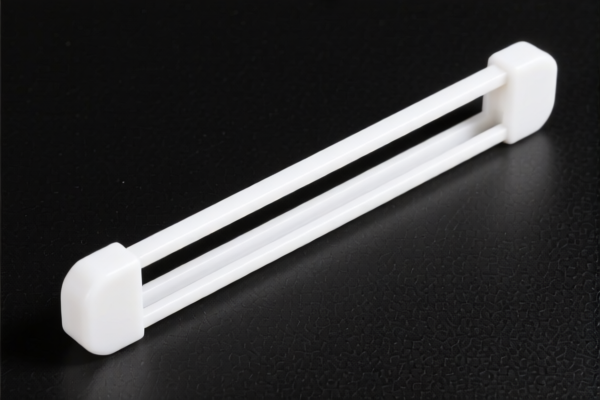
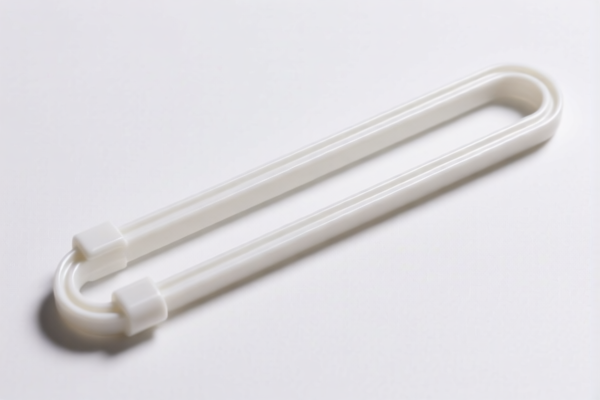
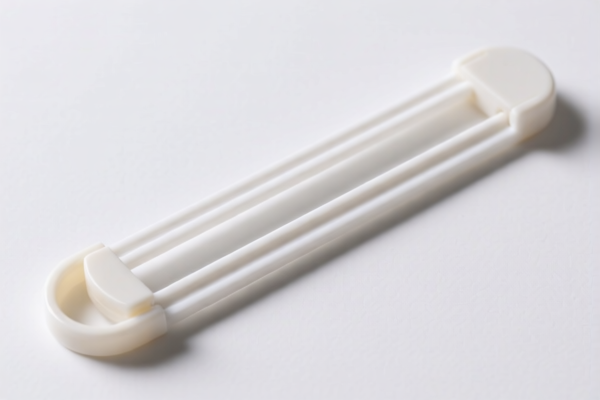
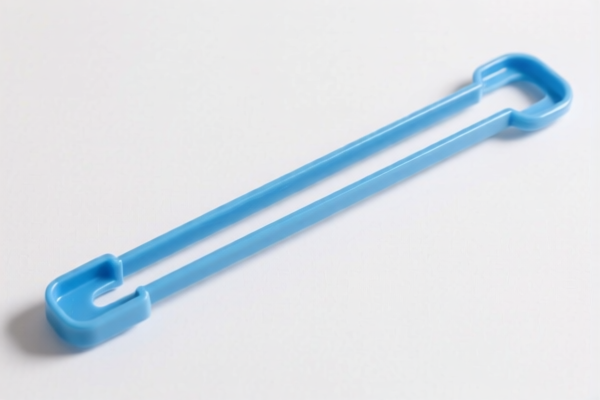
AI Analysis
🚛 Push Rods (Automotive Transmission/Engine Components)
🌐 HS Code Reference & Customs Clearance Guide | 2026 Latest Tariff Analysis | Professional Compliance Strategy
📌 One: Product Definition & Classification: What Exactly is a "Push Rod"?
In the automotive and heavy machinery industry, a Push Rod is a critical mechanical component. Depending on the specific context, it typically refers to one of two things:
- Engine Valve Push Rods: Used in overhead valve (OHV) internal combustion engines to transmit motion from the camshaft to the valve rocker arms.
- Transmission/Clutch Push Rods: Used in clutches or gearboxes to engage/disengage gears.
⚠️ Key Distinction for Classification:
The classification depends entirely on whether the push rod is designed for a spark-ignition engine (Gasoline) or a compression-ignition engine (Diesel), and whether it is a connecting rod or a crankshaft/camshaft component.
Critical Rule for Engine Parts (Heading 8409):
- If the part is "Suitable for use solely or principally with engines of heading 8407 (Spark-Ignition)", it follows the "Spark-Ignition" branch.
- If the part is for engines of heading 8408 (Compression-Ignition/Diesel), it follows the "Diesel" branch.
- Note: The provided data only contains codes for Spark-Ignition (Gasoline) engines or generic steel parts. There is NO specific code in the provided dataset for Diesel engine push rods (which would typically fall under 8409.91.91).
📦 Two: HS Code Classification Details (Based on Provided DATA)
The provided data contains 6 specific HS Codes. Below is the breakdown of why a "Push Rod" might be classified under each, and the associated tax implications.
| HS Code | Product Description | Why It Might Apply to "Push Rod" | Tax Rate (China → US) |
|---|---|---|---|
| 8409.91.50.81 | Steel forgings for Spark-Ignition Engines (Headings 8407/8408) | Most Likely for Gasoline Engine Push Rods. If the push rod is a forged steel part specifically designed for a gasoline engine vehicle (HS 8701-8704), this is the correct classification. | 0.0% |
| 8409.99.91.10 | Connecting rods for Spark-Ignition Engines | Only if it is a Connecting Rod. Warning: A "Push Rod" (valve lifter arm component) is NOT a "Connecting Rod" (which connects the piston to the crankshaft). If you mistakenly classify a valve push rod as a connecting rod, this code applies. | 0.0% |
| 8483.10.30.10 | Camshafts and Crankshafts for Vehicles of Chapter 87 | Not a Push Rod. This code is for Camshafts/Crankshafts. A push rod is a separate transmission element, not a shaft itself. Do not use unless it is a camshaft. | 0.0% |
| 8483.90.50.80 | Parts of Gearing, Gear Boxes, Speed Changers | Alternative for Non-Engine Parts. If the push rod is part of a transmission system (not the engine itself) or if it doesn't fit the "engine part" definition strictly, it may fall here as a "part of gearing." | 27.5% |
| 7326.90.86.88 | Other Articles of Iron or Steel | Fallback for Generic Steel Parts. If the part cannot be classified as an "engine part" (8409) or "transmission part" (8483) due to lack of specificity, it falls here as a generic steel article. | 77.9% |
| 7326.90.86.30 | Hangers and Similar Supports for Tubes/Pipes | Unlikely. Unless the push rod is being mislabeled as a pipe support/hanger, this code is incorrect for engine/transmission components. | 77.9% |
💰 Three: 2026 Latest Tariff Rate Breakdown
✅ Applicable Country: United States (US)
✅ Origin: China (CN)
✅ Effective Date: Current rates apply (Note: The provided data shows "Added Tariff" details, not just base rates).
🎯 1. The Zero-Tariff Group (Spark-Ignition Engine Parts)
Codes: 8409.91.50.81, 8409.99.91.10, 8483.10.30.10
| Item | Content |
|---|---|
| Base Duty | 0.0% |
| Section 301 Added Duty | 0.0% |
| Total Tax | 0.0% |
| Explanation | These parts are specifically for Spark-Ignition Engines (Gasoline/Petrol). The provided data indicates that for these specific subheadings, the "Added Tariff" is 0%. This is a significant advantage for gasoline engine parts. |
📌 Critical Note:
- This ONLY applies if the part is for a Gasoline Engine.
- If your push rod is for a Diesel Engine (Compression-Ignition), these codes are INVALID. You must check the general rate for Diesel parts (often higher) or use the generic steel codes.
🎯 2. The High-Tariff Group (Generic Steel / Transmission Parts)
Codes: 8483.90.50.80, 7326.90.86.88, 7326.90.86.30
| Item | Content |
|---|---|
| Base Duty | 2.5% (for 8483) / 2.9% (for 7326) |
| Section 301 Added Duty | 25.0% |
| Steel/Aluminum/Copper Added Duty | 50.0% (if applicable under specific provisions) |
| Total Tax | 27.5% (for 8483) or 77.9% (for 7326) |
| Explanation | These codes are used when the part does not qualify for the "Zero Tariff" engine part category. |
| Legal Path | USITC:8483.90.50.80 → FOOTNOTE:25.0% |
📌 Warning for 7326.90.86.88:
- This code has a 77.9% total tax rate (Base 2.9% + 25% Section 301 + 50% Steel/Aluminum/Copper Surcharge).
- Avoid this code for engine/transmission parts if possible. Only use it if the part is truly a "miscellaneous steel article" and not functionally an engine part.
🛠️ Four: Customs Clearance Practical Advice
✅ 1. Preparation Checklist (Must-Have Documents)
| Document | Required? | Purpose |
|---|---|---|
| ✅ Product Specification Sheet | ✔️ | Must clearly state: "Push Rod for Gasoline Engine" or "Valve Push Rod." |
| ✅ Engineering Drawing | ✔️ | Shows material (Steel), shape, and function. Proves it is not a "connecting rod." |
| ✅ Photo of Product & Label | ✔️ | Clear image showing the part. Label should match invoice. |
| ✅ Commercial Invoice | ✔️ | Must explicitly state: "Steel Push Rod for Spark-Ignition Internal Combustion Engine." |
| ✅ Origin Certificate (CO) | ✔️ | To prove Chinese origin (and trigger applicable tariffs). |
| ✅ Packing List | ✔️ | Detailed weight and dimensions. |
✅ 2. Declaration Tips (Key Mnemonics)
🔥 "Gasoline Engine = Zero Tax; Diesel/Generic = High Tax!"
| Scenario | Correct HS Code | Tax | Common Mistake |
|---|---|---|---|
| Valve Push Rod for Gasoline Engine | 8409.91.50.81 |
0% | Mislabeling as "Diesel Part" → Higher Tax |
| Connecting Rod (Piston to Crank) | 8409.99.91.10 |
0% | Calling it a "Push Rod" → Wrong Code |
| Push Rod for Diesel Engine | Not in Data | Check General Rate | Using 8409.91.50.81 → Declaration Error! |
| Generic Steel Rod (Non-Engine) | 7326.90.86.88 |
77.9% | Trying to force it into 8409 without proof |
| Transmission Gear Part | 8483.90.50.80 |
27.5% | Overlooking transmission vs. engine classification |
📌 Important:
- If the push rod is for a Diesel Engine, the provided data does not include a specific zero-tax code. You may need to use8409.99.99(general diesel parts) or check the latest tariff schedule for diesel-specific rates, which may be higher.
- Do not misclassify a Diesel part as a Gasoline part (8409.91.50.81) to avoid taxes. This is customs fraud and can lead to seizures.
✅ 3. Special Case Handling
| Case | Advice |
|---|---|
| OEM Custom Push Rods | Provide OEM drawings and customer PO to prove specific use. |
| Mixed Shipments (Gas + Diesel) | Declare separately. Gasoline parts under 8409.91.50.81, Diesel parts under appropriate diesel codes (or generic steel if unsure). |
| Push Rods as "Spares" for Machinery | If not for vehicles (Chapter 87), but for industrial engines, verify if 8409 still applies. If not, 7326 or 8483 may apply. |
| Material: Forged Steel | Emphasize "Forged Steel" in description to support 8409.91.50.81 (which specifies "Steel forgings"). |
🌍 Five: Global Market Comparison (2026 Update)
| Market | Recommended HS Code for Gasoline Push Rod | Tax Rate | Notes |
|---|---|---|---|
| 🇺🇸 US | 8409.91.50.81 |
0% | Zero added tariff for this specific code. |
| 🇨🇳 China | 8409.91.50.81 |
5-8% | Import duty only, no added tariffs. |
| 🇪🇺 EU | 8409.91.50 |
0-4% | Varies by specific subheading; often low. |
| 🇬🇧 UK | 8409.91.50 |
0-5% | Post-Brexit rates may vary. |
📌 Conclusion:
The US market offers a significant advantage for Gasoline Engine Push Rods if correctly classified under8409.91.50.81. However, precision is key. Misclassification can lead to 77.9% taxes.
📌 Six: Common Errors & Pitfalls (Lessons Learned)
❌ Error 1: Classifying Diesel Engine Push Rods under 8409.91.50.81
👉 Result: Customs seizure, fines, and forced reclassification.
👉 Fix: Identify engine type. If Diesel, use appropriate diesel code or generic steel code.
❌ Error 2: Calling a Connecting Rod a "Push Rod" to save costs
👉 Result: If it is a connecting rod, it should be 8409.99.91.10 (0% tax). If it is a valve push rod, it should be 8409.91.50.81 (0% tax). Both are 0% in this data, but accuracy is required for legal compliance.
👉 Fix: Use correct technical terminology.
❌ Error 3: Declaring as Generic Steel (7326) when it is clearly an Engine Part
👉 Result: Paying 77.9% tax unnecessarily.
👉 Fix: Provide engineering drawings to prove it is an engine part.
❌ Error 4: Ignoring the "Spark-Ignition" Requirement
👉 Result: Applying the zero-tax code to Diesel parts.
👉 Fix: Verify fuel type. Spark-Ignition = Gasoline. Compression-Ignition = Diesel.
✅ Correct Declaration Example:
"Steel Forged Push Rod for Spark-Ignition Internal Combustion Piston Engine, Model XYZ, For Vehicles of HS 8703, Part No. 12345"
🎯 Seven: Conclusion: Precision Drives Profit
🎯 Key Takeaway:
🔹 "Gasoline Push Rod = 0% Tax (8409.91.50.81)"
🔹 "Diesel Push Rod = Check Specific Code (Not in Zero List)"
🔹 "Generic Steel = 77.9% Tax (Avoid This!)"
📌 Pro Tip:
Always confirm the engine type (Gasoline vs. Diesel) and material (Forged Steel) before declaring. If in doubt, request a Binding Ruling from US Customs before shipment.
📣 Immediate Action:
📞 Verify Engine Type → Select Correct HS Code → Prepare Engineering Docs
🚀 Ensure 0% Tax Compliance for Gasoline Parts!
✨ Professional Customs Clearance Starts with Accurate Classification!
💼 Don't Let a Wrong Code Cost You 77.9%!
Customer Reviews
About HS Code Classification
The Harmonized System (HS) is an internationally standardized nomenclature developed by the World Customs Organization (WCO) to classify traded products. Over 200 countries use the HS system as the basis for customs tariffs, trade statistics, and import/export regulations.
Each HS code follows a hierarchical structure:
- Chapter (2 digits) — Broad category of goods (e.g., Chapter 84: Machinery and Mechanical Appliances)
- Heading (4 digits) — More specific grouping within the chapter
- Subheading (6 digits) — Internationally standardized breakdown, used by all WCO member countries
- National subdivisions (8-10 digits) — Country-specific extensions for further classification, such as US HTSUS 10-digit codes
Correct HS code classification is essential for smooth customs clearance, accurate duty payment, and compliance with trade regulations. Misclassification can lead to customs delays, overpayment of duties, or penalties.
When importing from CN to US, the applicable tariff rates may include:
- Most-Favored-Nation (MFN) rate — The standard duty rate applied to WTO members
- General rate — Applied to countries without trade agreements
- Trade remedy duties — Additional tariffs such as Section 301 (anti-dumping), Section 232 (national security), or countervailing duties
The information provided on this page is for reference purposes only. For official classification, please consult with your local customs authority or a licensed customs broker.