Push up Board
CN → US| HS Code | Tariff Rate | Origin | Destination | Doc |
|---|---|---|---|---|
| 3926906090 | 39.2% | CN | US | Official Doc |
| 9503000073 | 10.0% | CN | US | Official Doc |
| 9503000090 | 10.0% | CN | US | Official Doc |
| 3926909989 | 22.8% | CN | US | Official Doc |
| 3926901000 | 20.9% | CN | US | Official Doc |
Product Images
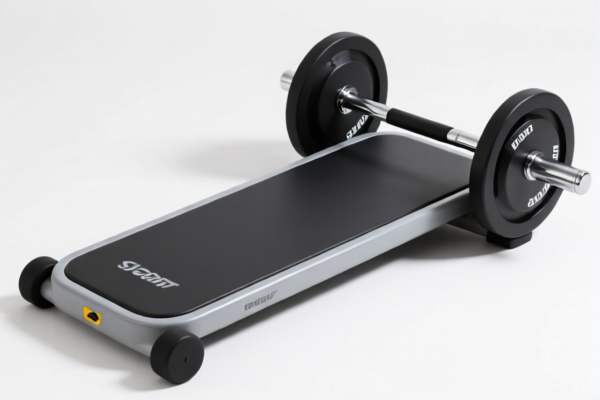
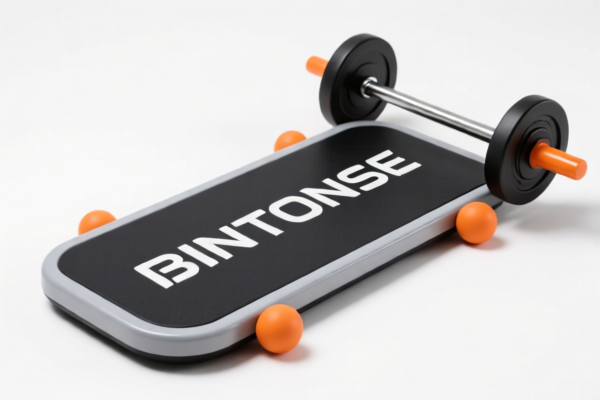
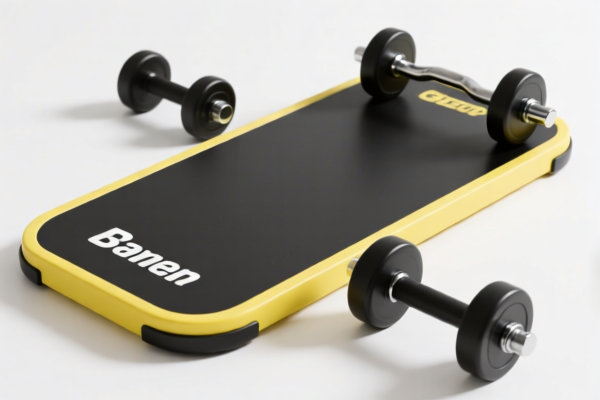
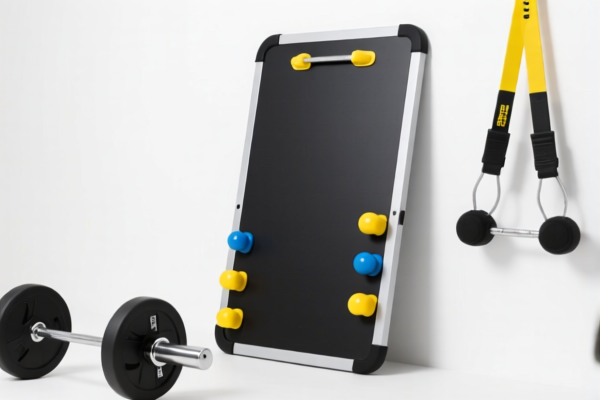
AI Analysis
🏋️♂️ Push Up Board (Fitness Equipment & Accessories)
🌐 HS Code Reference & Clearance Guide | 2026 Latest Tariff Analysis | Professional Compliance Strategy
📌 I. Product Definition & Classification: What Exactly Is a "Push Up Board"?
A Push Up Board is a specialized fitness tool designed to facilitate push-up exercises by providing various hand slots that target different muscle groups (chest, shoulders, triceps, back). In international trade, its classification depends heavily on its primary function and material composition.
It falls into two main categories:
1. As "Fitness Equipment" (Exercise Machines):
If the product is marketed primarily as a standalone exercise device for physical conditioning, it often falls under Chapter 95 (Toys, Games, and Sports Equipment).
2. As "Parts of Machinery/Articles" (Plastic Parts):
If the product is viewed primarily as a plastic accessory or part of a larger fitness system, or if it lacks specific mechanical features defining it as a complete machine, it may be classified under Chapter 39 (Plastics and Articles Thereof).
⚠️ Key Distinction Point:
- If marketed explicitly as "Fitness Equipment" or "Exercise Device" → Tends toward 9503.00 (Sports/Fitness).
- If marketed as "Plastic Fitness Accessory" or "Training Aid" without complex mechanics → Tends toward 3926.90 (Plastic Articles).
📦 II. HS Code Classification Details (2026 Latest Tariff Alignment)
Based on the provided data, here are the specific HS Codes, their logical derivations, and associated tax implications.
| HS Code | Product Description (Inferred) | Applicable Scenario | Material/Composition |
|---|---|---|---|
3926.90.60.90 |
Plastic articles for machinery/gym equipment parts | Push-up boards made of plastic, classified as parts/accessories for gym machinery | Plastic |
9503.00.00.73 |
Fitness Equipment (Toys/Sports Extension) | Push-up boards classified as fitness gear, extending from toy/sports categories | Plastic/Metal |
9503.00.00.90 |
Other Fitness Equipment Articles | Generic fitness accessories not specifically listed elsewhere; plastic or metal | Plastic/Metal |
3926.90.99.89 |
Other Plastic Articles | Plastic boards considered general plastic goods rather than specialized fitness equipment | Plastic/Composite |
3926.90.10.00 |
Plastic Fitness Accessories/Articles | Plastic components specifically for fitness/training | Plastic/Composite |
🔍 Key Insight:
- The divergence between 3926.90 (Plastics) and 9503.00 (Sports/Fitness) hinges on how the importer defines the product’s principal character.
- 3926.90 codes generally incur higher total taxes due to base duties and Section 301/122 additional tariffs.
- 9503.00 codes often benefit from 0% base tariffs but still face specific附加 tariffs (like Section 122).
💰 III. 2026 Latest Tariff Rate Breakdown (Including Additional Taxes)
✅ Applicable Country: United States (US)
✅ Origin: China (CN)
✅ Effective Time: Current Trade Rules (2026 Context)
🎯 1. 3926.90.60.90 – Plastic Parts for Gym Machinery
| Item | Detail |
|---|---|
| Base Duty | 4.2% |
| Section 301 Add-on | 25.0% |
| Section 122 Add-on | 10% |
| Total Tax Rate | 39.2% |
| Tax Calculation | CIF Value × 39.2% |
| Legal Basis | High tariff burden due to combined Section 301 and 122 measures on plastic parts. |
📌 Explanation:
- This code is treated as a plastic part of machinery.
- The 25% Section 301 tariff is fully applicable.
- The 10% Section 122 tariff adds further cost.
- Risk: This is one of the highest-cost classifications in the dataset.
🎯 2. 9503.00.00.73 – Fitness Equipment (Sports Category)
| Item | Detail |
|---|---|
| Base Duty | 0.0% |
| Section 301 Add-on | 0.0% |
| Section 122 Add-on | 10% |
| Total Tax Rate | 10.0% |
| Tax Calculation | CIF Value × 10.0% |
| Legal Basis | Benefits from 0% base duty for sports equipment; only Section 122 applies. |
📌 Explanation:
- Cost-Effective Option.
- By classifying as Fitness Equipment, it avoids the 25% Section 301 tariff.
- Only the 10% Section 122 tariff is applied.
- Strategy: Ideal for cost reduction if the product can be legally justified as "Fitness Equipment."
🎯 3. 9503.00.00.90 – Other Fitness Equipment Articles
| Item | Detail |
|---|---|
| Base Duty | 0.0% |
| Section 301 Add-on | 0.0% |
| Section 122 Add-on | 10% |
| Total Tax Rate | 10.0% |
| Tax Calculation | CIF Value × 10.0% |
| Legal Basis | Similar to 9503.73, benefits from 0% base duty. |
📌 Explanation:
- Also a Low-Cost Option.
- Used when the product doesn’t fit specific sub-categories but is clearly for fitness use.
- Advantage: Same 10% total rate as9503.00.00.73.
🎯 4. 3926.90.99.89 – Other Plastic Articles
| Item | Detail |
|---|---|
| Base Duty | 5.3% |
| Section 301 Add-on | 7.5% |
| Section 122 Add-on | 10% |
| Total Tax Rate | 22.8% |
| Tax Calculation | CIF Value × 22.8% |
| Legal Basis | Intermediate cost; treated as general plastic goods. |
📌 Explanation:
- Moderate Cost.
- Section 301 is reduced to 7.5% for this sub-category (vs. 25% for 3926.90.60.90).
- Still subject to 10% Section 122.
🎯 5. 3926.90.10.00 – Plastic Fitness Accessories
| Item | Detail |
|---|---|
| Base Duty | 3.4% |
| Section 301 Add-on | 7.5% |
| Section 122 Add-on | 10% |
| Total Tax Rate | 20.9% |
| Tax Calculation | CIF Value × 20.9% |
| Legal Basis | Low base duty but subject to partial Section 301. |
📌 Explanation:
- Low-Moderate Cost.
- Specifically for "plastic fitness articles."
- Advantage: Lower base duty (3.4%) compared to other plastic codes.
🛠️ IV. Clearance Practical Advice (Pitfall Avoidance Guide)
✅ 1. Preparation Checklist (Essential Documents)
| Document | Required | Purpose |
|---|---|---|
| ✅ Product Photos | ✔️ | Show hand slots, ergonomics, and brand/logo. Prove it’s a fitness tool. |
| ✅ Product Description | ✔️ | Must use terms like "Fitness Equipment," "Exercise Aid," "Push-Up Trainer." Avoid "Plastic Part." |
| ✅ Material Declaration | ✔️ | Specify if Plastic, Composite, or Metal. Impacts HS Code choice. |
| ✅ Usage Guide | ✔️ | Demonstrates fitness application, supporting 9503.00 classification. |
| ✅ Commercial Invoice | ✔️ | Clearly state "Push Up Board for Fitness Training." |
| ✅ Packing List | ✔️ | Detail contents to avoid "parts" classification. |
✅ 2. Declaration Strategy (Critical Tips)
🔥 "Claim Fitness, Not Plastic! 10% vs 39% Savings!"
| Scenario | Recommended HS Code | Total Tax | Why? |
|---|---|---|---|
| Marketing as Fitness Tool | 9503.00.00.73 or 9503.00.00.90 |
10% | 0% Base Duty + 10% Section 122. Best for cost. |
| Marketed as Plastic Accessory | 3926.90.10.00 |
20.9% | 3.4% Base + 7.5% S301 + 10% S122. |
| Treated as Machinery Part | 3926.90.60.90 |
39.2% | 4.2% Base + 25% S301 + 10% S122. Avoid! |
| General Plastic Good | 3926.90.99.89 |
22.8% | 5.3% Base + 7.5% S301 + 10% S122. |
📌 Key Advice:
- DO NOT declare as "Plastic Parts for Machinery" (3926.90.60.90) unless absolutely necessary, as the 39.2% tax is nearly 4x higher than the fitness equipment rate.
- DO emphasize "Fitness," "Exercise," and "Training" in product descriptions to support9503.00classification.
- If the product is made of metal components,9503.00is even stronger, as3926.90is strictly for plastic.
✅ 3. Special Considerations
| Situation | Handling Tip |
|---|---|
| Mixed Materials (Plastic + Metal) | Prefer 9503.00 (Fitness) to avoid plastic-specific tariffs. |
| OEM/Private Label | Ensure branding aligns with fitness equipment, not industrial parts. |
| Section 122 Applicability | Note: All listed codes incur 10% Section 122 tariff. This is unavoidable for Chinese-origin goods in this category under current rules. |
| Pre-Ruling Strategy | Consider filing a Request for Advance Ruling with CBP to secure the 9503.00 classification and reduce audit risk. |
🌍 V. Global Market Comparison (2026 Context)
| Market | Recommended HS Code | Estimated Total Tax (China Origin) | Notes |
|---|---|---|---|
| 🇺🇸 USA | 9503.00.00.73 / 9503.00.00.90 |
10% | Only Section 122 applies. Best for US imports. |
| 🇺🇸 USA (Plastic Path) | 3926.90.60.90 |
39.2% | Avoid unless misclassification is unavoidable. |
| 🇨🇳 China | 9506.99.90 |
~5-9% | Lower taxes; no Section 301/122. |
| 🇪🇺 EU | 9506.99 |
~2.7% | No Section 301/122. |
📌 Conclusion:
- The 10% total tax for9503.00is the optimal strategy for US importers.
- The 39.2% tax for3926.90.60.90is a critical pitfall to avoid.
📌 VI. Common Errors & Pitfalls (Lessons Learned)
❌ Error 1: Declaring as "Plastic Part for Gym Machine" (3926.90.60.90)
👉 Result: 39.2% Tax. Massive cost increase.
👉 Fix: Use "Fitness Equipment" or "Exercise Aid."
❌ Error 2: Ignoring Section 122 Tariff
👉 Result: Unexpected 10% additional duty.
👉 Fix: Budget for 10% Section 122 in all scenarios.
❌ Error 3: Inconsistent Product Descriptions
👉 Result: CBP audits leading to reclassification and penalties.
👉 Fix: Ensure invoices, photos, and descriptions all align with "Fitness Equipment."
✅ Best Practice:
"Push Up Board – Fitness Exercise Device, Model XYZ, Plastic/Metal, for Home Gym Use"
→ Supports9503.00.00.73→ 10% Total Tax.
🎯 VII. Conclusion: Smart Classification, Higher Margins!
🎯 Key Takeaway:
🔹 Fitness Classification = 10% Tax
🔹 Plastic Part Classification = 39.2% Tax
🔹 Difference = 29.2% Savings!
📌 Action Plan:
1. Update Product Descriptions to emphasize "Fitness" and "Exercise."
2. Choose 9503.00.00.73 or 9503.00.00.90 for declarations.
3. Budget for 10% Section 122 tariff.
4. Consider CBP Advance Ruling for long-term compliance.
📣 Final Note:
🚀 Optimize Your Supply Chain!
💼 Precision in HS Classification = Profitability.
📞 Consult Customs Brokers Early to Avoid 39.2% Traps!
✨ Accurate Declaration, Smooth Clearance, Maximum Profit!
Customer Reviews
About HS Code Classification
The Harmonized System (HS) is an internationally standardized nomenclature developed by the World Customs Organization (WCO) to classify traded products. Over 200 countries use the HS system as the basis for customs tariffs, trade statistics, and import/export regulations.
Each HS code follows a hierarchical structure:
- Chapter (2 digits) — Broad category of goods (e.g., Chapter 84: Machinery and Mechanical Appliances)
- Heading (4 digits) — More specific grouping within the chapter
- Subheading (6 digits) — Internationally standardized breakdown, used by all WCO member countries
- National subdivisions (8-10 digits) — Country-specific extensions for further classification, such as US HTSUS 10-digit codes
Correct HS code classification is essential for smooth customs clearance, accurate duty payment, and compliance with trade regulations. Misclassification can lead to customs delays, overpayment of duties, or penalties.
When importing from CN to US, the applicable tariff rates may include:
- Most-Favored-Nation (MFN) rate — The standard duty rate applied to WTO members
- General rate — Applied to countries without trade agreements
- Trade remedy duties — Additional tariffs such as Section 301 (anti-dumping), Section 232 (national security), or countervailing duties
The information provided on this page is for reference purposes only. For official classification, please consult with your local customs authority or a licensed customs broker.