Putty Knives
CN → US| HS Code | Tariff Rate | Origin | Destination | Doc |
|---|---|---|---|---|
| 8205513030 | 38.7% | CN | US | Official Doc |
| 8205595560 | 40.3% | CN | US | Official Doc |
Product Images
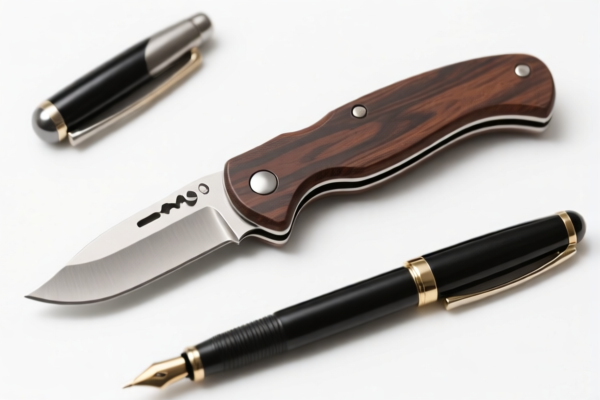
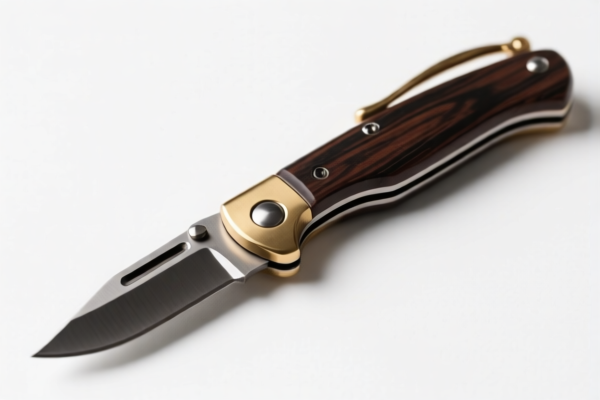
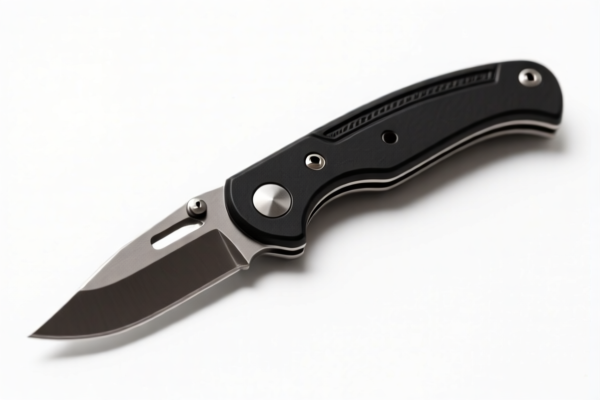
AI Analysis
🔪 Putty Knives & Hand Tools (Iron/Steel)
🌐 HS Code Reference & Clearance Guide | 2024/2025 Latest Tariff Analysis | Professional Customs Strategy
📌 I. Product Definition & Classification: Do You Know "Putty Knives"?
Putty knives are essential hand tools used for applying, smoothing, or removing soft materials like putty, spackling, caulk, or paint. In international trade, they fall under Chapter 82 (Tools, Implements, Spoons and Forks of Base Metal).
They are broadly categorized based on their specific use and design: 1. Kitchen/Table Implements (Household Tools): Often includes flexible putty knives or those with specific handles if classified broadly as "household tools" in some jurisdictions, but specifically under HS 8205 for hand tools. 2. General Hand Tools: Putty knives used for construction, repair, or industrial purposes.
⚠️ Key Distinction Point:
- If the tool is specifically designed for kitchen or table use (rare for putty knives, but possible for specific household scraper variants), it might fall under different sub-headings. However, standard putty knives are hand tools.
- The critical split in the provided data is between Household Tools (8205.51) and Other Hand Tools (8205.59).
- Note: In many standard HS systems, putty knives are often grouped under "Other hand tools". However, the provided data specifies a distinction for "Household tools" vs "Other". We must strictly follow the provided DATA.
📦 II. HS Code Classification Details (Based on Provided DATA)
| HS Code | Product Description | Application Scenario | Tax Rate |
|---|---|---|---|
8205.51.30.30 |
Other handtools: Household tools, and parts thereof: Of iron or steel: Other (including parts) Kitchen and table implements | Putty knives classified as Household/Kitchen/Table Implements. This often applies to smaller, domestic-grade tools or those marketed for home DIY tasks. | 28.7% |
8205.59.55.60 |
Other handtools: Other: Other: Of iron or steel Other | Putty knives classified as General/Industrial/Professional Hand Tools. This is the standard classification for construction-grade putty knives, steel trowels, or professional scrapers not specifically defined as "kitchen/table" implements. | 0.0% |
🔍 Key Reminder:
- HS 8205.51.30.30 carries a high tariff (28.7%) because it is categorized under "Household tools" with "Kitchen and table implements" notes.
- HS 8205.59.55.60 carries 0% tax because it is categorized as "Other hand tools" not elsewhere specified.
- The difference lies in the specific description of use and design. If the putty knife is marketed as a general construction tool, it likely falls under8205.59.55.60. If it is marketed as a household/kitchen implement (e.g., a small scraper for home use that might be confused with kitchen utensils), it risks being classified under8205.51.30.30.
💰 III. 2024/2025 Latest Tariff Rate Details (Including Surcharges)
✅ Applicable Country: United States (US)
✅ Origin: China (CN)
✅ Valid Time: Current rates as per provided data
🎯 1. 8205.51.30.30 —— Household Tools (Kitchen/Table Implements Category)
| Item | Detail |
|---|---|
| Base Tariff | 3.7% |
| Surcharges (Section 301) | +25.0% |
| Total Tax Rate | 28.7% |
| Tax Calculation | CIF Value × 28.7% |
| De Minimis Eligibility | ❌ No (Section 301 goods are generally excluded from de minimis exemptions) |
| Legal Basis Path | HS:8205.51.30.30 → Base:3.7% + Section301:25.0% |
📌 Explanation:
- The 28.7% rate is significant. This classification is often triggered if the customs officer interprets the product as a "household implement" similar to kitchen tools.
- Risk: Many generic putty knives shipped for home use may inadvertently fall into this category if not properly described.
🎯 2. 8205.59.55.60 —— Other Hand Tools (General Construction/Industrial)
| Item | Detail |
|---|---|
| Base Tariff | 0.0% |
| Surcharges (Section 301) | 0.0% |
| Total Tax Rate | 0.0% |
| Tax Calculation | CIF Value × 0.0% = $0 |
| De Minimis Eligibility | ✅ Yes (Potentially eligible for de minimis if value < $800 and not restricted) |
| Legal Basis Path | HS:8205.59.55.60 → Base:0.0% + Section301:0.0% |
📌 Explanation:
- This is the ideal classification for standard putty knives used in construction, drywall repair, or professional painting.
- It benefits from zero tariffs, making it highly cost-effective for importers.
🛠️ IV. Customs Clearance Practical Advice (Pitfall Avoidance Guide)
✅ 1. Documentation Checklist (Essential for 0% Tariff)
| Document | Required | Description |
|---|---|---|
| ✅ Product Specifications | ✔️ | Must clearly state: "Putty Knife, Steel Blade, Wooden Handle, for Construction/Drywall Use". Avoid words like "Kitchen", "Food", "Table". |
| ✅ Product Photos | ✔️ | Clear images of the blade, handle, and any branding. Show that it is a rigid or semi-rigid construction tool, not a flexible kitchen scraper. |
| ✅ Commercial Invoice | ✔️ | Description must match HS code intent: "Construction Hand Tool: Putty Knife". |
| ✅ Packing List | ✔️ | Standard packaging details. |
| ✅ Origin Certificate | ✔️ | If claiming preferential rates elsewhere (though US has 0% here, it's good practice). |
✅ 2. Declaration Tips (Key Mnemonics)
🔥 “Professional Use, Zero Tax; Kitchen Label, High Tax! Describing ‘Household’ is a Trap!”
| Scenario | Correct Declaration | Wrong Practice |
|---|---|---|
| Standard Putty Knife (Construction) | 8205.59.55.60Description: "Steel Putty Knife for Drywall Repair" |
Classifying as 8205.51.30.30Description: "Household Tool" |
| Small Household Scraper (Misclassified) | Consult Customs If it resembles a kitchen tool, it may be 8205.51.30.30 (28.7%) |
Trying to hide it as a general tool without proof of professional use |
| Set of Tools (Including Putty Knife) | Declare separately Putty knife under 8205.59.55.60 |
Bunching it with kitchen utensils |
✅ 3. Special Handling
| Situation | Advice |
|---|---|
| OEM Private Label | Ensure the product manual and marketing materials do not use terms like "Kitchen", "Food Safe", or "Table Use". Use "Construction", "Repair", "DIY Home Improvement". |
| Flexible Putty Knives | If the blade is highly flexible and thin, it might be mistaken for a kitchen scraper. Provide photos showing rigidity or usage in construction. |
| Mixed Containers | If shipping putty knives with kitchen tools, declare them separately. Mixing may cause the entire shipment to be scrutinized or the putty knives to be incorrectly classified. |
🌍 V. Global Market Comparison (2024/2025)
| Country/Region | Recommended HS Code | Tariff | Certification | Note |
|---|---|---|---|---|
| 🇺🇸 USA | 8205.59.55.60 |
0.0% | None | Best Option for professional tools. Avoid 8205.51.30.30 (28.7%). |
| 🇨🇳 China | 8205.59.55.60 |
~5-10% | CCC (if applicable) | Standard import duties apply. |
| 🇪🇺 EU | 8205.59.99 |
~2.7% | CE (if applicable) | Different HS structure, but generally low duty. |
| 🇬🇧 UK | 8205.59.99 |
~2.7% | UKCA | Post-Brexit rates similar to EU. |
📌 Conclusion:
- For the US Market, the 0% tariff on8205.59.55.60is a massive advantage.
- Critical Strategy: Ensure your product description excludes any ambiguity with "kitchen" or "table" implements to avoid the 28.7% tax.
📌 VI. Common Mistakes & Pitfalls (Lessons Learned)
❌ Mistake 1: Using "Household Tool" as a generic description
👉 Consequence: Customs may classify it under 8205.51.30.30 → 28.7% tax!
❌ Mistake 2: Including "Kitchen" or "Food" in marketing materials
👉 Consequence: Customs evidence may reclassify the item as a kitchen implement → 28.7% tax + fines
❌ Mistake 3: Not distinguishing between professional and consumer-grade tools
👉 Consequence: Ambiguity leads to higher scrutiny and potential misclassification.
❌ Mistake 4: Assuming all "hand tools" are the same
👉 Consequence: HS codes have specific sub-headings for "household" vs "other". Specificity wins.
✅ Correct Approach:
"Construction Hand Tool: Steel Putty Knife, 2-inch Blade, Wooden Handle, for Drywall and Paint Removal. NOT for kitchen use."
🎯 VII. Conclusion: Precision in Classification Saves Money!
🎯 Remember the Mantra:
🔹 "Professional Tools, Zero Tax! Kitchen Label, High Cost!"
🔹 "Describe Use, Not Just Shape! Avoid 'Household' Traps!"
📌 Pro Tip:
If your putty knives are not of Chinese origin (e.g., Vietnam, Thailand), they may still qualify for 0% under US trade agreements, but you must provide proof of origin. For Chinese-origin tools, 8205.59.55.60 is your golden ticket to 0% tariffs. Always verify the product description with a licensed customs broker before shipment.
📣 Immediate Action:
📞 Contact a Customs Broker + Provide Product Photos + Confirm HS Code
8205.59.55.60
🚀 Clear your goods smoothly, avoid the 28.7% trap, and boost your margins!
✨ Professional Clearance, Starting with Accurate Classification!
💼 Every Penny Saved is Profit Gained!
Customer Reviews
About HS Code Classification
The Harmonized System (HS) is an internationally standardized nomenclature developed by the World Customs Organization (WCO) to classify traded products. Over 200 countries use the HS system as the basis for customs tariffs, trade statistics, and import/export regulations.
Each HS code follows a hierarchical structure:
- Chapter (2 digits) — Broad category of goods (e.g., Chapter 84: Machinery and Mechanical Appliances)
- Heading (4 digits) — More specific grouping within the chapter
- Subheading (6 digits) — Internationally standardized breakdown, used by all WCO member countries
- National subdivisions (8-10 digits) — Country-specific extensions for further classification, such as US HTSUS 10-digit codes
Correct HS code classification is essential for smooth customs clearance, accurate duty payment, and compliance with trade regulations. Misclassification can lead to customs delays, overpayment of duties, or penalties.
When importing from CN to US, the applicable tariff rates may include:
- Most-Favored-Nation (MFN) rate — The standard duty rate applied to WTO members
- General rate — Applied to countries without trade agreements
- Trade remedy duties — Additional tariffs such as Section 301 (anti-dumping), Section 232 (national security), or countervailing duties
The information provided on this page is for reference purposes only. For official classification, please consult with your local customs authority or a licensed customs broker.