Quartz Clock Movement
CN → US| HS Code | Tariff Rate | Origin | Destination | Doc |
|---|---|---|---|---|
| 9105295000 | 0.0% | CN | US | Official Doc |
| 9105294000 | 0.0% | CN | US | Official Doc |
| 8543908885 | 85.0% | CN | US | Official Doc |
| 9114903000 | 0.0% | CN | US | Official Doc |
Product Images
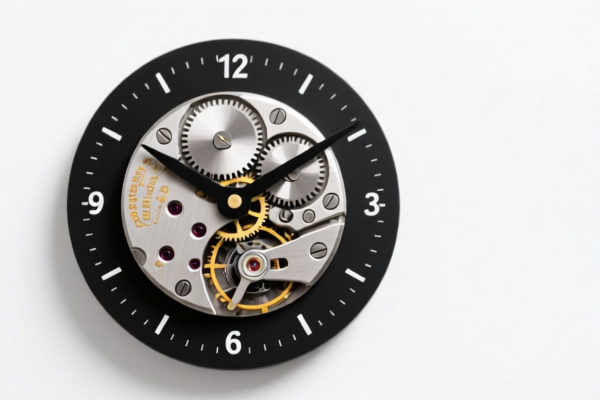

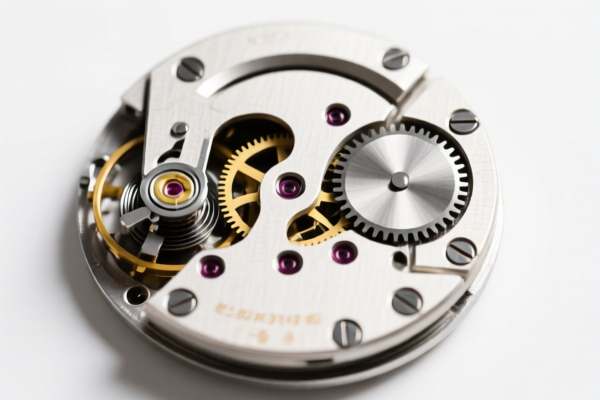
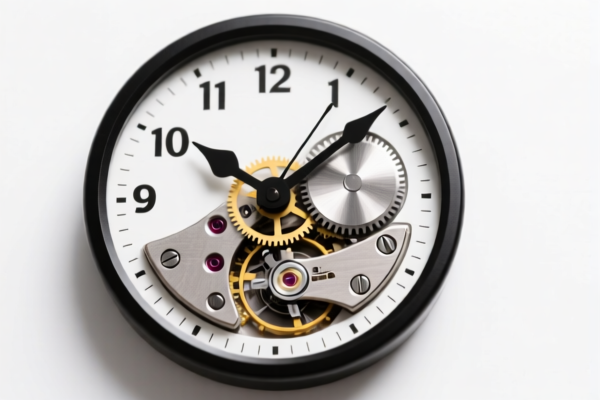
AI Analysis
⏰ Quartz Clock Movements (The Heart of Timekeeping)
🌐 HS Code Reference & Customs Clearance Guide | 2026 Latest Tariff Analysis | Professional Compliance Strategy
📌 Part I: Product Definition & Classification: Do You Truly Understand "Quartz Movements"?
A Quartz Clock Movement is the internal mechanical/electronic engine that drives a clock. It converts electrical energy into precise mechanical motion. In international trade, classification depends heavily on form (finished good vs. component) and function (part of a clock vs. generic electrical part).
Key Distinctions:
- Finished Clock (Wall Clock): If the movement is installed in a casing with hands/dial, it is a Timepiece (HS 91).
- Movement Component: If sold separately as a replacement part or kit, it is classified as a Part of Timepieces (HS 91) OR an Electrical Machine Part (HS 85) depending on specificity and integration.
⚠️ Critical Classification Point:
- If it is a complete wall clock (casing + movement + hands) → HS 9105.29.40.00
- If it is a generic electrical part/component not specifically identifiable as a clock part alone → HS 8543.90.88.85
- If it is a bare movement module intended for clock assembly → HS 9114.90.30.00
📦 Part II: HS Code Classification Details (2026 Official Tariff Cross-Reference)
| HS Code | Product Description | Application Scenario | Component Status |
|---|---|---|---|
9105.29.40.00 |
Wall clocks (Other than pocket watches or similar watches) | Finished wall clocks, decorative wall clocks, ready-to-hang timepieces | ✅ Finished Good |
8543.90.88.85 |
Electrical machines and apparatus, having individual functions, n.e.s. in Ch. 85 | Generic electrical components, plastic/metal housing parts, non-specific clock parts | ✅ Generic Part |
9114.90.30.00 |
Parts of clocks and watches (Other than cases, crystals, dials, hands) | Bare quartz movements, gears, batteries (if sold with), clock assembly kits | ✅ Specific Part |
🔍 Key Reminder:
- Finished Wall Clocks cannot be split into "movement + casing" for lower tariffs; they must be declared as 9105.
- Bare Movements are preferred under 9114 because they are specifically "parts of clocks." Using 8543 is risky if the item is exclusively for clocks.
- 8543.90.88.85 is often used for mixed-material components (plastic/metal) that don’t fit neatly into "clock parts" but are clearly electrical in nature.
💰 Part III: 2026 Latest Tariff Rate Breakdown (Including Duties & Surcharges)
✅ Applicable Country: United States (US)
✅ Origin: China (CN)
✅ Effective Date: From 2025/2026 (subject to ongoing Section 301 and IEEPA updates)
🎯 1. 9105.29.40.00 —— Wall Clocks (Finished Goods)
| Item | Details |
|---|---|
| Base Duty | 15¢ each + 6.4% (Ad Valorem) |
| Section 301 Surcharge | 0.0% (Note: Verify current list; historically some clocks were exempt or low, but check latest updates) |
| Section 122 Surcharge | +10.0% (New Trade Policy Surcharge) |
| Total Effective Rate | 6.4% + 15¢/unit + 10% surcharge |
| Calculation | (CIF Value × 6.4%) + ($0.15 × Units) + (CIF Value × 10%) |
| De Minimis Eligibility | ❌ No (Not eligible for $800 de minimis if duty > 0%) |
| Legal Basis | HTSUS:9105.29.40.00 → Section 122: 10% |
📌 Explanation:
- This is the most common code for imported wall clocks.
- The 15¢ per unit is a specific duty added to the ad valorem rate.
- The +10% Section 122 tariff is a significant cost driver introduced recently, impacting most Chinese-origin consumer goods.
🎯 2. 8543.90.88.85 —— Electrical Parts (Generic)
| Item | Details |
|---|---|
| Base Duty | 0.0% |
| Section 301 Surcharge | +25.0% |
| Steel/Aluminum/Copper Surcharge | +50.0% (If product contains significant metals, verify material composition) |
| Section 122 Surcharge | +10.0% |
| Total Effective Rate | Up to 85.0% (25% + 10% + potential 50% for metals) |
| Calculation | CIF Value × 85.0% (worst-case scenario) |
| De Minimis Eligibility | ❌ No |
| Legal Basis | HTSUS:8543.90.88.85 → Section 301: 9903.88.01 → Section 122 |
📌 Explanation:
- Extremely High Risk: If your quartz movement is classified here instead of under Chapter 91, you face 85% duty.
- This code is used when the item is not clearly a clock part but an "electrical machine part."
- Avoid this code unless the product is a complex, multi-function electrical component not primarily for timekeeping.
🎯 3. 9114.90.30.00 —— Parts of Clocks (Movements Only)
| Item | Details |
|---|---|
| Base Duty | 6% + 2.3¢/jewel + 0.2¢/other part |
| Section 301 Surcharge | 0.0% (Historically low for clock parts) |
| Section 122 Surcharge | +10.0% |
| Total Effective Rate | 6% + specific duties + 10% |
| Calculation | (CIF × 6%) + ($0.023 × Jewels) + ($0.002 × Other Parts) + (CIF × 10%) |
| De Minimis Eligibility | ❌ No |
| Legal Basis | HTSUS:9114.90.30.00 → Section 122: 10% |
📌 Explanation:
- Best for Bare Movements: If you import only the quartz movement (no casing, no dial), this is the most accurate code.
- The 2.3¢ per jewel applies if the movement contains jeweled bearings.
- The 10% Section 122 still applies, but the base rate is lower than finished clocks.
- Verify Jewel Count: Incorrectly declaring jewels can lead to penalties.
🛠️ Part IV: Customs Clearance Practical Advice (Pitfall Avoidance Guide)
✅ 1. Required Documentation Checklist (Non-Negotiable)
| Document | Mandatory? | Notes |
|---|---|---|
| ✅ Product Specification Sheet | ✔️ | Must clearly state: "Quartz Movement," "Voltage," "Battery Type," "Dimensions" |
| ✅ Photos (Internal/External) | ✔️ | Show the movement board, gears, and any branding |
| ✅ Bill of Lading/Packing List | ✔️ | Must match invoice description exactly |
| ✅ Commercial Invoice | ✔️ | Describe as "Quartz Clock Movement Module" or "Wall Clock" depending on HS Code |
| ✅ Certificate of Origin (CO) | ✔️ | If applicable for preferential treatment (though limited for CN origin in US) |
| ✅ Material Declaration | ✔️ | Critical for 8543.90.88.85 to avoid +50% metal surcharge |
✅ 2. Declaration Strategy (Key Mantras)
🔥 "Finished Clock = 9105 | Bare Movement = 9114 | Generic Part = 8543 (Avoid!)"
| Scenario | Correct HS Code | Incorrect Code | Risk |
|---|---|---|---|
| Complete Wall Clock (with case, hands, battery) | 9105.29.40.00 |
9114.90.30.00 |
Misclassification: Duty underpaid → Penalty |
| Bare Quartz Movement (no case, no hands) | 9114.90.30.00 |
8543.90.88.85 |
Catastrophic: 85% vs ~16% duty |
| Mixed Kit (Movement + Case + Hands, sold separately but shipped together) | 9105.29.40.00 |
Split into parts | GAA (General Rule of Interpretation 3): Assembled item governs |
| Replacement Movement (Sold for repair) | 9114.90.30.00 |
9105.29.40.00 |
Minor: Higher duty but acceptable |
✅ 3. Special Cases Handling
| Scenario | Recommendation |
|---|---|
| Smart Clocks (with WiFi/App) | May fall under 8517.62 (Communication Apparatus). Check if "quartz movement" is secondary to digital function. |
| Movement with Battery Included | Declare battery separately if required by USITC rules (Hazmat filing for Lithium). |
| Bulk Import vs. Retail Units | Bulk shipments of movements still require per-unit jewel count declaration for 9114.90.30.00. |
| Section 301 Exemptions | Historically, some clock parts were exempt. Check current HTSUS exclusions list before declaring. |
🌍 Part V: Global Market Comparison (2026 Update)
| Country/Region | Recommended HS Code | Estimated Duty (China Origin) | Key Requirements |
|---|---|---|---|
| 🇺🇸 USA | 9105.29.40.00 (Clock) / 9114.90.30.00 (Part) |
16% + 15¢/unit (Clock) 16% + 2.3¢/jewel (Part) |
Section 122 (10%) applies. No De Minimis. |
| 🇨🇳 China (Export) | 9105.29 / 9114.90 |
0% (Export Duty) | Standard export declaration. |
| 🇪🇺 EU | 9105.11 / 9114.20 |
0% - 4.5% (Most clock parts duty-free) | CE Marking for electrical parts. VAT applies. |
| 🇬🇧 UK | 9105.11 / 9114.20 |
0% - 4.5% | Post-Brexit rules apply. |
| 🇯🇵 Japan | 9105.99 / 9114.90 |
0% - 3.2% | JIS Certification may be required. |
📌 Conclusion:
- USA is the most expensive market due to Section 122 (10%) and potential Section 301.
- EU/UK/Japan are more favorable for quartz clock parts, with low or zero base duties.
- Never use8543.90.88.85for pure quartz movements in the US market unless explicitly advised by a customs broker for a non-standard electrical device.
📌 Part VI: Common Mistakes & Pitfalls (Lessons Learned)
❌ Mistake 1: Declaring a Complete Wall Clock as "Parts" (9114)
👉 Consequence: Customs may reject because a complete clock is not a "part." Even if accepted, you may be charged higher duties or face audits.
👉 Correct: Use 9105.29.40.00.
❌ Mistake 2: Declaring a Bare Movement as 8543.90.88.85
👉 Consequence: You pay 85% duty instead of ~16%. This is a massive cost overrun.
👉 Correct: Use 9114.90.30.00 for specific clock parts.
❌ Mistake 3: Ignoring the 15¢ per unit duty on finished clocks
👉 Consequence: Underpayment on low-value items. For 10,000 clocks, that’s $1,500 extra.
👉 Correct: Factor this into your landed cost calculation.
❌ Mistake 4: Failing to declare Jewel Count for 9114.90.30.00
👉 Consequence: If the movement has jewels (e.g., 5 jewels), you owe $0.115 per unit. Undeclared → Penalty.
👉 Correct: Check technical specs for jewel count.
🎯 Part VII: Conclusion: Precision in Classification Saves Money!
🎯 Remember the Mantras:
🔹 "Finished Clock = 9105 (6.4% + 15¢ + 10%) | Bare Movement = 9114 (6% + 2.3¢/jewel + 10%) | Avoid 8543 (85%!)"
🔹 "HS Code Determines Profit Margin. A 70% duty difference can destroy your business!"
📌 Pro Tip:
- If you import both finished clocks and bare movements, use separate SKUs and clear product descriptions.
- Request a Binding Tariff Information (BTI) or US CBP Ruling if your product is ambiguous (e.g., a "smart" clock).
- Always verify Section 122 applicability as US trade policy changes frequently.
📣 Immediate Action:
📞 Consult a licensed customs broker
📄 Prepare detailed technical specs (jewel count, voltage, material composition)
🚀 Optimize your supply chain to account for 16-26% landed duties in the US market
✨ Professional Customs Compliance Starts with Accurate Classification!
💼 Your Bottom Line Depends on It!
Customer Reviews
About HS Code Classification
The Harmonized System (HS) is an internationally standardized nomenclature developed by the World Customs Organization (WCO) to classify traded products. Over 200 countries use the HS system as the basis for customs tariffs, trade statistics, and import/export regulations.
Each HS code follows a hierarchical structure:
- Chapter (2 digits) — Broad category of goods (e.g., Chapter 84: Machinery and Mechanical Appliances)
- Heading (4 digits) — More specific grouping within the chapter
- Subheading (6 digits) — Internationally standardized breakdown, used by all WCO member countries
- National subdivisions (8-10 digits) — Country-specific extensions for further classification, such as US HTSUS 10-digit codes
Correct HS code classification is essential for smooth customs clearance, accurate duty payment, and compliance with trade regulations. Misclassification can lead to customs delays, overpayment of duties, or penalties.
When importing from CN to US, the applicable tariff rates may include:
- Most-Favored-Nation (MFN) rate — The standard duty rate applied to WTO members
- General rate — Applied to countries without trade agreements
- Trade remedy duties — Additional tariffs such as Section 301 (anti-dumping), Section 232 (national security), or countervailing duties
The information provided on this page is for reference purposes only. For official classification, please consult with your local customs authority or a licensed customs broker.