Quartz Wall Clock
CN → US| HS Code | Tariff Rate | Origin | Destination | Doc |
|---|---|---|---|---|
| 9105295000 | 0.0% | CN | US | Official Doc |
| 9105294000 | 0.0% | CN | US | Official Doc |
| 8543908885 | 85.0% | CN | US | Official Doc |
| 9114903000 | 0.0% | CN | US | Official Doc |
| 9105295000 | 0.0% | CN | US | Official Doc |
Product Images

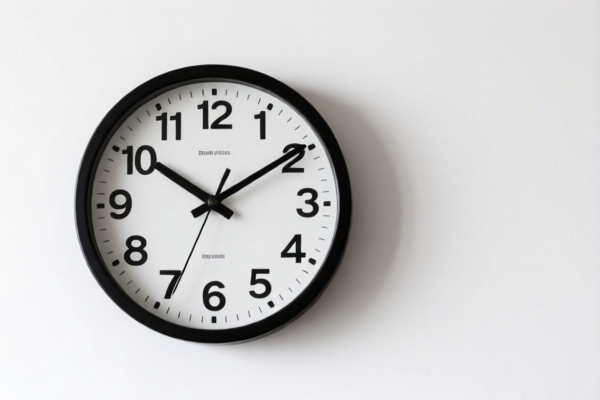
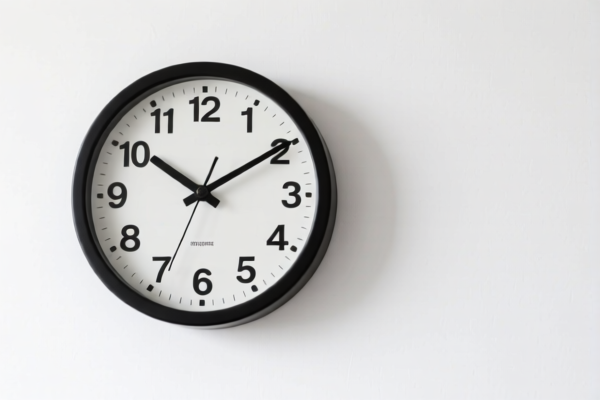
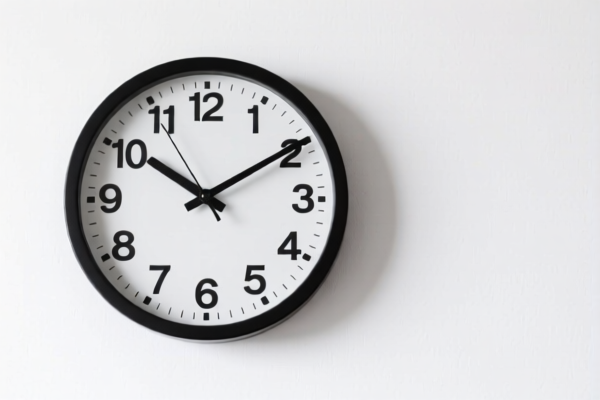
AI Analysis
🕰️ Quartz Wall Clock: HS Code Classification & 2026 Customs Clearance Guide
🌐 Global Trade Compliance & Tax Strategy | HS Code Deep Dive | 2026 Updated Tariff Analysis
📌 I. Product Definition & Classification Logic: What Exactly is a "Quartz Wall Clock"?
A Quartz Wall Clock is a timekeeping device that uses a quartz crystal oscillator to regulate the movement of its hands. In international trade, the classification depends heavily on what is being imported: the complete finished product or specific components. Misclassification here can lead to drastic tariff differences, especially when Section 301 (Trade War) and IEEPA tariffs are applied.
There are three distinct classification paths based on the product state: 1. Finished Clocks: The complete unit with case, dial, hands, and quartz movement. 2. Electrical Appliances/Parts: If classified as a component of a larger electrical system (less common for standalone clocks but possible in certain contexts). 3. Movements/Components: The internal mechanism (quartz movement) alone, without the case or dial.
⚠️ Key Distinction:
- If it includes the case, dial, hands, and battery compartment as a ready-to-use item → Classify as Wall Clock (Chapter 91).
- If it is just the internal mechanism (movement) → Classify as Parts of Clocks (Chapter 91).
- Warning: Do not classify a complete clock as an "electrical appliance part" unless specifically required by end-use, as the duty rates differ significantly.
📦 II. HS Code Classification Details (2026 Latest Tariff Alignment)
| HS Code | Product Description | Applicable Scenario | Key Characteristics |
|---|---|---|---|
9105.29.50.00 |
Wall Clocks, Other (Quartz) | Standard Quartz Wall Clocks | Non-mechanical, battery-operated, complete unit. |
9105.29.40.00 |
Wall Clocks, Other (Quartz) | Specific Quartz Wall Clocks | Another sub-category for quartz wall clocks under "Other". |
8543.90.88.85 |
Electrical Machines/Equipment, Other | Clocks as Electrical Components | If deemed a part of a larger electrical system or non-standard appliance. |
9114.90.30.00 |
Parts of Clocks & Watches | Quartz Movements/Components | The internal mechanism only, without case/dial. |
🔍 Critical Note:
- The majority of finished quartz wall clocks fall under 9105.29 series.
- The exact sub-code (40.00vs50.00) often depends on specific material composition or design nuances defined by local customs authorities, but both are "Wall Clocks."
- Never classify a finished clock as8543.90unless you have a specific legal ruling, as it attracts punitive tariffs.
💰 III. 2026 Latest Tariff Rate Breakdown (Detailed)
✅ Context: Analysis based on the provided data, primarily reflecting US Import Duties for Chinese-Origin Goods (due to "122 Clause" and high附加税 references).
✅ Origin: Typically China (CN) given the "122 Clause" reference.
✅ Scope: Base Duty + Section 301/IEEPA Add-ons.
🎯 1. 9105.29.50.00 – Wall Clocks, Other (Quartz)
| Item | Detail |
|---|---|
| Base Duty | $0.30 per clock + 4.3% (ad valorem) |
| Add-on Tariff | 7.5% (Section 301 / Trade War) |
| 122 Clause Tariff | +10% (Specific legislative clause) |
| Total Effective Rate | Complex Calculation: $0.30/unit + (4.3% + 7.5% + 10%) = 21.8% + $0.30/unit |
| Tax Detail | Base: $0.30 + 4.3% Add-on: 7.5% 122 Clause: 10% |
📌 Explanation:
- This is the most common classification for standard quartz wall clocks.
- The "122 Clause" adds a specific 10% surcharge on top of existing trade remedies.
- The fixed fee ($0.30) applies per unit, which can be significant for low-value items.
🎯 2. 9105.29.40.00 – Wall Clocks, Other (Quartz)
| Item | Detail |
|---|---|
| Base Duty | $0.15 per clock + 6.4% (ad valorem) |
| Add-on Tariff | 0.0% (Exempt from specific Section 301 add-ons for this sub-code?) |
| 122 Clause Tariff | +10% |
| Total Effective Rate | $0.15/unit + (6.4% + 10%) = 16.4% + $0.15/unit |
| Tax Detail | Base: $0.15 + 6.4% Add-on: 0.0% 122 Clause: 10% |
📌 Explanation:
- This sub-code appears more favorable regarding the Section 301 add-on (0.0% vs 7.5%).
- However, the base ad valorem rate is slightly higher (6.4% vs 4.3%).
- Strategy: If your clock fits this description, it saves ~7.5% on the ad valorem portion compared to9105.29.50.00.
🎯 3. 8543.90.88.85 – Electrical Machines/Equipment, Other
| Item | Detail |
|---|---|
| Base Duty | 0.0% |
| Add-on Tariff | 25.0% |
| 122 Clause Tariff | +10% |
| Steel/Aluminum/Copper Add-on | +50% (If components are ferrous/non-ferrous metals) |
| Total Effective Rate | Up to 85.0% (25% + 10% + 50%) |
| Tax Detail | Base: 0% Add-on: 25% 122 Clause: 10% Material Surcharge: 50% |
📌 CRITICAL WARNING:
- This classification is EXTREMELY HAZARDOUS for quartz wall clocks.
- It applies if customs determines the clock is an "electrical machine part" rather than a clock.
- The 50% metal surcharge can trigger if the case contains steel, aluminum, or copper.
- Avoid this HS Code unless you have a specific legal exemption or the product is truly a component, not a finished good.
🎯 4. 9114.90.30.00 – Parts of Clocks & Watches (Movements)
| Item | Detail |
|---|---|
| Base Duty | 6.0% + $0.023/jewel + $0.002/other part |
| Add-on Tariff | 0.0% |
| 122 Clause Tariff | +10% |
| Total Effective Rate | Variable: 16.0% + per-unit fees |
| Tax Detail | Base: 6% + per-jewel cost Add-on: 0% 122 Clause: 10% |
📌 Explanation:
- Only apply if importing movements only (the internal mechanism).
- The duty is complex, based on the number of jewels and parts.
- No Section 301 add-on (0.0%), but the 122 Clause (10%) still applies.
- Not suitable for finished clocks.
🛠️ IV. Customs Clearance Practical Advice (Risk Mitigation)
✅ 1. Essential Documentation Checklist
| Document | Required? | Purpose |
|---|---|---|
| ✅ Commercial Invoice | ✔️ | Must clearly state "Quartz Wall Clock" and HS Code. |
| ✅ Packing List | ✔️ | Show quantity and weight. |
| ✅ Product Photos | ✔️ | Show the clock face, back panel, and battery compartment to prove it's a finished good. |
| ✅ Bill of Materials (BOM) | ✔️ | If asked, to prove it's not just a "part" of an electrical system. |
| ✅ Origin Certificate | ✔️ | To verify country of origin for trade war tariffs. |
✅ 2. Declaration Best Practices
🔥 "Declare the End Product, Not the Parts!"
| Scenario | Correct HS Code | Incorrect HS Code | Consequence |
|---|---|---|---|
| Finished Quartz Clock | 9105.29.40.00 or 9105.29.50.00 |
8543.90.88.85 |
85% Tax vs 16-22% Tax! |
| Quartz Movement Only | 9114.90.30.00 |
9105.29.40.00 |
Overpayment of duty |
| Complete Clock with Stand | 9105.29.40.00 |
Split into "Clock" + "Stand" | Complex duty calculation, risk of misclassification |
✅ 3. Special Considerations
- Material Check: If using
8543.90.88.85, check if your clock has steel/aluminum cases. The 50% metal surcharge will destroy your profit margin. - 122 Clause Impact: The 10% "122 Clause" tariff applies to ALL listed categories. There is no exemption. Factor this into your cost model.
- Jewel Count: If importing movements (
9114.90.30.00), count the jewels accurately. The $0.023/jewel fee adds up quickly for high-quality movements.
🌍 V. Global Market Comparison (2026)
| Market | Recommended HS Code | Base Duty | Add-ons | Notes |
|---|---|---|---|---|
| 🇺🇸 USA | 9105.29.40.00 / 9105.29.50.00 |
4.3-6.4% | +17.5% (Section 301 + 122) | High tariffs. Avoid 8543 at all costs. |
| 🇪🇺 EU | 9105.29 |
0-4.5% | 0% | Generally low duty. No Section 301. |
| 🇨🇳 China | 9105.29 |
0-5% | 0% | No trade war tariffs. |
| 🇬🇧 UK | 9105.29 |
0-4.5% | 0% | Post-Brexit, generally favorable. |
📌 Conclusion:
- USA: The highest barrier. Use9105.29.40.00if possible to save 7.5% on ad valorem.
- EU/UK/Asia: Much lower risk. Focus on accurate description rather than tariff mitigation.
📌 VI. Common Mistakes & Pitfalls (Blood & Tears)
❌ Mistake 1: Classifying a finished quartz clock as 8543.90.88.85 ("Other Electrical Machine").
👉 Result: 85% Total Duty. Your product becomes uncompetitive.
👉 Fix: Always classify finished clocks under Chapter 91 (Timekeeping).
❌ Mistake 2: Ignoring the "122 Clause" (10% surcharge).
👉 Result: Unexpected tax bill at customs.
👉 Fix: Include 10% in all cost calculations for US imports from China.
❌ Mistake 3: Declaring "Clock Parts" when importing complete clocks.
👉 Result: Customs may suspect undervaluation or misclassification.
👉 Fix: Use "Finished Quartz Wall Clock" in commercial invoice description.
✅ Correct Declaration Example:
"Quartz Wall Clock, Battery Operated, Model XYZ, HS Code 9105.29.40.00"
🎯 VII. Conclusion: Precision Saves Profit!
🎯 Key Takeaway:
🔹 Finished Clocks →
9105.29.xxxx(16-22% Total Duty)
🔹 Movements Only →9114.90.30.00(16% + Jewel Fees)
🔹 Electrical Parts →8543.90.88.85(AVOID: 85% Duty!)
📌 Action Plan:
1. Confirm Product State: Is it finished or a part?
2. Select HS Code: Prefer 9105.29.40.00 for lowest duty.
3. Calculate Costs: Include Base + 7.5% (if applicable) + 10% (122 Clause).
4. Document Properly: Clear photos and descriptions.
✨ Smart Compliance, Higher Margins!
💼 Your Clock’s Value Depends on Its Classification!
Customer Reviews
About HS Code Classification
The Harmonized System (HS) is an internationally standardized nomenclature developed by the World Customs Organization (WCO) to classify traded products. Over 200 countries use the HS system as the basis for customs tariffs, trade statistics, and import/export regulations.
Each HS code follows a hierarchical structure:
- Chapter (2 digits) — Broad category of goods (e.g., Chapter 84: Machinery and Mechanical Appliances)
- Heading (4 digits) — More specific grouping within the chapter
- Subheading (6 digits) — Internationally standardized breakdown, used by all WCO member countries
- National subdivisions (8-10 digits) — Country-specific extensions for further classification, such as US HTSUS 10-digit codes
Correct HS code classification is essential for smooth customs clearance, accurate duty payment, and compliance with trade regulations. Misclassification can lead to customs delays, overpayment of duties, or penalties.
When importing from CN to US, the applicable tariff rates may include:
- Most-Favored-Nation (MFN) rate — The standard duty rate applied to WTO members
- General rate — Applied to countries without trade agreements
- Trade remedy duties — Additional tariffs such as Section 301 (anti-dumping), Section 232 (national security), or countervailing duties
The information provided on this page is for reference purposes only. For official classification, please consult with your local customs authority or a licensed customs broker.