Quick Connect Adapter
CN → US| HS Code | Tariff Rate | Origin | Destination | Doc |
|---|---|---|---|---|
| 8517690000 | 35.0% | CN | US | Official Doc |
| 8536694010 | 35.0% | CN | US | Official Doc |
| 8536698000 | 37.7% | CN | US | Official Doc |
| 8504406007 | 35.0% | CN | US | Official Doc |
| 8504407007 | 35.0% | CN | US | Official Doc |
Product Images
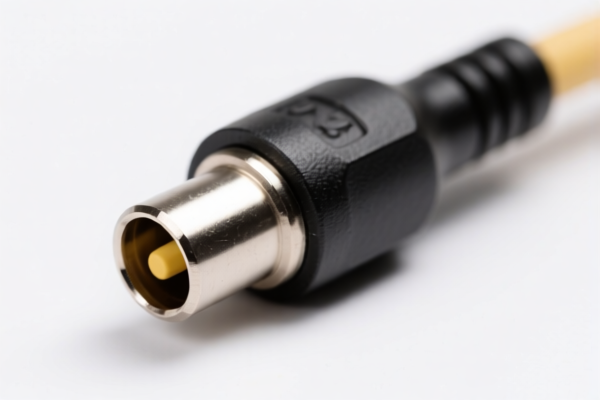
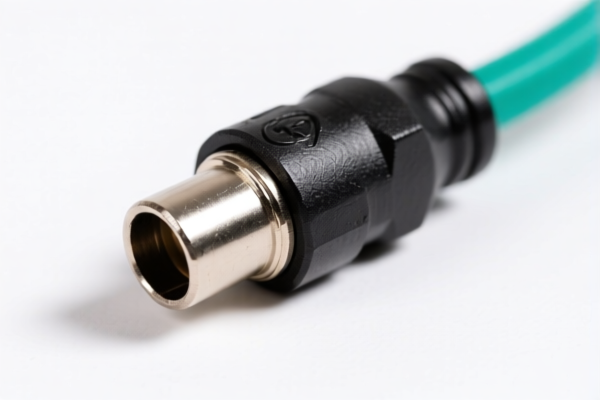
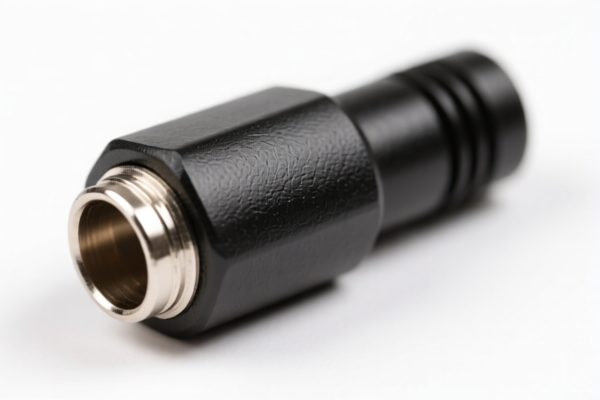
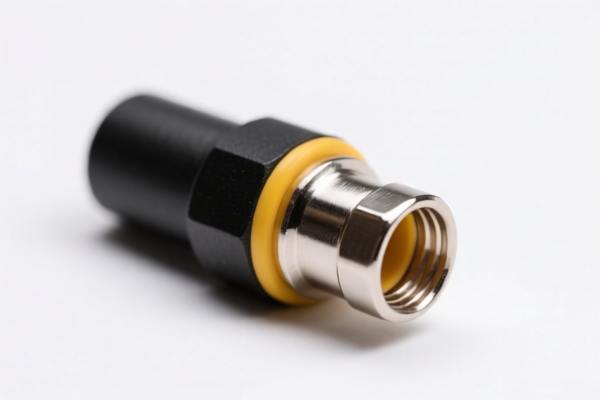
AI Analysis
🔌 Quick Connect Adapter (Universal Power/Data Hub)
🌐 HS Code Reference & Customs Clearance Guide | 2026 Latest Tariff Analysis | Professional Clearance Strategy
📌 I. Product Definition & Classification: What is a "Quick Connect Adapter"?
A "Quick Connect Adapter" is a broad term often used in e-commerce and logistics. In international trade, its classification depends entirely on its primary function: 1. Power Adapter (AC/DC Converter): Converts mains electricity (e.g., 110V/220V) to low voltage DC for devices (phones, laptops). 2. Data/Signal Adapter: Transfers data signals (e.g., HDMI to USB-C, Ethernet to Wi-Fi). 3. Electrical Connector: Physical mating devices (plugs/sockets) that connect circuits.
⚠️ Critical Distinction:
- If it converts power (AC to DC) → It is a Static Converter (Heading 8504).
- If it transmits data → It is a Transmission/Reception Apparatus (Heading 8517).
- If it connects circuits (plug/socket) without conversion → It is a Connector (Heading 8536).
📦 II. HS Code Classification Matrix (2026 Latest Tariff Data)
Based on the provided dataset, here are the four possible classifications for "Quick Connect Adapters" and their logic:
| HS Code | Summary & Logic | Primary Function |
|---|---|---|
8504.40.60.07 |
Static Converter (Power) Fits the description of a power converter providing power to electronic equipment. |
Power Supply (AC/DC Conversion) |
8504.40.70.07 |
Static Converter (Power) Identical to above; specifically categorized as a static/power converter. |
Power Supply (AC/DC Conversion) |
8517.69.00.00 |
Data Transmission Device Used for transmitting/receiving voice, image, or other data as a peripheral device. |
Data Transfer (e.g., Network, USB Hub) |
8536.69.40.10 |
Coaxial/Signal Connector Electrical connection/conversion equipment, voltage ≤1,000V. Fits coaxial connector category. |
Signal Connection (Coaxial/RJ45) |
8536.69.80.00 |
Plug/Socket Connector Electrical connection device, plug/socket category, made of electrical-grade material. |
Physical Connector (Plug/Socket) |
🔍 Key Decision Point:
- Does it have a circuit that changes voltage? → Go to 8504.
- Does it just pass data through? → Go to 8517.
- Is it just a plug/socket? → Go to 8536.
💰 III. 2026 Tariff Rate Breakdown (Detailed Analysis)
✅ Applicable Country: United States (US)
✅ Origin: China (CN)
✅ Effective Date: Post-2025 Policies (Section 301 + IEEPA)
🎯 1. Power Adapters (HS 8504.40.60.07 & 8504.40.70.07)
For devices that charge phones, laptops, or convert AC to DC.
| Item | Detail |
|---|---|
| Base Tariff | 0.0% |
| Section 301 Add-on | +25.0% (High tariff for Chinese electronics) |
| IEEPA 122 Clause | +10.0% (Additional levy on Chinese origin) |
| Total Tax Rate | 35.0% |
| Calculation | CIF Value × 35% |
| De Minimis Exemption | ❌ NOT Eligible (Deny De Minimis for Chinese goods under these clauses) |
| Legal Basis | Section 301: 9903.88.01 + IEEPA: 9903.01.24 |
📌 Explanation:
Power adapters are considered "Static Converters." The base rate is low, but the 35% total duty significantly impacts profitability. This is a high-cost item for US importers.
🎯 2. Data Adapters (HS 8517.69.00.00)
For USB hubs, Ethernet adapters, HDMI extenders, etc.
| Item | Detail |
|---|---|
| Base Tariff | 0.0% |
| Section 301 Add-on | +25.0% |
| IEEPA 122 Clause | +10.0% |
| Total Tax Rate | 35.0% |
| Calculation | CIF Value × 35% |
| De Minimis Exemption | ❌ NOT Eligible |
| Legal Basis | Section 301: 9903.88.01 + IEEPA: 9903.01.24 |
📌 Explanation:
Data transmission equipment falls under "Other transmission/reception apparatus." Like power adapters, it faces the 35% combined tariff. Do not assume data adapters are cheaper; they are taxed equally high in this dataset.
🎯 3. Coaxial/Signal Connectors (HS 8536.69.40.10)
For coaxial cables, RF adapters, specific signal connectors.
| Item | Detail |
|---|---|
| Base Tariff | 0.0% |
| Section 301 Add-on | +25.0% |
| IEEPA 122 Clause | +10.0% |
| Total Tax Rate | 35.0% |
| Calculation | CIF Value × 35% |
| De Minimis Exemption | ❌ NOT Eligible |
| Legal Basis | Section 301: 9903.88.01 + IEEPA: 9903.01.24 |
📌 Explanation:
Even if it's just a connector, if it's classified under this specific 10-digit code, it incurs the same 35% burden.
🎯 4. General Plug/Socket Connectors (HS 8536.69.80.00)
For generic electrical plugs, sockets, and junction boxes.
| Item | Detail |
|---|---|
| Base Tariff | 2.7% |
| Section 301 Add-on | +25.0% |
| IEEPA 122 Clause | +10.0% |
| Total Tax Rate | 37.7% |
| Calculation | CIF Value × 37.7% |
| De Minimis Exemption | ❌ NOT Eligible |
| Legal Basis | Section 301: 9903.88.01 + IEEPA: 9903.01.24 |
📌 Explanation:
⚠️ Highest Risk! This category has a 2.7% base tariff, making the total 37.7%. This is $2.70 more per $100 than other adapter types. Avoid this code unless absolutely necessary.
🛠️ IV. Customs Clearance Practical Advice
✅ 1. Documentation Checklist (Must-Haves)
| Document | Requirement | Why? |
|---|---|---|
| Product Specification Sheet | ✅ Mandatory | Must clearly state: Input Voltage, Output Voltage, Function (Power vs. Data). |
| Circuit Diagram | ✅ Highly Recommended | Proves whether it is a "Converter" (8504) or just a "Connector" (8536). |
| Product Photos | ✅ Mandatory | Show the label with Watts (W), Volts (V), and Amps (A). |
| Commercial Invoice | ✅ Mandatory | Description must be precise (e.g., "AC/DC Power Adapter," not just "Adapter"). |
| Origin Certificate | ✅ Mandatory | To prove Chinese origin for Section 301/IEEPA application. |
✅ 2. Classification Strategy (How to Save Money)
| Scenario | Recommended HS Code | Total Duty | Strategy |
|---|---|---|---|
| USB Charger / Laptop Brick | 8504.40.60.07 or 8504.40.70.07 |
35.0% | Declare as "Power Supply Unit" or "Static Converter." |
| Ethernet to USB / HDMI Cable | 8517.69.00.00 |
35.0% | Declare as "Data Transmission Device." |
| Simple Plug Splitter (No Circuit) | 8536.69.80.00 |
37.7% | ⚠️ Avoid if possible; highest tax. Only use if no conversion occurs. |
| Coaxial RF Adapter | 8536.69.40.10 |
35.0% | Declare as "Coaxial Connector." |
💡 Pro Tip:
If your adapter converts power (e.g., 110V to 5V), you MUST use 8504. Misclassifying a power adapter as a simple connector (8536) is a common customs error that leads to penalties. Conversely, don't classify a simple plug (8536) as a converter (8504) if it doesn't have internal circuitry.
✅ 3. Common Pitfalls & Avoidance
❌ Pitfall 1: Calling it "Universal Adapter" on the invoice.
👉 Result: Customs may hold it for further review.
✅ Fix: Use specific terms: "DC Power Adapter, 5V/2A" or "HDMI to VGA Signal Converter."
❌ Pitfall 2: Ignoring the "122 Clause" (IEEPA).
👉 Result: Underpayment of 10%.
✅ Fix: Ensure your broker applies 10% IEEPA surcharge on top of the 25% Section 301 duty.
❌ Pitfall 3: Assuming De Minimis (Section 321) applies.
👉 Result: Package seized or backdated duty + penalty.
✅ Fix: For Chinese-origin adapters, De Minimis does NOT apply. Plan for full duty payment.
🌍 V. Global Market Comparison (2026 Outlook)
| Market | HS Code Range | Est. Duty (China Origin) | Notes |
|---|---|---|---|
| 🇺🇸 USA | 8504 / 8517 / 8536 | 35.0% - 37.7% | High barriers due to Section 301 + IEEPA. |
| 🇨🇳 China | 8504 / 8517 / 8536 | 2.7% - 5.0% | Lower base rates, no Section 301. |
| 🇪🇺 EU | 8504 / 8517 | 0% - 4.0% | Generally low tariffs for electronics, but CE certification required. |
| 🇬🇧 UK | 8504 / 8517 | 0% - 4.0% | Post-Brexit, similar to EU but with separate UKCA marking. |
📌 Conclusion:
The US market is significantly more expensive for Chinese-made adapters due to political trade tariffs.
- Profit Margin Impact: A $10 adapter incurs $3.50–$3.77 in duty alone.
- Strategy: Consider labeling "Made in Vietnam" or "Made in Thailand" if supply chain allows, as these origins may qualify for lower or no Section 301 duties.
📌 VI. Final Summary & Action Items
- Identify Function: Is it Power (8504) or Data (8517) or Connector (8536)?
- Check Voltage: If it changes voltage, it's 8504.
- Calculate Cost: Budget for 35%–37.7% total duty for US imports.
- Declare Accurately: Never use vague terms like "Gadget" or "Connector" for power supplies. Use "Static Converter" or "Power Adapter."
🚀 Final Tip:
"Clear Classification = Lower Risk = Faster Clearance."
Always provide technical specs to prove your HS Code choice!
✨ Professional Customs Clearance Starts with Precise Coding!
💼 Don't let 35% duties eat your profits!
Customer Reviews
About HS Code Classification
The Harmonized System (HS) is an internationally standardized nomenclature developed by the World Customs Organization (WCO) to classify traded products. Over 200 countries use the HS system as the basis for customs tariffs, trade statistics, and import/export regulations.
Each HS code follows a hierarchical structure:
- Chapter (2 digits) — Broad category of goods (e.g., Chapter 84: Machinery and Mechanical Appliances)
- Heading (4 digits) — More specific grouping within the chapter
- Subheading (6 digits) — Internationally standardized breakdown, used by all WCO member countries
- National subdivisions (8-10 digits) — Country-specific extensions for further classification, such as US HTSUS 10-digit codes
Correct HS code classification is essential for smooth customs clearance, accurate duty payment, and compliance with trade regulations. Misclassification can lead to customs delays, overpayment of duties, or penalties.
When importing from CN to US, the applicable tariff rates may include:
- Most-Favored-Nation (MFN) rate — The standard duty rate applied to WTO members
- General rate — Applied to countries without trade agreements
- Trade remedy duties — Additional tariffs such as Section 301 (anti-dumping), Section 232 (national security), or countervailing duties
The information provided on this page is for reference purposes only. For official classification, please consult with your local customs authority or a licensed customs broker.