Quick Connect Plastic Pipe Fitting
CN → US| HS Code | Tariff Rate | Origin | Destination | Doc |
|---|---|---|---|---|
| 3919102055 | 40.8% | CN | US | Official Doc |
| 3917400095 | 40.3% | CN | US | Official Doc |
| 3919102010 | 40.8% | CN | US | Official Doc |
| 3926906090 | 39.2% | CN | US | Official Doc |
| 3917400050 | 40.3% | CN | US | Official Doc |
| 3926305000 | 22.8% | CN | US | Official Doc |
Product Images
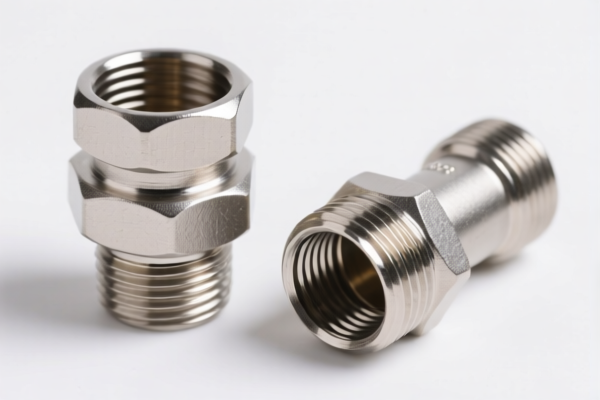
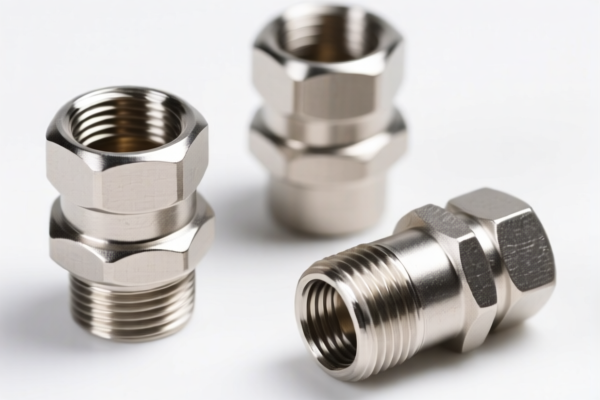
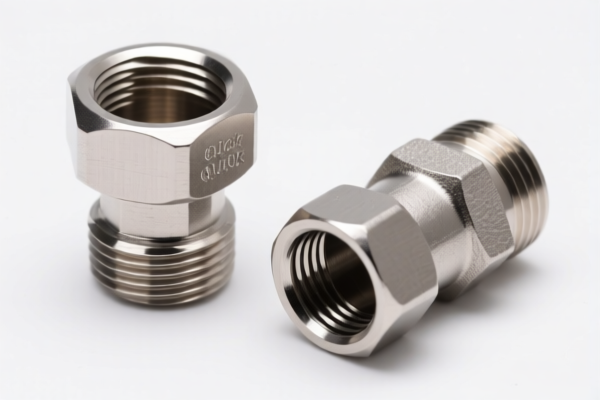
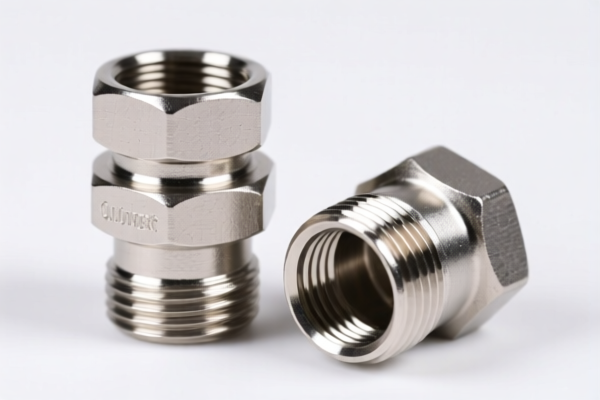
AI Analysis
🚰 Quick Connect Plastic Pipe Fitting (The "Plastic Tape" Enigma)
🌐 HS Code Reference & Customs Clearance Guide | 2026 Latest Tariff Analysis | Professional-Level Clearance Strategy
📌 I. Product Definition & Classification: Is it a "Fitting" or a "Tape"?
The term "Quick Connect Plastic Pipe Fitting" is a classic example of ambiguous product description in international trade. In the eyes of customs brokers and classifiers, this product sits at the crossroads of two distinct categories: Plastic Pipes/Fittings (Ch 3917) and Plastic Self-Adhesive Tapes/Plates (Ch 3919).
The classification hinges entirely on the physical form and function: 1. Rigid/Interlocking Fitting: If the item is a rigid piece (coupling, elbow, tee) designed to snap-fit pipes together → It is a Pipe Fitting. 2. Flexible/Self-Adhesive Tape: If the item is a roll or strip of plastic material used for sealing, bonding, or wrapping around connections → It is a Self-Adhesive Tape.
⚠️ Critical Distinction Point:
- If the product is a structural connector (hard plastic, snap-on mechanism) → Classify under 3917 (Pipe Fittings).
- If the product is a flexible strip (soft plastic, adhesive backing, roll form) used for sealing or bundling → Classify under 3919 (Self-Adhesive Tapes).
- Note: Some ambiguous items described as "tapes" are actually fittings classified as "Other" items, leading to different tariff liabilities.
📦 II. HS Code Classification Details (2026 Latest Tariff Authority Cross-Reference)
Based on the provided data, there are six potential classifications. This reflects the ambiguity between "Fittings" (3917), "Tapes" (3919), and "Other Plastic Articles" (3926).
| HS Code | Product Description & Logic | Tariff Category | Total Tax Rate |
|---|---|---|---|
3917.40.00.95 |
Plastic Pipe Fittings (Joints): Rigid connectors, elbows, couplers. Logic: Fits "Plastic pipes and fittings" category. | Pipe Fittings | 40.3% |
3917.40.00.50 |
Plastic Pipe Fittings (Other): Another variant of pipe joints. Logic: Fits "Plastic pipes, fittings, and accessories" without material conflict. | Pipe Fittings | 40.3% |
3919.10.20.55 |
Plastic Self-Adhesive Tape (Other): Flexible strips/rolls. Logic: Material is plastic, form is flat/strip-like, falls into "Other" fallback category. | Self-Adhesive Tape | 40.8% |
3919.10.20.10 |
Plastic Self-Adhesive Tape (Self-Adhesive Strips): Specifically classified as self-adhesive tapes. Logic: Matches material (plastic) and form (strip/tape). | Self-Adhesive Tape | 40.8% |
3926.90.60.90 |
Other Plastic Articles (Tape for Joints): Described as "joint tape." Logic: Fits "Other plastic articles" and "mechanical tapes" based on shape. | Other Plastic Articles | 39.2% |
3926.30.50.00 |
Other Plastic Articles (Connectors): Classified as "connectors" or "connecting pieces." Logic: Plastic material, use as a connector. | Other Plastic Articles | 22.8% |
🔍 Key Insight:
- The lowest possible tax rate is 22.8% (under3926.30.50.00as "Other Plastic Articles").
- The highest possible tax rate is 40.8% (under3919.10.20.55or3919.10.20.10as "Self-Adhesive Tape").
- The most common classification for rigid pipe fittings is 40.3% (3917).
- The ambiguity arises because "Quick Connect" can imply a rigid mechanical part OR a flexible sealing tape.
💰 III. 2026 Latest Tariff Rate Details (Including Surtaxes & Policy Add-ons)
✅ Applicable Country: United States (US)
✅ Country of Origin: China (CN)
✅ Effective Date: From November 10, 2025 (and subsequent imports)
🎯 1. 3917.40.00.95 & 3917.40.00.50 — Plastic Pipe Fittings
| Item | Details |
|---|---|
| Base Tariff | 5.3% (ad valorem) |
| USITC Section 301 Surtax | +25.0% (Additional Tariff) |
| IEEPA Section 122 Surcharge | +10.0% (China-specific surcharge) |
| Total Tax Rate | 40.3% |
| Tax Calculation | CIF Value × 40.3% |
| De Minimis Exemption | ❌ Not Eligible (deny_de_minimis) |
| Legal Basis Path | IEEPA:9903.01.24 → USITC:3917.40.00.95/50 → FOOTNOTE:301 |
📌 Explanation:
- Base 5.3%: Standard MFN rate for plastic pipes/fittings.
- +25% Section 301: The standard additional tariff on Chinese plastic imports.
- +10% IEEPA 122: A specific surcharge applied to certain Chinese goods under the International Emergency Economic Powers Act.
- Total 40.3%: This is a high tariff burden. Accurate classification as "Pipe Fitting" (3917) is critical to avoid being misclassified as "Tape" (3919) which may have a slightly different base but similar surtaxes.
🎯 2. 3919.10.20.55 & 3919.10.20.10 — Plastic Self-Adhesive Tapes
| Item | Details |
|---|---|
| Base Tariff | 5.8% (ad valorem) |
| USITC Section 301 Surtax | +25.0% |
| IEEPA Section 122 Surcharge | +10.0% |
| Total Tax Rate | 40.8% |
| Tax Calculation | CIF Value × 40.8% |
| De Minimis Exemption | ❌ Not Eligible |
| Legal Basis Path | IEEPA:9903.01.24 → USITC:3919.10.20.55/10 → FOOTNOTE:301 |
📌 Explanation:
- Base 5.8%: Slightly higher base rate than fittings (3917).
- Total 40.8%: This is the highest among the primary candidates.
- Risk: If your "Quick Connect" is actually a rigid fitting but declared as "Tape," you pay 0.5% more in base tariff, but more importantly, you might face customs audits for misdeclaration of product nature.
🎯 3. 3926.90.60.90 — Other Plastic Articles (Joint Tape)
| Item | Details |
|---|---|
| Base Tariff | 4.2% |
| USITC Section 301 Surtax | +25.0% |
| IEEPA Section 122 Surcharge | +10.0% |
| Total Tax Rate | 39.2% |
| Tax Calculation | CIF Value × 39.2% |
📌 Explanation:
- Lower base tariff (4.2%) makes this category attractive if the product truly falls under "Other Plastic Articles."
- However, "Other" categories are high-risk for customs audits.
🎯 4. 3926.30.50.00 — Other Plastic Articles (Connectors) ✅ Best Case Scenario?
| Item | Details |
|---|---|
| Base Tariff | 5.3% |
| USITC Section 301 Surtax | +7.5% (Note: Reduced surtax?) |
| IEEPA Section 122 Surcharge | +10.0% |
| Total Tax Rate | 22.8% |
| Tax Calculation | CIF Value × 22.8% |
📌 Explanation:
- This is the lowest total tax rate in the dataset.
- The USITC surtax is only 7.5% instead of 25%. This suggests this specific subheading might be exempt from the full Section 301 list or subject to a different tier.
- Condition: The product must be definitively classified as "Other Plastic Articles" (Connectors) and not as "Pipe Fittings" or "Tapes." This requires strong justification that it is not primarily a pipe fitting (3917) nor a tape (3919).
🛠️ IV. Customs Clearance Practical Advice (Real-World Pitfall Avoidance Guide)
✅ 1. Preparation Checklist (Non-Negotiable)
| Document | Required | Description |
|---|---|---|
| ✅ Product Specifications | ✔️ | Detailed specs: Material (PP, PVC, ABS?), Dimensions, Connection Type (Snap-fit, Push-to-connect). |
| ✅ High-Resolution Photos | ✔️ | Show the structure. Is it rigid? Does it have a locking mechanism? Is it flexible? |
| ✅ Technical Diagrams | ✔️ | Cross-section views to prove it's a "fitting" (interlocking) vs. "tape" (adhesive strip). |
| ✅ Commercial Invoice | ✔️ | Use precise description: "Plastic Pipe Fitting, Quick Connect, Model XYZ" NOT "Plastic Tape" unless it is tape. |
| ✅ Origin Certificate (CO) | ✔️ | Proof of Chinese origin. |
| ✅ HS Code Pre-Ruling Application | ✔️ | Strongly Recommended to avoid disputes over 3917 vs 3926. |
✅ 2. Declaration Strategy (Key Mantra)
🔥 "Shape Determines Code, Function Defines Rate!"
| Scenario | Correct Declaration | Wrong Practice | Consequence |
|---|---|---|---|
| Rigid Snap-Fit Connector | 3917.40.00.95 (Pipe Fitting) |
Declare as "Tape" or "Other" | Overpayment (40.3% vs 22.8% if misclassified incorrectly, or audit risk). |
| Flexible Sealing Strip/Tape | 3919.10.20.10 (Self-Adhesive Tape) |
Declare as "Pipe Fitting" | Misdeclaration Penalty + 40.8% tax. |
| Unique "Connector" Article | 3926.30.50.00 (Other Plastic Articles) |
Force-fitting into 3917/3919 | 22.8% Tax (Best case) BUT requires robust technical justification to survive audit. |
✅ 3. Special Handling Tips
| Situation | Recommendation |
|---|---|
| Ambiguous "Quick Connect" | If it has a locking ring/clip but is made of flexible plastic, consider 3926. If it is rigid, stick to 3917. |
| Bundle of Fittings + Tape | Split Declaration. Do not mix. Declare fittings under 3917 and tape under 3919. Mixed shipments risk reclassification of the entire shipment. |
| Sample vs. Bulk | Ensure the bulk production matches the sample submitted for pre-ruling. |
| OEM Products | Provide the buyer's design drawings. If the design is a "fitting," the HS code must reflect "fittings," regardless of the supplier's preference for lower tariffs. |
🌍 V. Global Market Comparison (2026 Latest)
| Country/Region | Recommended HS Code | Tariff (China Origin) | Notes |
|---|---|---|---|
| 🇺🇸 USA | 3917.40.00.95 / 3919.10.20.10 |
40.3% - 40.8% | High Section 301 + IEEPA tariffs. Check 3926 for 22.8% option if eligible. |
| 🇨🇳 China | 3917.40.00.95 |
~5% | Low base tariff, no Section 301. |
| 🇪🇺 EU | 3917.40.00.00 |
~4% | No IEEPA/Section 301 equivalents. Standard MFN rates apply. |
| 🇬🇧 UK | 3917.40.00.00 |
~4% | Post-Brexit, aligned with similar structure. |
📌 Conclusion:
- The USA is the most complex market due to the layered tariffs (Base + 301 + IEEPA).
- China origin plastic pipe fittings face a ~40% tax burden.
- The 22.8% option (3926.30.50.00) is a significant saving but requires a defensible argument that the product is not a standard pipe fitting or tape.
📌 VI. Common Errors & Pitfall Guide (Lessons from Experience)
❌ Error 1: Declaring a Rigid Fitting as "Plastic Tape" (3919) to avoid audits.
👉 Consequence: Customs detects the rigid structure via photos/x-ray. Reclassification to 3917 + Penalties.
❌ Error 2: Declaring a Flexible Sealant Strip as "Pipe Fitting" (3917).
👉 Consequence: Customs reclassifies as "Tape" (3919) with a 40.8% rate. Overpayment of base tariff (5.8% vs 5.3%) and risk of fraud allegations.
❌ Error 3: Ignoring the IEEPA 10% Surcharge.
👉 Consequence: Assuming only Section 301 (25%) applies. Total tax is 40.3%+, not 30.3%. Financial loss.
❌ Error 4: Using vague terms like "Plastic Connector."
👉 Consequence: Customs broker may choose the highest default tariff. Be specific: "Push-to-Connect Pipe Fitting" or "Self-Adhesive Plastic Seal Tape."
✅ Correct Practice:
"Plastic Push-to-Connect Pipe Fitting, PEX/PVC Compatible, Rigid Polymer, Model ABC, No Adhesive"
OR
"Self-Adhesive Plastic Tape Roll, Used for Pipe Joint Sealing, Flexible, 12m x 10mm"
🎯 VII. Conclusion: Precision Classification Saves Money!
🎯 Remember the Mantra:
🔹 "Rigid = Fitting (3917), Flexible = Tape (3919), Unique = Other (3926)?"
🔹 "40%+ Tax in USA, 22% if you can justify 'Other'!"
🔹 "HS Code is not optional, it's your biggest cost driver!"
📌 Pro Tip:
If your product is a hybrid (e.g., a rigid fitting with a plastic O-ring seal), it is still a Fitting (3917). Do not try to split components.
If you are uncertain, apply for an Advance Ruling (Pre-Decision) from US Customs and Border Protection (CBP). The cost of a ruling is far less than the cost of a 40% tariff misclassification + penalties.
📣 Immediate Action:
📞 Consult a licensed customs broker + Submit high-res photos + Apply for HS Code Pre-Ruling.
🚀 Clear your plastic fittings smoothly, reduce costs, and boost margins!
✨ Professional clearance starts with precise classification!
💼 Every percentage point of tax is a percentage point of profit lost!
Customer Reviews
About HS Code Classification
The Harmonized System (HS) is an internationally standardized nomenclature developed by the World Customs Organization (WCO) to classify traded products. Over 200 countries use the HS system as the basis for customs tariffs, trade statistics, and import/export regulations.
Each HS code follows a hierarchical structure:
- Chapter (2 digits) — Broad category of goods (e.g., Chapter 84: Machinery and Mechanical Appliances)
- Heading (4 digits) — More specific grouping within the chapter
- Subheading (6 digits) — Internationally standardized breakdown, used by all WCO member countries
- National subdivisions (8-10 digits) — Country-specific extensions for further classification, such as US HTSUS 10-digit codes
Correct HS code classification is essential for smooth customs clearance, accurate duty payment, and compliance with trade regulations. Misclassification can lead to customs delays, overpayment of duties, or penalties.
When importing from CN to US, the applicable tariff rates may include:
- Most-Favored-Nation (MFN) rate — The standard duty rate applied to WTO members
- General rate — Applied to countries without trade agreements
- Trade remedy duties — Additional tariffs such as Section 301 (anti-dumping), Section 232 (national security), or countervailing duties
The information provided on this page is for reference purposes only. For official classification, please consult with your local customs authority or a licensed customs broker.