Quick Connect Plastic Pipe Fittings
CN → US| HS Code | Tariff Rate | Origin | Destination | Doc |
|---|---|---|---|---|
| 3919102055 | 40.8% | CN | US | Official Doc |
| 3917400095 | 40.3% | CN | US | Official Doc |
| 3919102010 | 40.8% | CN | US | Official Doc |
| 3926906090 | 39.2% | CN | US | Official Doc |
| 3917400050 | 40.3% | CN | US | Official Doc |
| 3926305000 | 22.8% | CN | US | Official Doc |
Product Images
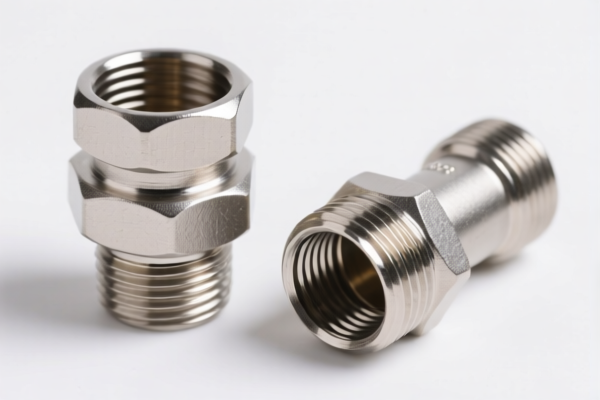
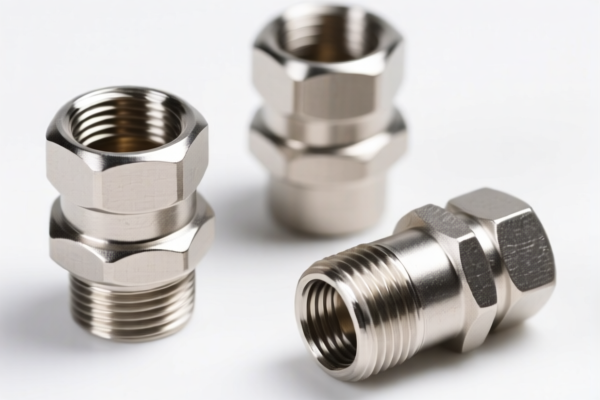
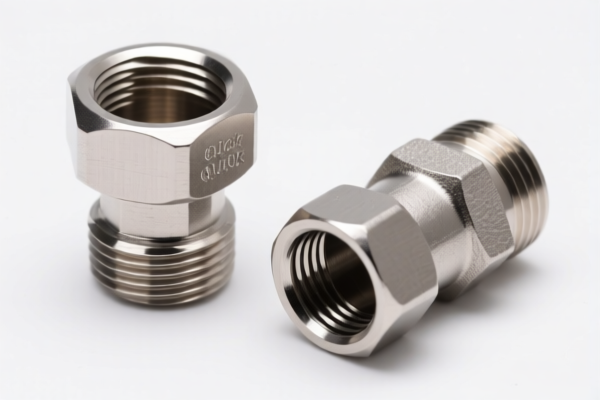
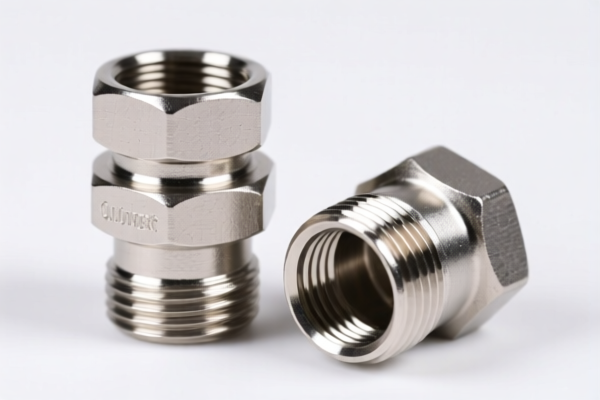
AI Analysis
🔌 Quick Connect Plastic Pipe Fittings: The Ultimate HS Code & Duty Clearance Guide
🌐 HS Code Reference & Clearance Strategy | 2026 Latest Tariff Analysis | Professional Level Compliance
📌 I. Product Definition & Classification: Do You Really Understand "Plastic Pipe Fittings"?
"Quick Connect Plastic Pipe Fittings" (接头/配件) are critical components in plumbing, industrial fluid control, and hydraulic systems. In international trade, these are primarily classified under Chapter 39 (Plastics and Articles Thereof).
Key Distinction: * Pipe Accessories/Fittings (3917): Defined as articles for pipes, tubes, or hoses (e.g., couplings, adapters, bends, quick connectors). These are the primary candidates. * General Plastic Articles (3926): A "catch-all" category. If the item does not clearly fit a specific heading like 3917 (pipes/fittings) or 3920/3921 (sheets/films), it may fall here. However, fittings are explicitly mentioned in 3917, so 3917 is the primary classification unless the "quick connect" mechanism makes it fundamentally different. * Self-Adhesive Tapes/Strips (3919): Only applicable if the "fitting" is actually a sealant tape or strip used with the fitting, not the fitting itself.
⚠️ Critical Classification Point:
- If the item is a connector, coupler, or adapter for pipes → HS 3917 is the most accurate.
- If the item is a generic plastic part not specifically identified as a pipe fitting → HS 3926 may be used as a fallback.
- Misclassification can lead to significant duty differences due to the "Section 301" and "122 Clause" surcharges.
📦 II. HS Code Classification Details (2026 Latest Tariff Authority Reference)
Based on the provided data, here are the 6 possible HS Codes and their rationale:
| HS Code | Summary & Rationale | Product Description | Application Scenario |
|---|---|---|---|
| 3917.40.00.95 | Primary Match: Material is plastic, form is pipe fittings (connectors/adapters). "Quick connect" is a type of connector/accessory. | Plastic Pipe Fittings / Connectors (Other) | Standard plumbing, industrial tubing, quick-lock couplings. |
| 3917.40.00.50 | Alternative Fit: Material is plastic, form is pipe tube joints. No material conflict with plastic pipe definition. | Plastic Pipe Joints / Connectors | Specific types of pipe joints, possibly with different connection mechanisms. |
| 3926.90.60.90 | Fallback/General: Material is plastic, form is "strip/connector belt" (接头带). Fits general plastic articles and mechanical belts. | General Plastic Articles / Connectors | If the "quick connect" is considered a general plastic part rather than a pipe fitting. |
| 3926.30.50.00 | Connection Component: Material is plastic, purpose/form is connector. Falls under "other plastic articles" as connectors. | Plastic Connectors (Other) | Smaller connectors, clips, or fasteners used in plastic assemblies. |
| 3919.10.20.10 | Misclassification Risk: Matches material (plastic) and form (strip/band). Infers self-adhesive tape category. | Self-Adhesive Plastic Tapes/Strips | Only if the product is actually Teflon tape or sealing strip, not a rigid fitting. |
| 3919.10.20.55 | Misclassification Risk: Material is plastic, form is flat/strip. Falls into "other" catch-all for plastics. | Other Plastic Articles (Flat/Strip) | Only if the product is a non-functional plastic strip or seal. |
🔍 Key Insight:
- HS 3917.40.00.95 and 3917.40.00.50 are the most accurate for "Quick Connect Plastic Pipe Fittings."
- HS 3926.90.60.90 and 3926.30.50.00 are viable if customs authorities argue the item is not a "pipe fitting" per se, but a general plastic connector.
- HS 3919 codes are likely incorrect unless the product is actually a sealing tape or strip, not a rigid fitting.
💰 III. 2026 Latest Tariff Rate Breakdown (Including Surcharges)
✅ Applicable Country: United States (US)
✅ Country of Origin: China (CN)
✅ Effective Time: From November 10, 2025 (including subsequent imports)
🎯 1. HS 3917.40.00.95 – Plastic Pipe Fittings (Other)
| Item | Content |
|---|---|
| Base Duty Rate | 5.3% (ad valorem) |
| USITC Surcharge (Section 301) | +25.0% |
| 122 Clause Surcharge | +10.0% |
| Total Duty Rate | 40.3% |
| Tax Calculation | CIF Value × 40.3% |
| De Minimis Exemption | ❌ Not Eligible (deny_de_minimis) |
| Legal Basis Path | USITC:3917.40.00.95 → FOOTNOTE:301 → 122Clause:10% |
📌 Explanation:
- 5.3% is the standard MFN (Most Favored Nation) duty for plastic pipe fittings.
- 25% is the Section 301 tariff on Chinese plastic articles.
- 10% is the additional "122 Clause" tariff on certain Chinese imports.
- Total: 40.3%. This is a high-duty item.
🎯 2. HS 3917.40.00.50 – Plastic Pipe Joints
| Item | Content |
|---|---|
| Base Duty Rate | 5.3% |
| USITC Surcharge (Section 301) | +25.0% |
| 122 Clause Surcharge | +10.0% |
| Total Duty Rate | 40.3% |
| Tax Calculation | CIF Value × 40.3% |
| De Minimis Exemption | ❌ Not Eligible |
| Legal Basis Path | USITC:3917.40.00.50 → FOOTNOTE:301 → 122Clause:10% |
📌 Note:
- Same rate as 3917.40.00.95. Both are considered "pipe fittings" under Chapter 39.
🎯 3. HS 3926.90.60.90 – Other Plastic Articles (Connectors)
| Item | Content |
|---|---|
| Base Duty Rate | 4.2% |
| USITC Surcharge (Section 301) | +25.0% |
| 122 Clause Surcharge | +10.0% |
| Total Duty Rate | 39.2% |
| Tax Calculation | CIF Value × 39.2% |
| De Minimis Exemption | ❌ Not Eligible |
| Legal Basis Path | USITC:3926.90.60.90 → FOOTNOTE:301 → 122Clause:10% |
📌 Note:
- Slightly lower total duty (39.2%) due to a lower base rate (4.2% vs 5.3%).
- Risk of reclassification if customs insists it is a "pipe fitting" (HS 3917).
🎯 4. HS 3926.30.50.00 – Plastic Connectors (Other)
| Item | Content |
|---|---|
| Base Duty Rate | 5.3% |
| USITC Surcharge (Section 301) | +7.5% |
| 122 Clause Surcharge | +10.0% |
| Total Duty Rate | 22.8% |
| Tax Calculation | CIF Value × 22.8% |
| De Minimis Exemption | ❌ Not Eligible |
| Legal Basis Path | USITC:3926.30.50.00 → FOOTNOTE:301 (7.5%) → 122Clause:10% |
📌 Note:
- Lowest Total Duty (22.8%).
- Critical Risk: This code has a lower Section 301 surcharge (7.5% instead of 25%). Customs may challenge this if the item is clearly a "pipe fitting" (which attracts the 25% surcharge). Use only with strong justification that it is not a standard pipe fitting.
🎯 5. HS 3919.10.20.10 – Self-Adhesive Plastic Strips (Misclassification Risk)
| Item | Content |
|---|---|
| Base Duty Rate | 5.8% |
| USITC Surcharge (Section 301) | +25.0% |
| 122 Clause Surcharge | +10.0% |
| Total Duty Rate | 40.8% |
| Tax Calculation | CIF Value × 40.8% |
| De Minimis Exemption | ❌ Not Eligible |
| Legal Basis Path | USITC:3919.10.20.10 → FOOTNOTE:301 → 122Clause:10% |
📌 Note:
- Incorrect Classification: Unless the product is a sealing tape, not a rigid fitting.
- High duty (40.8%) with no benefit.
🎯 6. HS 3919.10.20.55 – Other Plastic Articles (Misclassification Risk)
| Item | Content |
|---|---|
| Base Duty Rate | 5.8% |
| USITC Surcharge (Section 301) | +25.0% |
| 122 Clause Surcharge | +10.0% |
| Total Duty Rate | 40.8% |
| Tax Calculation | CIF Value × 40.8% |
| De Minimis Exemption | ❌ Not Eligible |
| Legal Basis Path | USITC:3919.10.20.55 → FOOTNOTE:301 → 122Clause:10% |
📌 Note:
- Incorrect Classification: Same as above. Avoid unless product is a non-functional plastic strip.
🛠️ IV. Practical Customs Clearance Advice (Battle-Tested Pitfall Avoidance)
✅ 1. Documentation Checklist (Non-Negotiable)
| Document | Required | Explanation |
|---|---|---|
| ✅ Product Specifications | ✔️ | Must specify: Material (e.g., PVC, PP, PE), Size, Connection Type (Push-fit, Threaded, Compression), Pressure Rating. |
| ✅ Product Photos | ✔️ | Clear images showing the "quick connect" mechanism, labeling, and overall shape. |
| ✅ Commercial Invoice | ✔️ | Must clearly state "Plastic Pipe Fittings" or "Plastic Connectors" – avoid vague terms like "Plastic Parts." |
| ✅ Packing List | ✔️ | List individual items and quantities. |
| ✅ Certificate of Origin (CO) | ✔️ | To prove origin and apply potential exemptions (if any). |
| ✅ FCC/CE/RoHS Certs | ✔️ | If applicable for compliance, though not always required for plastic fittings. |
✅ 2. Declaration Strategy (Key Mnemonics)
🔥 "Fit the Function, Name the Form, Avoid the Tape Trap!"
| Scenario | Correct Declaration | Wrong Practice | Consequence |
|---|---|---|---|
| Rigid Quick-Connect Fitting | 3917.40.00.95 or 3917.40.00.50 |
Declare as 3926 (General) |
May be audited for misclassification; risk of higher duty if 3917 is enforced. |
| Plastic Connector/Clip | 3926.90.60.90 or 3926.30.50.00 |
Declare as 3917 |
Possible if not used for pipes; lower duty (22.8%) if justified. |
| Sealing Tape/Strip | 3919.10.20.10 |
Declare as 3917 (Fitting) |
Severe penalty for misclassification; 40.8% duty vs. potential lower duty for fittings. |
| Generic Plastic Part | 3926.90.60.90 |
Declare as 3919 (Tape) |
40.8% duty; no benefit. |
✅ 3. Special Case Handling
| Scenario | Recommendation |
|---|---|
| Mixed Shipments (Fittings + Tape) | Declare separately. Fittings under 3917, Tape under 3919. Do not bundle. |
| OEM/Custom Designs | Provide design drawings to prove the "fitting" function. Helps justify HS 3917. |
| High-Value Industrial Connectors | Consider Advance Ruling (Pre-classification) from CBP to secure HS 3926.30.50.00 (22.8%) if viable. |
| Origin: Not China | If from Vietnam, Thailand, etc., Section 301 (25%) does not apply. Duty may be significantly lower (e.g., 5.3% base + 10% 122 clause = 15.3% if 122 applies, or less if exempt). |
🌍 V. Global Market Clearance Comparison (2026 Latest)
| Country/Region | Recommended HS Code | Estimated Duty (China Origin) | Certification Requirements | Notes |
|---|---|---|---|---|
| 🇺🇸 United States | 3917.40.00.95 |
40.3% | FCC (if electronic), no specific for plastic | High duty due to Section 301 + 122 Clause. |
| 🇨🇳 China | 3917.40.00.95 |
5.3% | CCC (if applicable) | No surcharges. Lowest duty. |
| 🇪🇺 European Union | 3917.40.00.95 |
1.7% | CE, REACH, RoHS | No Section 301. Very competitive. |
| 🇬🇧 United Kingdom | 3917.40.00.95 |
2.5% | UKCA | Post-Brexit rules may vary slightly. |
| 🇦🇺 Australia | 3917.40.00.95 |
5.0% | ADR (if for dangerous goods) | Moderate duty. |
| 🇯🇵 Japan | 3917.40.00.95 |
0% - 2.5% | PSE (if applicable) | Often 0% for plastic fittings. |
📌 Conclusion:
- USA is the most expensive market for Chinese-origin plastic pipe fittings due to 40.3% total duty.
- EU, Japan, and Australia offer significantly lower duties. Consider supply chain diversification if targeting the US market with high-volume goods.
📌 VI. Common Errors & Pitfall Guide (Lessons from Blood and Tears)
❌ Error 1: Declaring "Quick Connect Fittings" as "Plastic Parts" (HS 3926) to avoid Section 301.
👉 Consequence: CBP may reclassify to HS 3917, adding 17.5% (25% - 7.5%) in surcharges + penalties.
✅ Fix: If the item is used for pipes, it is a pipe fitting. Be honest. Use HS 3926.30.50.00 only if it’s clearly not a pipe fitting (e.g., a clip for mounting pipes, not connecting them).
❌ Error 2: Declaring Rigid Fittings as "Plastic Tape" (HS 3919).
👉 Consequence: Clear misclassification. High duty (40.8%) with no benefit. Potential fraud charges.
✅ Fix: Always declare based on function and form. Rigid = Fitting/Part. Flexible/Strip = Tape.
❌ Error 3: Ignoring the "122 Clause" (10% Surcharge).
👉 Consequence: Underpayment of duties. CBP will demand back taxes + interest.
✅ Fix: Always check if the HS Code is subject to the 122 Clause. Most plastic articles (3917, 3926) are not automatically exempt.
❌ Error 4: Mixing Origin Documentation.
👉 Consequence: If you claim non-China origin to avoid Section 301, but provide Chinese CO, seizure risk increases.
✅ Fix: Ensure CO matches the actual manufacturing location.
🎯 VII. Conclusion: Smart Classification, Smarter Profits
🎯 Remember the Golden Rules:
🔹 "Pipe Fitting = 3917 (40.3% Duty)"
🔹 "General Connector = 3926 (22.8%-39.2% Duty)"
🔹 "Tape = 3919 (40.8% Duty, but Wrong Item!)"
🔹 "Origin Matters: China = High Duty; Vietnam/Thailand = Low Duty"
📌 Pro Tip:
If your product is a unique, non-standard connector that doesn’t fit neatly into "pipe fitting," consult a customs broker to argue for HS 3926.30.50.00 (22.8%). This can save 17.5% in duties per shipment.
📣 Immediate Action:
📞 Contact a licensed customs broker.
📄 Submit product photos and specs for Pre-classification Ruling.
🚀 Don’t let 40% duty eat your margin. Classify correctly!
✨ Professional Clearance, Starts with Accurate Classification!
💼 Every Dollar Saved is Profit Earned!
Customer Reviews
About HS Code Classification
The Harmonized System (HS) is an internationally standardized nomenclature developed by the World Customs Organization (WCO) to classify traded products. Over 200 countries use the HS system as the basis for customs tariffs, trade statistics, and import/export regulations.
Each HS code follows a hierarchical structure:
- Chapter (2 digits) — Broad category of goods (e.g., Chapter 84: Machinery and Mechanical Appliances)
- Heading (4 digits) — More specific grouping within the chapter
- Subheading (6 digits) — Internationally standardized breakdown, used by all WCO member countries
- National subdivisions (8-10 digits) — Country-specific extensions for further classification, such as US HTSUS 10-digit codes
Correct HS code classification is essential for smooth customs clearance, accurate duty payment, and compliance with trade regulations. Misclassification can lead to customs delays, overpayment of duties, or penalties.
When importing from CN to US, the applicable tariff rates may include:
- Most-Favored-Nation (MFN) rate — The standard duty rate applied to WTO members
- General rate — Applied to countries without trade agreements
- Trade remedy duties — Additional tariffs such as Section 301 (anti-dumping), Section 232 (national security), or countervailing duties
The information provided on this page is for reference purposes only. For official classification, please consult with your local customs authority or a licensed customs broker.