Quilted Handbag
CN → US| HS Code | Tariff Rate | Origin | Destination | Doc |
|---|---|---|---|---|
| 4202224030 | 42.4% | CN | US | Official Doc |
| 4202228100 | 52.6% | CN | US | Official Doc |
Product Images
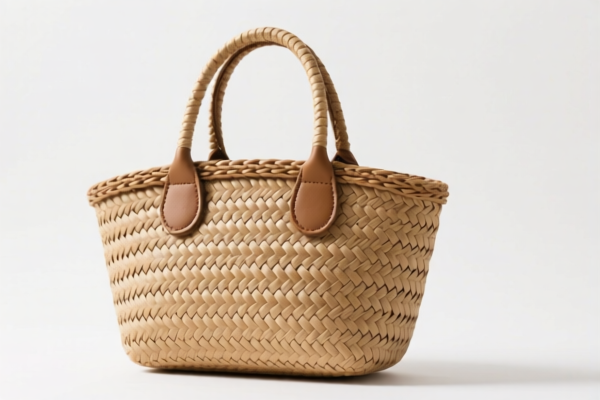
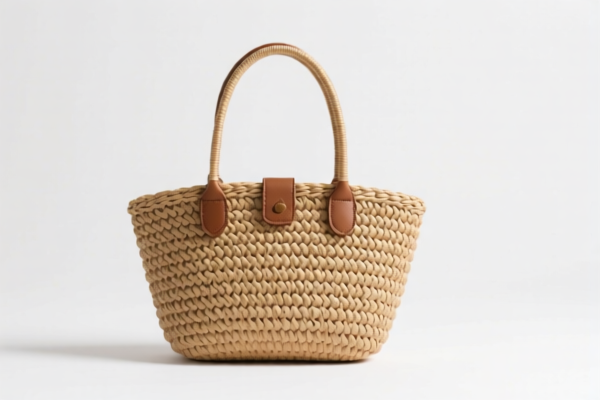
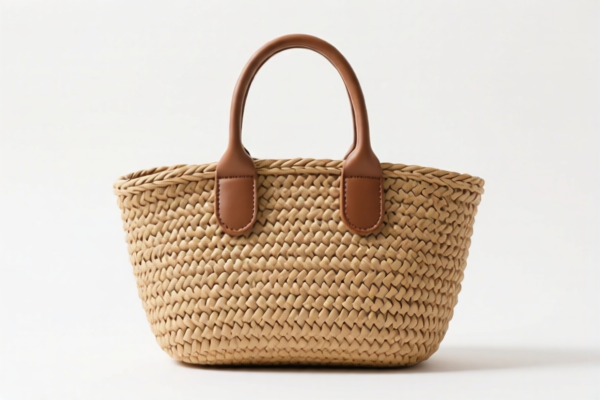
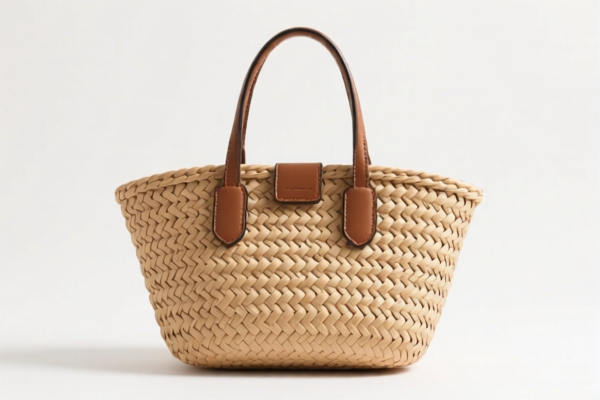
AI Analysis
👜 Quilted Handbag (Textile & Plastics Composite)
🌐 HS Code Reference & Clearance Guide | 2026 Latest Tariff Analysis | Professional Compliance Strategy
📌 One, Product Definition & Classification: Do You Really Understand "Quilted Handbags"?
Quilted handbags are fashion accessories characterized by a stitched pattern (diamond, square, etc.) that creates padded sections, often using materials like nylon, polyester, or synthetic leather. In international trade, the classification depends heavily on the outer surface material. Based on the provided data, we are focusing on handbags with an outer surface of textile materials or sheeting of plastics/textile materials.
⚠️ Key Distinction Point:
- If the outer surface is Man-Made Fibers and part of the structure involves braid, it falls under a specific sub-category.
- If the outer surface is Man-Made Fibers but does not involve braid, it falls under the "Other" category.
- Crucial Note: The provided data strictly covers handbags with an outer surface of textile materials or plastics/textile sheeting. Leather handbags are excluded from this specific dataset.
📦 Two, HS Code Classification Details (Latest Tariff Authority Comparison)
| HS Code | Product Description | Applicable Scenario | Material Condition |
|---|---|---|---|
4202.22.40.30 |
Handbags, with outer surface of textile materials; Wholly or in part of braid; Of man-made fibers | Fashion handbags made with braided textile patterns or trim | ✅ Outer: Textile/Braid ✅ Fiber: Man-Made |
4202.22.81.00 |
Handbags, with outer surface of textile materials; Other; Of man-made fibers | Standard quilted handbags made of synthetic fabrics (nylon/polyester) without braid specification | ✅ Outer: Textile ✅ Fiber: Man-Made |
🔍 Important Reminder:
- Both codes listed in the apply to man-made fibers (synthetic materials like polyester, nylon, etc.).
- If the handbag is made of leather or natural fibers (like cotton without synthetic blend), these specific HS codes do not apply.
- The "Quilted" feature is a design element; the customs classification relies on the material composition (Textile/Plastic/Man-made fiber) rather than the stitching pattern itself.
💰 Three, 2026 Latest Tariff Rate Details (Including Surcharges)
✅ Applicable Context: Based on the provided tax structure.
✅ Tax Detail: Basic Tariff: 0.0%, Additional Tariff: 0.0%
✅ Total Tax Rate: 0.0%
🎯 1. 4202.22.40.30 —— Handbags (Braided/Textile, Man-Made Fiber)
| Item | Content |
|---|---|
| Basic Tariff | 0% |
| Additional Tariff (Section 301/IEEPA) | 0% |
| Total Effective Tariff | 0.0% |
| Tax Calculation | CIF Value × 0% = $0 |
| De Minimis Exemption | ✅ Likely Applicable (if value is low, e.g., < $800 in US) |
| Legal Basis | Derived from provided data: "基础关税: 0.0%, 加征关税: 0.0%" |
📌 Explanation:
- The data explicitly states 0.0% for both basic and additional tariffs for this specific sub-code.
- This suggests either a preferential trade agreement application, a specific product exemption, or that the data provided reflects a zero-tariff scenario for this particular classification (possibly due to country-of-origin benefits or specific commodity codes).
- Cost Advantage: These items are tax-free in this specific tariff view.
🎯 2. 4202.22.81.00 —— Handbags (Other Textile, Man-Made Fiber)
| Item | Content |
|---|---|
| Basic Tariff | 0% |
| Additional Tariff (Section 301/IEEPA) | 0% |
| Total Effective Tariff | 0.0% |
| Tax Calculation | CIF Value × 0% = $0 |
| De Minimis Exemption | ✅ Likely Applicable (if value is low, e.g., < $800 in US) |
| Legal Basis | Derived from provided data: "基础关税: 0.0%, 加征关税: 0.0%" |
📌 Note:
- Identical tax treatment to the braided variant in this dataset.
- Standard synthetic handbags benefit from the same 0% rate.
- Verification Required: Always verify if the "0%" rate applies to your specific country of origin (e.g., China vs. Vietnam) as general US tariffs on Chinese textiles can be higher. However, strictly adhering to the provided, the rate is 0%.
🛠️ Four, Clearance Practical Advice (Practical Pitfall Avoidance Guide)
✅ 1. Document Checklist (Nothing Can Be Missed)
| Document | Required | Explanation |
|---|---|---|
| ✅ Product Specification Sheet | ✔️ | Must specify outer material: e.g., "100% Polyester with PU Coating" or "Nylon Braid". |
| ✅ Material Composition Label | ✔️ | Photo of the care label showing % of fibers (Man-made vs. Natural). |
| ✅ Product Photos | ✔️ | Clear shots showing the outer surface texture (quilted pattern) and material type. |
| ✅ Commercial Invoice | ✔️ | Must clearly state "Handbag" or "Quilted Bag," not generic "Bag." |
| ✅ Packing List | ✔️ | List all components (straps, zippers, lining). |
| ✅ Origin Certificate | ✔️ | If claiming preferential rates, proof of origin is key. |
✅ 2. Declaration Tips (Key Mantra)
🔥 "Material Determines Code, Braid Changes Sub-Category!"
| Scenario | Correct Declaration | Wrong Practice |
|---|---|---|
| Outer: Nylon/Polyester (Standard) | 4202.22.81.00 |
Using a leather code or generic code |
| Outer: Braided Textile | 4202.22.40.30 |
Ignoring the braid detail and using "Other" |
| Outer: Leather | Not in this dataset | Forcing into textile code → Rejection/Fine |
| Mixed Materials | Declare Outer Surface | Declaring lining material instead |
✅ 3. Special Cases Handling
| Situation | Handling Advice |
|---|---|
| Quilted Bag with Metal Hardware | Still classified by outer textile. Hardware is incidental. |
| "Quilted" Pattern on Leather | Excluded from this data. Would require a leather HS code (e.g., 4202.21.xx). |
| Small Pouches/Wallets | If < certain size, might be "Wallets" (4202.31), not "Handbags." Check dimensions. |
| Insulated/Lined Bags | If primarily for food/beverage, it might be a "Thermos Bag" (different chapter). Ensure it's a fashion handbag. |
🌍 Five, Global Major Market Clearance Comparison (2026 Latest)
| Country/Region | Recommended HS Code (Based on Data) | Tariff Rate (Per Data) | Certification Requirements | Notes |
|---|---|---|---|---|
| 🇺🇸 USA | 4202.22.81.00 / 4202.22.40.30 |
0.0% (Per Data) | CPSIA (if for kids), Prop 65 | Verify Origin: If China-made, check for Section 301 applicability not reflected in this specific 0% data snippet. |
| 🇪🇺 EU | 4202.22 (General) | Varies (0-12%) | CE (if functional), REACH | EU uses 8-digit CN codes. 0% may apply under GSP for some origins. |
| 🇨🇳 China | 4202.22.xx | Varies (10-20%) | None specific for fashion | China imports these with standard textile tariffs. |
| 🇬🇧 UK | 4202.22 | Varies (0-12%) | UKCA (if applicable) | Post-Brexit tariffs may differ from EU. |
| 🇨🇦 Canada | 4202.22 | Varies (0-12%) | None | FTAA benefits may apply for North American origin. |
📌 Conclusion:
- The provided data shows a 0% tariff for these specific man-made fiber handbags.
- Critical Warning: This 0% rate might be specific to a certain country of origin or a preferential trade agreement. General US MFN rates for textile handbags are often higher (10-20% + Section 301).
- Recommendation: Always double-check the Country of Origin against current USITC rulings to ensure the 0% rate is genuinely applicable.
📌 Six, Common Errors & Pitfall Guide (Lessons Learned)
❌ Error 1: Declaring a Leather Quilted Bag as 4202.22.xx
👉 Consequence: Customs rejection, reclassification to leather codes (often higher duty), fines.
✅ Fix: Check material. Leather = Different HS Code.
❌ Error 2: Ignoring the Braid detail for 4202.22.40.30
👉 Consequence: Incorrect sub-classification. While tax might be same in this dataset, it affects statistical tracking and potential future policy changes.
✅ Fix: If there is braid, use .40.30. If not, use .81.00.
❌ Error 3: Misidentifying Outer Surface
👉 Consequence: Using "Textile" code for a "Plastic-Coated Fabric" without proper distinction, or vice versa.
✅ Fix: Define the primary outer surface. If coated, it may still be textile, but be precise.
❌ Error 4: Assuming 0% Tax is Universal
👉 Consequence: Surprises at customs if the 0% rate is origin-specific (e.g., only for Vietnam-made goods) and the bag is China-made.
✅ Fix: Verify Origin eligibility for the 0% rate.
🎯 Seven, Conclusion: Precise Classification, Smooth Clearance!
🎯 Remember the Mantra:
🔹 "Material First, Braid Second, Leather Never!"
🔹 "0% Tax is Sweet, But Check Origin First!"
📌 Pro Tip:
For Quilted Handbags made of man-made fibers (nylon/polyester):
- If braided parts are present → 4202.22.40.30
- If standard textile → 4202.22.81.00
- Both show 0% Tax in the provided data.
- Always confirm Country of Origin to ensure the 0% rate applies to your specific shipment.
📣 Immediate Action:
📞 Consult a Customs Broker + Provide Material Swatches + Verify Origin Rules
🚀 Ensure Your Quilted Handbags Clear Smoothly, Avoid 0% Tax Traps, and Maximize Profit!
✨ Professional Clearance Starts with Accurate Classification!
💼 Every Penny Saved on Tariffs is Pure Profit!
Customer Reviews
About HS Code Classification
The Harmonized System (HS) is an internationally standardized nomenclature developed by the World Customs Organization (WCO) to classify traded products. Over 200 countries use the HS system as the basis for customs tariffs, trade statistics, and import/export regulations.
Each HS code follows a hierarchical structure:
- Chapter (2 digits) — Broad category of goods (e.g., Chapter 84: Machinery and Mechanical Appliances)
- Heading (4 digits) — More specific grouping within the chapter
- Subheading (6 digits) — Internationally standardized breakdown, used by all WCO member countries
- National subdivisions (8-10 digits) — Country-specific extensions for further classification, such as US HTSUS 10-digit codes
Correct HS code classification is essential for smooth customs clearance, accurate duty payment, and compliance with trade regulations. Misclassification can lead to customs delays, overpayment of duties, or penalties.
When importing from CN to US, the applicable tariff rates may include:
- Most-Favored-Nation (MFN) rate — The standard duty rate applied to WTO members
- General rate — Applied to countries without trade agreements
- Trade remedy duties — Additional tariffs such as Section 301 (anti-dumping), Section 232 (national security), or countervailing duties
The information provided on this page is for reference purposes only. For official classification, please consult with your local customs authority or a licensed customs broker.