RC Airplane Model
CN → US| HS Code | Tariff Rate | Origin | Destination | Doc |
|---|---|---|---|---|
| 9503000090 | 10.0% | CN | US | Official Doc |
| 3926400090 | 15.3% | CN | US | Official Doc |
| 3926400010 | 15.3% | CN | US | Official Doc |
| 8526925000 | 35.0% | CN | US | Official Doc |
| 8526921000 | 10.0% | CN | US | Official Doc |
Product Images
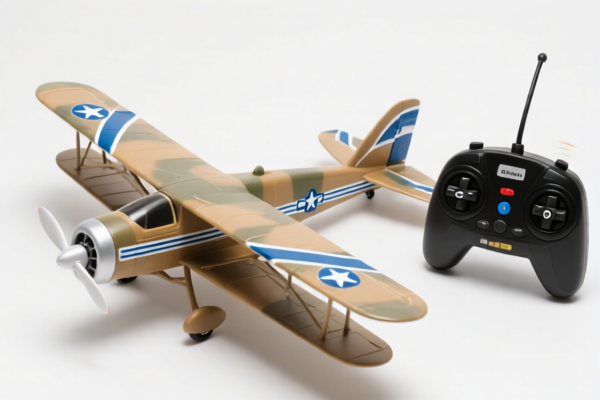
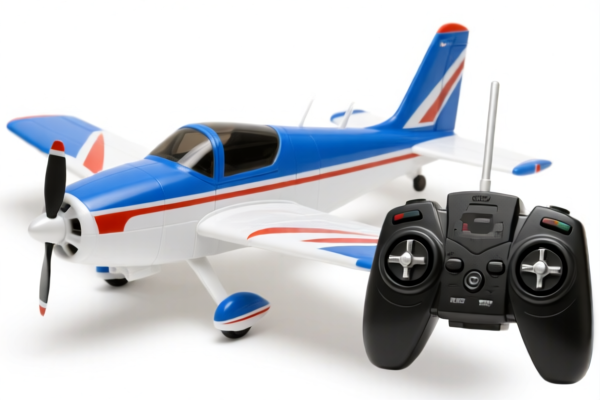
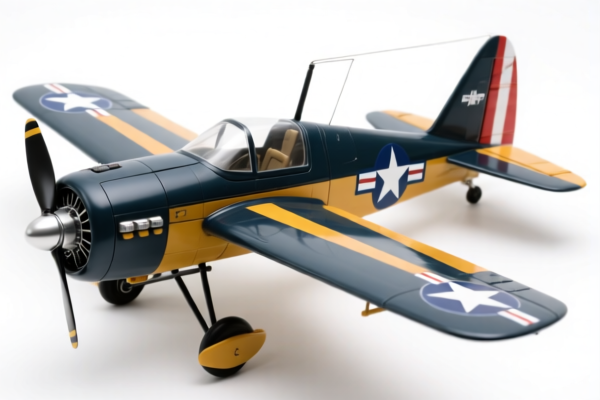
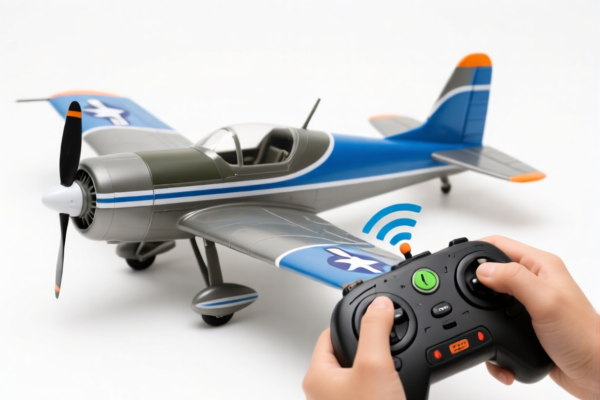
AI Analysis
🛩️ RC Airplane Model (Remote Control Aircraft Models)
🌐 HS Code Reference & Customs Clearance Guide | 2026 Latest Tariff Analysis | Professional Clearance Strategy
📌 I. Product Definition & Classification: Do You Really Understand “RC Airplane Models”?
RC Airplane Models are complex goods that often blur the lines between toys, decorative collectibles, and electronic devices. In international trade, their classification depends heavily on two factors: 1. Material Composition (Plastic, resin, wood, etc.) 2. Functional Components (Does it include a radio control transmitter? Is it a static display model or a flying device?)
⚠️ Key Distinction:
- If it is a static decorative model (no motor, no electronics) → Likely classified under Chapter 95 (Toys) or Chapter 39 (Plastics/Decorations).
- If it is a flying RC model with a remote controller → The controller and the model may be classified separately, or the whole set may be classified based on its primary function (often the radio equipment).
📦 II. HS Code Classification Details (Based on Provided Data)
Based on the specific HS codes provided in your data, we have identified four distinct classification paths. It is crucial to select the one that matches your physical product and declaration intent.
| HS Code | Product Description | Summary & Reasoning | Total Tax Rate (US/China) |
|---|---|---|---|
| 9503.00.00.90 | Airplane Model (Toy/Scale Model) | Classified as a "scaled model" falling under the reasonable coverage of "Other" categories within Toys. Ideal for static display models or toys without complex electronic controllers declared separately. | 10.0% |
| 3926.40.00.90 | Airplane Model (Decorative Article) | Classified as a finished decorative item, serving as a "catch-all" category for products made of plastic or other materials. Suitable for non-functional plastic models. | 15.3% |
| 3926.40.00.10 | Airplane Model (Decorative/Composite) | Classified as a decorative item, inferring the material is plastic or other composite materials. Similar to above but may apply to specific composite structures. | 15.3% |
| 8526.92.50.00 | Remote Control Model (Radio Control Device) | Classified as a "Radio Remote Control Device." This is a reasonable category for the controller or the aircraft if the radio function is deemed the primary characteristic. High Risk/High Cost. | 35.0% |
| 8526.92.10.00 | Remote Control Model (Radio Control Device) | Classification consistent with "Radio Remote Control Devices." Reasonable category for electronic control systems. Note: This code has a lower additional tariff profile than 8526.92.50.00. | 10.0% |
🔍 Critical Analysis: - Codes 9503.00.00.90 & 8526.92.10.00 offer the most competitive 10.0% total tax rate. - Codes 3926.40.00.90 & 3926.40.00.10 are higher at 15.3%, suitable if the item is strictly decorative and the radio aspect is omitted or secondary. - Code 8526.92.50.00 carries a heavy 35.0% burden due to high additional tariffs. Avoid this unless strictly required by the specific electronic configuration.
💰 III. 2026 Latest Tariff Rate Details (Including Additional Taxes)
✅ Applicable Country: United States (US)
✅ Origin: China (CN)
✅ Effective Time: Post-2025 adjustments (Current analysis based on provided data)
🎯 1. 9503.00.00.90 —— Airplane Model (Toys/Scale Models)
| Item | Content |
|---|---|
| Base Tariff | 0.0% |
| Additional Tariff (Section 301) | 0.0% |
| 122 Clause Tariff | +10.0% |
| Total Tax Rate | 10.0% |
| Tax Calculation | CIF Value × 10% |
| De Minimis Exemption | ❌ Not Applicable (High tariff goods usually exempt from de minimis benefits if declared properly) |
| Legal Basis Path | 122 Clause Tariff |
📌 Interpretation:
This code leverages the "Toys" category, which often benefits from lower base tariffs. The 10% charge comes from the "122 Clause" (likely referring to specific Section 301 or retaliatory tariffs on certain toy/model categories). It is significantly cheaper than the radio equipment classification.
🎯 2. 3926.40.00.90 / 3926.40.00.10 —— Decorative Articles (Plastic/Composite)
| Item | Content |
|---|---|
| Base Tariff | 5.3% |
| Additional Tariff (Section 301) | 0.0% |
| 122 Clause Tariff | +10.0% |
| Total Tax Rate | 15.3% |
| Tax Calculation | CIF Value × 15.3% |
| De Minimis Exemption | ❌ Not Applicable |
| Legal Basis Path | 122 Clause Tariff + Base Tariff 5.3% |
📌 Interpretation:
When classified as "Other Articles of Plastics," the base tariff applies (5.3%), plus the 122 Clause surcharge (10%). This is higher than the toy classification (10%) but lower than the high-end radio equipment classification (35%). It is suitable for static models where electronic components are not declared as the primary function.
🎯 3. 8526.92.50.00 —— Radio Remote Control Devices (High Tariff Risk)
| Item | Content |
|---|---|
| Base Tariff | 0.0% |
| Additional Tariff (Section 301) | +25.0% |
| 122 Clause Tariff | +10.0% |
| Total Tax Rate | 35.0% |
| Tax Calculation | CIF Value × 35% |
| De Minimis Exemption | ❌ Not Applicable |
| Legal Basis Path | IEEPA + USITC + 122 Clause |
📌 Interpretation:
This code attracts a 25% Section 301 Additional Tariff PLUS a 10% 122 Clause Tariff. This is the most expensive option. It applies if the customs authority views the item primarily as a "radio transmission device" rather than a toy or model. Strongly consider avoiding this classification if possible.
🎯 4. 8526.92.10.00 —— Radio Remote Control Devices (Optimized Radio Class)
| Item | Content |
|---|---|
| Base Tariff | 0.0% |
| Additional Tariff (Section 301) | 0.0% |
| 122 Clause Tariff | +10.0% |
| Total Tax Rate | 10.0% |
| Tax Calculation | CIF Value × 10% |
| De Minimis Exemption | ❌ Not Applicable |
| Legal Basis Path | 122 Clause Tariff |
📌 Interpretation:
Interestingly, this radio control code also results in 10.0%. This suggests that specific sub-categories of radio equipment (...10.00) may be exempt from the 25% Section 301 tariff that affects...50.00. If your product is legally a "radio control device," this is the optimal radio code. However, you must ensure it fits the specific technical definition of this sub-heading.
🛠️ IV. Customs Clearance Practical Advice (Combat Survival Guide)
✅ 1. Preparation Checklist (Non-Negotiable)
| Document | Mandatory? | Explanation |
|---|---|---|
| ✅ Product Specifications | ✔️ | Must detail dimensions, weight, material (plastic/wood/resin), and power source. |
| ✅ Circuit Diagram / Schematic | ✔️ | Crucial for distinguishing between a "Toy" (9503) and a "Radio Device" (8526). |
| ✅ Product Photos | ✔️ | Show the model AND the controller separately. Show packaging. |
| ✅ Commercial Invoice | ✔️ | Clearly state: "RC Airplane Model" or "Radio Control Aircraft." Avoid vague terms like "Plastic Toy" if it has electronics. |
| ✅ Origin Certificate | ✔️ | If applicable, to verify Country of Origin (CN triggers 122 Clause). |
✅ 2. Declaration Strategy (Key Mantra)
🔥 “Material Matters, Function Defines, Controller Splits, Tax Saves Half!”
| Scenario | Recommended HS Code | Why? |
|---|---|---|
| Static Display Model (No electronics, no remote) | 9503.00.00.90 |
Classified as a scale model/toy. Lowest effort, 10% tax. |
| Flying RC Model (Declared as Toy) | 9503.00.00.90 |
If the radio component is minor/integrated, argue it's a "Toy." 10% tax. |
| RC Model (Declared as Radio Device) | 8526.92.10.00 |
If it must be classified as radio equipment, use this code to avoid the 25% surcharge. 10% tax. |
| RC Model (High-Power Radio Gear) | 8526.92.50.00 |
AVOID. High tax (35%). Only use if technically mandated by USITC. |
| Decorative Plastic Model | 3926.40.00.90 |
If not a toy and not functional radio gear. 15.3% tax. |
📌 Crucial Tip:
- Do NOT split the controller and the plane into two separate shipments if they are sold as a set. Customs may reclassify the whole set based on the more expensive component (the radio). - If you ship them separately, ensure the controller is declared accurately as8526.92.10.00(10%) and the plane as9503.00.00.90(10%) if it’s static, or8526.92.10.00if it’s functional.
✅ 3. Special Handling Cases
| Case | Handling Advice |
|---|---|
| OEM Custom Models | Provide design files. If the design mimics a military aircraft, additional scrutiny applies. |
| Mixed Packaging (Plane + Controller) | Declare as a set. Use the code that best reflects the primary character. For RC models, the "Radio Control" function often dominates, pushing it toward Chapter 85. However, 8526.92.10.00 offers a 10% rate, making it competitive. |
| Batteries Included | Must declare battery type (Li-ion, NiMH, etc.) and UN38.3 certification for air freight safety. This does not change HS code but affects logistics. |
🌍 V. Global Market Comparison (2026 Context)
| Country/Region | Recommended HS Code | Est. Tariff (CN Origin) | Notes |
|---|---|---|---|
| 🇺🇸 USA | 9503.00.00.90 or 8526.92.10.00 |
10.0% | Optimal choice. Avoid 8526.92.50.00 (35%). |
| 🇺🇸 USA | 3926.40.00.90 |
15.3% | Acceptable for decorative items. |
| 🇨🇳 China | 9503.00.00.90 |
5.0% (Import) | Low entry tariff for imports. |
| 🇪🇺 EU | 9503.00.30 |
0% - 6% | Varies by specific toy type. Generally lower than US. |
📌 Conclusion:
- The US market is the most critical due to the 122 Clause and Section 301 tariffs. - The goal is to keep the total tariff at 10% by choosing9503.00.00.90(if defensible as a toy/model) or8526.92.10.00(if defensible as a specific radio device). - Avoid8526.92.50.00at all costs unless you have no other choice, as it doubles your tax burden.
📌 VI. Common Mistakes & Pitfalls (Blood Lessons)
❌ Mistake 1: Declaring an RC Plane as a "Plastic Toy" (9503) when it is clearly a functional electronic device.
👉 Consequence: Customs may audit, reclassify to 8526, and impose penalties if 8526.92.10.00 was the correct 10% code, or worse, 8526.92.50.00 if deemed high-power.
👉 Fix: Ensure your technical specs support the toy classification (e.g., "for recreational use," "simple controls").
❌ Mistake 2: Using 8526.92.50.00 unnecessarily.
👉 Consequence: Paying 35% tax instead of 10%.
👉 Fix: Check if your specific radio frequency or power output qualifies for the lower-taxed sub-heading ...10.00.
❌ Mistake 3: Ignoring the "122 Clause".
👉 Consequence: Assuming a 0% base tariff means 0% total tax.
👉 Fix: Remember, 122 Clause adds 10% to almost all these categories for Chinese goods. Factor this into your pricing.
🎯 VII. Conclusion: Professional Classification, Maximum Savings!
🎯 Remember the Mantra:
🔹 “Toy or Radio? Choose Wisely.”
🔹 “9503 is 10%, 8526.10 is 10%, but 8526.50 is 35%.”
🔹 “Decorative Plastic is 15.3%, so don’t use it unless necessary.”
📌 Pro Tip:
If you are unsure whether your RC model qualifies as a "Toy" (9503) or a "Radio Device" (8526), consult a customs broker for a Pre-Ruling (Advance Ruling). The difference between 10% and 35% on high-value models is significant.
📣 Immediate Action:
📞 Review your product specs: Is it primarily a display piece or a functional drone?
📄 Select HS Code:9503.00.00.90(if toy/model) or8526.92.10.00(if radio).
🚀 Clear Customs Smoothly: Ensure all documentation supports your chosen classification.
✨ Professional Customs Clearance Starts with Accurate Classification!
💼 Every Percent Saved is Pure Profit!
Customer Reviews
About HS Code Classification
The Harmonized System (HS) is an internationally standardized nomenclature developed by the World Customs Organization (WCO) to classify traded products. Over 200 countries use the HS system as the basis for customs tariffs, trade statistics, and import/export regulations.
Each HS code follows a hierarchical structure:
- Chapter (2 digits) — Broad category of goods (e.g., Chapter 84: Machinery and Mechanical Appliances)
- Heading (4 digits) — More specific grouping within the chapter
- Subheading (6 digits) — Internationally standardized breakdown, used by all WCO member countries
- National subdivisions (8-10 digits) — Country-specific extensions for further classification, such as US HTSUS 10-digit codes
Correct HS code classification is essential for smooth customs clearance, accurate duty payment, and compliance with trade regulations. Misclassification can lead to customs delays, overpayment of duties, or penalties.
When importing from CN to US, the applicable tariff rates may include:
- Most-Favored-Nation (MFN) rate — The standard duty rate applied to WTO members
- General rate — Applied to countries without trade agreements
- Trade remedy duties — Additional tariffs such as Section 301 (anti-dumping), Section 232 (national security), or countervailing duties
The information provided on this page is for reference purposes only. For official classification, please consult with your local customs authority or a licensed customs broker.