RC Car
CN → US| HS Code | Tariff Rate | Origin | Destination | Doc |
|---|---|---|---|---|
| 9503000073 | 10.0% | CN | US | Official Doc |
| 8703105060 | 20.0% | CN | US | Official Doc |
| 9503000071 | 10.0% | CN | US | Official Doc |
| 8526925000 | 35.0% | CN | US | Official Doc |
| 8703210150 | 37.5% | CN | US | Official Doc |
Product Images
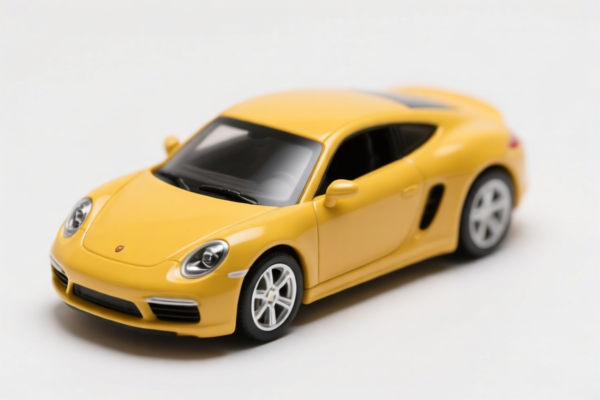


AI Analysis
🏎️ RC Cars (Radio-Controlled Cars & Models)
🌐 HS Code Reference & Customs Clearance Guide | 2026 Tariff Analysis | Professional Strategy for Toy & Vehicle Imports
📌 I. Product Definition & Classification: What Exactly is an "RC Car"?
Radio-Controlled (RC) cars fall into a unique crossroads in international trade: they can be classified as toys (entertainment models) or actual vehicles (transportation devices), depending on their size, function, and intent. The distinction is critical because the tariff rates differ drastically (10% vs. 37.5%).
Key Classification Divergence: * 🚗 "Toy Models" (Toys Category): Small-scale replicas, non-driveable, purely for entertainment, made of plastic/metal. * Primary HS Codes: 9503.00.00.71 / 9503.00.00.73 * ⚙️ "Functional Vehicles" (Vehicle Category): Full-size or functional driveable cars that operate as transportation, even if remote-controlled. * Primary HS Code: 8703.10.50.60 / 8703.21.01.50 * 📡 "Electronics" (Control Devices Category): Focused on the radio control system itself as a standalone electronic device. * Primary HS Code: 8526.92.50.00
⚠️ Critical Distinction:
- If the product is < 30cm and clearly a toy for children → 9503 (Low Duty).
- If the product is large, functional, or marketed as a "drivable vehicle" → 8703 (High Duty).
- If the RC system is the primary component sold separately or dominates the value → 8526 (Highest Duty).
📦 II. HS Code Classification Details (2026 Latest Tariff Schedule)
| HS Code | Product Description | Application Scenario | Key Attributes |
|---|---|---|---|
9503.00.00.73 |
RC Car classified as a "scaled model" | Entertainment toys, children's play, miniaturized replicas | 🎯 Toy Category (Entertainment focus) |
8703.10.50.60 |
RC Car inferred as a "Vehicle Model" (Catch-all) | Vehicle replicas, no specific material conflict, general vehicle classification | 🚗 Vehicle Category (Deductive classification) |
9503.00.00.71 |
RC Car as a "Model" (Entertainment Toy) | Toys made of plastic/metal, strictly for recreational play | 🎯 Toy Category (Material: Plastic/Metal) |
8526.92.50.00 |
RC Car as "Radio Control Device" | Focus on the electronic control system, remote transmission, & electronic components | ⚙️ Electronics Category (Control focus) |
8703.21.01.50 |
RC Car as a "Passenger Vehicle" | Functional cars meeting criteria for passenger cars, no attribute conflict | 🚗 Vehicle Category (Functional/Drivable) |
🔍 Focus Reminder:
- Toys (9503) are the most common for standard hobbyists and kids.
- Vehicles (8703) are often triggered for high-speed, long-range, or "real-world" sized RC cars (often >30cm).
- Electronics (8526) is rare for a complete car but applies if the "RC system" is the dominant value or the car is a "kit" of electronic parts.
💰 III. 2026 Tariff Rate Breakdown (Including Surtaxes & Policy Add-ons)
✅ Applicable Market: United States (US)
✅ Country of Origin: China (CN)
✅ Effective Date: As of current 2025-2026 trade policies (Section 301 / Section 122)
🎯 1. 9503.00.00.73 & 9503.00.00.71 —— The "Toy" Route (Entertainment Models)
| Item | Detail |
|---|---|
| Base Tariff | 0.0% (duty-free for toys) |
| Section 301 Surtax | 0.0% (No additional surtax for toy models in this context) |
| Section 122 Tariff | +10% (Targeted surtax on specific Chinese goods) |
| Total Tax Rate | 10.0% |
| Tax Calculation | CIF Value × 10% |
| De Minimis Exemption | ❌ No (Section 122 applies) |
| Legal Basis | Section 122: 10% surcharge on classified toy models |
📌 Explanation:
- This is the most favorable classification for standard RC cars.
- The "Section 122" 10% surtax is the only penalty.
- Strategy: Emphasize "Toy," "Recreational," "Non-Driveable," or "Scaled Model" to secure this 10% rate.
🎯 2. 8703.10.50.60 —— The "Vehicle Model" (Catch-all)
| Item | Detail |
|---|---|
| Base Tariff | 2.5% (Standard vehicle duty) |
| Section 301 Surtax | +7.5% (Section 301 penalty) |
| Section 122 Tariff | +10% (Targeted surtax) |
| Total Tax Rate | 20.0% |
| Tax Calculation | CIF Value × 20% |
| De Minimis Exemption | ❌ No |
| Legal Basis | Section 301 + Section 122 on vehicle classification |
📌 Note:
- This rate is significantly higher than the "Toy" rate.
- Customs may classify a large RC car here if it's deemed "functional" rather than a "toy."
🎯 3. 8526.92.50.00 —— The "Electronics" Route (Radio Control Systems)
| Item | Detail |
|---|---|
| Base Tariff | 0.0% (Electronics base rate) |
| Section 301 Surtax | +25.0% (High Section 301 penalty) |
| Section 122 Tariff | +10% (Targeted surtax) |
| Total Tax Rate | 35.0% |
| Tax Calculation | CIF Value × 35% |
| De Minimis Exemption | ❌ No |
| Legal Basis | Section 301 + Section 122 on electronic devices |
📌 Warning:
- This is the highest tax rate among the options.
- Avoid this classification unless the product is specifically a radio control unit without the car body, or if the car is marketed as an "electronic kit" where the control system is the primary value.
🎯 4. 8703.21.01.50 —— The "Passenger Vehicle" Route (Drivable)
| Item | Detail |
|---|---|
| Base Tariff | 2.5% (Standard vehicle duty) |
| Section 301 Surtax | +25.0% (High Section 301 penalty) |
| Section 122 Tariff | +10% (Targeted surtax) |
| Total Tax Rate | 37.5% |
| Tax Calculation | CIF Value × 37.5% |
| De Minimis Exemption | ❌ No |
| Legal Basis | Section 301 + Section 122 on passenger vehicles |
📌 Critical:
- If your RC car is large, fast, or marketed as a "miniature vehicle" that can be driven like a real car, Customs may apply this 37.5% rate.
- Only use this if the product legally qualifies as a "passenger vehicle" under Chapter 87 rules.
🛠️ IV. Customs Clearance Practical Advice (Avoiding Pitfalls)
✅ 1. Preparation Checklist (Non-Negotiable)
| Document | Mandatory? | Purpose |
|---|---|---|
| ✅ Product Specs (Spec Sheet) | ✔️ | Must state "Toy" vs. "Vehicle," max speed, scale (1:10, 1:24), dimensions. |
| ✅ Photos (Lifestyle & Product) | ✔️ | Show children playing (supports "Toy") vs. adults driving (supports "Vehicle"). |
| ✅ Bill of Materials (BOM) | ✔️ | Highlight plastic/metal parts (Toy) vs. engine/electronic chassis (Vehicle). |
| ✅ Commercial Invoice | ✔️ | Must use terms like "Radio-Controlled Toy Car" or "Model Car," NOT "Remote Controlled Vehicle." |
| ✅ Packaging Label | ✔️ | Must clearly say "Toy" or "Model Kit" to align with HS Code 9503. |
| ✅ FCC/CE Certificates | ✔️ | Required for electronics (especially for 8526 classification). |
✅ 2. Declaration Strategy (The Golden Rule)
🔥 "Toy First, Vehicle Second, Electronics Last!"
| Scenario | Correct Declaration | Risk if Wrong |
|---|---|---|
| Standard Hobbyist RC Car | 9503.00.00.71 (Toy) |
Mistaken for Vehicle → 20% vs 10% (Double duty) |
| Large Drivable RC Car | 8703.21.01.50 (Vehicle) |
Mistaken for Toy → Audit Risk + Retrospective Duty |
| RC Control System Only | 8526.92.50.00 (Electronics) |
Mistaken for Toy → 35% vs 10% (Huge loss) |
| RC Car Kit (No Body) | 8526.92.50.00 (Electronics) |
Mistaken for Toy → 35% vs 10% |
Pro Tip: If the car is under 30cm, plastic, and marketed to kids, force the classification to 9503.00.00.71 or 9503.00.00.73. Use the phrase "Scaled Entertainment Model" on all docs.
✅ 3. Special Scenarios
| Situation | Recommendation |
|---|---|
| OEM Custom RC Cars | Provide design drawings showing "toy" features (e.g., safety bumpers, low speed). |
| RC Cars with 4G/5G Modules | Still classify as Toy (9503) if the comms are secondary to the toy function. Avoid 8526. |
| High-Speed "Pro" RC Cars | If marketed to adults as "high-performance vehicles," expect 8703 (20-37.5%) classification. |
| RC Car with Real Engine | If it has a combustion engine, it's definitely 8703. |
🌍 V. Global Market Comparison (2026 Snapshot)
| Country/Region | Recommended HS Code | Duty Rate (China Origin) | Key Requirements |
|---|---|---|---|
| 🇺🇸 USA | 9503.00.00.71/73 |
10.0% (Total) | FCC, CPSIA (Children's Product Cert) |
| 🇪🇺 EU | 9503.00.00 |
4.0% (Toy) | CE, EN71 (Safety), WEEE |
| 🇯🇵 Japan | 9503.00.00 |
3.0% (Toy) | PSE (Electronics) |
| 🇦🇺 Australia | 9503.00.00 |
5.0% (Toy) | ACMA (Radio compliance) |
📌 Conclusion:
- USA is the most aggressive with the 10% Section 122 surtax on toys, but still the cheapest compared to vehicle classification (37.5%).
- Avoid the "Vehicle" classification (8703) in the US unless absolutely necessary.
- Electronics classification (8526) is a tax trap (35%) and should be avoided unless the product is purely electronic.
📌 VI. Common Mistakes & Pitfalls (Learn from the Mistakes)
❌ Mistake 1: Calling an RC car "Remote Control Vehicle" on the invoice.
👉 Consequence: Customs assumes 8703 (Vehicle) → 20-37.5% duty.
✅ Fix: Use "Radio-Controlled Toy Car" or "Scale Model".
❌ Mistake 2: Including the RC system separately in the BOM as a standalone.
👉 Consequence: Risk of 8526 classification (35%).
✅ Fix: Bundle as a "Complete Toy Unit."
❌ Mistake 3: Importing large, adult-sized RC cars as "Toys."
👉 Consequence: Audit, seizure, or retroactive duty of 37.5%.
✅ Fix: Be honest. If it's a "Vehicle," declare it as such, but ensure you have the margin to absorb the cost.
❌ Mistake 4: Ignoring the "Section 122" surtax.
👉 Consequence: Unexpected 10% increase on top of base duty.
✅ Fix: Factor the 10% Section 122 into all cost calculations immediately.
🎯 VII. Conclusion: Precision Classification = Profit Protection
🎯 Remember the Golden Rule:
🔹 "Toy Classification (
9503) = 10% (Best Choice)"
🔹 "Vehicle Classification (8703) = 20-37.5% (High Risk)"
🔹 "Electronics Classification (8526) = 35% (Avoid!)"
📌 Action Plan:
1. Review Product Photos: Do they look like toys or real cars?
2. Update Invoice Language: Use "Toy," "Model," "Recreational."
3. Check Dimensions: If <30cm, push for 9503.
4. Calculate Duty: Always include the 10% Section 122 surtax in your margin.
🚀 Let your RC Cars sail smoothly across the ocean, paying only 10%!
✨ Professional Classification Starts with the Right HS Code!
💼 Your Profit Margin Depends on This 10% Decision!
Customer Reviews
About HS Code Classification
The Harmonized System (HS) is an internationally standardized nomenclature developed by the World Customs Organization (WCO) to classify traded products. Over 200 countries use the HS system as the basis for customs tariffs, trade statistics, and import/export regulations.
Each HS code follows a hierarchical structure:
- Chapter (2 digits) — Broad category of goods (e.g., Chapter 84: Machinery and Mechanical Appliances)
- Heading (4 digits) — More specific grouping within the chapter
- Subheading (6 digits) — Internationally standardized breakdown, used by all WCO member countries
- National subdivisions (8-10 digits) — Country-specific extensions for further classification, such as US HTSUS 10-digit codes
Correct HS code classification is essential for smooth customs clearance, accurate duty payment, and compliance with trade regulations. Misclassification can lead to customs delays, overpayment of duties, or penalties.
When importing from CN to US, the applicable tariff rates may include:
- Most-Favored-Nation (MFN) rate — The standard duty rate applied to WTO members
- General rate — Applied to countries without trade agreements
- Trade remedy duties — Additional tariffs such as Section 301 (anti-dumping), Section 232 (national security), or countervailing duties
The information provided on this page is for reference purposes only. For official classification, please consult with your local customs authority or a licensed customs broker.