RC Car Parts
CN → US| HS Code | Tariff Rate | Origin | Destination | Doc |
|---|---|---|---|---|
| 8512202080 | 35.0% | CN | US | Official Doc |
| 8708295160 | 0.0% | CN | US | Official Doc |
| 8543709860 | 37.6% | CN | US | Official Doc |
| 8703900100 | 112.5% | CN | US | Official Doc |
| 8703105060 | 20.0% | CN | US | Official Doc |
Product Images
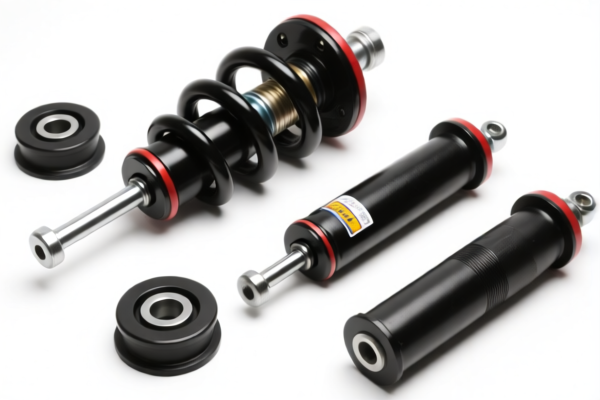
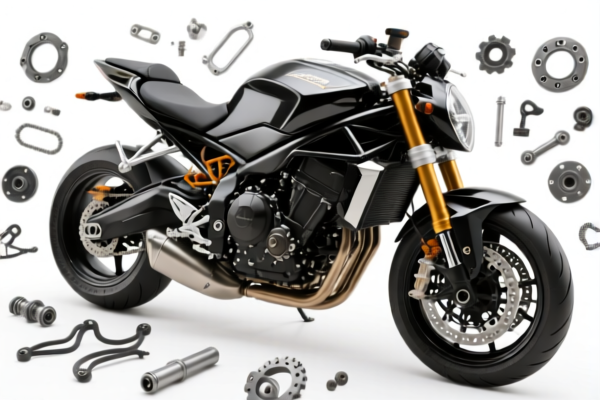
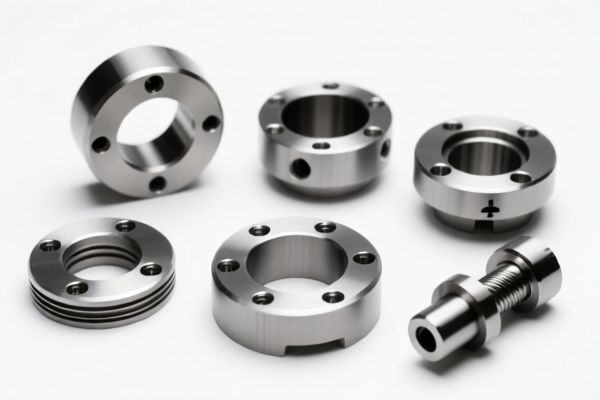
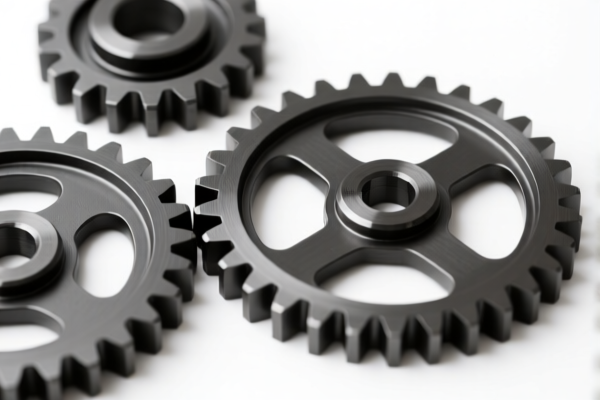
AI Analysis
🚗 RC Car Parts: The Ultimate 2026 Customs & Tax Guide
🌐 HS Code Reference & Clearance Strategy | 2026 Latest Tariff Analysis | Expert通关 Tactics
📌 I. Product Definition & Classification: Do You Know Your "RC Car Parts"?
Remote Control (RC) Cars are a dual-nature product in international trade: they are toys when sold as complete units, but automotive parts when sold as spare components for vehicles. The classification depends entirely on the nature of the item and its specific function.
The Two Main Categories: 1. 🧸 Toys (Complete Units or Toy-Specific Parts): If the item is clearly designed for children's play (e.g., a toy car body, wheels for a 1/10 scale toy car), it falls under Toy classifications. * Key HS Code: 9503.00.00.90 2. 🛠️ Automotive/Industrial Parts: If the item is a mechanical/electronic component that could be used for a real vehicle or is classified as a general-purpose electronic device/vehicle accessory, it falls under Vehicle Parts or Electronic Appliances. * Key HS Codes: 8708.29.51.60, 8512.20.20.80, 8543.70.98.60.
⚠️ Critical Distinction: - Is it a finished toy? → 9503.00.00.90 (Low Tax) - Is it a car part or electronic module? → 8708/8512/8543 (High Tax due to US Trade Restrictions)
📦 II. Detailed HS Code Classification (2026 Tariff Authority)
Based on the provided dataset, here is the breakdown of where RC Car Parts fall:
| HS Code | Product Description | Category Summary | Material/Logic Conflict |
|---|---|---|---|
9503.00.00.90 |
RC Car (Toy Category) (Includes parts clearly defined as toys like 3-wheelers, skateboards) |
Toys (Category: 9503) | ❌ No conflict. Fits "Three-wheeled vehicles, skateboards" toy definition. |
8708.29.51.60 |
Vehicle Body Parts & Accessories (General car parts, other accessories) |
Body Parts & Accessories (Category: 8708) | ❌ No conflict. Highly matches "Other parts & accessories" for vehicles. |
8512.20.20.80 |
Vehicle Lighting/Signal Equipment (Headlights, taillights, turn signals) |
Vehicle Parts/Lighting | ❌ No conflict. Purely a component for vehicle lighting. |
8543.70.98.60 |
RC Car (Electronic Device) (Remote control unit,具有独立功能 electronic module) |
Other Machines/Devices (Category: 8543) | ❌ No conflict. Fits "Other machines and apparatus" for independent electronic function. |
8703.90.01.00 |
Motor Vehicles (RC Racing) (RC Cars designed for racing/riding, 载人/运动) |
Motor Vehicles (Category: 8703) | ❌ No conflict. Logic matches "Vehicles designed for passenger/sport". |
💰 III. 2026 Tariff Rate Breakdown (US Market - China Origin)
✅ Applicable Country: United States (US)
✅ Origin: China (CN)
✅ Timeline: 2026 Tariff Regime (Includes Section 301 & Section 232 effects)
🎯 1. 9503.00.00.90 — Toys (Lowest Tax)
The "Safe Harbor" for Toys.
| Item | Content |
|---|---|
| Base Duty | 0.0% (Ad Valorem) |
| Additional Duty (Section 301) | 0.0% |
| Section 232 Tariff (122 Clause) | +10% (Specific 10% tariff applied) |
| Total Tax Rate | 10.0% |
| Tax Calculation | CIF Value × 10% |
| De Minimis Exemption | ⚠️ Depends on value, but generally higher thresholds apply to toys vs. tech. |
📌 Analysis:
This is the most favorable rate. If the RC Car or its parts can be legally classified as a "Toy" (no serious safety hazards, not for racing competition, clearly for play), you save ~75-100% in taxes compared to other classifications.
🎯 2. 8708.29.51.60 — Body Parts & Accessories (High Tax)
The "Steel, Aluminum, Copper" Trap.
| Item | Content |
|---|---|
| Base Duty | 2.5% |
| Additional Duty (Section 301) | +25.0% |
| Section 232 Tariff (Steel/Al/Cu) | +50.0% (For Steel, Aluminum, Copper products) |
| 122 Clause Tariff | +10% |
| Total Tax Rate | ~87.5% - 100% (Depending on material) |
| Tax Calculation | CIF Value × (2.5% + 25% + 50% + 10%) |
| De Minimis Exemption | ❌ None (Highly restricted) |
📌 Analysis:
CRITICAL WARNING: If your RC part is made of Steel, Aluminum, or Copper and classified as a Vehicle Part, the "122 Clause" (Section 232) adds a massive 50% surcharge on top of the standard 301 tariffs. This creates a ~85-100% tax wall. - Formula:2.5% (Base) + 25% (301) + 10% (122) + 50% (Material) = 87.5%
🎯 3. 8512.20.20.80 — Lighting Components (Medium-High Tax)
Specific Vehicle Lighting.
| Item | Content |
|---|---|
| Base Duty | 0.0% |
| Additional Duty (Section 301) | +25.0% |
| 122 Clause Tariff | +10% |
| Total Tax Rate | 35.0% |
| Tax Calculation | CIF Value × 35% |
📌 Analysis:
Lighting parts are treated as general vehicle accessories. No "Steel/Copper" surcharge applies unless the bulb housing is specifically flagged, resulting in a moderate 35% rate.
🎯 4. 8543.70.98.60 — Electronic Modules (High Tax)
Remote Control Units / Independent Electronics.
| Item | Content |
|---|---|
| Base Duty | 2.6% |
| Additional Duty (Section 301) | +25.0% |
| 122 Clause Tariff | +10% |
| Total Tax Rate | 37.6% |
| Tax Calculation | CIF Value × 37.6% |
📌 Analysis:
Electronic devices with independent functions (like a standalone remote control module) fall here. The base rate is slightly higher than toys, and the 301+122 tariffs apply.
🎯 5. 8703.90.01.00 — Motor Vehicles (Maximum Tax)
RC Cars treated as "Vehicles".
| Item | Content |
|---|---|
| Base Duty | 2.5% |
| Additional Duty (Section 301) | +100.0% (Extreme penalty rate) |
| 122 Clause Tariff | +10% |
| Total Tax Rate | 112.5% |
| Tax Calculation | CIF Value × 112.5% |
| De Minimis Exemption | ❌ Impossible |
📌 Analysis:
If Customs classifies an RC car as a Motor Vehicle (e.g., due to speed, power, or "racing" classification), the Section 301 tariff hits 100%, leading to a 112.5% total tax. This is a tax trap that destroys profit margins.
🛠️ IV. Customs Clearance Practical Advice (Risk Avoidance)
✅ 1. Material Declaration Strategy
- 🚫 Avoid "Steel/Aluminum" if possible: If you can classify parts under 9503 (Toys) instead of 8708, you avoid the 50% Steel/Aluminum surcharge.
- ✅ Use Plastic/Composite: Clearly specify that chassis/wheels are made of ABS Plastic or Composite, not Steel or Aluminum, to escape the Section 232 (122 Clause) 50% surcharge.
✅ 2. The "Toy vs. Part" Declaration
- 🧸 Playful Context: If the item is a replacement part, ensure the Description explicitly states: "Replacement part for Children's Toy RC Car" or "Spare part for Toy Vehicle (Non-Motorized)".
- ⚠️ Avoid "Vehicle Part" Language: Do not use terms like "Auto Part," "Automotive Accessory," or "Replacement for [Brand] Car" unless you are ready to pay 112.5% tax.
✅ 3. Electronic Component Handling
- 🔌 Separation: If selling a Remote Control Unit separately, classify as 8543 (37.6%). Do not bundle it with a "Vehicle" classification unless necessary.
- 🔦 Lighting: If selling lights, use 8512 (35%) but ensure you don't misclassify them as full vehicle systems.
🌍 V. Global Market Comparison (2026)
| Region | Recommended HS Code | Tariff Estimate | Risk Level |
|---|---|---|---|
| 🇺🇸 USA | 9503.00.00.90 | 10% | ✅ LOW (Best Option) |
| 🇺🇸 USA | 8708.29.51.60 (Metal Parts) | ~87.5% | 🔴 EXTREME (Avoid) |
| 🇺🇸 USA | 8703.90.01.00 (Vehicle Class) | 112.5% | 🔴 CATASTROPHIC |
| 🇪🇺 EU | 9503.00.00.90 | 0% (Free Trade) | ✅ LOW |
| 🇪🇺 EU | 8708 (Vehicle Parts) | 0% - 4% | ✅ MODERATE |
📌 Conclusion:
The US market is the only place where the classification difference between "Toy" (10%) and "Vehicle Part" (87%+) is a matter of life and death for profitability.
📌 VI. Common Errors & Pitfalls (Lessons Learned)
❌ Error 1: Over-classifying as "Vehicle Parts"
* Mistake: Labeling an RC car body as "Auto Body Part" → Class 8708.
* Consequence: Tax jumps from 10% to 87.5% (if metal) or 112.5% (if vehicle).
* Fix: Always emphasize "Toy" in the commercial invoice description.
❌ Error 2: Ignoring Material Composition (Steel/Al/Cu) * Mistake: Not declaring that a part is Aluminum, assuming it's just "Plastic". * Consequence: If inspected and found to be Aluminum, the 50% Section 232 surcharge is applied retroactively + penalties. * Fix: Be precise: "Plastic RC Car Body".
❌ Error 3: Bundling "Vehicle" with "Toy" * Mistake: Declaring a kit containing an RC car body and a motor as a single "Motor Vehicle" kit. * Consequence: The whole shipment gets the 112.5% "Vehicle" rate. * Fix: Split the shipment or declare components separately as "Toy Parts".
🎯 VII. Strategic Recommendations for 2026
- Prioritize
9503.00.00.90: If your product is an RC car or toy part, fight for the Toy classification. It is the only way to keep taxes under 10%. - Avoid Metal Declarations: If you must use
8708(Parts), try to use plastic materials to avoid the 50% Steel/Al/Cu surcharge. - Detailed Documentation: Provide a "Product Usage Statement" proving the item is for recreational toy use only, not for actual transportation or industrial racing.
- Pre-Arrangement: Request a Binding Ruling from US Customs (CBP) if your product is borderline (e.g., high-speed RC cars).
🚀 Final Takeaway:
"Toy = 10% (Life) | Vehicle Part = 87%+ (Death)"
Your HS Code is your Profit Margin. Get it right, or pay the 100% tax penalty!
✨ Professional Clearance Starts with Precision!
💼 Calculate your tax burden before shipping!
Customer Reviews
About HS Code Classification
The Harmonized System (HS) is an internationally standardized nomenclature developed by the World Customs Organization (WCO) to classify traded products. Over 200 countries use the HS system as the basis for customs tariffs, trade statistics, and import/export regulations.
Each HS code follows a hierarchical structure:
- Chapter (2 digits) — Broad category of goods (e.g., Chapter 84: Machinery and Mechanical Appliances)
- Heading (4 digits) — More specific grouping within the chapter
- Subheading (6 digits) — Internationally standardized breakdown, used by all WCO member countries
- National subdivisions (8-10 digits) — Country-specific extensions for further classification, such as US HTSUS 10-digit codes
Correct HS code classification is essential for smooth customs clearance, accurate duty payment, and compliance with trade regulations. Misclassification can lead to customs delays, overpayment of duties, or penalties.
When importing from CN to US, the applicable tariff rates may include:
- Most-Favored-Nation (MFN) rate — The standard duty rate applied to WTO members
- General rate — Applied to countries without trade agreements
- Trade remedy duties — Additional tariffs such as Section 301 (anti-dumping), Section 232 (national security), or countervailing duties
The information provided on this page is for reference purposes only. For official classification, please consult with your local customs authority or a licensed customs broker.