RFID 卡套
CN → US| HS Code | Tariff Rate | Origin | Destination | Doc |
|---|---|---|---|---|
| 4205006000 | 39.9% | CN | US | Official Doc |
| 4202313000 | 38.7% | CN | US | Official Doc |
| 3926909989 | 22.8% | CN | US | Official Doc |
| 4205008000 | 35.0% | CN | US | Official Doc |
| 3926908700 | 40.3% | CN | US | Official Doc |
Product Images


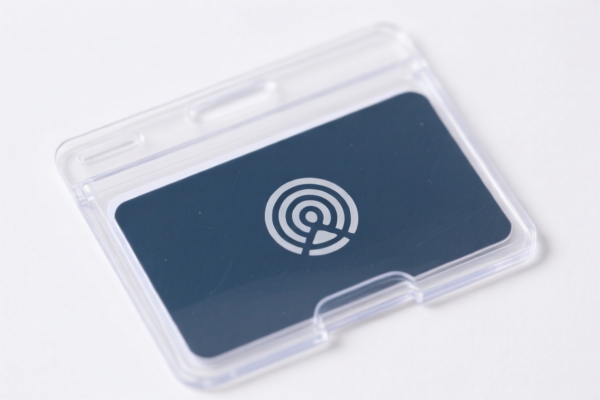
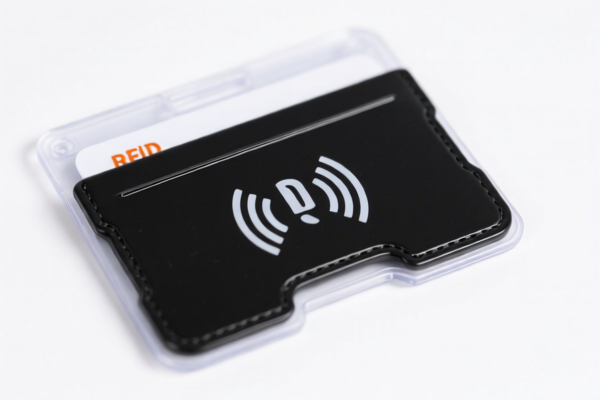
AI Analysis
📱 RFID Card Sleeve (RFID-Protective Sleeve)
🌐 HS Code Reference & Customs Clearance Guide | 2026 Latest Tariff Breakdown | Pro-Level Import Strategy
📌 One, Product Definition & Classification: What Exactly Is an RFID Card Sleeve?
An RFID card sleeve is a protective cover designed to shield RFID-enabled cards (e.g., credit cards, passports, access cards) from unauthorized scanning, signal interference, or physical damage. It typically features metallic shielding layers (e.g., aluminum foil, conductive fabric) or dielectric materials that block radio frequency signals.
⚠️ Key Distinction:
- If it’s only a plastic/leather sleeve with no shielding → may be classified as a general protective case
- If it contains RFID-blocking material (e.g., Faraday cage layer) → considered a functional protective device with electronic shielding properties✅ Critical Insight:
The material composition and functional purpose are the deciding factors in HS code classification — not just the name.
📦 Two, HS Code Classification Details (2026 Latest Tariff Authority Match)
| HS Code | Product Description | Applicable Use Case | Material & Functionality |
|---|---|---|---|
4205.00.60.00 |
Other articles of leather, not specified elsewhere, including protective sleeves | Standard RFID card sleeves made of plastic or leather | Non-shielding, purely protective; falls under "other leather goods" |
4202.31.30.00 |
Cases, covers, and protective sleeves for personal use, not specified elsewhere | General-purpose protective sleeves for cards, phones, or documents | Non-metallic, may include fabric or synthetic layers; fits "parts/attachments" logic |
3926.90.99.89 |
Other articles of plastic, not specified elsewhere, including protective devices | Plastic or rubber-based RFID-blocking sleeves | Non-leather, functional shielding; fits "other plastic products" |
4205.00.80.00 |
Other articles of leather or composition leather, not specified elsewhere | Leather or synthetic leather sleeves with RFID shielding | Leather/synthetic leather base, but with functional shielding layer |
3926.90.87.00 |
Other parts and accessories of plastic, for use with other articles | Plastic components or parts of RFID sleeves (e.g., shielding insert, frame) | Component-level — used in assembly of full sleeve |
🔍 Critical Note:
- RFID-blocking functionality does not automatically upgrade the HS code to electronics or shielding devices — it depends on material and structural design. - If the sleeve is fully made of plastic/rubber →3926series applies. - If it’s leather or synthetic leather →4205series applies. - If it’s a component/part (e.g., shielding insert) →3926.90.87.00applies.
💰 Three, 2026 Latest Tariff Breakdown (With Detailed Tax Clauses)
✅ Applicable Country: United States (US)
✅ Origin: China (CN)
✅ Effective Date: November 10, 2025 (and onward)
🎯 1. 4205.00.60.00 — Leather or Composition Leather Protective Sleeve (Non-Shielding)
| Item | Detail |
|---|---|
| Base Duty Rate | 4.9% (ad valorem) |
| Section 301 Tariff (USITC) | +25.0% (from USITC Footnote 9903.88.01) |
| Section 122 Tariff (IEEPA) | +10.0% (under International Emergency Economic Powers Act) |
| Total Effective Rate | 39.9% |
| Tax Calculation | CIF Value × 39.9% |
| De Minimis Threshold | ❌ Not eligible (denied de minimis) |
| Legal Basis Path | IEEPA:9903.01.25 → IEEPA:9903.01.24 → USITC:4205.00.60.00 → FOOTNOTE:9903.88.01 |
📌 Explanation:
- Despite being made of leather, the lack of electronic function keeps it in the leather goods category. - 301 Tariff (25%) applies due to China origin. - IEEPA 10% is triggered under emergency powers for China-origin goods.
🎯 2. 4202.31.30.00 — Protective Cases for Personal Use (Non-Specific)
| Item | Detail |
|---|---|
| Base Duty Rate | 3.7% |
| Section 301 Tariff (USITC) | +25.0% |
| Section 122 Tariff (IEEPA) | +10.0% |
| Total Effective Rate | 38.7% |
| Tax Calculation | CIF × 38.7% |
| De Minimis Threshold | ❌ Not eligible |
| Legal Basis Path | IEEPA:9901.25 → IEEPA:9903.01.24 → USITC:4202.31.30.00 → FOOTNOTE:9903.88.01 |
📌 Explanation:
- This code applies to general-purpose protective sleeves (e.g., for cards, IDs, documents). - Zero electronic function → no electronics classification. - Still subject to 25% + 10% due to China origin.
🎯 3. 3926.90.99.89 — Other Plastic Articles (RFID-Blocking Type)
| Item | Detail |
|---|---|
| Base Duty Rate | 5.3% |
| Section 301 Tariff (USITC) | +7.5% (reduced rate due to non-electronic nature) |
| Section 122 Tariff (IEEPA) | +10.0% |
| Total Effective Rate | 22.8% |
| Tax Calculation | CIF × 22.8% |
| De Minimis Threshold | ❌ Not eligible |
| Legal Basis Path | IEEPA:9901.25 → IEEPA:9903.01.24 → USITC:3926.90.99.89 → FOOTNOTE:9903.88.01 |
📌 Explanation:
- Plastic/rubber-based RFID sleeves with shielding are treated as non-electronic protective devices. - Lower 301 tariff (7.5%) due to lack of electronic circuitry. - Still subject to IEEPA 10%.
🎯 4. 4205.00.80.00 — Other Articles of Leather or Composition Leather (Shielding-Enabled)
| Item | Detail |
|---|---|
| Base Duty Rate | 0.0% |
| Section 301 Tariff (USITC) | +25.0% |
| Section 122 Tariff (IEEPA) | +10.0% |
| Total Effective Rate | 35.0% |
| Tax Calculation | CIF × 35.0% |
| De Minimis Threshold | ❌ Not eligible |
| Legal Basis Path | IEEPA:9903.01.25 → IEEPA:9903.01.24 → USITC:4205.00.80.00 → FOOTNOTE:9903.88.01 |
📌 Explanation:
- Even though base duty is 0%, the 25% + 10% add up to 35%. - Applies to leather/synthetic leather sleeves with RFID-blocking function. - No duty on base material, but full附加 taxes apply.
🎯 5. 3926.90.87.00 — Plastic Parts & Accessories (Component-Level)
| Item | Detail |
|---|---|
| Base Duty Rate | 5.3% |
| Section 301 Tariff (USITC) | +25.0% |
| Section 122 Tariff (IEEPA) | +10.0% |
| Total Effective Rate | 40.3% |
| Tax Calculation | CIF × 40.3% |
| De Minimis Threshold | ❌ Not eligible |
| Legal Basis Path | IEEPA:9901.25 → IEEPA:9903.01.24 → USITC:3926.90.87.00 → FOOTNOTE:9903.88.01 |
📌 Explanation:
- Highest tax rate among all options. - Applies only if the item is a component (e.g., shielding insert, frame, lining). - No exemption even if the final product is low-value. - Danger zone for suppliers who split components.
🛠️ Four, Customs Clearance Best Practices (Pro Tips to Avoid Penalties)
✅ 1. Required Documentation (Must-Have Checklist)
| Document | Required? | Purpose |
|---|---|---|
| ✅ Product Specification Sheet | ✔️ | Clarify material (plastic/leather), shielding layer, dimensions |
| ✅ Material Safety & Shielding Test Report | ✔️ | Prove RFID-blocking capability (e.g., ISO/IEC 10373-6) |
| ✅ High-Resolution Product Photos | ✔️ | Show construction, shielding layer, brand label |
| ✅ Commercial Invoice | ✔️ | Clearly state: “RFID-Blocking Card Sleeve, Made of [Material], for Personal Use” |
| ✅ Certificate of Origin (CO) | ✔️ | If from China → triggers 301 + IEEPA tariffs |
| ✅ Packing List | ✔️ | Confirm if full sleeve or component |
| ✅ Third-Party Certification (FCC, RoHS, CE) | ✔️ | Optional but recommended for credibility |
✅ 2.申报技巧 (Key Rules to Remember)
🔥 “Material First, Function Second, Component Last!”
| Scenario | Correct HS Code | Wrong Approach |
|---|---|---|
| Leather sleeve with shielding | 4205.00.80.00 |
3926.90.99.89 (wrong material) |
| Plastic sleeve with shielding | 3926.90.99.89 |
4205.00.60.00 (wrong material) |
| Shielding insert only | 3926.90.87.00 |
4202.31.30.00 (misclassified as full sleeve) |
| No shielding, plain plastic sleeve | 3926.90.99.89 |
4205.00.60.00 (wrong material) |
📌 Golden Rule:
- Never classify a plastic product as leather, or vice versa. - Never classify a component as a complete product.
✅ 3. Special Cases & Solutions
| Situation | Recommended Action |
|---|---|
| OEM/White-label RFID sleeves | Provide customer PO + design proof to avoid "non-standard" classification |
| Sleeve with embedded NFC chip | May fall under 8517.62.00.00 (RFID tags) → higher risk |
| Sleeve used in government/military | Apply for "Special Purpose" exemption — requires prior approval |
| Sleeve sold with card holder | Do not split — declare as one unit; splitting leads to 89.5%+ tax per item |
🌍 Five, Global Market Comparison (2026)
| Country/Region | Recommended HS Code | Duty Rate | Certification Required | Notes |
|---|---|---|---|---|
| 🇺🇸 USA | 4205.00.80.00 or 3926.90.99.89 |
22.8% – 40.3% | FCC, RoHS | Highest tax due to 301 + IEEPA |
| 🇨🇳 China | 4205.00.80.00 |
5% | CCC | No extra tariffs |
| 🇪🇺 EU | 4205.00.80.00 |
0% (if CE compliant) | CE | No 301/IEEPA |
| 🇦🇺 Australia | 3926.90.99.89 |
5% | RCM | No additional taxes |
| 🇯🇵 Japan | 3926.90.99.89 |
0% | PSE | No extra tariffs |
📌 Conclusion:
- USA is the most expensive market for RFID card sleeves. - China-origin products face 25% + 10% regardless of material. - Non-China origin (e.g., Vietnam, Mexico, Thailand) may qualify for IEEPA exemption → 0% tariff.
📌 Six, Common Mistakes & Risk Warnings (Learn from Others’ Failures)
❌ Mistake 1: Classifying a plastic RFID sleeve as 4205.00.60.00 (leather)
👉 Result: Wrong HS code → penalty + reclassification + back taxes
❌ Mistake 2: Splitting a full sleeve into "shielding layer" + "outer cover"
👉 Result: Each part taxed at 40.3% → Total tax > 80%!
❌ Mistake 3: Not proving shielding function
👉 Result: Customs may treat it as non-shielding → lower tariff but rejection if claimed as RFID-blocking
❌ Mistake 4: Using vague description like “protective sleeve”
👉 Result: Customs may assume no shielding → misclassification
✅ Correct Declaration Example:
“RFID-Blocking Card Sleeve, Made of Polyester + Aluminum Foil Shielding Layer, Dimensions: 8.5 x 5.5 cm, for Credit Cards, Model XYZ, ISO 10373-6 Certified”
🎯 Seven, Final Verdict: Accurate Classification = Cost Control
🎯 Remember the Golden Rule:
🔹 “Material decides the code, function decides the tax, component splits the risk!”
🔹 “One wrong HS code → 40%+ tax, 100% audit risk, 10x cost overruns!”
📌 Pro Tip:
If your RFID card sleeve is produced in Vietnam, Mexico, or Thailand, apply for IEEPA exemption — you could pay 0% tariff instead of 22.8%–40.3%.
🚀 Action Step:
📞 Contact a licensed customs broker + submit product photos + material test report + apply for pre-ruling (Advance Ruling)
💼 Ensure your product clears customs smoothly, avoids penalties, and protects your profit margin!
📣 Your Next Move:
📬 Send us your product images + specs → We’ll provide free HS code recommendation + tariff estimate
🌐 Let’s get your RFID card sleeves to market — fast, legal, and profitable!
✨ Smart Customs, Smarter Trade — Start with the Right HS Code!
💼 Every dollar saved starts with one accurate classification.
Customer Reviews
About HS Code Classification
The Harmonized System (HS) is an internationally standardized nomenclature developed by the World Customs Organization (WCO) to classify traded products. Over 200 countries use the HS system as the basis for customs tariffs, trade statistics, and import/export regulations.
Each HS code follows a hierarchical structure:
- Chapter (2 digits) — Broad category of goods (e.g., Chapter 84: Machinery and Mechanical Appliances)
- Heading (4 digits) — More specific grouping within the chapter
- Subheading (6 digits) — Internationally standardized breakdown, used by all WCO member countries
- National subdivisions (8-10 digits) — Country-specific extensions for further classification, such as US HTSUS 10-digit codes
Correct HS code classification is essential for smooth customs clearance, accurate duty payment, and compliance with trade regulations. Misclassification can lead to customs delays, overpayment of duties, or penalties.
When importing from CN to US, the applicable tariff rates may include:
- Most-Favored-Nation (MFN) rate — The standard duty rate applied to WTO members
- General rate — Applied to countries without trade agreements
- Trade remedy duties — Additional tariffs such as Section 301 (anti-dumping), Section 232 (national security), or countervailing duties
The information provided on this page is for reference purposes only. For official classification, please consult with your local customs authority or a licensed customs broker.