RME (Rapeseed Methyl Ester)
CN → US| HS Code | Tariff Rate | Origin | Destination | Doc |
|---|---|---|---|---|
| 1514919010 | 23.9% | CN | US | Official Doc |
| 1514999010 | 23.9% | CN | US | Official Doc |
| 3826001000 | 39.6% | CN | US | Official Doc |
| 3826003000 | 41.5% | CN | US | Official Doc |
| 2710201002 | 0.0% | CN | US | Official Doc |
Product Images

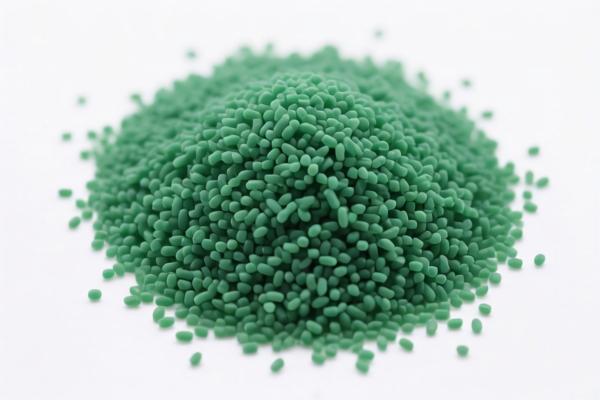
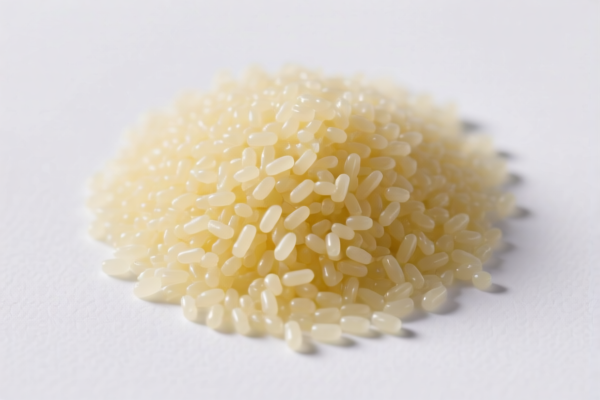
AI Analysis
🛢️ RME (Rapeseed Methyl Ester) / Biodiesel & Related Oil Products
🌐 HS Code Reference & Customs Clearance Guide | 2024 Latest Tariff Schedule | Professional Entry Strategy
📌 I. Product Definition & Classification: Do You Really Understand "RME"?
RME (Rapeseed Methyl Ester) is primarily known as Biodiesel, a renewable biofuel derived from rapeseed oil. However, in international trade, it is often categorized differently depending on its purity, processing stage, and specific application.
In the provided data set, RME and its derivatives are split into two main categories: 1. Crude/Refined Rapeseed Oil & Derivatives: If the product is considered an agricultural oil or its direct fractions before final fuel conversion. 2. Finished Biodiesel & Fuel Mixtures: If the product is clearly defined as a fuel or fuel blend.
⚠️ Key Distinction:
- If the substance is pure biodiesel intended for immediate fuel use → It generally falls under 3826.00 (Biodiesel).
- If the substance is raw oil, refined oil, or its馏出物 (fractions/distillates) intended for further processing or non-fuel industrial use → It falls under 1514.91/99 (Rapeseed/Coleseed Oil).
- If it is a blend with petroleum diesel → It may fall under 2710.20 (Fuel Oil containing Biodiesel).
📦 II. HS Code Classification Details (Latest Tariff Authority Comparison)
| HS Code | Product Description | Application Scenario | Tax Implication |
|---|---|---|---|
1514.91.90.10 |
Rapeseed or canola oil and its fractions | Raw/Refined rapeseed oil, not yet converted to biodiesel; intermediate chemical feedstock | 23.9% Total Tax |
1514.99.90.10 |
Distillates of Rapeseed/Coleseed Oil | Fractionated oils or partially processed oils | 23.9% Total Tax |
3826.00.10.00 |
Biodiesel | Pure RME specifically manufactured as a renewable fuel | 39.6% Total Tax |
3826.00.30.00 |
Biodiesel and Mixtures thereof | Biodiesel blends (e.g., B20, B50) or mixtures with other fuels | 41.5% Total Tax |
2710.20.10.02 |
Distillate Fuel Oil Containing Biodiesel | Petroleum-based diesel blends that contain a measurable amount of biodiesel | 10.5¢/bbl + 35.0% Tax |
🔍 Critical Reminder:
- Pure RME is most commonly classified under 3826.00.10.00 if it meets the ASTM D6751 or EN 14214 standards for biodiesel.
- Do not misclassify pure biodiesel as "Rapeseed Oil" (1514) to save taxes, as this is a high-risk customs error leading to penalties.
- If the product is a blend, ensure the biodiesel content percentage is clearly stated on the invoice to determine if it falls under3826.00.30.00or2710.20.10.02.
💰 III. 2024 Latest Tariff Rate Breakdown (Including Surtaxes & Policy Add-ons)
✅ Applicable Country: United States (US)
✅ Country of Origin: China (CN) (Note: Rates are high due to Section 301 and Section 232/122 tariffs)
✅ Effective Date: Current rates apply as per latest IEEPA/USITC directives.
🎯 1. 1514.91.90.10 & 1514.99.90.10 —— Rapeseed/Coleseed Oil & Fractions
| Item | Content |
|---|---|
| Base Duty Rate | 6.4% |
| Section 301 Surtax | +7.5% (Specific to Chinese origin) |
| Section 122 Tariff | +10% (Reciprocal Trade Act / Retaliatory Tariff) |
| Total Tax Rate | 23.9% |
| Tax Calculation | CIF Value × 23.9% |
| De Minimis Exemption | ❌ Not Eligible |
📌 Explanation:
- These codes apply to the raw or refined oil before it becomes a fuel.
- The 23.9% total includes base MFN rate plus significant retaliatory/add-on tariffs for Chinese imports.
- This is lower than the biodiesel tax rate but applies only if the product is not classified as fuel.
🎯 2. 3826.00.10.00 —— Biodiesel (Pure RME)
| Item | Content |
|---|---|
| Base Duty Rate | 4.6% |
| Section 301 Surtax | +25.0% (Standard Section 301 tariff on many chemical/fuel products) |
| Section 122 Tariff | +10% |
| Total Tax Rate | 39.6% |
| Tax Calculation | CIF Value × 39.6% |
| De Minimis Exemption | ❌ Not Eligible |
📌 Explanation:
- This is the standard classification for pure RME biodiesel.
- The 39.6% rate is significantly higher than the oil rate (1514) due to the higher base rate and the full Section 301 surcharge.
- Strategic Note: Importers sometimes try to misclassify biodiesel as oil to pay 23.9% instead of 39.6%, but customs audits are strict on fuel content.
🎯 3. 3826.00.30.00 —— Biodiesel and Mixtures
| Item | Content |
|---|---|
| Base Duty Rate | 6.5% |
| Section 301 Surtax | +25.0% |
| Section 122 Tariff | +10% |
| Total Tax Rate | 41.5% |
| Tax Calculation | CIF Value × 41.5% |
| De Minimis Exemption | ❌ Not Eligible |
📌 Explanation:
- Applies to blends (e.g., B20, B50) or mixtures where biodiesel is combined with other substances for fuel purposes.
- Highest ad valorem rate among the biodiesel-related codes.
🎯 4. 2710.20.10.02 —— Distillate Fuel Oil Containing Biodiesel
| Item | Content |
|---|---|
| Specific Duty | 10.5¢/bbl (per barrel) |
| Section 301 Surtax | +25.0% |
| Section 122 Tariff | +10% |
| Total Effective Rate | 10.5¢/bbl + 35.0% (Ad Valorem) |
| Tax Calculation | (10.5¢ × Volume in Bbls) + (CIF Value × 35.0%) |
| De Minimis Exemption | ❌ Not Eligible |
📌 Explanation:
- This code is for petroleum-based diesel that contains a small percentage of biodiesel (below the threshold for pure biodiesel classification).
- The 35.0% ad valorem rate (25% + 10%) applies to the total value, plus a per-barrel fee.
- Use this only if the product is primarily petroleum diesel with a minor biodiesel additive.
🛠️ IV. Customs Clearance Practical Advice (Avoiding Pitfalls)
✅ 1. Required Documentation Checklist
| Document | Mandatory? | Notes |
|---|---|---|
| ✅ Safety Data Sheet (SDS) | ✔️ | Critical for proving chemical nature (Fatty Acid Methyl Esters). |
| ✅ Certificate of Analysis (CoA) | ✔️ | Must specify Biodiesel Content %, FAME content, and Origin. |
| ✅ Commercial Invoice | ✔️ | Clearly state "Rapeseed Methyl Ester (RME)" or "Biodiesel B100". |
| ✅ Bill of Lading | ✔️ | Ensure no "Mixed" descriptions that confuse customs. |
| ✅ EPA Registration Number | ✔️ | If importing into the US as fuel, EPA registration may be required. |
| ✅ Country of Origin Certificate | ✔️ | Essential for applying surtaxes accurately. |
✅ 2. Classification Strategy (Key Mantra)
🔥 "Pure RME = 3826; Oil = 1514; Blend = 2710/3826 Mix. Misclassification = Heavy Fines!"
| Scenario | Correct HS Code | Risk of Misclassification |
|---|---|---|
| Pure Biodiesel (B100) | 3826.00.10.00 |
Reporting as Oil (1514) → Back taxes + Penalty (Difference: ~15%) |
| Rapeseed Oil (Unrefined) | 1514.91.90.10 |
Reporting as Biodiesel (3826) → Incorrect duty, potential re-inspection |
| Diesel-Biodiesel Blend (B5-B20) | 2710.20.10.02 or 3826.00.30.00 |
Depends on primary character; Check ASTM D975 vs D6751 standards |
| RME for Cosmetics/Chemicals | 1514 or 3824 |
Must prove non-fuel use with technical data sheets |
✅ 3. Special Considerations
| Situation | Handling Advice |
|---|---|
| US Origin Biofuel | If RME is produced in the US, different duties may apply (check FTAs). |
| Indonesian/Malaysian Palm Methyl Ester (PME) | Often grouped with RME under 3826, but ensure correct botanical origin labeling. |
| Section 301 Exclusions | Currently, most biodiesel products from China DO NOT have exclusions. Assume 39.6% or 41.5%. |
| Fuel Tax Credits (RINs) | In the US, biodiesel may qualify for RINs (Renewable Identification Numbers) for EPA compliance, separate from customs duties. |
🌍 V. Global Market Comparison (2024 Snapshot)
| Country/Region | Recommended HS Code | Duty Rate (China Origin) | Certification | Notes |
|---|---|---|---|---|
| 🇺🇸 USA | 3826.00.10.00 |
39.6% | EPA + ASTM D6751 | High tariffs due to trade tensions. |
| 🇨🇳 China | 3826.00.10.00 |
~6-10% | GB 19147 | Lower base duty, no Section 301. |
| 🇪🇺 EU | 3826.00.10.00 |
0% (if renewable) | EN 14214 | No import duty for biodiesel; subject to EU VAT & Excise. |
| 🇧🇷 Brazil | 3826.00.10.00 |
14% | INMETRO | Major biodiesel producer; imports are less common. |
📌 Conclusion:
- USA imposes the highest combined duty (39.6%) on Chinese RME.
- EU is the most favorable for duty-free entry if sustainability criteria are met.
- China has moderate duties but no punitive surtaxes.
📌 VI. Common Errors & Pitfalls (Lessons Learned)
❌ Error 1: Classifying Pure Biodiesel as Rapeseed Oil (1514) to save taxes.
👉 Consequence: Customs may issue a Class 78 Ruling or Penalty for misdeclaration. The difference of 15.7% is significant on large volumes.
❌ Error 2: Ignoring Section 122 Tariffs.
👉 Consequence: Forgetting to add the 10% surtax results in underpayment, leading to audits and interest charges.
❌ Error 3: Confusing Biodiesel (3826) with Glycerin (3824.99) by-product.
👉 Consequence: Biodiesel and Glycerin are often produced together. Ensure each is classified and taxed separately.
✅ Correct Action:
"Rapeseed Methyl Ester (RME), 99.5% Purity, ASTM D6751 Compliant, for Biofuel Use, Batch No. XXX"
🎯 VII. Conclusion: Precise Classification Saves Money!
🎯 Key Takeaway:
🔹 "Pure RME = 39.6% (3826); Oil = 23.9% (1514). Know your product's stage of refinement."
🔹 "Always include CoA and SDS to prove classification."
📌 Pro Tip:
- If you are importing large volumes, consider applying for an Advanced Ruling from U.S. Customs and Border Protection (CBP) to confirm the HS Code.
- Check for RIN (Renewable Identification Number) credits which can offset fuel tax liabilities in the US.
📣 Immediate Action:
📞 Consult a licensed customs broker with fuel expertise.
📄 Provide Certificate of Analysis and Technical Data Sheet.
🚀 Ensure Compliance, Avoid Seizures, Maximize Profit Margins!
✨ Professional Customs Clearance Starts with Accurate Classification!
💼 Every Percent of Duty Matters!
Customer Reviews
About HS Code Classification
The Harmonized System (HS) is an internationally standardized nomenclature developed by the World Customs Organization (WCO) to classify traded products. Over 200 countries use the HS system as the basis for customs tariffs, trade statistics, and import/export regulations.
Each HS code follows a hierarchical structure:
- Chapter (2 digits) — Broad category of goods (e.g., Chapter 84: Machinery and Mechanical Appliances)
- Heading (4 digits) — More specific grouping within the chapter
- Subheading (6 digits) — Internationally standardized breakdown, used by all WCO member countries
- National subdivisions (8-10 digits) — Country-specific extensions for further classification, such as US HTSUS 10-digit codes
Correct HS code classification is essential for smooth customs clearance, accurate duty payment, and compliance with trade regulations. Misclassification can lead to customs delays, overpayment of duties, or penalties.
When importing from CN to US, the applicable tariff rates may include:
- Most-Favored-Nation (MFN) rate — The standard duty rate applied to WTO members
- General rate — Applied to countries without trade agreements
- Trade remedy duties — Additional tariffs such as Section 301 (anti-dumping), Section 232 (national security), or countervailing duties
The information provided on this page is for reference purposes only. For official classification, please consult with your local customs authority or a licensed customs broker.