RV Charger
CN → US| HS Code | Tariff Rate | Origin | Destination | Doc |
|---|---|---|---|---|
| 8543906800 | 35.0% | CN | US | Official Doc |
| 8504409580 | 35.0% | CN | US | Official Doc |
| 8543908885 | 85.0% | CN | US | Official Doc |
| 8504404000 | 35.0% | CN | US | Official Doc |
| 8504409580 | 35.0% | CN | US | Official Doc |
Product Images
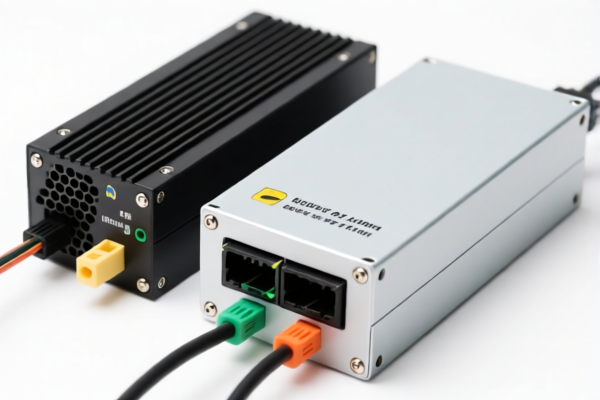
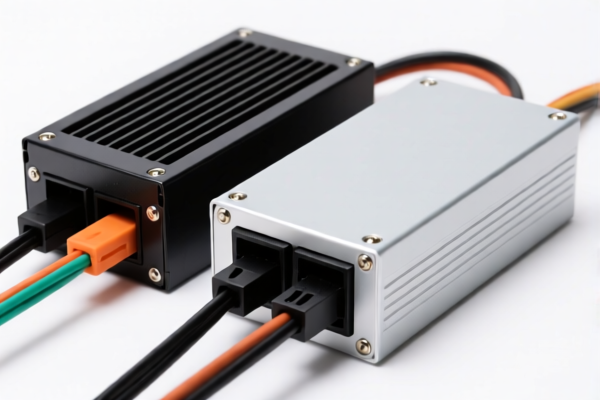
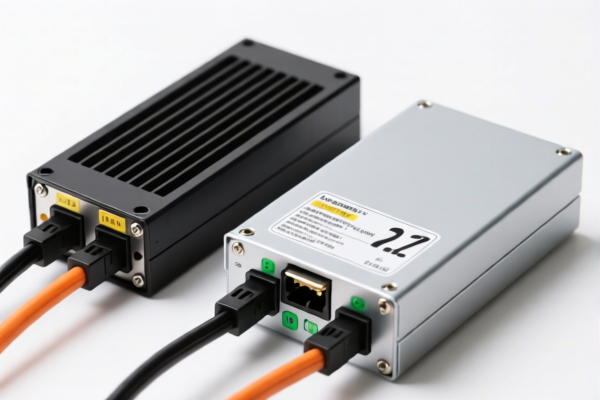
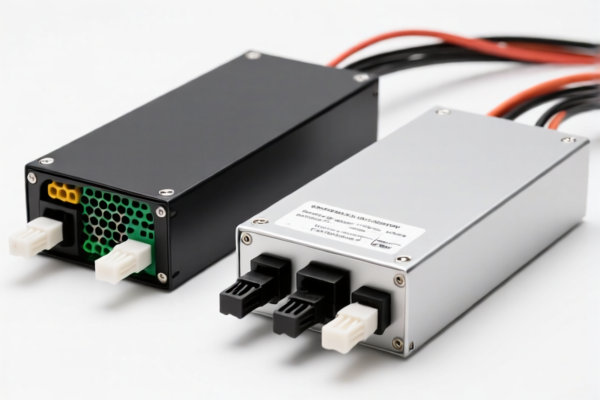
AI Analysis
🔌 RV Charger (Recreational Vehicle Charger)
🌐 HS Code Reference & Customs Clearance Guide | 2026 Latest Tariff Analysis | Professional-Level Strategy
📌 I. Product Definition & Classification: Do You Really Understand “RV Charger”?
An RV Charger is a critical electrical component in recreational vehicles, designed to convert Alternating Current (AC) from shore power or generators into Direct Current (DC) to charge the vehicle’s battery bank and manage power distribution. In international trade, it is primarily classified based on its function as either a static converter (rectifier) or an independent electrical apparatus.
Key Distinction Logic: - Static Converters/Rectifiers: If the device’s core function is strictly to convert AC to DC without complex independent control logic beyond standard rectification, it falls under Chapter 8504. - Independent Electrical Apparatus: If the device includes complex circuitry, microcontrollers, or specific independent functional capabilities beyond simple conversion, it may fall under Chapter 8543.
⚠️ Critical Classification Point:
- If the device is a standard rectifier/converter (AC→DC) → Likely 8504.40.95.80
- If the device has independent functional characteristics (e.g., smart management, specific proprietary circuitry) → Likely 8543.90.68.00 or 8543.90.88.85
📦 II. HS Code Classification Details (2026 Latest Tariff Authority Comparison)
| HS Code | Product Description | Applicable Scenario | Functional Characteristic |
|---|---|---|---|
8504.40.95.80 |
Static converters for DC; other (including rectifiers) | Standard AC-DC conversion, no complex independent logic | ✅ Static Converter/Rectifier |
8504.40.40.00 |
Static converters for DC; electric vehicle chargers | Specifically designated for EV charging logic | ✅ Static Converter (EV Logic) |
8543.90.68.00 |
Other electrical machines and apparatus; with printed circuit assemblies | Devices with complex circuitry, smart control | ✅ Independent Electrical Apparatus |
8543.90.88.85 |
Other electrical machines and apparatus; other | Generic independent electrical equipment | ✅ Independent Electrical Apparatus |
🔍 Key Reminder:
- 8504.40.95.80 is the most common classification for standard RV chargers because they are fundamentally static converters (rectifiers) converting AC to DC. - 8543 codes apply if the device is considered to have independent functional characteristics distinct from simple power conversion, often due to integrated smart controls or specific circuit designs.
💰 III. 2026 Latest Tariff Rate Details (Including Surcharges & Policy Add-ons)
✅ Applicable Country: United States (US)
✅ Country of Origin: China (CN)
✅ Effective Date: From November 10, 2025 (and subsequent imports)
🎯 1. 8504.40.95.80 —— Static Converters for DC (Standard RV Charger)
| Item | Content |
|---|---|
| Basic Tariff | 0.0% |
| Section 301 Surtax | +25.0% |
| 122 Section Surtax | +10.0% |
| Total Tariff Rate | 35.0% |
| Tax Calculation | CIF Value × 35.0% |
| De Minimis Exemption | ❌ Not Applicable |
| Legal Basis Path | Section 301: 25% → Section 122: 10% → HS: 8504.40.95.80 |
📌 Explanation:
- This is the most standard classification for RV chargers. - The 35% total tariff is a combination of the 25% Section 301 tariff (targeting Chinese manufacturing) and the 10% Section 122 tariff (additional levies on certain Chinese goods). - Base rate is 0%, but the surcharges drive the effective cost significantly higher.
🎯 2. 8504.40.40.00 —— Static Converters for DC (Electric Vehicle Charger Logic)
| Item | Content |
|---|---|
| Basic Tariff | 0.0% |
| Section 301 Surtax | +25.0% |
| 122 Section Surtax | +10.0% |
| Total Tariff Rate | 35.0% |
| Tax Calculation | CIF Value × 35.0% |
| De Minimis Exemption | ❌ Not Applicable |
| Legal Basis Path | Section 301: 25% → Section 122: 10% → HS: 8504.40.40.00 |
📌 Note:
- Although named "Electric Vehicle Charger," this code is used for static converters with similar logic. If your RV charger is functionally identical to an EV charger (AC→DC static conversion), this code may apply. - Tariff rate remains 35%, same as the general static converter.
🎯 3. 8543.90.68.00 —— Other Electrical Machines/Apparatus (With PCB)
| Item | Content |
|---|---|
| Basic Tariff | 0.0% |
| Section 301 Surtax | +25.0% |
| 122 Section Surtax | +10.0% |
| Total Tariff Rate | 35.0% |
| Tax Calculation | CIF Value × 35.0% |
| De Minimis Exemption | ❌ Not Applicable |
| Legal Basis Path | Section 301: 25% → Section 122: 10% → HS: 8543.90.68.00 |
📌 Explanation:
- Applies if the charger is deemed to have independent functional characteristics and contains printed circuit assemblies. - Despite the different HS code, the tariff impact is identical (35%) due to the same surcharge structure.
🎯 4. 8543.90.88.85 —— Other Electrical Machines/Apparatus (Other)
| Item | Content |
|---|---|
| Basic Tariff | 0.0% |
| Section 301 Surtax | +25.0% |
| 122 Section Surtax | +10.0% |
| Steel/Aluminum/Copper Products Surcharge | +50.0% (if applicable) |
| Total Tariff Rate | 85.0% (Base Scenario) |
| Tax Calculation | CIF Value × 85.0% |
| De Minimis Exemption | ❌ Not Applicable |
| Legal Basis Path | Section 301: 25% → Section 122: 10% → Metal Surcharges: 50% → HS: 8543.90.88.85 |
📌 ⚠️ HIGH RISK ALERT:
- This code carries the highest tariff burden (85%). - The 85% rate includes the standard 35% (25% + 10%) PLUS an additional 50% surcharge specifically for Steel, Aluminum, or Copper products if the apparatus falls under this specific metal-related provision. - Only apply if explicitly confirmed by classification authority. Avoid this code for standard RV chargers unless specifically instructed.
🛠️ IV. Customs Clearance Practical Advice (Battle-Tested Pitfall Guide)
✅ 1. Documentation Checklist (Non-Negotiable)
| Document | Must Provide | Description |
|---|---|---|
| ✅ Product Specification Sheet | ✔️ | Input/Output voltage, current, power rating, efficiency |
| ✅ Circuit Diagram | ✔️ | To prove "Static Converter" vs. "Independent Apparatus" status |
| ✅ Product Photos (Label) | ✔️ | Clear view of model number, brand, input/output ports |
| ✅ Third-Party Certifications | ✔️ | UL, ETL, FCC, RoHS (required for US market) |
| ✅ Commercial Invoice | ✔️ | Must clearly state "RV Charger" or "Static Converter for DC" |
| ✅ Packing List | ✔️ | Detail contents to avoid misdeclaration as parts |
✅ 2. Declaration Tips (Key Mantra)
🔥 “Static Converter, 35% is the goal; Independent Apparatus, 85% is the pitfall!”
| Scenario | Correct Declaration | Incorrect Practice |
|---|---|---|
| Standard AC-DC Charger | 8504.40.95.80 (35%) |
Misdeclare as 8543.90.88.85 → 85% |
| Smart Charger with PCB | 8543.90.68.00 (35%) |
Do not use 8543.90.88.85 unless metals surcharge applies |
| EV Charger Logic | 8504.40.40.00 (35%) |
Same tariff, but ensure functional description matches |
| Charger with Metal Housing | Check 8543.90.88.85 carefully |
Avoid 85% tariff unless specifically required |
📌 Strategy:
- Prefer8504.40.95.80for most RV chargers as it is the most defensible "static converter" code with a 35% total rate. - Avoid8543.90.88.85unless you are certain about the metal surcharge implications. The 85% rate is prohibitively expensive.
✅ 3. Special Cases Handling
| Situation | Handling Advice |
|---|---|
| OEM Custom Chargers | Provide design files to justify "Static Converter" status if disputed. |
| Charger with Battery Management System (BMS) | Still likely 8504 if core function is conversion. Provide BMS specs to show it supports conversion, not replaces it. |
| Partial Assembly | If shipped as a kit, ensure components are declared as such to avoid "finished good" classification issues. |
🌍 V. Global Market Comparison (2026 Latest)
| Country/Region | Recommended HS Code | Tariff (China Origin) | Certification Requirements | Notes |
|---|---|---|---|---|
| 🇺🇸 USA | 8504.40.95.80 |
35% | UL/ETL + FCC | 85% if misclassified as 8543.90.88.85 |
| 🇨🇳 China | 8504.40.95.80 |
~10-15% (Import Duty) | CCC | No Section 301/122 |
| 🇪🇺 EU | 8504.40.95 |
0-4% | CE + RoHS | No anti-dumping surcharges typically |
| 🇦🇺 Australia | 8504.40.95 |
5% | RCM | No major surcharges |
📌 Conclusion:
- The USA is the only major market with these significant Section 301 (25%) and Section 122 (10%) surcharges. - Total 35% tariff for8504codes is high but manageable. 85% for8543.90.88.85is a critical risk to avoid.
📌 VI. Common Errors & Pitfall Guide (Lessons Learned)
❌ Error 1: Misclassifying a standard RV charger as 8543.90.88.85
👉 Consequence: 85% tariff instead of 35% → Massive cost increase!
❌ Error 2: Declaring "Charger" without specifying "Static Converter"
👉 Consequence: Customs may reclassify to the highest bracket (8543.90.88.85) → Audit risk + fines.
❌ Error 3: Ignoring the Section 122 Surtax
👉 Consequence: Underpayment of 10% → Back taxes + penalties.
✅ Correct Practice:
"Static DC Converter, RV Charger, Model XYZ, AC 120V to DC 24V, 50A, UL Listed, FCC Certified"
🎯 VII. Conclusion: Professional Declaration Saves Money!
🎯 Remember the Mantra:
🔹 “Static Converter = 35% (Safe)”
🔹 “Independent Apparatus (Metal) = 85% (Danger)”
🔹 “Always specify 'Static Converter' in description!”
📌 Pro Tip:
- Always provide circuit diagrams to prove "Static Converter" status.
- Pre-clearance ruling is highly recommended for high-value shipments.
- Avoid any ambiguity that leads to
8543.90.88.85.
📣 Action Required:
📞 Consult a Licensed Customs Broker
📄 Prepare Detailed Spec Sheets & Certifications
🚀 Ensure Accurate HS Code:8504.40.95.80
✨ Precision in Classification, Profit in Your Pocket!
💼 Every percentage point saved is pure profit!
Customer Reviews
About HS Code Classification
The Harmonized System (HS) is an internationally standardized nomenclature developed by the World Customs Organization (WCO) to classify traded products. Over 200 countries use the HS system as the basis for customs tariffs, trade statistics, and import/export regulations.
Each HS code follows a hierarchical structure:
- Chapter (2 digits) — Broad category of goods (e.g., Chapter 84: Machinery and Mechanical Appliances)
- Heading (4 digits) — More specific grouping within the chapter
- Subheading (6 digits) — Internationally standardized breakdown, used by all WCO member countries
- National subdivisions (8-10 digits) — Country-specific extensions for further classification, such as US HTSUS 10-digit codes
Correct HS code classification is essential for smooth customs clearance, accurate duty payment, and compliance with trade regulations. Misclassification can lead to customs delays, overpayment of duties, or penalties.
When importing from CN to US, the applicable tariff rates may include:
- Most-Favored-Nation (MFN) rate — The standard duty rate applied to WTO members
- General rate — Applied to countries without trade agreements
- Trade remedy duties — Additional tariffs such as Section 301 (anti-dumping), Section 232 (national security), or countervailing duties
The information provided on this page is for reference purposes only. For official classification, please consult with your local customs authority or a licensed customs broker.