Rabbit Ear Headband
CN → US| HS Code | Tariff Rate | Origin | Destination | Doc |
|---|---|---|---|---|
| 6117808500 | 32.1% | CN | US | Official Doc |
| 6117803010 | 12.3% | CN | US | Official Doc |
| 6505001525 | 42.9% | CN | US | Official Doc |
| 6505002545 | 42.5% | CN | US | Official Doc |
| 9505904000 | 10.0% | CN | US | Official Doc |
| 9505906000 | 10.0% | CN | US | Official Doc |
Product Images


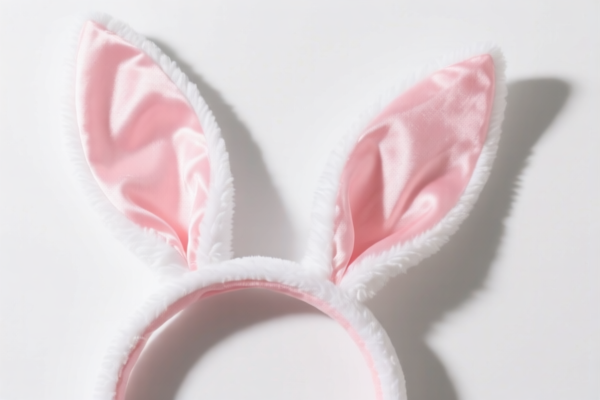
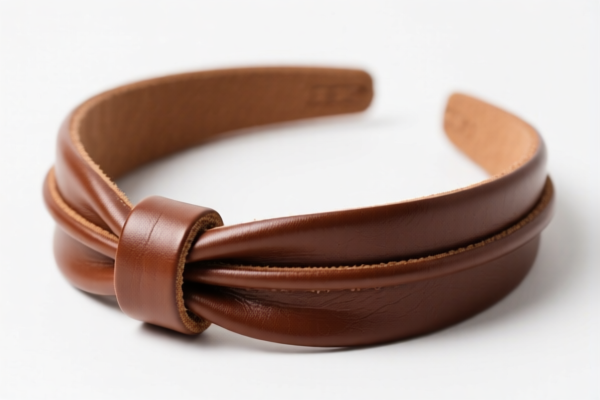
AI Analysis
🐰 Rabbit Ear Headband (Animal Ear Headbands)
🌐 HS Code Classification & Customs Strategy | 2026 Updated Tariff Analysis | Professional Clearance Guide
📌 I. Product Definition & Classification: Is It a "Party Favor" or a "Fashion Accessory"?
Rabbit Ear Headbands are versatile items found in two distinct trade categories depending on material composition and intended use. In international trade, misclassification leads to massive tax disparities (0% vs. 22.1%).
🧐 The Critical Split:
-
Carnival/Party Supply (Non-Fashion):
- Description: Made of paper, plastic, or cheap synthetics, often attached to a simple clip or band. Used for Halloween, Easter, Carnival, or Children's Play.
- Goal: Single-use, festive entertainment.
- Classification: Chapter 95 (Festive/Entertainment Articles).
- Tax Rate: 0.0% (Highly favorable).
-
Fashion Accessory (Knitted/Silk):
- Description: Made of knitted fabric (acrylic, cotton, wool) or 70%+ silk. Designed as a wearable fashion item, not just a prop. Often includes ponytail holders, hair nets, or decorative knitted bands.
- Goal: Daily wear, fashion styling.
- Classification: Chapter 61 (Knitted/Crocheted Accessories).
- Tax Rate: 22.1% (for cotton) or 0.0% (for silk).
⚠️ Key Distinction: * If the headband is Paper/Plastic/Artificial Fiber (non-knitted) and sold as a party item → 9505.90.40.00 (0% Tax). * If the headband is Knitted/Crocheted and sold as clothing accessory → 6117.80.85.00 (22.1% Tax). * Exception: If made of Silk (70%+) even if knitted → 6117.80.30.10 (0% Tax).
📦 II. HS Code Classification Matrix (2026 Data Source)
Based strictly on the provided dataset, here is the authoritative mapping for Rabbit Ear Headbands:
| HS Code | Product Description | Material & Type | Tax Rate (Total) | Status | | :--- | :--- | :--- | :--- :---: | | 9505.90.40.00 | Festive Party Supplies: Confetti, streamers, party favors... | Paper/Plastic/Festive Materials | 0.0% ✅ | Party Use Only | | 9505.90.60.00 | Other Festive Articles: Other parts/accessories of festive items | Non-specific Festive | 0.0% ✅ | General Party | | 6117.80.85.00 | Knitted Accessories: Other accessories, headbands, ponytail holders | Knitted/Crocheted (Cotton/Acrylic) | 22.1% ⚠️ | Fashion Wear | | 6117.80.30.10 | Silk Accessories: Headbands, ponytail holders (70%+ Silk) | Knitted/Crocheted (Silk) | 0.0% ✅ | Luxury/High-End | | 6505.00.15.25 | Visors/Headgear (Cotton): No crown covering (e.g., ear clips only) | Knitted Cotton | 0.0% ✅ | Specific Headgear | | 6505.00.25.45 | Visors/Headgear (Cotton): No crown covering | Non-knitted Cotton | 0.0% ✅ | Specific Headgear |
🔍 Analysis Note: * If your "Rabbit Ear Headband" is a knitted fabric band with ears sewn on (intended for fashion), it falls under 6117.80.85.00. * If it is a paper or plastic clip for Halloween costumes, it falls under 9505.90.40.00.
💰 III. 2026 Tariff Rate Breakdown (Detailed Calculation)
✅ Market Focus: US Import (Based on dataset "Add-on Tariff" structure) ✅ Origin: China (CN)
🎯 Scenario A: The "Party Favor" Rabbit Ear (Paper/Plastic)
- HS Code:
9505.90.40.00or9505.90.60.00 - Description: Festive, carnival, or entertainment articles (paper spirals, streamers, party favors).
| Component | Rate | Calculation Basis |
|---|---|---|
| Base Tariff | 0.0% | Most favorable for party goods. |
| Add-on Tariff | 0.0% | No Section 301 or IEEPA penalties for this code. |
| Total Duty | 0.0% | Duty-Free! |
📌 Why 0%? * This code treats the item as a "Toy/Entertainment" good, not a textile. * US Customs views these as consumable party supplies, exempt from textile protectionism.
🎯 Scenario B: The "Fashion" Knitted Rabbit Ear (Cotton/Acrylic)
- HS Code:
6117.80.85.00 - Description: Other made up clothing accessories, knitted or crocheted (Headbands).
| Component | Rate | Calculation Basis |
|---|---|---|
| Base Tariff | 14.6% | Standard textile duty for "Other accessories". |
| Add-on Tariff | 7.5% | Section 301 / Specific Country Penalties on textiles. |
| Total Duty | 22.1% | Significant Cost Increase |
📌 Why 22.1%? * Base (14.6%): Applied because it is classified as a knitted garment accessory (Chapter 61). * Add-on (7.5%): Specific punitive tax applied to Chinese textile products. * Impact: If your product costs $1.00, you pay $0.221 in duty alone.
🎯 Scenario C: The "Luxury" Silk Rabbit Ear
- HS Code:
6117.80.30.10 - Description: Knitted headbands containing 70%+ silk.
| Component | Rate | Calculation Basis |
|---|---|---|
| Base Tariff | 0.0% | Silk goods often enjoy lower base rates. |
| Add-on Tariff | 0.0% | No penalties for silk content. |
| Total Duty | 0.0% | Duty-Free |
📌 Why 0%? * High silk content qualifies for preferential treatment, avoiding the "Other knitted accessories" penalty.
🛠️ IV. Custom Clearance Strategy & Action Plan
✅ 1. Material Declaration is Critical (The "Silk vs. Cotton" Trap)
- Risk: A "knitted" headband with 51% cotton and 49% polyester is taxed at 22.1%.
- Strategy:
- If using Silk: Ensure the fabric certificate explicitly states ≥70% Silk. Declare as
6117.80.30.10for 0% tax. - If using Cotton/Poly: Be prepared for the 22.1% cost, OR redesign as a Party Favor (Non-knitted) to use
9505.90.40.00.
- If using Silk: Ensure the fabric certificate explicitly states ≥70% Silk. Declare as
✅ 2. Functional Classification (Party vs. Fashion)
- Risk: Shipping a knitted cotton bunny headband as a "Party Favor" to evade tax.
- Strategy:
- If Fashion: Be honest. Use
6117.80.85.00. Pay the tax. - If Party: If the item is non-woven, paper, or plastic, clearly declare it as a "Festive/Entertainment Article" under 9505.90.40.00.
- Warning: If Customs inspectors find a knitted cotton headband in a box labeled "Party Favor," they will reclassify it to 6117.80.85.00 and demand back-taxes + fines.
- If Fashion: Be honest. Use
✅ 3. Required Documentation
| Document | Requirement | Purpose |
|---|---|---|
| Material Composition Label | Must show % of Silk, Cotton, Polyester | Determines if it's 6117 (Textile) or 9505 (Party) |
| Product Photos | Show texture (Knitted vs. Paper) | Visual proof of classification |
| Function Statement | "Wearable Fashion" vs. "Halloween Prop" | Justifies the HS Code choice |
| Origin Certificate | Proof of Origin (China) | Confirms applicability of Add-on Tariffs |
🚀 V. Smart Shipping Scenarios (Examples)
🟢 Scenario 1: The "Easter Bunny" (Knitted Cotton)
- Product: Soft, knitted cotton headband with ears.
- Classification:
6117.80.85.00 - Duty: 22.1%
- Advice: Factor this into your pricing. If margin is tight, switch to 9505.90.40.00 by changing material to felt or non-woven fabric (not knitted) and marketing strictly as a "Party Favor."
🟢 Scenario 2: The "Luxury Silk" Headband
- Product: 100% Silk knitted headband with ears.
- Classification:
6117.80.30.10 - Duty: 0.0%
- Advice: Highlight the "70% Silk" content in your description. This is a high-margin opportunity due to zero duty.
🟢 Scenario 3: The "Halloween Clip-On" (Plastic/Paper)
- Product: Hard plastic ears on a plastic clip.
- Classification:
9505.90.40.00 - Duty: 0.0%
- Advice: Do NOT describe this as a "headband" (which implies textile). Describe as "Festive Party Prop" or "Ears for Costume." This guarantees 0% duty.
⚠️ VI. Common Pitfalls & Warnings
| ❌ Mistake | 🚫 Consequence | ✅ Correction |
|---|---|---|
| Calling a knitted cotton band "Party Favor" | Rejection & 22.1% Back-tax | Use correct Code 6117.80.85.00 |
Using "Other Knitted" (6117.80.85.00) for Silk |
Overpaying Taxes | Use specific Silk Code 6117.80.30.10 |
Shipping Knitted Headband as "Visor" (6505) |
Misclassification | Only use 6505 if it has no crown coverage (e.g., ear clips only) |
| Ignoring the "Add-on Tariff" | Margin Erosion | 22.1% is the real cost for cotton knitted goods! |
📌 VII. Conclusion: Optimize Your Tax Bill
🎯 Key Takeaway: * Cotton/Knitted Fashion = 22.1% (High Cost) * Paper/Plastic Party Props = 0.0% (Best Value) * Silk Knitted = 0.0% (Premium Free)
Action Item:
Before shipping, ask your factory: "Is this knitted or non-woven/paper? What is the silk percentage?"
* If Knitted + Cotton → Expect 22.1%.
* If Paper/Plastic → Claim 0.0% under 9505.90.40.00.
* If Silk → Claim 0.0% under 6117.80.30.10.
🚀 Pro Tip: If you want to sell "Fashion Bunny Ears" in the US, consider sourcing Non-Knitted (Felt/Plastic) versions to unlock the 0% Party Favor duty while maintaining a fashion look!
✨ Professional Customs Clearance, Precision Classification, Zero Waste!
💼 Know your material. Know your code. Know your tax!
Customer Reviews
About HS Code Classification
The Harmonized System (HS) is an internationally standardized nomenclature developed by the World Customs Organization (WCO) to classify traded products. Over 200 countries use the HS system as the basis for customs tariffs, trade statistics, and import/export regulations.
Each HS code follows a hierarchical structure:
- Chapter (2 digits) — Broad category of goods (e.g., Chapter 84: Machinery and Mechanical Appliances)
- Heading (4 digits) — More specific grouping within the chapter
- Subheading (6 digits) — Internationally standardized breakdown, used by all WCO member countries
- National subdivisions (8-10 digits) — Country-specific extensions for further classification, such as US HTSUS 10-digit codes
Correct HS code classification is essential for smooth customs clearance, accurate duty payment, and compliance with trade regulations. Misclassification can lead to customs delays, overpayment of duties, or penalties.
When importing from CN to US, the applicable tariff rates may include:
- Most-Favored-Nation (MFN) rate — The standard duty rate applied to WTO members
- General rate — Applied to countries without trade agreements
- Trade remedy duties — Additional tariffs such as Section 301 (anti-dumping), Section 232 (national security), or countervailing duties
The information provided on this page is for reference purposes only. For official classification, please consult with your local customs authority or a licensed customs broker.