Raccoon Fur (Undyed)
CN → US| HS Code | Tariff Rate | Origin | Destination | Doc |
|---|---|---|---|---|
| 4302193040 | 36.5% | CN | US | Official Doc |
| 4302206000 | 38.5% | CN | US | Official Doc |
| 4103901190 | 17.5% | CN | US | Official Doc |
| 4103902000 | 20.8% | CN | US | Official Doc |
| 4103902000 | 20.8% | CN | US | Official Doc |
Product Images
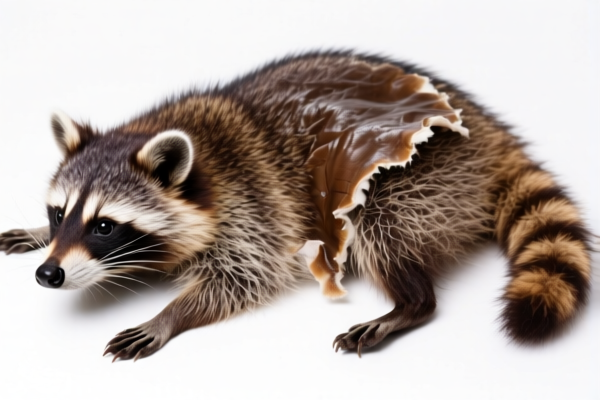
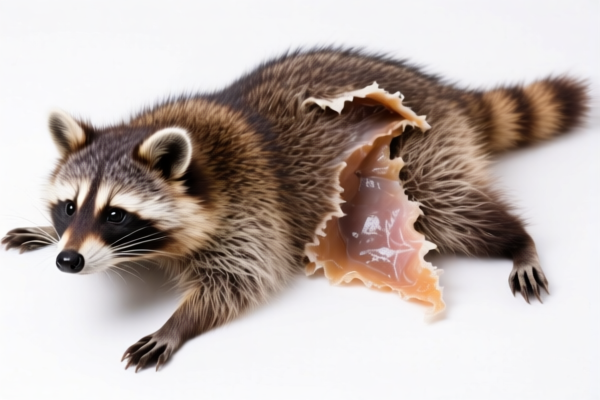
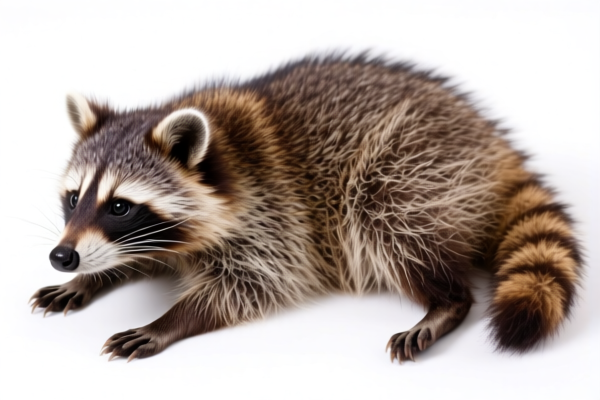
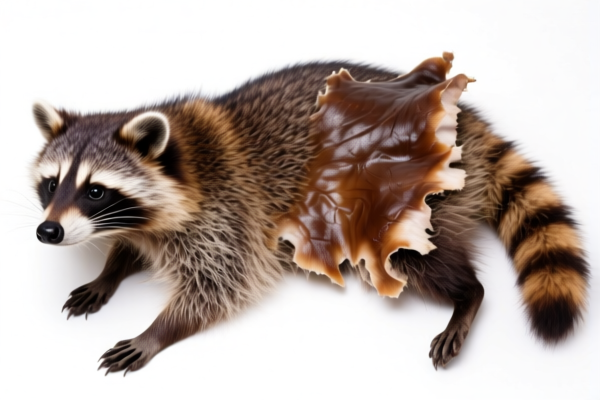
AI Analysis
🦝 Raccoon Fur (Undyed) – Comprehensive HS Code Guide & US Customs Clearance Strategy (2026)
🌐 HS Code Reference & Clearance Guide | 2026 Latest Tariff Analysis | Professional-Level Clearance Strategy
📌 I. Product Definition & Classification: Do You Really Understand "Raccoon Fur"?
Raccoon fur, specifically undyed and unprepared, falls under Chapter 43 (Furskins and Artificial Fur) or Chapter 41 (Raw Hides and Skins, Other Than Furskins), depending on the degree of processing. In international trade, the distinction between "raw skin," "tanned skin," and "prepared fur" is critical for accurate HS Code classification and tariff calculation.
Key Distinctions:
* Raw/Unprepared Skins (4103...): Skins that have been salted or dried but not yet tanned or dressed. These are considered raw materials.
* Prepared Fur Skins/Pieces (4302...): Skins that have been tanned, dressed, and potentially cut into pieces (but not yet sewn into garments). Even if "undyed," the tanning/dressing process moves them from Chapter 41 to Chapter 43.
* Undyed vs. Dyed: "Undyed" refers to the color process. It does not change the fundamental classification if the skin has been tanned/dressed. It primarily affects aesthetic value, not HS duty structure in this context.
⚠️ Critical Classification Point:
- If the raccoon skin is raw, salted, or dried only → It belongs to Chapter 41 (Lower Base Tariff).
- If the raccoon skin is tanned, cured, or dressed (even if undyed) → It belongs to Chapter 43 (Higher Base Tariff).
- Cut pieces vs. Whole Skins: The HS code varies based on whether the fur is in whole skin format or cut into fragments/pieces.
📦 II. HS Code Classification Details (2026 Official Tariff Cross-Reference)
Based on the provided data, here are the precise classifications for Raccoon Fur (Undyed) under US Customs regulations:
| HS Code | Product Description | Condition | Status |
|---|---|---|---|
4103.90.11.90 |
Unprepared Raccoon Skins | Raw, salted, or dried; NOT tanned or dressed. | ✅ Chapter 41 |
4103.90.20.00 |
Raw Hides/Skins, Raccoon | Specific sub-category for raw raccoon hides. | ✅ Chapter 41 |
4302.19.30.40 |
Undyed Raccoon Fur Skins, Whole | Tanned/dressed, whole skin format, undyed. | ✅ Chapter 43 |
4302.20.60.00 |
Undyed Raccoon Fur Pieces | Tanned/dressed, cut into fragments/pieces, not assembled. | ✅ Chapter 43 |
4302.20.60.00 |
Undyed Raccoon Fur Skins (Fragment Characteristic) | Classified as fragments due to processing/state. | ✅ Chapter 43 |
🔍 Key Insight:
- The same product ("Raccoon Fur") has three different total tax rates depending on its state: 17.5%, 20.8%, or 38.5%.
- Chapter 43 (Tanned/Dressed) incurs significantly higher base tariffs (1.5% - 3.5%) compared to Chapter 41 (Raw) (0.0% - 3.3%).
- Cut pieces (4302.20.60.00) attract the highest tariff burden due to the combination of higher base rates and specific trade restrictions.
💰 III. 2026 Latest Tariff Rate Breakdown (Including Additional Taxes)
✅ Applicable Country: United States (US)
✅ Origin: China (CN)
✅ Effective Date: November 10, 2025 (and subsequent imports)
✅ Applicable Laws: Section 301 (USITC) & Section 122 (IEEPA)
🎯 1. 4103.90.11.90 – Unprepared Raccoon Skins (Raw)
| Item | Content |
|---|---|
| Base Tariff | 0.0% |
| Section 301 Additional Tariff | +7.5% |
| Section 122 IEEPA Additional Tariff | +10.0% |
| Total Tariff Rate | 17.5% |
| Tax Calculation | CIF Value × 17.5% |
| De Minimis Exemption | ❌ Not Applicable (Denied) |
| Legal Basis Path | USITC:4103.90.11.90 → FOOTNOTE:301 → IEEPA:122 |
📌 Explanation:
- This is the lowest tariff option among the listed codes.
- Only applies if the skin is strictly raw/unprepared. Any tanning process invalidates this code.
- Warning: Misdeclaring tanned fur as raw skin to access this rate is considered fraud and carries severe penalties.
🎯 2. 4103.90.20.00 – Raw Hides/Skins, Raccoon
| Item | Content |
|---|---|
| Base Tariff | 3.3% |
| Section 301 Additional Tariff | +7.5% |
| Section 122 IEEPA Additional Tariff | +10.0% |
| Total Tariff Rate | 20.8% |
| Tax Calculation | CIF Value × 20.8% |
| De Minimis Exemption | ❌ Not Applicable (Denied) |
| Legal Basis Path | USITC:4103.90.20.00 → FOOTNOTE:301 → IEEPA:122 |
📌 Explanation:
- Slightly higher base rate than4103.90.11.90.
- Applies to specific raw hide classifications where4103.90.11.90does not fit.
- Still part of Chapter 41 (Raw), so it avoids the heavy Chapter 43 base tariffs.
🎯 3. 4302.19.30.40 – Undyed Raccoon Fur Skins, Whole (Tanned/Dressed)
| Item | Content |
|---|---|
| Base Tariff | 1.5% |
| Section 301 Additional Tariff | +25.0% |
| Section 122 IEEPA Additional Tariff | +10.0% |
| Total Tariff Rate | 36.5% |
| Tax Calculation | CIF Value × 36.5% |
| De Minimis Exemption | ❌ Not Applicable (Denied) |
| Legal Basis Path | USITC:4302.19.30.40 → FOOTNOTE:301.88.01 → IEEPA:122 |
📌 Explanation:
- Applies to whole, tanned/dressed undyed raccoon skins.
- The 25% Section 301 tariff is the dominant cost driver here.
- Commonly used for high-quality fur goods manufacturing input.
🎯 4. 4302.20.60.00 – Undyed Raccoon Fur Pieces / Fragments
| Item | Content |
|---|---|
| Base Tariff | 3.5% |
| Section 301 Additional Tariff | +25.0% |
| Section 122 IEEPA Additional Tariff | +10.0% |
| Total Tariff Rate | 38.5% |
| Tax Calculation | CIF Value × 38.5% |
| De Minimis Exemption | ❌ Not Applicable (Denied) |
| Legal Basis Path | USITC:4302.20.60.00 → FOOTNOTE:301.88.01 → IEEPA:122 |
📌 Explanation:
- This is the highest tariff rate listed (38.5%).
- Applies to fur that has been cut into pieces or fragments (not whole skins).
- Often results from waste management or specific crafting processes.
- Note: Both4302.20.60.00entries in the data reflect the same tax structure.
🛠️ IV. Customs Clearance Practical Advice (Battle-Proven Pitfall Avoidance)
✅ 1. Mandatory Documentation Checklist
| Document | Required? | Purpose |
|---|---|---|
| ✅ Commercial Invoice | ✔️ | Must clearly state: "Raccoon Fur, Undyed, [Raw/Tanned/Cut]" and exact HS Code. |
| ✅ Packing List | ✔️ | Detailing weight, piece count, and whether items are whole skins or fragments. |
| ✅ Certificate of Origin | ✔️ | To confirm US origin rules if claiming any preferences (though unlikely for China origin). |
| ✅ Tanning/Dressing Certificate | ✔️ | Crucial! Proves whether the skin is raw (Ch 41) or prepared (Ch 43). If missing, Customs may assume the higher tax bracket. |
| ✅ Product Photos | ✔️ | Showing the texture, cut state, and label. |
| ✅ End-Use Statement | ✔️ | Explain if it's for manufacturing, display, or raw material. |
| ✅ CITES Permit | ✔️ | Check Requirement! Raccoons (Procyon lotor) are listed in CITES Appendix II in some contexts. Verify if international trade requires CITES documentation. |
✅ 2. Declaration Strategy (Key Mnemonics)
🔥 "Raw is Cheap, Tanned is Expensive; Whole is Better than Pieces!"
| Scenario | Correct Declaration | Incorrect Declaration | Consequence |
|---|---|---|---|
| Salted/Dried Skin | 4103.90.11.90 (17.5%) |
4302.19.30.40 (36.5%) |
Overpayment of ~19% |
| Tanned Whole Skin | 4302.19.30.40 (36.5%) |
4103.90.11.90 (17.5%) |
Underpayment → Penalty + Back Taxes |
| Cut Fur Pieces | 4302.20.60.00 (38.5%) |
4302.19.30.40 (36.5%) |
Underpayment + Misclassification Fine |
| Garment/Accessory | (Not in Data - Likely 4303 or 4304) |
4302.20.60.00 |
Wrong Chapter → Rejection |
✅ 3. Special Handling for "Undyed" Status
-
"Undyed" does not mean "Raw": Many importers mistakenly believe "undyed" = "raw".
- Fact: A skin can be undyed but still tanned and dressed. This moves it to Chapter 43.
- Action: Provide a chemical treatment certificate or tanning summary to prove the state of preparation.
-
Fragmentation Check:
- If the shipment contains trimmed edges, belly cuts, or sewn patches, it must be declared as
4302.20.60.00. - Declaring fragments as "whole skins" (
4302.19.30.40) is a common audit trigger.
- If the shipment contains trimmed edges, belly cuts, or sewn patches, it must be declared as
🌍 V. Global Market Comparison (2026)
| Country/Region | Recommended HS Code | Tariff (China Origin) | Certification | Notes |
|---|---|---|---|---|
| 🇺🇸 USA | 4103.90.11.90 / 4302.19.30.40 / 4302.20.60.00 |
17.5% – 38.5% | CITES (if applicable) | Highest burden due to 301 & 122 tariffs. |
| 🇨🇳 China | 4103.90.11.90 / 4302.19.30.40 |
Varies (0-20%) | None usually | Lower base rates, no US-style trade wars. |
| 🇪🇺 EU | 4302 / 4103 |
0-6% | CITES | Stricter CITES enforcement, but lower trade tariffs. |
| 🇬🇧 UK | 4302 / 4103 |
0-6% | CITES | Post-Brexit rules apply. |
📌 Conclusion:
- The US market is uniquely punitive for Chinese-origin raccoon fur due to the 35%+ total tariff rate.
- Chapter 41 (Raw) is the only viable path to significantly reduce duties, but only if the product is genuinely raw.
- CITES compliance is critical globally, but the US also imposes heavy trade war taxes.
📌 VI. Common Errors & Pitfall Guide (Blood & Tears Lessons)
❌ Error 1: Declaring Tanned Undyed Fur as Raw Skin (4103...)
👉 Consequence: Customs audit reveals tanning chemicals/texture → Back taxes + 20% penalty + seizure risk.
❌ Error 2: Declaring Cut Pieces as Whole Skins (4302.19.30.40)
👉 Consequence: Misclassification → Underpayment of 2% + administrative fines.
❌ Error 3: Ignoring CITES Regulations
👉 Consequence: Shipment held at border, potential criminal charges for wildlife trade violation.
❌ Error 4: Assuming "Undyed" = Lower Tariff
👉 Consequence: No tariff benefit in the US. The base rate is determined by processing (Ch 41 vs 43), not color.
✅ Correct Practice:
"Raccoon Fur, Undyed, Tanned and Dressed, Whole Skins, For Manufacturing Garments. HS Code:
4302.19.30.40"
OR
"Raccoon Skins, Raw, Salted, Undyed. HS Code:4103.90.11.90"
🎯 VII. Conclusion: Precision Classification Saves Money!
🎯 Remember the Mantra:
🔹 "Raw is 17.5%, Tanned is 36.5%, Pieces are 38.5%!"
🔹 "Undyed does not save you from Section 301!"
🔹 "Check CITES, Check Tanning, Check Cut State!"
📌 Pro Tip:
If you are importing large volumes, consider:
1. Importing Raw Skins (4103...) if your facility has the capability to tan them domestically (lower import tax).
2. Applying for an HTSUS Exclusion (if applicable under specific trade war exclusion lists, though unlikely for fur currently).
3. Pre-Ruling: Request a Binding Tariff Information (BTI) or US CBP Ruling before shipment to lock in the classification.
📣 Immediate Action:
📞 Contact a licensed customs broker.
📄 Prepare Tanning Certificates and CITES Docs.
🚀 Avoid the 38.5% trap by classifying correctly!
✨ Professional Clearance Starts with Accurate Classification!
💼 Every percentage point of tax saved is pure profit earned!
Customer Reviews
About HS Code Classification
The Harmonized System (HS) is an internationally standardized nomenclature developed by the World Customs Organization (WCO) to classify traded products. Over 200 countries use the HS system as the basis for customs tariffs, trade statistics, and import/export regulations.
Each HS code follows a hierarchical structure:
- Chapter (2 digits) — Broad category of goods (e.g., Chapter 84: Machinery and Mechanical Appliances)
- Heading (4 digits) — More specific grouping within the chapter
- Subheading (6 digits) — Internationally standardized breakdown, used by all WCO member countries
- National subdivisions (8-10 digits) — Country-specific extensions for further classification, such as US HTSUS 10-digit codes
Correct HS code classification is essential for smooth customs clearance, accurate duty payment, and compliance with trade regulations. Misclassification can lead to customs delays, overpayment of duties, or penalties.
When importing from CN to US, the applicable tariff rates may include:
- Most-Favored-Nation (MFN) rate — The standard duty rate applied to WTO members
- General rate — Applied to countries without trade agreements
- Trade remedy duties — Additional tariffs such as Section 301 (anti-dumping), Section 232 (national security), or countervailing duties
The information provided on this page is for reference purposes only. For official classification, please consult with your local customs authority or a licensed customs broker.