Racing Car Inner Tube
CN → US| HS Code | Tariff Rate | Origin | Destination | Doc |
|---|---|---|---|---|
| 8708706060 | 37.5% | CN | US | Official Doc |
| 8708998180 | 37.5% | CN | US | Official Doc |
| 4011105000 | 38.4% | CN | US | Official Doc |
Product Images
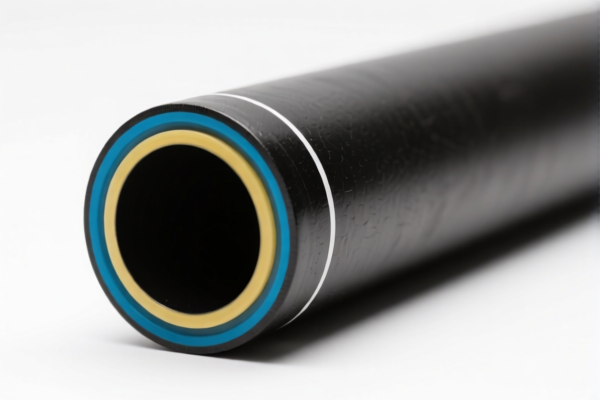
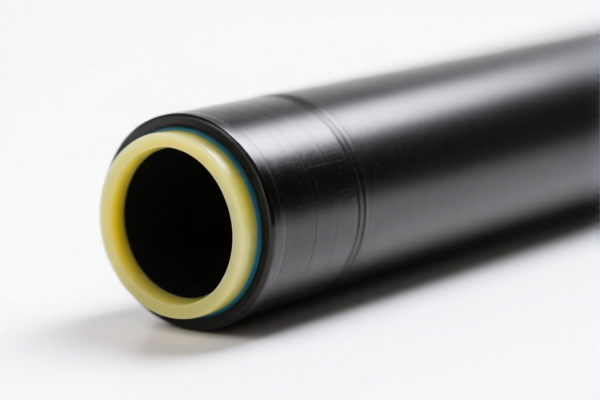
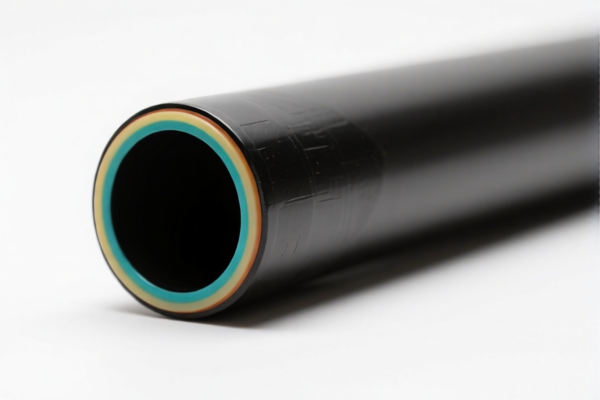
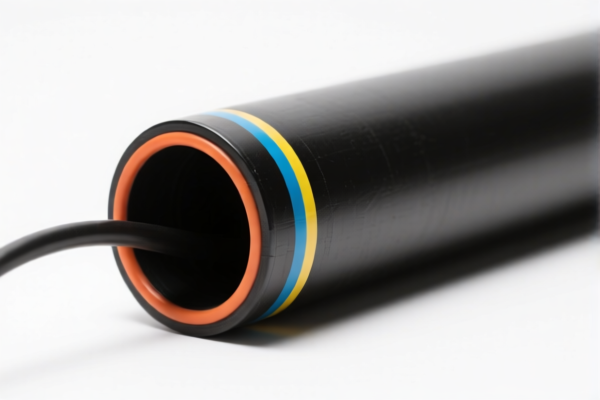
AI Analysis
🏎️ Racing Car Inner Tube (乘用车内胎)
🌐 HS Code Reference & Customs Clearance Guide | 2026 Latest Tariff Analysis | Professional Level Entry Strategy
📌 I. Product Definition & Classification: Do You Really Understand "Inner Tubes"?
A Racing Car Inner Tube is a critical component of the wheel system, designed to hold air pressure within the tire assembly. In international trade, its classification depends heavily on whether it is viewed as a standalone tire component or a general automobile spare part, and the material is inferred to be Rubber.
⚠️ Key Distinction Point:
- If classified as a Tire Component (part of the pneumatic tire structure) → Look at Chapter 40.
- If classified as a General Auto Spare Part (generic accessory) → Look at Chapter 87.
📦 II. HS Code Classification Details (2026 Latest Tariff Authority Comparison)
Based on the provided data, there are three potential HS Codes for "Racing Car Inner Tube." The choice depends on the specific customs interpretation of the product's primary function and structural integration.
| HS Code | Product Description | Summary & Logic | Total Tax Rate |
|---|---|---|---|
4011.10.50.00 |
Pneumatic Rubber Tires for Passengers' Cars | Logic: Considered part of the pneumatic tire system itself. Fits the "new type of rubber pneumatic tire" material requirement. | 38.4% |
8708.70.60.60 |
Parts & Accessories for Road Vehicles (Other) | Logic: Considered a component of "road wheels." Fits the use case of "other parts and accessories." | 37.5% |
8708.99.81.80 |
Parts & Accessories for Motor Vehicles | Logic: Considered a general automotive spare part. Fits the "parts and accessories of automobiles" category. | 37.5% |
🔍 Critical Note:
-4011.10.50.00is typically used if the inner tube is deemed an integral part of the tire assembly itself.
-8708.70.60.60and8708.99.81.80are used when classified as a detachable spare part or accessory.
- Material Assumption: All classifications assume the material is Rubber.
💰 III. 2026 Latest Tariff Rate Details (Including Surtaxes & Policy Add-ons)
✅ Applicable Country: United States (US)
✅ Origin: China (CN)
✅ Effective Date: Includes imports from 2025 onwards (reflecting current 122/Section 301/IEEPA structures)
🎯 1. 4011.10.50.00 – Pneumatic Rubber Tires (Tire Component View)
| Item | Content |
|---|---|
| Base Tariff | 3.4% (Ad Valorem) |
| Section 301 Surcharge | +25.0% |
| 122-Clause Tariff | +10.0% |
| Total Tax Rate | 38.4% |
| Tax Calculation | CIF Value × 38.4% |
| De Minimis Exemption | ❌ Not Eligible (High risk of audit) |
📌 Explanation:
- The Base Rate (3.4%) applies to rubber pneumatic tires.
- The +25% Section 301 Surtax is applied to Chinese-made automotive parts and rubber goods.
- The +10% "122-Clause" Tariff is an additional layer often applied to specific Chinese imports under trade enforcement measures.
- Total: 38.4%. This is the highest rate among the options, as tires often face stricter duty structures than generic parts.
🎯 2. 8708.70.60.60 – Parts of Road Wheels (Accessory View A)
| Item | Content |
|---|---|
| Base Tariff | 2.5% (Ad Valorem) |
| Section 301 Surcharge | +25.0% |
| 122-Clause Tariff | +10.0% |
| Total Tax Rate | 37.5% |
| Tax Calculation | CIF Value × 37.5% |
| De Minimis Exemption | ❌ Not Eligible |
📌 Explanation:
- The Base Rate (2.5%) is lower than the tire category.
- However, the Same Surtaxes (+25% + 10%) apply due to the product's origin and nature as an auto part.
- Total: 37.5%. This is a slightly more favorable option than the tire classification.
🎯 3. 8708.99.81.80 – Other Auto Parts & Accessories (Accessory View B)
| Item | Content |
|---|---|
| Base Tariff | 2.5% (Ad Valorem) |
| Section 301 Surcharge | +25.0% |
| 122-Clause Tariff | +10.0% |
| Total Tax Rate | 37.5% |
| Tax Calculation | CIF Value × 37.5% |
| De Minimis Exemption | ❌ Not Eligible |
📌 Explanation:
- Identical tax structure to8708.70.60.60.
- Used when the product is viewed as a generic "Other Part" rather than specifically a "Wheel Part."
- Total: 37.5%.
🛠️ IV. Customs Clearance Practical Advice (Real-World Pitfall Guide)
✅ 1. Documentation Checklist (Non-Negotiable)
| Document | Required? | Notes |
|---|---|---|
| ✅ Product Specification Sheet | ✔️ | Must specify: Material (Rubber), Type (Inner Tube), Application (Racing Car/Passenger Car). |
| ✅ Material Composition Proof | ✔️ | Lab report confirming rubber content to justify Chapter 40 vs. Chapter 87 classification. |
| ✅ Commercial Invoice | ✔️ | Must clearly state: "Inner Tube for Racing Cars" AND the specific HS Code used. |
| ✅ Bill of Lading / Air Waybill | ✔️ | Ensure packaging does not mix with other auto parts to avoid "basket" classification. |
| ✅ Origin Certificate (CO) | ✔️ | Essential for proving Chinese origin (and thus applying the correct surtaxes). |
| ✅ Photos of Product & Label | ✔️ | Show "Inner Tube" labeling, size, and brand. |
✅ 2. Declaration Strategy (Key Tips)
🔥 “Classify as Part, Not Tire; Lower Rate is King!”
| Scenario | Recommended HS Code | Reason |
|---|---|---|
| Inner Tube sold separately | 8708.70.60.60 or 8708.99.81.80 |
Viewed as a spare part/accessory. 37.5% is better than 38.4%. |
| Inner Tube sold WITH Tire | 4011.10.50.00 |
If packaged as a tire kit, it may be seen as part of the tire. 38.4%. |
| High-Performance Racing Tube | 8708.70.60.60 |
Specific to "road wheels" improves clarity vs. generic "other parts." |
⚠️ Warning:
- Do NOT simply declare "Rubber Part." Customs will likely choose the highest duty category (4011.10.50.00) if the distinction is unclear.
- Be consistent: If you use8708.70.60.60, ensure the invoice description matches "Part of Road Wheel."
✅ 3. Special Handling Cases
| Case | Advice |
|---|---|
| OEM Racing Parts | Provide the race car manufacturer’s part number and bill of materials to prove it’s a specific "wheel part" (8708.70.60.60). |
| Mixed Container (Tires + Tubes) | Declare tubes and tires separately. Do not bundle them into one line item to avoid misclassification. |
| Material Dispute | If the tube contains non-rubber reinforcements (e.g., carbon fiber), provide a detailed material breakdown. This could shift classification, but rubber remains the primary driver for current rates. |
🌍 V. Global Market Comparison (2026 Context)
| Region | Recommended HS Code | Estimated Total Duty | Notes |
|---|---|---|---|
| 🇺🇸 USA | 8708.70.60.60 |
37.5% | Includes 25% Sec 301 + 10% 122-Clause. Highest Cost. |
| 🇨🇳 China | 4011.10.50.00 |
~3.4% | Base rate only. No surtaxes for imports into China. |
| 🇪🇺 EU | 4011.10.50.00 |
~3.5% | Standard EU duty for rubber tires. No US-style surtaxes. |
| 🇬🇧 UK | 8708.70.60.60 |
~2.5% | Post-Brexit tariff. Generally lower than US. |
📌 Conclusion:
- The USA is the most expensive market due to layered tariffs (Base + Sec 301 + 122-Clause).
- Classifying as an Auto Part (8708.xxxx) rather than a Tire (4011.xxxx) saves 0.9% in total duty, which is significant for high-volume shipments.
📌 VI. Common Mistakes & Pitfalls (Lessons Learned)
❌ Mistake 1: Declaring as "Rubber Inner Tube" without specifying the HS Code.
👉 Consequence: Customs may default to 4011.10.50.00 (38.4%) or initiate a hold for inspection.
❌ Mistake 2: Misclassifying as a "Generic Rubber Part" (e.g., 4016.93) to avoid auto part surtaxes.
👉 Consequence: AUDIT & PENALTIES. Inner tubes are specifically listed under auto parts or tires. Misdeclaration leads to back taxes + fines.
❌ Mistake 3: Ignoring the "122-Clause" Tariff.
👉 Consequence: Unexpected 10% charge at customs. Many importers forget this layer.
✅ Correct Approach:
“Declare as ‘Inner Tube for Road Vehicle Wheel’, HS 8708.70.60.60, CIF Value X, Origin: China.”
🎯 VII. Conclusion: Precision Pays Off!
🎯 Key Takeaway:
🔹 HS Code
8708.70.60.60is the optimal choice (37.5%) for racing car inner tubes.
🔹 Avoid4011.10.50.00(38.4%) unless the tube is structurally inseparable from the tire.
🔹 Always account for the 35% Surcharge (25% Sec 301 + 10% 122-Clause) in your cost model.
📌 Pro Tip:
If you are importing high-volume racing parts, consider applying for an HTS Exclusion under Section 301 if your specific product type is eligible (check USTR lists periodically). This could save the 25% surcharge, reducing the total duty to 12.5% (2.5% Base + 10% 122-Clause).
📣 Immediate Action Required:
📞 Verify with your broker: Ensure the description "Part of Road Wheel" is used on the commercial invoice.
📄 Prepare Documents: Material composition sheet + Racing Car Application Proof.
🚀 Optimize Cost: Choose8708.70.60.60for the lowest possible duty rate.
✨ Professional Clearance Starts with Accurate Classification!
💼 Every Percentage Point Saved is Pure Profit!
Customer Reviews
About HS Code Classification
The Harmonized System (HS) is an internationally standardized nomenclature developed by the World Customs Organization (WCO) to classify traded products. Over 200 countries use the HS system as the basis for customs tariffs, trade statistics, and import/export regulations.
Each HS code follows a hierarchical structure:
- Chapter (2 digits) — Broad category of goods (e.g., Chapter 84: Machinery and Mechanical Appliances)
- Heading (4 digits) — More specific grouping within the chapter
- Subheading (6 digits) — Internationally standardized breakdown, used by all WCO member countries
- National subdivisions (8-10 digits) — Country-specific extensions for further classification, such as US HTSUS 10-digit codes
Correct HS code classification is essential for smooth customs clearance, accurate duty payment, and compliance with trade regulations. Misclassification can lead to customs delays, overpayment of duties, or penalties.
When importing from CN to US, the applicable tariff rates may include:
- Most-Favored-Nation (MFN) rate — The standard duty rate applied to WTO members
- General rate — Applied to countries without trade agreements
- Trade remedy duties — Additional tariffs such as Section 301 (anti-dumping), Section 232 (national security), or countervailing duties
The information provided on this page is for reference purposes only. For official classification, please consult with your local customs authority or a licensed customs broker.