Racing Inner Tube
CN → US| HS Code | Tariff Rate | Origin | Destination | Doc |
|---|---|---|---|---|
| 8708706060 | 37.5% | CN | US | Official Doc |
| 8708998180 | 37.5% | CN | US | Official Doc |
| 4011105000 | 38.4% | CN | US | Official Doc |
Product Images
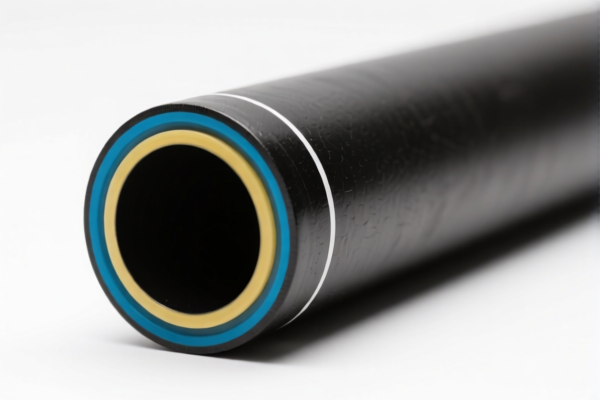
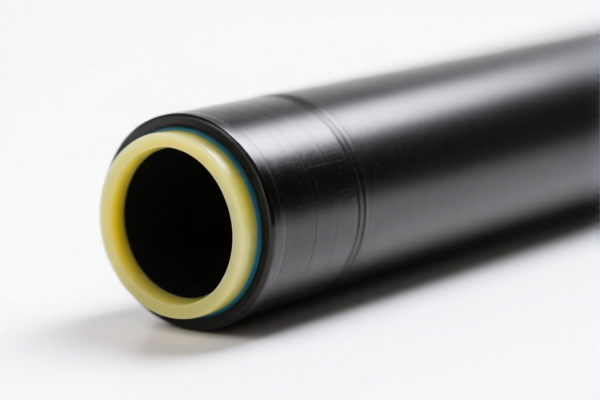
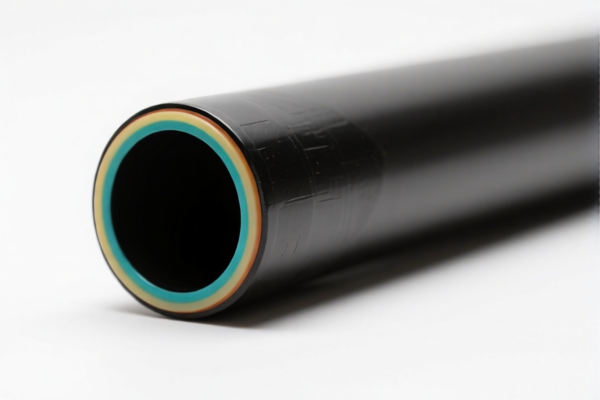
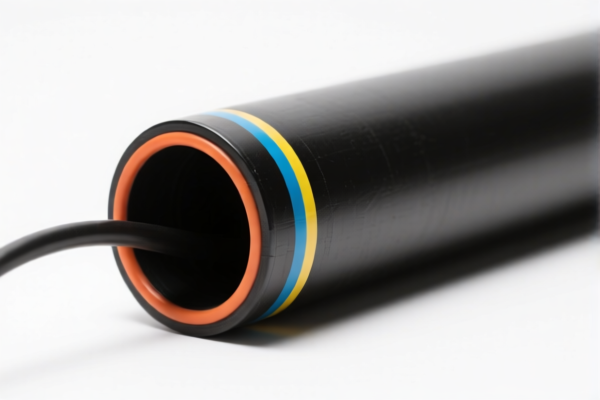
AI Analysis
🏎️ Racing Inner Tube (High-Performance Automotive Inner Tubes)
🌐 HS Code Classification & Customs Clearance Guide | 2026 Tariff Analysis | Strategic Import Strategy for US Market
📌 I. Product Definition & Classification: Are You Importing a "Part" or a "Tire"?
Racing Inner Tubes are critical components for high-performance vehicles, typically used in motorsports or track-day applications. In international trade, classification hinges on whether the item is viewed as a component of the tire system or a standalone spare part.
Rubber Inner Tubes (Assembled): Used as a lining for pneumatic tires or as a separate article. Automotive Parts: Components specifically designed for the assembly, maintenance, or repair of motor vehicles (Chapter 87).
⚠️ Critical Distinction:
- If declared as a component of the tire structure (functional equivalent to part of the tire assembly) →归入 4011.10.50.00 (Rubber Tires category).
- If declared as a general automotive spare part (interchangeable component for repair) →归入 8708.70.60.60 or 8708.99.81.80 (Auto Parts category).
- Material Note: Regardless of the HS code, the material is inferred to be Rubber based on standard inner tube composition.
📦 二、HS Code Classification Details (2026 Latest Tariff Alignment)
| HS Code | Product Description | Applicable Scenario | Material Inference |
|---|---|---|---|
8708.70.60.60 |
Parts and accessories of motor vehicles: Other parts and accessories; Tubes for pneumatic tires | General racing inner tubes classified as automotive spare parts | ✅ Rubber |
8708.99.81.80 |
Parts and accessories of motor vehicles: Other; Other | Alternative classification for specific racing tube variants under general auto parts | ✅ Rubber |
4011.10.50.00 |
Pneumatic tires of rubber: New; Of a kind used on passenger motor cars | Inner tubes classified as integral components of the tire system | ✅ Rubber |
🔍 Key Insight:
- 87xx Series (Auto Parts): Often used when the inner tube is sold as a repair part or spare component for vehicles.
- 4011 Series (Tires): Used when the inner tube is viewed functionally as part of the tire assembly itself.
- Customs Precedent: The distinction can be subjective. Importers must ensure the commercial invoice and description align strictly with the chosen HS code to avoid audits.
💰 三、2026 Latest Tariff Rate Breakdown (Including Surtaxes & Policy Surcharges)
✅ Applicable Country: United States (US)
✅ Origin: China (CN)
✅ Effective Time: Current rates apply (Base + Section 301 + Section 122/IEEPA)
🎯 1. 8708.70.60.60 —— Automotive Part: Inner Tube (As Part Accessory)
| Item | Content |
|---|---|
| Base Duty Rate | 2.5% (Ad valorem) |
| Section 301 Surtax | +25.0% (Specific to Chinese origin goods under USITC lists) |
| Section 122/IEEPA Surtax | +10.0% (Targeted surtax on specific Chinese imports) |
| Total Effective Rate | 37.5% |
| Tax Calculation | CIF Value × 37.5% |
| De Minimis Eligibility | ❌ Not Eligible (High tariff rates often disqualify low-value shipments from Section 321 exemption if classified under punitive codes) |
| Legal Basis Path | USITC:8708.70.60.60 → Section 301 → Section 122 |
📌 Explanation:
- Base 2.5%: Standard Most Favored Nation (MFN) rate for auto parts.
- Section 301 (25%): Significant barrier for Chinese-manufactured auto components.
- Section 122 (10%): Additional layer targeting specific supply chains.
- Total 37.5%: A heavy tax burden requiring precise margin calculation.
🎯 2. 8708.99.81.80 —— Other Automotive Parts: Inner Tube Variant
| Item | Content |
|---|---|
| Base Duty Rate | 2.5% |
| Section 301 Surtax | +25.0% |
| Section 122/IEEPA Surtax | +10.0% |
| Total Effective Rate | 37.5% |
| Tax Calculation | CIF Value × 37.5% |
| De Minimis Eligibility | ❌ Not Eligible |
| Legal Basis Path | USITC:8708.99.81.80 → Section 301 → Section 122 |
📌 Note:
- Functionally similar to the previous code in terms of tax impact.
- Use this code if the specific tube design doesn't fit neatly into "70.60" (other parts/accessories) but is still clearly an auto part.
🎯 3. 4011.10.50.00 —— Rubber Tire: New, Passenger Car Type (Inner Tube as Tire Component)
| Item | Content |
|---|---|
| Base Duty Rate | 3.4% |
| Section 301 Surtax | +25.0% |
| Section 122/IEEPA Surtax | +10.0% |
| Total Effective Rate | 38.4% |
| Tax Calculation | CIF Value × 38.4% |
| De Minimis Eligibility | ❌ Not Eligible |
| Legal Basis Path | USITC:4011.10.50.00 → Section 301 → Section 122 |
📌 Warning:
- Although the base rate is slightly higher (3.4% vs 2.5%), the total effective rate is 38.4%.
- This classification treats the inner tube as a tire, which may trigger stricter FDA or DOT inspections regarding rubber safety standards.
- Risk: Misclassifying a "part" as a "tire" can lead to delays if DOT compliance documents are missing.
🛠️ 四、Customs Clearance Practical Advice (Real-World Pitfall Avoidance)
✅ 1. Documentation Checklist (Non-Negotiable)
| Document | Required | Explanation |
|---|---|---|
| ✅ Product Specification Sheet | ✔️ | Must state material (Rubber), dimensions, and compatibility (Passenger Car/Motorcycle) |
| ✅ Commercial Invoice | ✔️ | Clearly describe as "Racing Inner Tube, Rubber, HS Code [Insert Code]" |
| ✅ Certificate of Origin | ✔️ | Essential for verifying Chinese origin and applying/defending surtaxes |
| ✅ Packaging List | ✔️ | Show unit weight and dimensions for duty calculation |
| ✅ Material Safety Data Sheet (MSDS) | ✔️ | If required by carrier or specific HS code interpretation |
✅ 2. Declaration Tips (Key Mnemonics)
🔥 “Match the Part, Check the Surtax, Don’t Split the Tube!”
| Scenario | Correct Declaration | Wrong Practice |
|---|---|---|
| Racing Inner Tube (General) | 8708.70.60.60 |
Using 4011 without DOT cert → Detention |
| Inner Tube + Outer Tire Set | Declare separately | Bundling under one code → Audit Risk |
| Used/Recycled Tubes | Prohibited/Restricted | Declaring as "New" → Fraud |
| Non-Rubber Synthetic Tubes | Re-evaluate HS Code | Assuming all tubes are Rubber → Misclassification |
✅ 3. Special Circumstances Handling
| Situation | Recommendation |
|---|---|
| High-Value Racing Tubes | Consider Advance Ruling (AMA) from CBP to lock in the HS code and mitigate surprise duties. |
| Small Quantity Samples | Even small samples are subject to 37.5%-38.4% if not de minimis exempt (check current $800 threshold rules for China). |
| Private Label/OEM | Ensure the invoice lists the brand clearly; mismatched branding can trigger intellectual property checks. |
🌍 五、Global Market Comparison (2026 Context)
| Country/Region | Recommended HS Code | Est. Duty (China Origin) | Certification Req. | Note |
|---|---|---|---|---|
| 🇺🇸 USA | 8708.70.60.60 / 4011.10.50.00 |
37.5% - 38.4% | None specific | High surtaxes make US less attractive for low-margin tubes. |
| 🇨🇳 China | 4010.39 or 8708.70 |
~5% - 10% | CCC (if applicable) | Lower barrier for domestic sales. |
| 🇪🇺 EU | 4010 or 8708 |
0% - 4% | REACH Compliance | Lower tariffs, but strict chemical regulations. |
| 🇬🇧 UK | 4010 or 8708 |
0% - 5% | UKCA Marking | Post-Brexit rules apply. |
📌 Conclusion:
- The US market imposes a significant ~38% tax burden on racing inner tubes from China.
- EU/UK offer much more competitive duty rates (<5%), but compliance costs (REACH/UKCA) must be factored in.
- Strategy: If targeting the US, optimize supply chain (e.g., transshipment via non-China hubs if legal/feasible) or accept the margin impact.
📌 六、Common Mistakes & Pitfall Guide (Blood & Tears Lessons)
❌ Mistake 1: Declaring Inner Tubes under HS 4011 without DOT Compliance
👉 Consequence: Customs holds shipment for inspection → Delay 2-4 weeks.
Why? 4011 is "Tires." Inner tubes are often "Parts." Using 4011 requires proof it's a tire component, not just a spare part.
❌ Mistake 2: Ignoring Section 301 & 122 Surtaxes
👉 Consequence: Underpayment by ~35% → Penalties + Back Duties.
Why? Many importers forget that even if the base rate is low, the punitive tariffs are mandatory.
❌ Mistake 3: Splitting "Tube + Valve Stem" into separate lines
👉 Consequence: Valuation disputes → Audits.
Why? They are typically sold as a single unit. Declare them together under one HS code.
✅ Correct Practice:
“Rubber Inner Tube, Racing Grade, for Passenger Cars, HS Code 8708.70.60.60, Origin: China”
🎯 七、Conclusion: Precise Classification Saves Money!
🎯 Remember the Mantra:
🔹 “Auto Part (87xx) = 37.5% / Tire Part (4011) = 38.4%”
🔹 “Base Rate is Low, Surtaxes are High, Don’t Get Caught!”
🔹 “Document Material, Declare Origin, Avoid Delays!”
📌 Pro Tip:
If your racing inner tubes are originating from Vietnam, Mexico, or Thailand, you may qualify for zero or reduced Section 301 duties (check specific HTSUS exclusions).
Action: Apply for an Advance Ruling with CBP before shipment to confirm the final duty rate and avoid post-clearance adjustments.
📣 Immediate Action:
📞 Consult a Licensed Customs Broker
📄 Verify HS Code with Current CBP Databases
🚀 Secure Your Supply Chain Against Tariff Volatility!
✨ Professional Clearance Starts with Accurate Classification!
💼 Every Percentage Point Matters in High-Tariff Markets!
Customer Reviews
About HS Code Classification
The Harmonized System (HS) is an internationally standardized nomenclature developed by the World Customs Organization (WCO) to classify traded products. Over 200 countries use the HS system as the basis for customs tariffs, trade statistics, and import/export regulations.
Each HS code follows a hierarchical structure:
- Chapter (2 digits) — Broad category of goods (e.g., Chapter 84: Machinery and Mechanical Appliances)
- Heading (4 digits) — More specific grouping within the chapter
- Subheading (6 digits) — Internationally standardized breakdown, used by all WCO member countries
- National subdivisions (8-10 digits) — Country-specific extensions for further classification, such as US HTSUS 10-digit codes
Correct HS code classification is essential for smooth customs clearance, accurate duty payment, and compliance with trade regulations. Misclassification can lead to customs delays, overpayment of duties, or penalties.
When importing from CN to US, the applicable tariff rates may include:
- Most-Favored-Nation (MFN) rate — The standard duty rate applied to WTO members
- General rate — Applied to countries without trade agreements
- Trade remedy duties — Additional tariffs such as Section 301 (anti-dumping), Section 232 (national security), or countervailing duties
The information provided on this page is for reference purposes only. For official classification, please consult with your local customs authority or a licensed customs broker.