Radial Car Tires 14 15 Inch
CN → US| HS Code | Tariff Rate | Origin | Destination | Doc |
|---|---|---|---|---|
| 4012114000 | 39.0% | CN | US | Official Doc |
| 4012118000 | 38.4% | CN | US | Official Doc |
| 4011101030 | 39.0% | CN | US | Official Doc |
| 4011101020 | 39.0% | CN | US | Official Doc |
| 4011101010 | 39.0% | CN | US | Official Doc |
Product Images
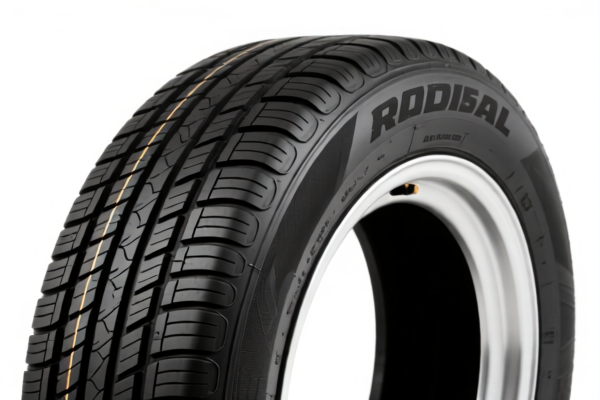
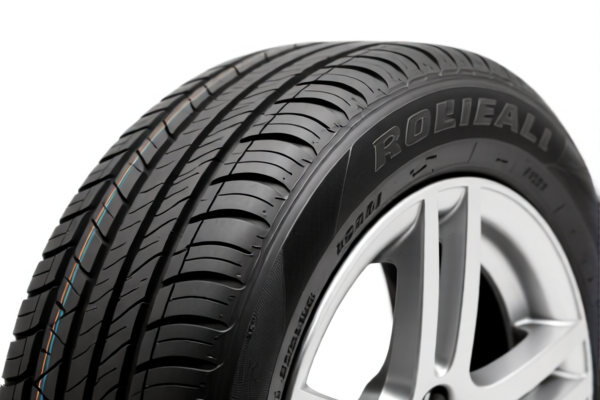
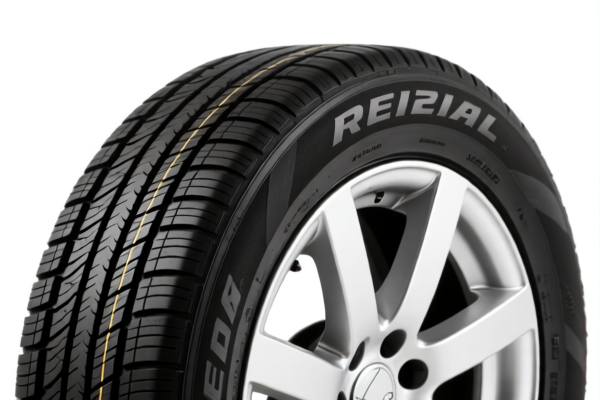
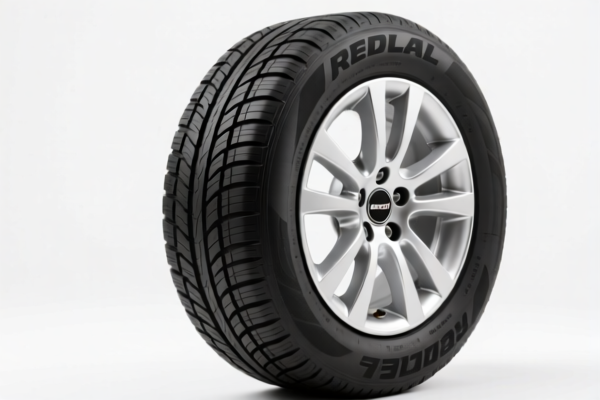
AI Analysis
🚗 Radial Car Tires (14-15 Inch)
🌐 HS Code Reference & Customs Clearance Guide | 2026 Latest Tariff Analysis | Professional-Level Entry Strategy
📌 I. Product Definition & Classification: Do You Really Understand "Car Tires"?
Radial car tires are the primary contact point between the vehicle and the road, essential for safety, handling, and performance. In international trade, they are strictly categorized based on material composition, structural type (radial vs. bias), and vehicle application (passenger car vs. truck/bus).
Radial Structure: Characterized by layers of cord plies that run radially across the tire from bead to bead. This is the modern standard for passenger vehicles, offering better fuel efficiency, heat dissipation, and road grip compared to bias-ply tires.
⚠️ Key Classification Points:
- Size Range: Specifically 14-inch to 15-inch diameters (Passenger Car category).
- Material: Rubber-based.
- Application: Must be specified for passenger cars (not trucks, buses, or motorcycles).
- Structure: Must be explicitly stated as "Radial" to qualify for HS Chapter 4011 rather than 4012.
📦 II. HS Code Classification Details (Latest 2026 Tariff Authority Comparison)
Based on the provided data, here are the exact HS Codes and their specific justifications for 14-15 inch radial car tires.
| HS Code | Product Description & Justification | Applicability Note |
|---|---|---|
4012.11.40.00 |
Radial Tires for Passenger Cars: Matches rubber material, radial structure, and passenger car usage. | Primary Match: General radial tire for passenger cars. |
4012.11.80.00 |
Rubber Tires for Automobiles: Matches rubber material and passenger car usage description. | General Match: Used if specific radial specs are not the primary focus, but still fits the "passenger car" description. |
4011.10.10.30 |
Radial Tires (14-15 Inch): Specifically matches 14-15 inch diameter, radial structure, and passenger car usage. | Size-Specific: Best for inventory where size is strictly defined as 14-15 inch. |
4011.10.10.20 |
14-Inch Boundary Radial Tires: Matches 14-inch tires at specific boundary ranges, radial structure, and passenger car usage. | Boundary Case: Used for 14-inch tires that fall on regulatory boundaries. |
4011.10.10.10 |
Radial Car Tires: Matches material, radial structure, and passenger car usage requirements. | General Radial: Standard classification for radial tires for passenger cars. |
🔍 Key Insight:
- Codes starting with 4011 generally refer to "New pneumatic tyres of rubber" for passenger cars.
- Codes starting with 4012 often refer to used tires or specific sub-categories depending on the country's nomenclature. However, based on the provided DATA,4012.11.40.00is explicitly linked to "Radial Car Tires".
- Crucial: Ensure the commercial invoice explicitly states "Radial" and "Passenger Car" to avoid misclassification into truck/bus tires (which have different duty rates).
💰 III. 2026 Latest Tariff Rate Breakdown (Including Additional Taxes & Policy Add-ons)
✅ Applicable Country: USA (US)
✅ Country of Origin: China (CN)
✅ Effective Time: Current ongoing trade policies (Section 301, Section 232, and IEEMA provisions)
All HS Codes in the provided DATA share the same tax structure due to the origin being China.
🎯 1. Unified Tariff Structure for All Listed HS Codes
| Item | Detail |
|---|---|
| Base Tariff Rate | 4.0% (Most entries) or 3.4% (4012.11.80.00) |
| Section 301 Additional Tariff | +25.0% (Specific to Chinese origin goods) |
| Section 122 / IEEMA Tariff | +10.0% (Specific Chinese import provisions) |
| Total Effective Tax Rate | 39.0% (For 4012.11.40.00, 4011.10.10.30/20/10) 38.4% (For 4012.11.80.00) |
| Calculation Basis | CIF Value (Cost, Insurance, and Freight) × Total Rate |
| De Minimis Exemption | ❌ Not Applicable (High duty rates exclude low-value shipment exemptions) |
| Legal Basis Path | Section 301 → Section 122 → USITC Subheading |
📌 Explanation:
- The 39.0% / 38.4% rate is extremely high compared to the base MFN rate of 4%.
- This is due to the 25% Section 301 tariff (trade war) and an additional 10% tariff (often referred to as Section 122 or specific IEEMA measures against Chinese imports).
- Total Cost Impact: For a $10,000 shipment, you will pay approximately $3,900 in duties alone.
🛠️ IV. Customs Clearance Practical Advice (Avoiding Pitfalls)
✅ 1. Required Documentation Checklist (Mandatory)
| Document | Required? | Purpose |
|---|---|---|
| ✅ Commercial Invoice | ✔️ | Must explicitly state: "Radial Pneumatic Tires, Passenger Car, 14-15 Inch, Rubber" |
| ✅ Packing List | ✔️ | Show net/gross weight per tire and total quantity. |
| ✅ Certificate of Origin | ✔️ | Essential for confirming CN origin to apply (or dispute) Section 301. |
| ✅ DOT Safety Certification | ✔️ | Critical for USA: Each tire must have a DOT compliance mark on the sidewall. |
| ✅ Product Specification Sheet | ✔️ | Include tread pattern, load index, speed rating, and radial construction proof. |
| ✅ Bill of Lading (B/L) | ✔️ | Must match invoice description exactly. |
✅ 2. Declaration Tips (Key Phrases to Use)
🔥 Golden Rule:
"Be Specific! Use 'Radial', 'Passenger Car', and Exact Sizes."
| Scenario | Correct Declaration | Incorrect Declaration |
|---|---|---|
| General Import | "Radial Car Tires, 15 inch, Passenger Vehicle Use" | "Car Tires" (Too vague) |
| Size Specific | "Radial Tires, 14 inch, for Passenger Cars" | "14 inch Tires" (Could be truck) |
| Material | "Rubber Radial Tires" | "Tires" (Could be foam/airless) |
✅ 3. Special Handling Notes
| Situation | Action |
|---|---|
| DOT Marking | Ensure every tire has the DOT code on the sidewall. Without it, US Customs will reject entry. |
| Mixed Sizes | If shipping 14-inch and 15-inch together, declare them separately or group under the most common code, but list each in the invoice. |
| Brand Names | Include brand name (e.g., Michelin, Bridgestone) on the invoice to avoid "Unknown Brand" penalties. |
| Packaging | Tires must be packaged to prevent damage. Stacked or boxed, not loose, to avoid customs inspection delays. |
🌍 V. Global Market Comparison (2026)
| Market | Recommended HS Code | Approx. Duty Rate (China Origin) | Key Requirements |
|---|---|---|---|
| 🇺🇸 USA | 4012.11.40.00 / 4011.10.10.x0 |
38.4% - 39.0% | DOT Certification, Section 301 Tariff |
| 🇨🇳 China | 4011.10.10.x0 |
~5-10% (Import Duty) | CCC Certification (if sold locally) |
| 🇪🇺 EU | 4011.10.10 |
0-3% + Anti-Dumping? | ECE R117 Marking, Energy Label |
| 🇬🇧 UK | 4011.10.10 |
0-3% | UKCA Marking |
📌 Conclusion:
- USA is the most expensive market due to Section 301 and Section 122 tariffs.
- Ensure DOT compliance to avoid immediate rejection.
- Consider pre-classification rulings if unsure about the exact sub-heading (14 vs 15 inch boundary).
📌 VI. Common Mistakes & Pitfalls (Lessons Learned)
❌ Mistake 1: Omitting "Radial" in the description
👉 Consequence: Customs may classify as "Other Tyres" (higher duty) or reject for misdeclaration.
❌ Mistake 2: Not including DOT Code on the product
👉 Consequence: Entry Refused by US CBP. No exception.
❌ Mistake 3: Using vague terms like "Auto Parts"
👉 Consequence: Audit trigger. Delays of 2-4 weeks. Correct term is "Tires".
❌ Mistake 4: Ignoring the 10% Section 122 Tariff
👉 Consequence: Underpayment of duties. Penalties and Interest accrue.
✅ Correct Approach:
"Radial Pneumatic Tires, Passenger Car, 14-Inch Diameter, Rubber, DOT Certified, Model XYZ, HS Code 4011.10.10.30"
🎯 VII. Conclusion: Professional Declaration, Smooth Clearance
🎯 Remember the Formula:
🔹 "Radial + Passenger Car + DOT Mark = Clear Entry"
🔹 "39% Duty is Real: Plan Your Costing Accordingly!"
🔹 "Size Matters: 14 vs 15 Inch Can Change HS Code Sub-Headings"
📌 Pro Tip:
If you are shipping large volumes, consider applying for a Section 301 Exclusion (if available for your specific tire type) to reduce the 25% duty. However, this process is complex and time-consuming.
Always verify the latest USITC updates before shipment.
📣 Immediate Action:
📞 Contact Your Customs Broker + Provide DOT Photos + Confirm HS Code 4011.10.10.30 or 4012.11.40.00
🚀 Ensure Smooth US Customs Clearance, Avoid Delays, Protect Your Margins!
✨ Precision in Classification is Key to Profitability!
💼 Every Percent in Duty is Money Out of Your Pocket!
Customer Reviews
About HS Code Classification
The Harmonized System (HS) is an internationally standardized nomenclature developed by the World Customs Organization (WCO) to classify traded products. Over 200 countries use the HS system as the basis for customs tariffs, trade statistics, and import/export regulations.
Each HS code follows a hierarchical structure:
- Chapter (2 digits) — Broad category of goods (e.g., Chapter 84: Machinery and Mechanical Appliances)
- Heading (4 digits) — More specific grouping within the chapter
- Subheading (6 digits) — Internationally standardized breakdown, used by all WCO member countries
- National subdivisions (8-10 digits) — Country-specific extensions for further classification, such as US HTSUS 10-digit codes
Correct HS code classification is essential for smooth customs clearance, accurate duty payment, and compliance with trade regulations. Misclassification can lead to customs delays, overpayment of duties, or penalties.
When importing from CN to US, the applicable tariff rates may include:
- Most-Favored-Nation (MFN) rate — The standard duty rate applied to WTO members
- General rate — Applied to countries without trade agreements
- Trade remedy duties — Additional tariffs such as Section 301 (anti-dumping), Section 232 (national security), or countervailing duties
The information provided on this page is for reference purposes only. For official classification, please consult with your local customs authority or a licensed customs broker.