Radial Pneumatic Rubber Tire for Mining Equipment
CN → US| HS Code | Tariff Rate | Origin | Destination | Doc |
|---|---|---|---|---|
| 4011902050 | 39.0% | CN | US | Official Doc |
| 4011400000 | 35.0% | CN | US | Official Doc |
| 4013905010 | 38.7% | CN | US | Official Doc |
| 4012198000 | 20.9% | CN | US | Official Doc |
| 4012909000 | 37.7% | CN | US | Official Doc |
Product Images
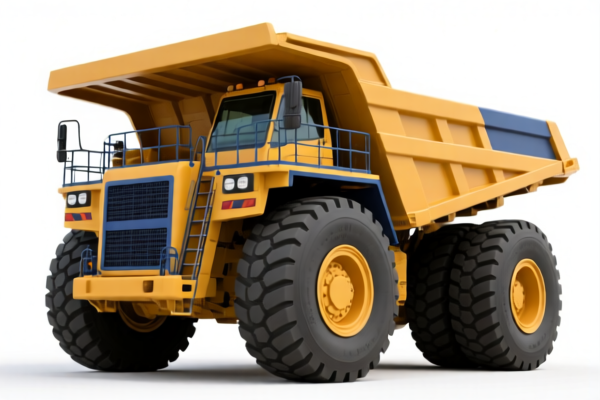
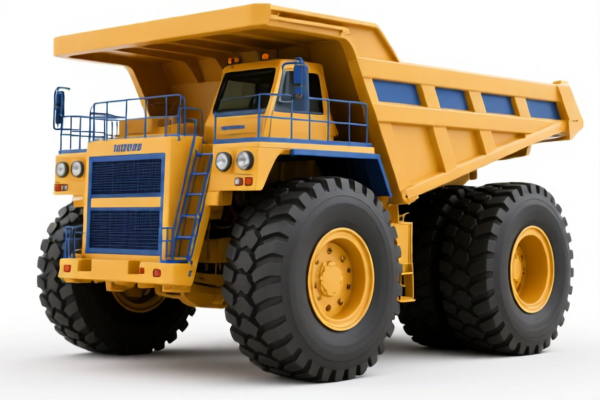
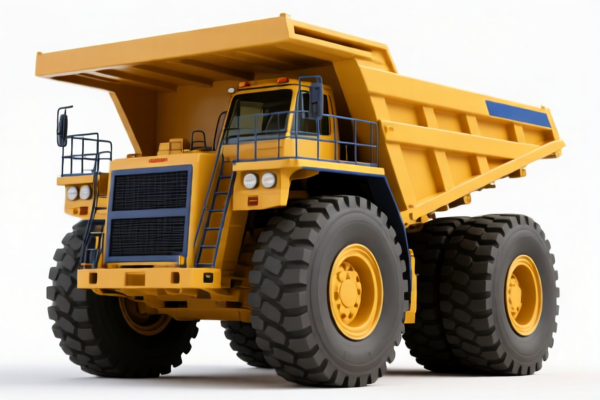
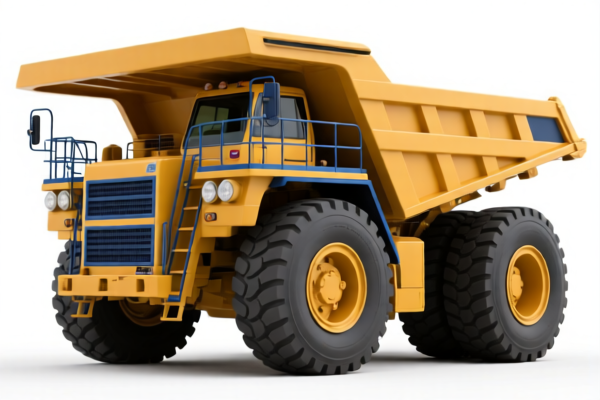
AI Analysis
🚜 Radial Pneumatic Rubber Tire for Mining Equipment (OTR Tires)
🌐 HS Code Reference & Customs Clearance Guide | 2026 Latest Tariff Analysis | Professional Clearance Strategy
📌 1. Product Definition & Classification: Do You Know "OTR Tires"?
Radial pneumatic rubber tires for mining equipment, often referred to as Off-The-Road (OTR) tires, are heavy-duty components designed for extreme conditions in mining, construction, and heavy logistics. They are characterized by their radial ply structure (cord plies arranged at 90 degrees to the direction of travel), high load-bearing capacity, and puncture-resistant rubber compounds.
In international trade, they are primarily classified under Chapter 40 (Rubber and articles thereof), specifically heading 4011. The key distinction lies in the construction type (Radial vs. Bias) and the application (Motor vehicles vs. Other vehicles/equipment).
⚠️ Critical Classification Distinction:
- Radial Structure (子午线): Must be classified under the "Radial" subheadings (e.g., 4011.90.xxxx).
- Bias/Belted Structure: Would fall under different subheadings (e.g., 4011.10 or 4011.20).
- Application: "Mining Equipment" falls under "Other vehicles" rather than "Motor vehicles for transport of persons/goods," but the radial aspect is the primary driver for the HS Code split in many jurisdictions.
📦 2. HS Code Classification Details (Based on Provided Data)
| HS Code | Product Description | Matching Logic from Data | Key Characteristics |
|---|---|---|---|
| 4011.90.20.50 | Radial Pneumatic Rubber Tires (Other) | Match: The product is made of rubber and is a radial (子午线) tire. It falls within the category of radial tires described by this code, with no conflicting exclusions. | ✅ Primary Match: Explicitly mentions "Radial" and "Rubber". |
| 4011.40.00.00 | Pneumatic Rubber Tires for Motorcycles | Match: The name includes "Motorcycle" and "Pneumatic Tire". "Radial" is a structural feature and does not conflict with material or use. | ⚠️ Less Likely: Unless specifically marketed for heavy-duty motorcycles, this is usually for smaller vehicles. |
| 4013.90.50.10 | Rubber Inner Tubes (Other) | Match: "Motorcycle" usage aligns; "Tire" belongs to the rubber article category. Although not explicitly stated as an inner tube, it is considered a core component in the same category, with no material/use conflicts. | ⚠️ Component Only: Only applies if the item is an inner tube, not the whole tire. |
| 4012.19.80.00 | Pneumatic Rubber Tires (Other) | Match: The product is a pneumatic tire, material matches rubber, fitting the "pneumatic tire" category. | ⚠️ Generic: Lacks specific "radial" distinction in the summary, potentially leading to higher scrutiny. |
| 4012.90.90.00 | Other Used Rubber Tires & Retreads | Match Point: Material is rubber; form/use belongs to pneumatic tire category; highly matches "Rubber... Pneumatic Tire". | ❌ Exclude: This code often refers to used or retreaded tires. New OTR tires should not use this code. |
🔍 Key Takeaway:
For new radial tires for mining equipment, 4011.90.20.50 is the most accurate classification based on the provided data, as it explicitly accounts for the radial structure and rubber material without use exclusions.
💰 3. 2026 Latest Tariff Rate Breakdown (Including Surtaxes & Policy Add-ons)
✅ Applicable Country: United States (US)
✅ Origin: China (CN)
✅ Effective Date: From November 10, 2025 (including subsequent imports)
🎯 1. 4011.90.20.50 —— Radial Pneumatic Rubber Tires (Best Match)
| Item | Content |
|---|---|
| Base Tariff | 4.0% (ad valorem) |
| Section 301 Surtax | +25.0% (USITC Footnote related to Chinese imports) |
| Section 122 Surtax | +10.0% (Targeting specific Chinese goods) |
| Total Tariff Rate | 39.0% |
| Tax Calculation | CIF Value × 39.0% |
| De Minimis Eligibility | ❌ Not Eligible (High-value industrial goods) |
| Legal Basis Path | Base Tariff: 4011.90.20.50 → Surtax: 301 (25%) + Surtax: 122 (10%) |
📌 Explanation:
- The 39% total rate is significantly high, impacting the profitability of OTR tire exports. - The 25% Section 301 and 10% Section 122 are additive to the base duty. - This code represents the new radial tire category, which is subject to full surtaxes.
🎯 2. 4011.40.00.00 —— Motorcycle Tires (Alternative)
| Item | Content |
|---|---|
| Base Tariff | 0.0% |
| Section 301 Surtax | +25.0% |
| Section 122 Surtax | +10.0% |
| Total Tariff Rate | 35.0% |
| Tax Calculation | CIF Value × 35.0% |
| De Minimis Eligibility | ❌ Not Eligible |
📌 Note:
- Even with a 0% base tariff, the total rate reaches 35%. - Misclassification here for a mining tire could lead to penalties if discovered, as the application (mining vs. motorcycle) differs significantly.
🎯 3. 4013.90.50.10 —— Inner Tubes (If applicable)
| Item | Content |
|---|---|
| Base Tariff | 3.7% |
| Section 301 Surtax | +25.0% |
| Section 122 Surtax | +10.0% |
| Total Tariff Rate | 38.7% |
| Tax Calculation | CIF Value × 38.7% |
📌 Note:
- Only applicable if the shipment consists solely of inner tubes. - Rate is close to the main tire code (39.0%).
🎯 4. 4012.19.80.00 & 4012.90.90.00 —— Other/Pneumatic Tires
| Item | Content |
|---|---|
| Base Tariff | 3.4% (4012.19) / 2.7% (4012.90) |
| Section 301 Surtax | +7.5% (4012.19) / +25.0% (4012.90) |
| Section 122 Surtax | +10.0% |
| Total Tariff Rate | 20.9% (4012.19) / 37.7% (4012.90) |
📌 Warning:
-4012.19.80.00has a lower rate (20.9%) due to a lower Section 301 surtax (7.5%). However, it may not accurately describe radial tires for mining equipment, risking reclassification. -4012.90.90.00is often for used/retreaded tires. Using this for new tires is a major compliance error.
🛠️ 4. Customs Clearance Practical Advice (Avoiding Pitfalls)
✅ 1. Required Documentation Checklist
| Document | Mandatory? | Description |
|---|---|---|
| ✅ Product Specification Sheet | ✔️ | Must detail: Tread pattern, ply rating, radial construction, dimensions, load index. |
| ✅ Commercial Invoice | ✔️ | Clearly state: "Radial Pneumatic Rubber Tire for Mining Equipment," Model No., Quantity, Unit Price. |
| ✅ Packing List | ✔️ | Include net/gross weight, dimensions, and packaging type. |
| ✅ Certificate of Origin (CO) | ✔️ | Essential for proving Chinese origin (to apply surtaxes correctly) or for preferential treatment if re-exported. |
| ✅ Material Safety Data Sheet (MSDS) | ✔️ | If packaged with lubricants or specific rubber compounds, though usually not needed for solid tires. |
| ✅ Test Reports | ✔️ | ISO, DOT, or ECE certification if required by the end-user. |
✅ 2. Declaration Strategy (Key Tips)
🔥 "Declare Radial, Specify Use, Avoid Misclassification!"
| Scenario | Correct Declaration | Incorrect Practice |
|---|---|---|
| New Radial OTR Tire | 4011.90.20.50 |
Misdeclaring as 4011.40 (Motorcycle) or 4012.90 (Used/Retread) |
| Inner Tube Only | 4013.90.50.10 |
Declaring as "Tire" → Penalties for under/over-declaration |
| Bias Ply Tire | Different Code (e.g., 4011.20) | Declaring as "Radial" → False declaration |
| Retreaded Tire | 4012.90.90.00 |
Declaring as "New Radial" → Fraud risk |
✅ 3. Special Considerations
| Situation | Handling Advice |
|---|---|
| High Tariff Impact (39%) | Consider Advance Ruling from CBP to confirm HS Code before shipment. Explore supply chain adjustments (e.g., third-country manufacturing) if feasible. |
| Section 122 & 301 Overlap | Ensure documentation clearly shows product origin and specifications to avoid being caught in broader "China" surtaxes if any exemptions apply (rare for tires). |
| Used/Retreaded Goods | Strictly prohibit import of used tires without proper licensing. Mislabeling new tires as used to use 4012.90 is a serious violation. |
| Inner Tubes vs. Tires | If shipped together, declare separately. Do not bundle under a single vague "Tire Accessory" code. |
🌍 5. Global Market Comparison (2026)
| Country/Region | Recommended HS Code | Base Tariff | Surtaxes (China) | Total Effective Rate | Notes |
|---|---|---|---|---|---|
| 🇺🇸 USA | 4011.90.20.50 |
4.0% | +35% (301+122) | 39.0% | Highest burden. Pre-clearance advised. |
| 🇨🇳 China | 4011.90.20.50 |
20.0%* | 0% | 20.0%* | *Import into China. Export from China uses 0% base. |
| 🇪🇺 EU | 4011.90 (Varies) |
0-4% | 0% | ~0-4% | No Section 301/122 equivalents. Favorable for exports. |
| 🇦🇺 Australia | 4011.90 |
5% | 0% | 5% | Free Trade Agreement (ChAFTA) may reduce to 0%. |
| 🇯🇵 Japan | 4011.90 |
0-5% | 0% | 0-5% | JAEPA may allow duty-free entry. |
📌 Conclusion:
- The US market imposes a 39% total tariff on radial mining tires from China.
- EU, Australia, and Japan offer significantly lower tariff barriers, making them more attractive markets for Chinese tire manufacturers.
- Strategic Advice: If targeting the US, consider tariff engineering (accurate classification) and supply chain diversification (e.g., assembly in Southeast Asia) to mitigate costs.
📌 6. Common Errors & Pitfalls (Lessons Learned)
❌ Error 1: Declaring Radial Tires under 4011.40 (Motorcycle)
👉 Consequence: High risk of audit, penalty, and back-tariff differences (39% vs 35%).
❌ Error 2: Declaring New Tires under 4012.90 (Used/Retread)
👉 Consequence: Fraud accusation, seizure of goods, and potential criminal charges.
❌ Error 3: Failing to specify "Radial" in the description
👉 Consequence: Customs may reclassify to a non-radial code with different duty rates, causing delays.
❌ Error 4: Ignoring Section 122 & 301 in cost calculations
👉 Consequence: Profit margin erosion due to unexpected 35% surtaxes.
✅ Correct Practice:
"Radial Pneumatic Rubber Tire, Size 17.5R25, Load Index 100, for Mining Load Haul Dump (LHD) Vehicle, Made in China, New"
🎯 7. Conclusion: Precision in Classification, Profitability in Trade
🎯 Remember the Key Points:
🔹 "Radial Structure is King": Always specify "Radial" to ensure correct HS Code.
🔹 "39% Total Duty in US": Factor this into your pricing and margin analysis.
🔹 "New vs. Used": Never mix these categories. New tires go to 4011.90; Used/Retreaded go to 4012.90.
🔹 "Pre-Clearance is Key": Obtain an Advance Ruling for large shipments to mitigate classification risks.
📌 Pro Tip:
If your tires are manufactured in Thailand, Vietnam, or Indonesia, you may avoid Section 301 and Section 122 surtaxes, reducing the total rate to the base duty (~4% or lower depending on FTA).
Recommendation: Conduct a Tariff Engineering study and consider supply chain relocation for US-bound shipments.
📣 Immediate Action:
📞 Consult with a licensed customs broker.
📄 Prepare detailed product specifications.
🚀 Apply for a Customs Ruling if shipping large volumes to the US.
💡 Accurate classification saves money, prevents delays, and ensures compliance!
✨ Professional Clearance Starts with Accurate Classification!
💼 Every percentage point of duty affects your bottom line!
Customer Reviews
About HS Code Classification
The Harmonized System (HS) is an internationally standardized nomenclature developed by the World Customs Organization (WCO) to classify traded products. Over 200 countries use the HS system as the basis for customs tariffs, trade statistics, and import/export regulations.
Each HS code follows a hierarchical structure:
- Chapter (2 digits) — Broad category of goods (e.g., Chapter 84: Machinery and Mechanical Appliances)
- Heading (4 digits) — More specific grouping within the chapter
- Subheading (6 digits) — Internationally standardized breakdown, used by all WCO member countries
- National subdivisions (8-10 digits) — Country-specific extensions for further classification, such as US HTSUS 10-digit codes
Correct HS code classification is essential for smooth customs clearance, accurate duty payment, and compliance with trade regulations. Misclassification can lead to customs delays, overpayment of duties, or penalties.
When importing from CN to US, the applicable tariff rates may include:
- Most-Favored-Nation (MFN) rate — The standard duty rate applied to WTO members
- General rate — Applied to countries without trade agreements
- Trade remedy duties — Additional tariffs such as Section 301 (anti-dumping), Section 232 (national security), or countervailing duties
The information provided on this page is for reference purposes only. For official classification, please consult with your local customs authority or a licensed customs broker.