Radial Tires for Industrial Handling Vehicles
CN → US| HS Code | Tariff Rate | Origin | Destination | Doc |
|---|---|---|---|---|
| 4011201015 | 39.0% | CN | US | Official Doc |
| 4012909000 | 37.7% | CN | US | Official Doc |
| 4013100020 | 38.7% | CN | US | Official Doc |
| 4011201005 | 39.0% | CN | US | Official Doc |
| 4012194000 | 39.0% | CN | US | Official Doc |
Product Images
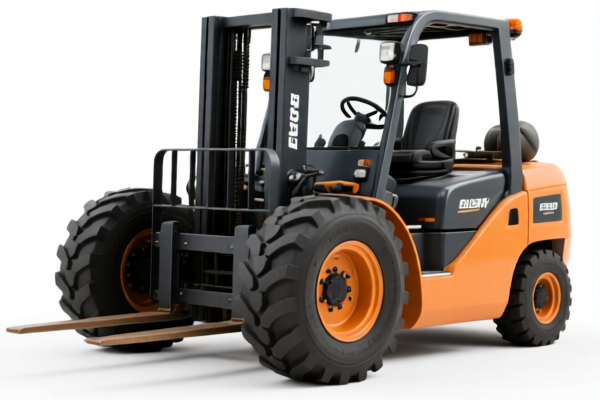
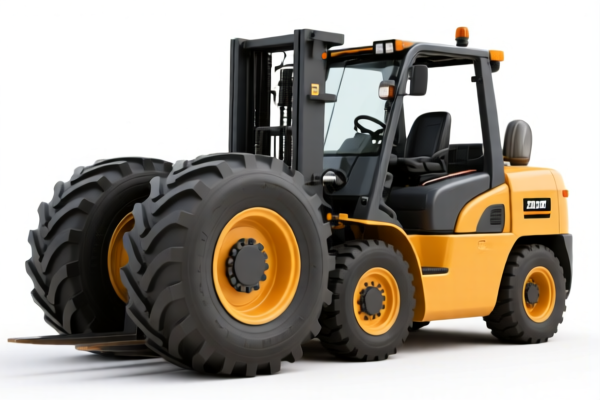
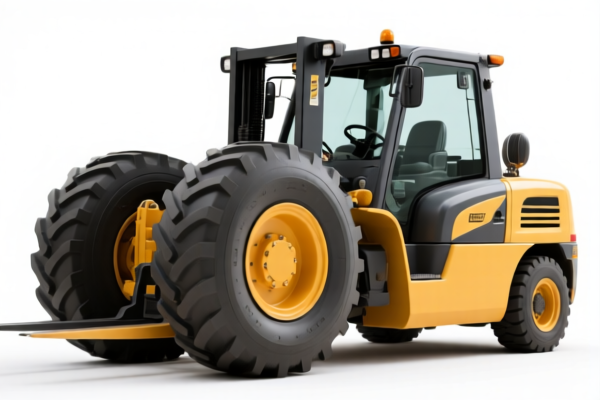
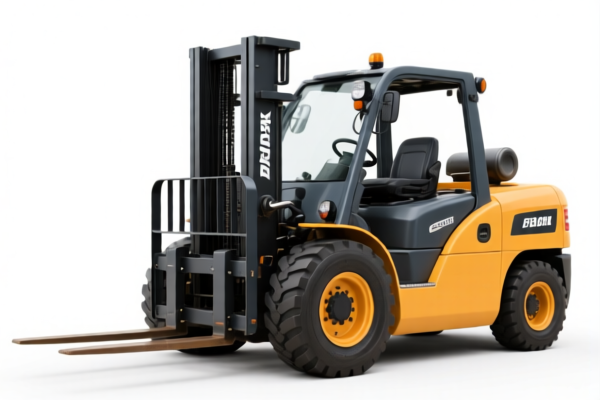
AI Analysis
🚛 Radial Tires for Industrial Handling Vehicles (Trucks & Buses)
🌐 HS Code Reference & Customs Clearance Guide | 2026 Latest Tariff Breakdown | Professional Compliance Strategy
📌 I. Product Definition & Classification: What Are "Radial Tires for Industrial Handling Vehicles"?
In international trade, Radial Tires for Industrial Handling Vehicles typically refer to truck/bus radial tires and their related components (inner tubes, solid tires, retreaded tires) used in logistics, construction, and urban transportation. These are not passenger car tires but heavy-duty rubber products requiring precise HS classification to avoid high tariffs.
Key distinctions: - Radial Tires (4011.20): Standard pneumatic tires with radial carcass construction. - Inner Tubes (4013.10): Rubber tubes used inside pneumatic tires. - Solid/Pad Tires (4012.90): Non-pneumatic, solid rubber tires for forklifts or heavy machinery. - Retreaded Tires (4012.19): Regenerated rubber tires refurbished for reuse.
⚠️ Critical Distinction:
- If the product is a new radial pneumatic tire → Classify under 4011.20
- If it is a solid rubber tire → Classify under 4012.90
- If it is a tube for truck/bus tires → Classify under 4013.10
- If it is a retreaded/regenerated tire → Classify under 4012.19
Misclassification can lead to 39%+ total tariffs plus penalties.
📦 II. HS Code Classification Details (2026 Latest Tariff Authority Alignment)
| HS Code | Product Description | Application Scenario | Material | Tax Rate |
|---|---|---|---|---|
4011.20.10.15 |
Radial tires for trucks/buses | Heavy-duty trucks, buses, logistics vehicles | Rubber | 39.0% |
4012.90.90.00 |
Air-filled, solid, or pad tires | Forklifts, industrial handling, non-pneumatic use | Rubber | 37.7% |
4013.10.00.20 |
Inner tubes for trucks/buses | Companion to pneumatic tires | Rubber | 38.7% |
4011.20.10.05 |
Radial tires for trucks | Standard truck radial tires | Rubber | 39.0% |
4012.19.40.00 |
Regenerated rubber radial tires for retreading | Refurbished tires for reuse | Regenerated Rubber | 39.0% |
🔍 Key Reminder:
- All these HS codes apply to Chinese-origin products imported into the US.
- No de minimis exemption applies — all shipments are subject to full tariff calculation.
- Origin matters: Products from Vietnam, Mexico, or Thailand may qualify for IEEPA exemptions (lower taxes).
💰 III. 2026 Latest Tariff Rate Breakdown (Including Additional Taxes & Policy Surcharges)
✅ Applicable Country: United States (US)
✅ Origin: China (CN)
✅ Effective Date: From November 10, 2025 (including subsequent imports)
🎯 1. 4011.20.10.15 / 4011.20.10.05 —— Radial Tires for Trucks/Buses
| Item | Content |
|---|---|
| Base Tariff | 4.0% (ad valorem) |
| USITC Additional Tax | +25% (under Section 301 of the Trade Act) |
| 122 Clause Tax | +10% (Section 122 of the Trade Expansion Act) |
| Total Tariff | 39.0% |
| Tax Calculation | CIF Value × 39.0% |
| De Minimis Exemption | ❌ Not Eligible (deny_de_minimis) |
| Legal Basis Path | USITC:4011.20.10.15 → FOOTNOTE:301.88.01 → 122_CLAUSE:10% |
📌 Explanation:
- The 25% Section 301 tariff is applied to Chinese-origin rubber products under specific HS codes.
- The 10% Section 122 tariff is a separate statutory surcharge on certain imported goods.
- Combined 39.0% makes this a high-cost category for Chinese exporters.
🎯 2. 4012.90.90.00 —— Solid/Pad Tires (Non-Pneumatic)
| Item | Content |
|---|---|
| Base Tariff | 2.7% |
| USITC Additional Tax | +25% |
| 122 Clause Tax | +10% |
| Total Tariff | 37.7% |
| Tax Calculation | CIF Value × 37.7% |
| De Minimis Exemption | ❌ Not Eligible |
| Legal Basis Path | USITC:4012.90.90.00 → FOOTNOTE:301.88.01 → 122_CLAUSE:10% |
📌 Note:
- Solid tires are often used in forklifts, pallet jacks, and industrial handling equipment.
- Despite being "solid," they are still classified under rubber product HS codes and subject to the same surcharges.
🎯 3. 4013.10.00.20 —— Inner Tubes for Trucks/Buses
| Item | Content |
|---|---|
| Base Tariff | 3.7% |
| USITC Additional Tax | +25% |
| 122 Clause Tax | +10% |
| Total Tariff | 38.7% |
| Tax Calculation | CIF Value × 38.7% |
| De Minimis Exemption | ❌ Not Eligible |
| Legal Basis Path | USITC:4013.10.00.20 → FOOTNOTE:301.88.01 → 122_CLAUSE:10% |
📌 Important:
- Inner tubes are always declared separately from the tire itself.
- Even small quantities are fully taxed — no bulk discount or exemption.
🎯 4. 4012.19.40.00 —— Regenerated Rubber Tires for Retreading
| Item | Content |
|---|---|
| Base Tariff | 4.0% |
| USITC Additional Tax | +25% |
| 122 Clause Tax | +10% |
| Total Tariff | 39.0% |
| Tax Calculation | CIF Value × 39.0% |
| De Minimis Exemption | ❌ Not Eligible |
| Legal Basis Path | USITC:4012.19.40.00 → FOOTNOTE:301.88.01 → 122_CLAUSE:10% |
📌 Caution:
- Retreaded tires are considered "regenerated rubber products" and face the same high tariffs.
- Ensure proper documentation showing retread process to avoid being misclassified as "new tires."
🛠️ IV. Customs Clearance Practical Advice (Real-World Pitfall Avoidance)
✅ 1. Required Documentation Checklist (Mandatory)
| Document | Must Provide | Explanation |
|---|---|---|
| ✅ Product Specification Sheet | ✔️ | Include tire size, load index, speed rating, radial construction type |
| ✅ Technical Drawing/Structure Diagram | ✔️ | Show carcass layer, belt construction, rubber compound |
| ✅ Product Photos (with Label) | ✔️ | Clear view of sidewall markings: "RADIAL," "TRUCK," "BUS" |
| ✅ Third-Party Test Report | ✔️ | DOT certification, ISO 9001, REACH/RoHS if applicable |
| ✅ Commercial Invoice | ✔️ | Explicitly state: "Radial Tire for Truck/Bus, Model XYZ, Chinese Origin" |
| ✅ Certificate of Origin (CO) | ✔️ | If non-Chinese origin, apply for preferential tariff |
| ✅ Packing List | ✔️ | Clarify relationship between tires, tubes, and accessories |
✅ 2. Declaration Tips (Key Mnemonics)
🔥 “Radial Not Passenger, Solid Not Tube, Retread Not New, Full Tax Always!”
| Scenario | Correct Declaration | Wrong Practice |
|---|---|---|
| New radial truck tire | 4011.20.10.15 |
Misdeclare as "passenger tire" → Higher penalty |
| Solid forklift tire | 4012.90.90.00 |
Declare as "pneumatic tire" → 39% vs 37.7% |
| Inner tube for truck | 4013.10.00.20 |
Combine with tire in one line → Complex audit |
| Retreaded tire | 4012.19.40.00 |
Declare as "new tire" → Fraud risk, heavy fines |
✅ 3. Special Case Handling
| Scenario | Handling Advice |
|---|---|
| OEM Custom Tires | Provide client order + design specs to prove custom nature |
| Tire + Rim + Valve | Declare as one unit under tire HS code — do not split |
| Used/Retreaded Tires | Must prove retread process with documentation; otherwise deemed "used goods" |
| Non-Chinese Origin | Apply for IEEPA exemption (0–5% tariff) if from Vietnam/Mexico/Thailand |
🌍 V. Global Customs Comparison (2026 Latest)
| Country/Region | Recommended HS Code | Tariff | Certification Required | Notes |
|---|---|---|---|---|
| 🇺🇸 USA | 4011.20.10.15 |
39.0% (China) | DOT + ISO 9001 | 37.7% for solid tires |
| 🇨🇳 China | 4011.20.10.15 |
5% | CCC + GB Standard | No additional surcharges |
| 🇪🇺 EU | 4011.20.10.15 |
4% | ECE R30/R54 | No Section 301 equivalent |
| 🇦🇺 Australia | 4011.20.10.15 |
5% | SAA Standard | No surcharges |
| 🇯🇵 Japan | 4011.20.10.15 |
0% | JIS Standard | Preferential if ASEAN origin |
📌 Conclusion:
- USA imposes the highest tariffs on Chinese-origin radial tires.
- China, EU, Australia, Japan have significantly lower rates (0–5%).
- Vietnam/Mexico/Thailand origins can achieve 0–5% via IEEPA exemptions.
📌 VI. Common Mistakes & Pitfall Prevention (Lessons Learned)
❌ Mistake 1: Declaring solid tires as "pneumatic tires"
👉 Consequence: 39.0% instead of 37.7% → Extra cost per unit
❌ Mistake 2: Combining inner tubes with tires in one line item
👉 Consequence: Customs audits each component → Delays + penalties
❌ Mistake 3: Mislabeling retreaded tires as "new"
👉 Consequence: Fraud detection → Seizure + heavy fines
❌ Mistake 4: Ignoring Section 122 10% surcharge
👉 Consequence: Underpayment → Back taxes + interest
✅ Correct Practice:
“Radial Tire for Truck, 12R22.5, Load Index 146/143, Speed Rating L, Chinese Origin, Model TRK-125, DOT Certified”
🎯 VII. Conclusion: Professional Declaration, Save Time, Reduce Costs!
🎯 Remember the Mnemonics:
🔹 “Radial Not Passenger, Solid Not Tube, Retread Not New, Full Tax Always!”
🔹 “HS Code Determines Life, 39% vs 0%, One Mistake Costs Thousands!”
📌 Tips:
- If your tires are originating from Vietnam, Mexico, Thailand, or Malaysia, you can apply for IEEPA Exemption, reducing tariffs to 0–5%.
- Pre-ruling (Advance Ruling) is strongly recommended to avoid customs disputes.
📣 Immediate Action:
📞 Contact professional customs brokers + Provide product photos + Apply for HS Code Pre-ruling
🚀 Ensure smooth customs clearance, efficient global logistics, and maximized profit margins!
✨ Professional Customs Clearance Starts with Accurate Classification!
💼 Every Cent of Cost Deserves Precise Calculation!
Customer Reviews
About HS Code Classification
The Harmonized System (HS) is an internationally standardized nomenclature developed by the World Customs Organization (WCO) to classify traded products. Over 200 countries use the HS system as the basis for customs tariffs, trade statistics, and import/export regulations.
Each HS code follows a hierarchical structure:
- Chapter (2 digits) — Broad category of goods (e.g., Chapter 84: Machinery and Mechanical Appliances)
- Heading (4 digits) — More specific grouping within the chapter
- Subheading (6 digits) — Internationally standardized breakdown, used by all WCO member countries
- National subdivisions (8-10 digits) — Country-specific extensions for further classification, such as US HTSUS 10-digit codes
Correct HS code classification is essential for smooth customs clearance, accurate duty payment, and compliance with trade regulations. Misclassification can lead to customs delays, overpayment of duties, or penalties.
When importing from CN to US, the applicable tariff rates may include:
- Most-Favored-Nation (MFN) rate — The standard duty rate applied to WTO members
- General rate — Applied to countries without trade agreements
- Trade remedy duties — Additional tariffs such as Section 301 (anti-dumping), Section 232 (national security), or countervailing duties
The information provided on this page is for reference purposes only. For official classification, please consult with your local customs authority or a licensed customs broker.