Radial Tires with Rim Size Not Exceeding 61cm
CN → US| HS Code | Tariff Rate | Origin | Destination | Doc |
|---|---|---|---|---|
| 4011902010 | 39.0% | CN | US | Official Doc |
| 8708704560 | 37.5% | CN | US | Official Doc |
| 4011802010 | 39.0% | CN | US | Official Doc |
| 4011808010 | 38.4% | CN | US | Official Doc |
| 4011802010 | 39.0% | CN | US | Official Doc |
Product Images
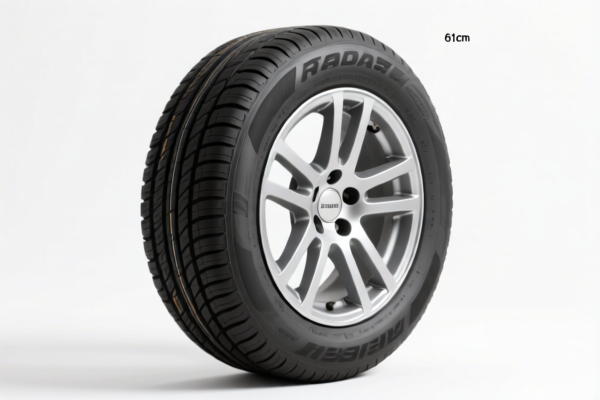
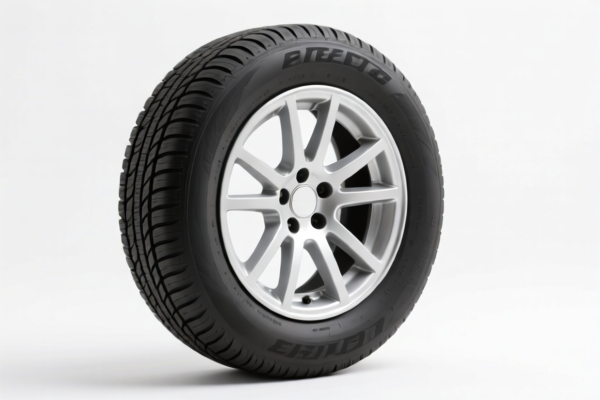
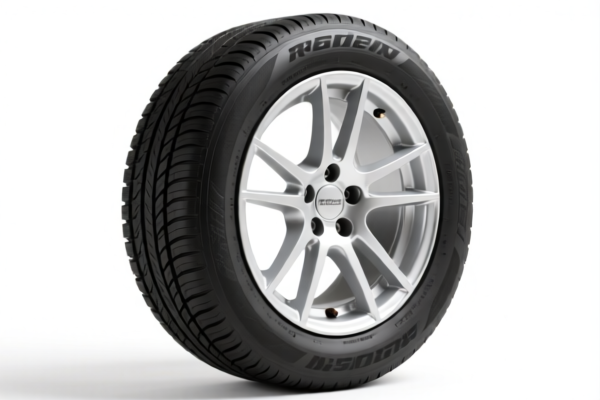
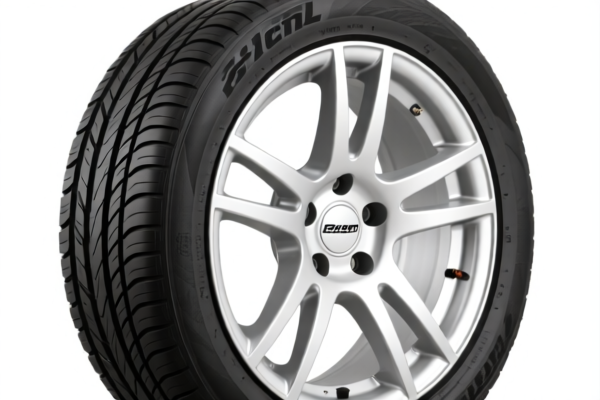
AI Analysis
🚛 Radial Tires (Construction, Mining & Industrial Handling Vehicles)
🌐 HS Code Reference & Clearance Guide | 2026 Latest Tariff Analysis | Professional Clearance Strategy
📌 I. Product Definition & Classification: Do You Understand "Radial Tires"?
Radial Tires are a type of pneumatic tire where the cord runs radially across the tire, providing better stability, fuel efficiency, and tread life. In international trade, specifically for construction, mining, and industrial handling vehicles, classification depends heavily on the rim size and application.
The provided data focuses on a specific niche: New pneumatic tires that are Radial and used on heavy-duty machinery, with a rim size not exceeding 61 cm.
⚠️ Key Distinction Point:
- If the tire is for Construction/Mining/Industrial Handling Vehicles AND Rim Size ≤ 61 cm → HS Code4011.80.20.10
- If the tire is for Golf Carts/ATVs/Lawn Mowers → HS Code4011.90.20.10
- Note: The prompt specifically mentions "Rim Size Not Exceeding 61cm," which aligns directly with the first category in the data.
📦 II. HS Code Classification Details (2026 Latest Tariff Authority对照)
Based on the provided <DATA>, here are the specific HS Codes and their applications. Although the prompt only explicitly mentions "Rim Size Not Exceeding 61cm," the dataset includes related industrial tires. We will clarify both to ensure complete compliance.
| HS Code | Product Description | Application Scenario | Rim Size Constraint |
|---|---|---|---|
4011.80.20.10 |
New pneumatic tires, of rubber; Of a kind used on construction, mining or industrial handling vehicles and machines; Other; Radial; Having a rim size not exceeding 61 cm | Heavy machinery, excavators, forklifts, mining trucks | ✅ ≤ 61 cm |
4011.90.20.10 |
New pneumatic tires, of rubber; Other; Radial; Of a kind used on golf carts, all-terrain vehicles, and for turf, lawn and garden, and trailer applications | Golf courses, lawns, ATVs, trailers | ✅ N/A (Different category) |
🔍 Critical Reminder:
- HS Code4011.80.20.10is the exact match for your query regarding "Radial Tires with Rim Size Not Exceeding 61cm" for industrial use.
- Do not confuse this with4011.90.20.10, which is for lighter, recreational, or turf equipment. Misclassification can lead to customs delays or penalties.
💰 III. 2026 Latest Tariff Rate Details (Including Additional Taxes)
✅ Applicable Country: United States (US)
✅ Origin: China (CN)
✅ Effective Date: Current (Including subsequent imports)
🎯 1. 4011.80.20.10 —— Radial Tires for Construction/Mining/Industrial Vehicles (Rim ≤ 61cm)
| Item | Content |
|---|---|
| Base Tariff Rate | 4.0% (Ad Valorem) |
| Additional Tariff (Section 301) | +25.0% (Retaliatory/Trade War Tariff) |
| Total Tax Rate | 29.0% |
| Tax Calculation | CIF Value × 29.0% |
| Legal Basis Path | HTSUS: 4011.80.20.10 → USITC Footnote: Section 301 |
📌 Explanation:
- The base tariff of 4% applies to new pneumatic tires of rubber for special vehicles.
- The additional 25% is a mandatory surcharge for goods originating from China under the Section 301 Trade Act.
- Total Cost Impact: For every $10,000 CIF value, you pay $2,900 in tariffs. This is a high-cost item for importers.
🎯 2. 4011.90.20.10 —— Radial Tires for Golf Carts/ATVs/Lawn/Trailers
| Item | Content |
|---|---|
| Base Tariff Rate | 4.0% (Ad Valorem) |
| Additional Tariff (Section 301) | +25.0% |
| Total Tax Rate | 29.0% |
| Tax Calculation | CIF Value × 29.0% |
| Legal Basis Path | HTSUS: 4011.90.20.10 → USITC Footnote: Section 301 |
📌 Note:
- Same tax structure as above.
- Ensure your product description clearly states the intended use (e.g., "For Construction Vehicle") to avoid being misclassified into a different subheading with potentially different duty rates (though in this specific dataset, both are 29%).
🛠️ IV. Customs Clearance Practical Advice (Real-World Pitfall Avoidance Guide)
✅ 1. Documentation Checklist (Non-Negotiable)
| Document | Must Provide | Explanation |
|---|---|---|
| ✅ Product Specification Sheet | ✔️ | Must clearly state: "Radial Construction Tire," "Rim Size: XX cm," "Max Load Index." |
| ✅ Tire Sidewall Photos | ✔️ | Show the full sidewall marking including TREAD PATTERN, SIZE (e.g., 26.5-25), and RADIAL indication. |
| ✅ Commercial Invoice | ✔️ | Must explicitly state: "New Pneumatic Radial Tires for Construction Equipment" |
| ✅ Packing List | ✔️ | Include gross/net weight, number of tires per pallet. |
| ✅ Origin Certificate (CO) | ✔️ | Proof of Chinese origin (triggers the 25% tax). If re-exported from Vietnam, different rules may apply. |
✅ 2. Declaration Tips (Key Mnemonic)
🔥 “Specify Use, Measure Rim, Declare Radial!”
| Scenario | Correct Declaration | Wrong Action |
|---|---|---|
| Industrial Tire, Rim ≤ 61cm | 4011.80.20.10 |
Misdeclare as "Automobile Tire" (4011.10) → Higher base rate + Different scrutiny |
| Tire Rim > 61cm | 4011.80.20.20 (Likely, if exists) |
Forcing 4011.80.20.10 → Customs seizure for false declaration |
| Golf Cart Tire | 4011.90.20.10 |
Misdeclare as "Construction Tire" → Potential fraud investigation |
✅ 3. Special Circumstances Handling
| Situation | Handling Advice |
|---|---|
| OEM/White Label Tires | Provide the original manufacturer’s catalog showing the tread pattern matches the HS code description. |
| Tire + Rim Combination | If shipped mounted on a rim, the classification may change to "Parts of Vehicles" (8708.70...). See below for clarification. |
| Used Tires | Prohibited/Restricted in many jurisdictions. Ensure declaration states "NEW". |
🔄 Clarification on Wheels vs. Tires (Data Expansion)
Although your query is about Tires, the <DATA> also includes Road Wheels (8708.70.45.48 and 8708.70.45.60). It is crucial not to confuse Tires with Wheels.
| HS Code | Product | Tax Rate | Key Difference |
|---|---|---|---|
4011.80.20.10 |
Tire Only (Rubber) | 29.0% | Rubber part that fits on the rim. |
8708.70.45.48 |
Road Wheel (Aluminum) | 27.5% | The metal rim itself. |
8708.70.45.60 |
Road Wheel (Other) | 27.5% | The metal rim itself (non-aluminum). |
📌 Warning:
- If you import Tire + Wheel together, some customs brokers might declare them separately.
- However, if they are marketed and sold as a complete wheel assembly, they may need to be classified under8708.
- Strategy: If shipping separately, ensure invoices clearly distinguish "Rubber Tire" from "Metal Wheel" to avoid confusion.
🌍 V. Global Market Clearance Comparison (2026 Latest)
| Country/Region | Recommended HS Code | Tariff (China Origin) | Certification | Note |
|---|---|---|---|---|
| 🇺🇸 USA | 4011.80.20.10 |
29.0% | DOT (Department of Transportation) | High tariff; DOT compliance mandatory. |
| 🇨🇳 China | 4011.80.20.10 |
~6-10% | CCC (if applicable) | Lower duty for domestic or FTZ imports. |
| 🇪🇺 EU | 4011.80.20 |
~4% + Anti-dumping? | ECE R54 (Truck/Bus tires) | Check for specific anti-dumping duties on Chinese tires. |
| 🇬🇧 UK | 4011.80.20 |
~4% | ECE R54 | Post-Brexit rules apply; check UKCA marking. |
| 🇦🇺 Australia | 4011.80.20 |
~5% | ADR/ADR-compliant | Strict tire safety standards. |
📌 Conclusion:
- The US market is the most expensive due to the 25% Section 301 tariff.
- DOT Marking is mandatory for import into the US. Tires must have the DOT code molded into the sidewall.
- Anti-Dumping Duties: Check if specific Chinese tire manufacturers are subject to additional anti-dumping duties in the US or EU, which could raise costs further.
📌 VI. Common Mistakes & Pitfall Guide (Blood & Tears Lessons)
❌ Mistake 1: Declaring Industrial Tires as Automobile Tires (4011.10)
👉 Consequence: Higher base duty (often 2.5-5% but with different regulations) + Misclassification penalties.
❌ Mistake 2: Ignoring Rim Size
👉 Consequence: If rim size is > 61cm, it may fall under a different subheading (4011.80.20.20 or similar). Misdeclaration leads to Customs Holds.
❌ Mistake 3: Missing DOT Code on US-bound Tires
👉 Consequence: Refusal of Entry by CBP (Customs and Border Protection). Tires without DOT markings cannot be legally sold in the US.
❌ Mistake 4: Confusing Tire with Wheel
👉 Consequence: Incorrect HS Code (8708 vs 4011). 8708 wheels have a different tax rate (27.5% vs 29.0%), but more importantly, it’s a false declaration.
✅ Correct Approach:
"New Radial Pneumatic Tires, For Construction Vehicles, Rim Size 50cm, DOT Certified, Model XYZ, Made in China"
🎯 VII. Conclusion: Professional Declaration, Save Money, Avoid Delays!
🎯 Remember the Mnemonic:
🔹 “Tire is Rubber, Wheel is Metal; 29% Tax for Radial; DOT Code is Key!”
🔹 “HS Code 4011.80.20.10 is your friend; Check Rim Size, Check Use, Check DOT!”
📌 Pro Tip:
- If you are importing Tires and Wheels separately, declare them as such.
- If importing Tire Assemblies (Tire mounted on Wheel), consult a customs broker immediately, as classification may shift to 8708.
- Always verify the DOT Code on the physical product before shipping to the US.
📣 Immediate Action:
📞 Contact a Licensed Customs Broker + Provide Product Photos + Verify DOT Compliance
🚀 Ensure Smooth Clearance, Avoid Seizures, Protect Your Margins!
✨ Professional Clearance Starts with Accurate Classification!
💼 Every 1% of Tax Difference is Pure Profit or Loss!
Customer Reviews
About HS Code Classification
The Harmonized System (HS) is an internationally standardized nomenclature developed by the World Customs Organization (WCO) to classify traded products. Over 200 countries use the HS system as the basis for customs tariffs, trade statistics, and import/export regulations.
Each HS code follows a hierarchical structure:
- Chapter (2 digits) — Broad category of goods (e.g., Chapter 84: Machinery and Mechanical Appliances)
- Heading (4 digits) — More specific grouping within the chapter
- Subheading (6 digits) — Internationally standardized breakdown, used by all WCO member countries
- National subdivisions (8-10 digits) — Country-specific extensions for further classification, such as US HTSUS 10-digit codes
Correct HS code classification is essential for smooth customs clearance, accurate duty payment, and compliance with trade regulations. Misclassification can lead to customs delays, overpayment of duties, or penalties.
When importing from CN to US, the applicable tariff rates may include:
- Most-Favored-Nation (MFN) rate — The standard duty rate applied to WTO members
- General rate — Applied to countries without trade agreements
- Trade remedy duties — Additional tariffs such as Section 301 (anti-dumping), Section 232 (national security), or countervailing duties
The information provided on this page is for reference purposes only. For official classification, please consult with your local customs authority or a licensed customs broker.