Radiation Detector
CN → US| HS Code | Tariff Rate | Origin | Destination | Doc |
|---|---|---|---|---|
| 9031808085 | 35.0% | CN | US | Official Doc |
| 9031499000 | 35.0% | CN | US | Official Doc |
| 9030890100 | 35.0% | CN | US | Official Doc |
| 9022298000 | 35.0% | CN | US | Official Doc |
| 9030100000 | 35.0% | CN | US | Official Doc |
Product Images
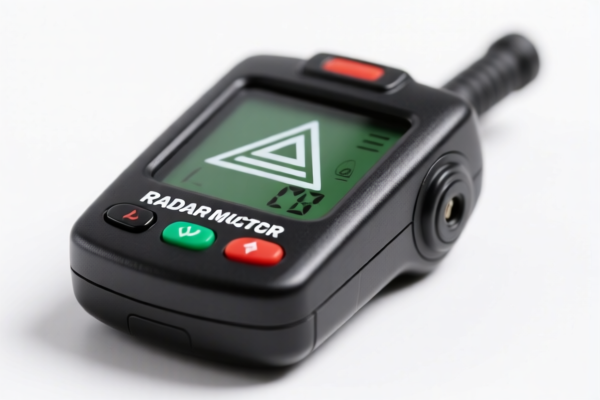
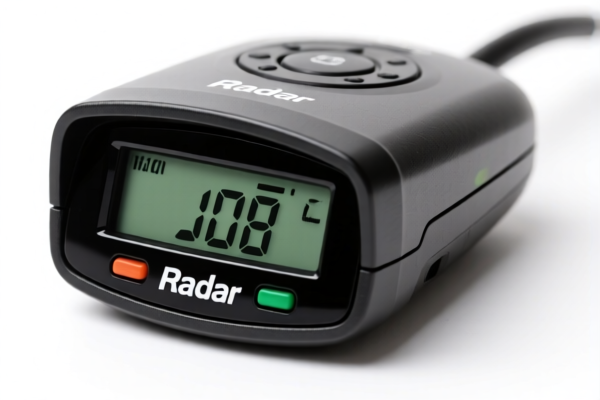


AI Analysis
☢️ Radiation Detector (Electromagnetic Radiation Detectors)
🌐 HS Code Reference & Customs Clearance Guide | 2026 Latest Tariff Analysis | Professional Entry Strategy
📌 I. Product Definition & Classification: What Exactly is a "Radiation Detector"?
A Radiation Detector in the context of this data refers specifically to Electromagnetic Radiation Detectors. These are precision instruments used to measure, detect, or analyze electromagnetic fields (EMF), ionizing radiation, or related physical phenomena. In international trade, classification is critical because these devices sit at the intersection of medical instruments, scientific measuring devices, and electrical sensors.
⚠️ Key Distinction Point:
- If the device measures Ionizing Radiation (X-rays, Gamma rays, Nuclear particles) → It often falls under Chapter 90 (Instruments) rather than general electrical equipment.
- If it is a general-purpose Electromagnetic Field Sensor without specific optical/mechanical precision → It may fall under 9031 (Other measuring/checking instruments).
- Crucial Note: The data provided indicates that for these specific models, the total tax burden is high due to US-China trade policies (Section 301 & IEEPA).
📦 II. HS Code Classification Details (2026 Latest Tariff Authority)
Based on the provided <DATA>, there are five specific HS Codes recommended for "Electromagnetic Radiation Detectors." While they share similar functions, their legal descriptions differ slightly based on the specific nature of the radiation measured (Ionizing vs. Non-ionizing/Electromagnetic).
| HS Code | Product Description / Summary | Application Scenario | Key Classification Basis |
|---|---|---|---|
9031.80.80.85 |
Electromagnetic Radiation Detector | General EMF measurement, industrial safety, environmental monitoring. | Falls under "Measuring or checking instruments" (Other). Matches the definition of other category purposes. |
9031.49.90.00 |
Electromagnetic Radiation Detector | Optical or other scientific measurement contexts. | Category: Optical/Other Measuring & Testing Instruments. Functionally identical to the above but categorized under optical/precision optics rules. |
9030.89.01.00 |
Electromagnetic Radiation Detector | Devices highly consistent with measuring/checking ionizing radiation. | Category: Oscilloscopes, Spectrum Analyzers, & Other Instruments for Measuring Electric Quantities. Note: "Ionizing" context is key here. |
9022.29.80.00 |
Electromagnetic Radiation Detector | Medical or therapeutic radiation detection apparatus. | Category: Other Apparatus for X-ray or ionizing radiation projection. Fits "Apparatus for detection of ionizing/electromagnetic radiation." |
9030.10.00.00 |
Electromagnetic Radiation Detector | General measurement or detection of radiation. | Category: Cathode-ray tube (CRT) oscilloscopes & spectrum analyzers. Note: Despite the CRT name, this code often covers general radiation measurement instruments in specific USITC rulings if they fit the electrical quantity detection profile. |
🔍 Critical Analysis:
- All five codes listed above result in the same total tariff rate (35%).
- The choice between9031(General Measuring),9030(Electric Quantity/Signal Analysis), and9022(X-ray/Radiation Apparatus) depends on the primary function and technical documentation of your specific device.
- Do not guess: If your device is used for medical X-ray quality control,9022is stronger. If it’s for general EMF safety compliance,9031or9030is more appropriate.
💰 III. 2026 Latest Tariff Rate Breakdown (Including Surcharges)
✅ Applicable Country: United States (US)
✅ Country of Origin: China (CN)
✅ Effective Time: Current rates apply (Post-2024 Trade Policies)
For ALL HS Codes listed in the <DATA> section (9031.80.80.85, 9031.49.90.00, 9030.89.01.00, 9022.29.80.00, 9030.10.00.00), the tariff structure is identical:
🎯 1. Universal Tariff Structure for These Radiation Detectors
| Item | Rate | Legal Basis / Explanation |
|---|---|---|
| Base Tariff | 0.0% | Standard Most Favored Nation (MFN) duty for many instruments under Chapter 90 is 0%. |
| Section 301 Tariff | +25.0% | "China-Specific Tariffs" imposed under US Trade Law Section 301. Applies to all these HS codes. |
| Section 122 Tariff | +10.0% | Additional duty under Section 122 of the Trade Expansion Act (often applied to specific categories of imports from China). |
| Total Tax Rate | 35.0% | Sum of Base + Sec 301 + Sec 122 |
| Tax Calculation | CIF Value × 35% | Calculated on Cost, Insurance, and Freight value. |
| De Minimis Exemption | ❌ NOT ELIGIBLE | These codes are not eligible for the $800 de minimis exemption. Must be formally entered. |
| Legal Path | USITC:9031.xxxx / 9030.xxxx / 9022.xxxx → Sec 301 Footnote → Sec 122 |
Complex overlay of trade acts. |
📌 Explanation:
- Even though the base duty is 0%, the additional surcharges push the total cost to 35%.
- Section 301 (25%) is the dominant cost driver for Chinese-origin high-tech instruments.
- Section 122 (10%) is an additional layer often applied to goods deemed to threaten US national security or economic interests, which includes certain advanced measurement technologies.
🛠️ IV. Customs Clearance Practical Advice (Pitfall Avoidance Guide)
✅ 1. Documentation Checklist (Essential for Chapter 90)
| Document | Required? | Purpose |
|---|---|---|
| Product Specification Sheet | ✅ Yes | Must clearly state: Measures EMF/Ionizing Radiation, Frequency Range, Accuracy, and Application (Medical vs. Industrial). |
| Technical Data Sheet | ✅ Yes | Proves it is a "Measuring Instrument" and not a general consumer gadget. |
| Certificate of Origin (CO) | ✅ Yes | Critical for determining if China-origin tariffs apply. |
| Import License / FDA Registration | ⚠️ Conditional | If the device is used for medical radiation detection (e.g., checking X-ray machines), FDA pre-market notification or registration may be required. |
| Commercial Invoice | ✅ Yes | Must clearly describe as "Electromagnetic Radiation Detector" or "Radiation Measuring Instrument." Avoid vague terms like "Sensor" alone. |
✅ 2. Declaration Strategy (Key Tips)
🔥 "Be Precise, Be Technical, Avoid Ambiguity!"
| Scenario | Correct Declaration | Incorrect Declaration | Consequence |
|---|---|---|---|
| Industrial EMF Meter | "Electromagnetic Radiation Detector, Model XYZ, for Industrial Safety Compliance, Class II Instrument" | "RF Detector" or "Wireless Signal Tester" | Risk of reclassification to 8543 (Electrical Machinery) → Higher/ Different duties. |
| Medical Radiation Checker | "Ionizing Radiation Detector for Medical Equipment Quality Assurance" | "X-ray Detector" (Could imply it produces X-rays) | Misdeclaration can trigger FDA/EPA holds. |
| General Purpose | Use 9031.80.80.85 |
Use 8543.70.96.00 (General electrical machines) |
9031 is often more accurate for "measuring" functions. 8543 might attract different trade remedies. |
✅ 3. Special Considerations
| Issue | Recommendation |
|---|---|
| Dual-Use Technology | Radiation detectors can be considered "dual-use" (civilian/military). Ensure no military end-use is declared. |
| Frequency Range | If the detector covers radio frequencies (RF), ensure it complies with FCC regulations (Part 15). Provide FCC ID if applicable. |
| Pre-Ruling | Highly Recommended. Given the 35% tariff and multiple potential HS codes, applying for an Advance Ruling from US Customs (CBP) is wise to lock in the correct code and avoid post-entry audits. |
🌍 V. Global Market Comparison (2026 Overview)
| Country/Region | Recommended HS Code | Estimated Duty (China Origin) | Key Certification | Notes |
|---|---|---|---|---|
| 🇺🇸 USA | 9031 / 9030 / 9022 series |
35% (Base 0% + 25% Sec 301 + 10% Sec 122) | FCC, FDA (if medical) | High Barrier. Section 301 and 122 significantly increase cost. |
| 🇨🇳 China | 9031.80 / 9030.89 |
~5-10% (Variable) | CCC (if electrical) | Domestic market has lower barriers for these instruments. |
| 🇪🇺 EU | 9031 / 9030 |
0% (Mostly) | CE, RoHS, EMC | No significant trade tariffs on instruments. Focus on technical standards. |
| 🇯🇵 Japan | 9031 / 9030 |
0-3% | PSE (Electrical) | Low tariffs, strict technical compliance. |
| 🇬🇧 UK | 9031 / 9030 |
0-5% | UKCA, EMC | Post-Brexit rules apply, but generally favorable for scientific instruments. |
📌 Conclusion:
- USA is the most challenging market due to the 35% effective tariff rate.
- Europe and Asia offer much more favorable tariff environments (often 0-5%).
- If selling to the US, cost absorption or supply chain optimization (e.g., final assembly in a third country, if legal) may be necessary.
📌 VI. Common Mistakes & Pitfalls (Lessons Learned)
❌ Mistake 1: Classifying as "Electronic Sensor" (8543)
👉 Consequence: While base duty might be low, Section 301 may still apply, but the lack of "Measuring Instrument" proof can lead to CBP rejection or reclassification penalties.
❌ Mistake 2: Ignoring "Section 122"
👉 Consequence: Assuming only 25% duty. The additional 10% is often overlooked by less experienced brokers, leading to underpayment and audits.
❌ Mistake 3: Vague Description ("Radiation Sensor")
👉 Consequence: CBP may detain the shipment for "Insufficient Information." Must specify type of radiation (EMF vs. Ionizing) and application.
❌ Mistake 4: Failing to Disclose Country of Origin Clearly
👉 Consequence: If origin is disputed, CBP may apply the highest possible duty rate or additional punitive tariffs.
✅ Correct Practice:
"Electromagnetic Radiation Detector, Model ABC, Frequency Range 1MHz-18GHz, Accuracy ±2dB, For Industrial EMF Safety Monitoring, Made in China."
🎯 VII. Conclusion: Strategic Compliance for Profitability
🎯 Key Takeaways:
🔹 "35% is the Price of Entry for US Market."
🔹 "Chapter 90 is Your Friend, but Documentation is Your Key."
🔹 "Section 122 is the Hidden Cost."
📌 Pro Tip:
If your radiation detector is not of Chinese origin (e.g., assembled in Vietnam or Malaysia with substantial transformation), you may avoid the Section 301 and Section 122 tariffs, potentially reducing the duty to 0% or a lower rate.
Action: Consult a customs attorney to assess Substantial Transformation rules if diversifying manufacturing.
📣 Immediate Action Steps:
📞 Step 1: Confirm the exact technical specifications (Ionizing vs. EMF).
📞 Step 2: Request an Advance Ruling from CBP for the specific HS Code.
📞 Step 3: Budget for 35% duty if shipping from China to the US.
🚀 Goal: Smooth customs clearance, no detention, and predictable landed costs.
✨ Precision in Classification, Profit in Clearance!
💼 Don't let 35% tariff eat your margins. Get it right from Day 1.
Customer Reviews
About HS Code Classification
The Harmonized System (HS) is an internationally standardized nomenclature developed by the World Customs Organization (WCO) to classify traded products. Over 200 countries use the HS system as the basis for customs tariffs, trade statistics, and import/export regulations.
Each HS code follows a hierarchical structure:
- Chapter (2 digits) — Broad category of goods (e.g., Chapter 84: Machinery and Mechanical Appliances)
- Heading (4 digits) — More specific grouping within the chapter
- Subheading (6 digits) — Internationally standardized breakdown, used by all WCO member countries
- National subdivisions (8-10 digits) — Country-specific extensions for further classification, such as US HTSUS 10-digit codes
Correct HS code classification is essential for smooth customs clearance, accurate duty payment, and compliance with trade regulations. Misclassification can lead to customs delays, overpayment of duties, or penalties.
When importing from CN to US, the applicable tariff rates may include:
- Most-Favored-Nation (MFN) rate — The standard duty rate applied to WTO members
- General rate — Applied to countries without trade agreements
- Trade remedy duties — Additional tariffs such as Section 301 (anti-dumping), Section 232 (national security), or countervailing duties
The information provided on this page is for reference purposes only. For official classification, please consult with your local customs authority or a licensed customs broker.