Radio Tester
CN → US| HS Code | Tariff Rate | Origin | Destination | Doc |
|---|---|---|---|---|
| 8543200000 | 35.0% | CN | US | Official Doc |
| 8543906800 | 35.0% | CN | US | Official Doc |
| 9030400000 | 35.0% | CN | US | Official Doc |
| 9030200500 | 35.0% | CN | US | Official Doc |
Product Images
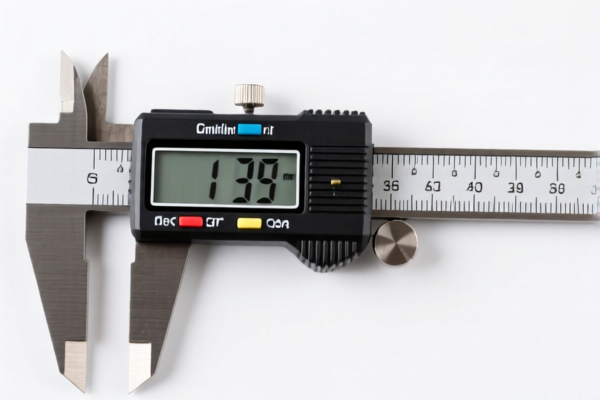
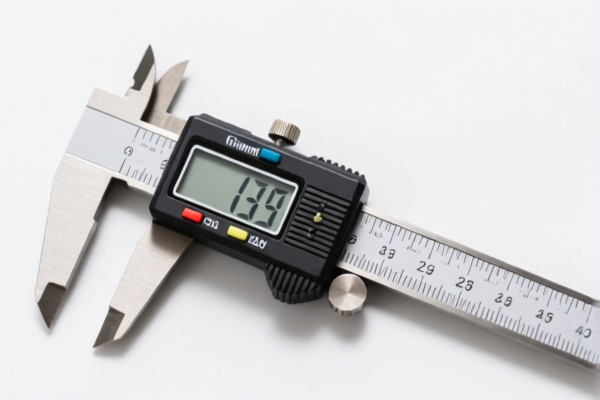
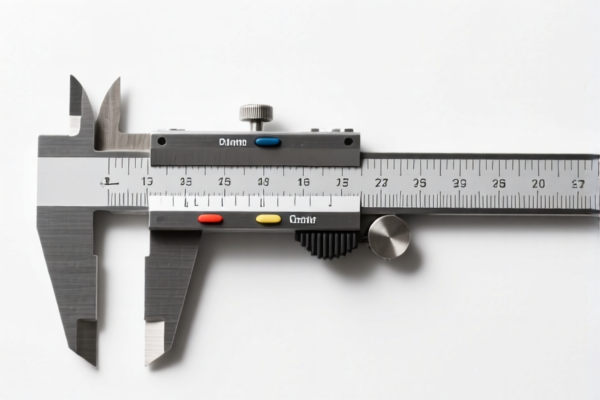
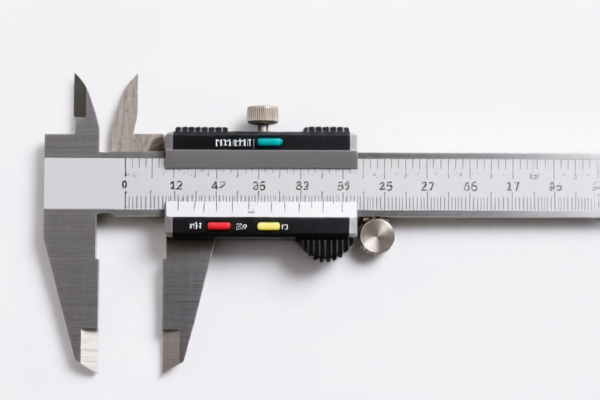
AI Analysis
📻 Radio Tester (RF Measurement Instruments)
🌐 HS Code Reference & Customs Clearance Guide | 2026 Latest Tariff Analysis | Professional Compliance Strategy
📌 I. Product Definition & Classification: What Exactly is a "Radio Tester"?
A "Radio Tester" is not a single, unified product in international trade. It is a functional description that can encompass several different pieces of electrical equipment depending on its specific capabilities, circuitry, and intended use. In customs classification, function determines destination.
We categorize Radio Testers into three distinct types based on their technical nature:
- Signal Generators: Devices that produce specific radio frequencies for testing other devices.
- PCBA (Printed Circuit Board Assemblies): Internal components of test equipment, often sold separately or as parts.
- Measurement Instruments: Devices that analyze or measure radio signals (e.g., spectrum analyzers, oscilloscopes for telecom).
⚠️ Critical Distinction:
- If the device outputs a signal to test a radio → Signal Generator (8543).
- If the device measures/analyzes radio characteristics → Measurement Instrument (9030).
- If it is a circuit board assembly within these devices → Parts (8543).
📦 II. HS Code Classification Matrix (2026 Authoritative对照)
Below is the precise classification for "Radio Testers" based on the provided data, mapped to their functional reality.
| HS Code | Product Description | Functional Role in "Radio Testing" | Key Features |
|---|---|---|---|
8543.20.00.00 |
Signal Generators | Active Source: Generates RF signals to stimulate a radio receiver under test. | Generates sine waves, modulated signals, or pulses. Does not "measure" input; it "sends" output. |
8543.90.68.00 |
Parts: Printed Circuit Assemblies (PCBA) | Internal Component: The main logic board of a signal generator or tester. | Sold as a spare part or internal module. Contains integrated circuits but no user interface. |
9030.40.00.00 |
Other Measurement Instruments (Telecom Specialized) | Analyzer: Measures electrical quantities like gain, distortion, or cross-talk in telecom/radio circuits. | Instruments specially designed for telecommunications (e.g., cross-talk meters, distortion factor meters). |
9030.20.05.00 |
Oscilloscopes (Telecom Specialized) | Visualization Tool: Visualizes radio frequency waveforms specifically for telecom applications. | Oscilloscopes specially designed for telecommunications. General-purpose scopes may fall elsewhere. |
🔍 Key Insight:
- "Radio Tester" is not a valid HS description on its own. You must declare the technical function. - If it makes the signal →8543.20.00.00. - If it reads the signal (specialized for telecom) →9030.40.00.00or9030.20.05.00.
💰 III. 2026 Tariff Rate Analysis (USA/China Trade Context)
✅ Applicable Country: United States (US)
✅ Origin: China (CN)
✅ Effective Date: Current trade policies (Section 301 / IEEPA implications)
⚠️ Warning: All items below are subject to significant additional tariffs due to US-China trade tensions.
🎯 1. 8543.20.00.00 – Signal Generators
| Item | Detail |
|---|---|
| Base Tariff | 0.0% |
| Additional Tariff (Section 301) | +25.0% |
| Total Tariff | 25.0% |
| Tax Calculation | CIF Value × 25% |
| Legal Basis | USITC List 3 / 301 Tariff |
| De Minimis Exemption | ❌ Not Applicable (High-value professional equipment) |
📌 Explanation:
Signal generators are classified as "Electrical machines... having individual functions." While the base duty is 0%, the 25% retaliatory/additional tariff applies. This is a standard high-tariff category for electronic test equipment of Chinese origin.
🎯 2. 8543.90.68.00 – Parts (Printed Circuit Assemblies)
| Item | Detail |
|---|---|
| Base Tariff | 0.0% |
| Additional Tariff (Section 301) | +25.0% |
| Total Tariff | 25.0% |
| Tax Calculation | CIF Value × 25% |
| Legal Basis | USITC List 3 / 301 Tariff |
| De Minimis Exemption | ❌ Not Applicable |
📌 Explanation:
Even if you are importing only the circuit board (PCBA) inside a radio tester, it is still subject to the same 25% additional tariff. Parts follow the parent product’s tariff line unless specifically exempted.
🎯 3. 9030.40.00.00 – Telecom Measurement Instruments
| Item | Detail |
|---|---|
| Base Tariff | 0.0% |
| Additional Tariff (Section 301) | +25.0% |
| Total Tariff | 25.0% |
| Tax Calculation | CIF Value × 25% |
| Legal Basis | USITC List 3 / 301 Tariff |
| De Minimis Exemption | ❌ Not Applicable |
📌 Explanation:
This code covers instruments specially designed for telecommunications. If your "Radio Tester" measures distortion, gain, or cross-talk for radio/telecom systems, it falls here. The tariff burden remains 25%.
🎯 4. 9030.20.05.00 – Telecom Oscilloscopes
| Item | Detail |
|---|---|
| Base Tariff | 0.0% |
| Additional Tariff (Section 301) | +25.0% |
| Total Tariff | 25.0% |
| Tax Calculation | CIF Value × 25% |
| Legal Basis | USITC List 3 / 301 Tariff |
| De Minimis Exemption | ❌ Not Applicable |
📌 Explanation:
Only oscilloscopes specially designed for telecommunications fall under this subheading. Standard general-purpose oscilloscopes may have different classifications, but for telecom-specific radio testing, this is the correct code. Tariff: 25%.
🛠️ IV. Customs Clearance Practical Advice
✅ 1. Documentation Checklist (Must-Haves)
| Document | Required | Purpose |
|---|---|---|
| Product Specification Sheet | ✔️ | Must clearly state: Function (Generator vs. Analyzer), Frequency Range, Output Power, Accuracy. |
| Technical Diagram | ✔️ | To prove if it’s a PCBA (Part) or a Complete Instrument. |
| Commercial Invoice | ✔️ | Must use precise HS Code descriptions (e.g., "RF Signal Generator," not just "Radio Tester"). |
| Country of Origin Certificate | ✔️ | To confirm Chinese origin (triggers 25% tariff). |
| FCC ID / Certification | ✔️ | Radio equipment requires FCC approval for import into the US. |
✅ 2. Naming & Declaration Strategy
🔥 Golden Rule: "Never use 'Radio Tester' as the sole description."
| Scenario | Incorrect Declaration | ✅ Correct Declaration |
|---|---|---|
| Device sends signals to test radios | "Radio Tester" | "RF Signal Generator, Model XYZ, 1MHz-6GHz, for Telecom Testing" → 8543.20.00.00 |
| Internal circuit board of tester | "Radio Tester Part" | "Printed Circuit Assembly, Signal Generator Type, Part No. ABC" → 8543.90.68.00 |
| Device measures signal quality | "Radio Quality Tester" | "Specially Designed Telecom Measurement Instrument, Cross-talk Meter" → 9030.40.00.00 |
| Device visualizes radio waves | "Radio Wave Analyzer" | "Telecommunications Oscilloscope, Digital, Model DEF" → 9030.20.05.00 |
✅ 3. Critical Warnings
- FCC Compliance is Mandatory: All electrical devices emitting radio frequencies (Signal Generators) must have an FCC ID. Without it, customs will seize the goods.
- No "De Minimis" for Test Equipment: Unlike small consumer goods, professional test equipment (even parts) does not qualify for the $800 de minimis exemption. Full duty calculation applies.
- Tariff Consistency: All four HS codes in the data share the same 25% additional tariff. There is no tariff advantage in choosing one over another for cost-saving purposes. The choice must be based on technical accuracy to avoid misdeclaration penalties.
🌍 V. Global Market Comparison (2026)
| Region | HS Code Focus | Tariff Impact | Key Requirement |
|---|---|---|---|
| 🇺🇸 USA | 8543.20, 9030.xx |
25% Additional (Total ~25-30%) | FCC Certification + Precise Functional Description |
| 🇪🇺 EU | 9030.xx, 8543.20 |
0-4% (Standard) | CE Marking + RoHS Compliance |
| 🇨🇳 China | Same Codes | 0-5% (Standard) | CCC Certification (if applicable) |
| 🇯🇵 Japan | Same Codes | 0-3% (Standard) | PSE Marking |
📌 Conclusion:
The USA is the most expensive market for importing Radio Testers from China due to the flat 25% additional tariff on all categories. EU and Asia offer lower tariff burdens but require strict compliance with local safety standards (CE/PSE).
📌 VI. Common Mistakes & Pitfalls
❌ Mistake 1: Declaring as "Electronic Instrument" (Generic)
👉 Consequence: Customs may reclassify it to a higher duty bracket or reject the entry for lack of specificity.
❌ Mistake 2: Ignoring FCC Requirements for Signal Generators
👉 Consequence: Goods held at border, destroyed, or returned. FCC ID is non-negotiable.
❌ Mistake 3: Splitting a Complete Tester into "Parts" to lower declared value
👉 Consequence: Fraud risk. If customs finds the PCBA is meant to be a complete unit, they may assess full duty + penalties.
🎯 VII. Conclusion: Precision is Profit
🎯 Key Takeaway:
For "Radio Testers," function dictates HS Code, and origin dictates tariff.
- All relevant codes in the provided data incur a 25% additional tariff for Chinese-origin goods.
- There is no tax arbitrage between Signal Generators (8543) and Telecom Instruments (9030).
- Accuracy in description is the only way to avoid delays.
✅ Action Plan:
1. Identify if your device is a Generator (8543) or Analyzer (9030).
2. Ensure FCC Certification is attached.
3. Declare with technical specificity (e.g., "RF Signal Generator").
4. Budget for 25% additional duty on top of any base duty.
📣 Final Tip:
If you are using these test instruments for R&D only and not for sale, you might qualify for HTSUS Exemption 9801.01.00 (U.S. Instruments Sent Abroad for Testing), but this requires strict "Sent Abroad and Returned" documentation. Consult a customs broker for this advanced strategy.
✨ Professional Compliance = Smooth Clearance
💼 Don't Guess the Code. Define the Function.
Customer Reviews
About HS Code Classification
The Harmonized System (HS) is an internationally standardized nomenclature developed by the World Customs Organization (WCO) to classify traded products. Over 200 countries use the HS system as the basis for customs tariffs, trade statistics, and import/export regulations.
Each HS code follows a hierarchical structure:
- Chapter (2 digits) — Broad category of goods (e.g., Chapter 84: Machinery and Mechanical Appliances)
- Heading (4 digits) — More specific grouping within the chapter
- Subheading (6 digits) — Internationally standardized breakdown, used by all WCO member countries
- National subdivisions (8-10 digits) — Country-specific extensions for further classification, such as US HTSUS 10-digit codes
Correct HS code classification is essential for smooth customs clearance, accurate duty payment, and compliance with trade regulations. Misclassification can lead to customs delays, overpayment of duties, or penalties.
When importing from CN to US, the applicable tariff rates may include:
- Most-Favored-Nation (MFN) rate — The standard duty rate applied to WTO members
- General rate — Applied to countries without trade agreements
- Trade remedy duties — Additional tariffs such as Section 301 (anti-dumping), Section 232 (national security), or countervailing duties
The information provided on this page is for reference purposes only. For official classification, please consult with your local customs authority or a licensed customs broker.