Radio or Television Broadcasting Equipment
CN → US| HS Code | Tariff Rate | Origin | Destination | Doc |
|---|---|---|---|---|
| 8525503040 | 35.0% | CN | US | Official Doc |
| 8527298000 | 35.0% | CN | US | Official Doc |
| 8517610000 | 17.5% | CN | US | Official Doc |
| 8525507010 | 35.0% | CN | US | Official Doc |
| 8527991500 | 35.0% | CN | US | Official Doc |
| 8517620090 | 35.0% | CN | US | Official Doc |
Product Images
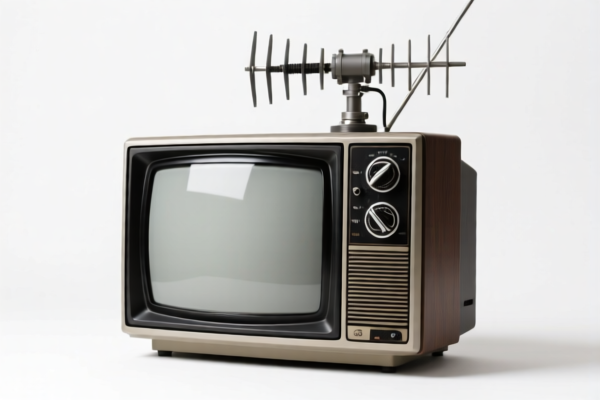
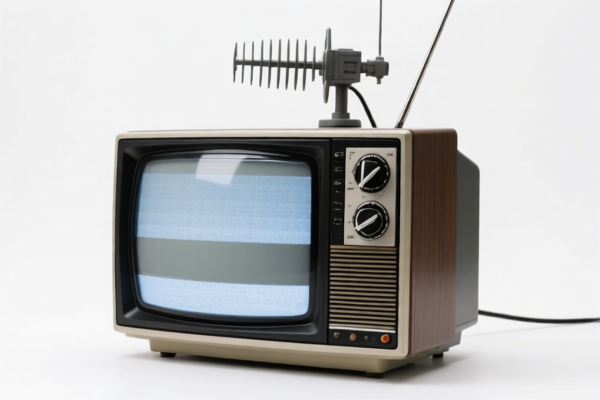

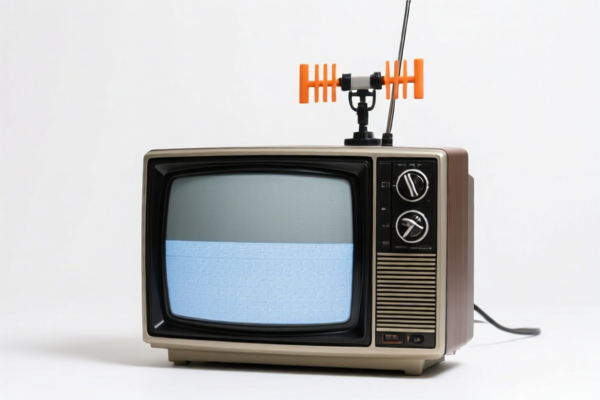
AI Analysis
📡 Radio or Television Broadcasting Equipment (Broadcast & Transmission Devices)
🌐 HS Code Reference & Customs Clearance Guide | 2026 Latest Tariff Analysis | Professional Clearance Strategy
📌 I. Product Definition & Classification: What Exactly Is "Broadcasting Equipment"?
Radio and Television Broadcasting Equipment refers to devices primarily used for the transmission or reception of radio signals, television signals, voice, images, or other data for broadcasting purposes. In international trade, these devices are often confused with general telecommunications or consumer audio/video gear.
Key Distinctions: * Transmission Focus: If the device is designed to send signals (e.g., transmitters, broadcast encoders), it often falls under Chapter 8525 (Transmission apparatus). * Reception/Integrated Focus: If the device is designed to receive signals or integrates transmission/reception for broadcast purposes, it may fall under Chapter 8527 (Receiving apparatus) or Chapter 8517 (Transmission/Reception apparatus for voice, images, data). * No Material Conflict: All codes listed below are based on functional utility rather than material composition. There is no conflict regarding materials; the classification hinges entirely on the device's primary purpose in the broadcasting chain.
⚠️ Critical Note:
- These products are subject to significant additional tariffs under current US trade policies.
- The total tax burden is high, requiring precise classification to avoid penalties or delays.
- All listed HS Codes carry a 35.0% Total Tax Rate for China-origin goods.
📦 II. HS Code Classification Details (2026 Latest Tariff Authority Cross-Reference)
Based on the provided data, the following HS Codes are eligible for Radio or Television Broadcasting Equipment. Each entry shares the same tax structure but differs in specific functional categorization.
| HS Code | Product Description / Summary | Functional Scope | Key Clarification |
|---|---|---|---|
8525.50.30.40 |
Transmission Equipment for Radio/TV Broadcasting | Fully consistent with broadcast/TV transmission device usage. | Transmission Focus: Specifically for devices that transmit signals. No material conflict. |
8527.29.80.00 |
Broadcasting Reception Equipment | Fits the category of broadcast receiving equipment. | Reception Focus: Devices designed to receive broadcast signals. No material conflict. |
8517.61.00.00 |
Data/Voice/Image Transmission Apparatus | Consistent with transmission/reception of voice, images, or data. | General Transmission: Broad category for transmission devices. No material/form conflict. |
8525.50.70.10 |
Transmission Equipment for Broadcast/TV | Consistent with broadcast/TV transmission device usage. | Transmission Focus: Similar to 8525.50.30.40, specific to broadcast/TV transmission. No material/form conflict. |
8527.99.15.00 |
Other Broadcast Transmission/Receiving Equipment | Falls within the scope of broadcast transmission/reception. | Hybrid/Other: For equipment that may have mixed functions or doesn't fit primary reception/transmission slots. No material/form conflict. |
🔍 Key Reminder:
- All five HS Codes listed above are functionally aligned with broadcasting equipment.
- The choice among them depends on whether the device is primarily a Transmitter (8525), a Receiver (8527), or a General Data/Voice Transmitter (8517).
- No material conflicts exist for any of these codes; classification is purely usage-based.
💰 III. 2026 Latest Tariff Rate Breakdown (Detailed Tax Clauses)
✅ Applicable Country: USA (US)
✅ Country of Origin: China (CN)
✅ Effective Date: Current applicable rates (Note: Rates subject to trade policy updates, but as per data, the structure is fixed at 35% total).
🎯 Unified Tax Structure for All Listed HS Codes
For all the HS Codes listed above (8525.50.30.40, 8527.29.80.00, 8517.61.00.00, 8525.50.70.10, 8527.99.15.00), the tax structure is identical:
| Item | Rate / Detail | Explanation |
|---|---|---|
| Base Tariff (MFN) | 0.0% | The standard Most Favored Nation tariff for these broadcasting/telecom equipment categories is zero. |
| Section 301 Additional Tariff | +25.0% | Imposed under US Trade Law Section 301 on certain Chinese imports. |
| Section 122 Clause Tariff | +10.0% | Specific additional tariff clause applied to this category of goods. |
| Total Tax Rate | 35.0% | Sum of Base (0%) + Section 301 (25%) + Section 122 (10%). |
| Tax Calculation | CIF Value × 35% | Tax is calculated on the Cost, Insurance, and Freight value. |
| De Minimis Exemption | ❌ NOT Applicable | These goods cannot use the $800 de minimis exemption. Full duty applies. |
📌 Detailed Tax Clause Explanation:
- "Base Tariff: 0.0%": Indicates that under normal WTO MFN rates, these electronic transmission/reception devices are duty-free.
- "Additional Tariff: 25.0%": This is the Section 301 tariff, a major trade barrier for Chinese-origin electronics. It is non-negotiable for most goods in this category.
- "Section 122 Clause Tariff: 10%": This refers to specific legislative or executive clauses (often related to national security or trade adjustments) that add an extra 10% layer.
- "Total: 35.0%": This is a high-cost category. Importers must factor this 35% into their landed cost calculations. There are no standard exemptions for these specific HS codes.
🛠️ IV. Customs Clearance Practical Advice (Pitfall Avoidance Guide)
✅ 1. Required Documentation Checklist
| Document | Mandatory? | Description |
|---|---|---|
| ✅ Product Specification Sheet | ✔️ | Must clearly state: "Broadcasting Equipment," "Transmission/Reception Function," and "No Media Content." |
| ✅ Technical Datasheet | ✔️ | Include frequency range, power output, and modulation type to justify HS Code selection. |
| ✅ Commercial Invoice | ✔️ | Must match the HS Code exactly. Avoid vague terms like "Electronic Device." Use "Radio Transmitter" or "TV Receiver." |
| ✅ Certificate of Origin | ✔️ | Essential for proving China origin, which triggers the 35% tax. If non-China origin, tariffs may differ. |
| ✅ FCC Declaration (if US) | ✔️ | Broadcasting equipment requires FCC ID/Declaration. Missing this causes customs delays. |
| ✅ Photos of Label/Marking | ✔️ | Clear image of the product label showing model number and country of origin. |
✅ 2. Declaration Best Practices
🔥 "Clear Function, Specific Code, Full Disclosure!"
| Scenario | Correct Declaration | Incorrect Declaration |
|---|---|---|
| Radio Transmitter | 8525.50.30.40 - "Radio Broadcast Transmitter" |
"Electronic Part" or "Speaker" |
| TV Receiver | 8527.29.80.00 - "Television Receiving Apparatus" |
"Monitor" or "Display Screen" |
| Data Transmission Box | 8517.61.00.00 - "Data Transmission Apparatus" |
"Router" (if not primarily for broadcasting) |
| Mixed Function Device | 8527.99.15.00 - "Other Broadcast Equipment" |
Vague term like "Multimedia Device" |
📌 Why it Matters:
- Misclassification (e.g., calling a broadcaster a "computer peripheral") can lead to audits, fines, or cargo detention.
- While base rates might be similar, the 35% total tax is unavoidable for China-origin goods in these categories. Accuracy prevents delays.
✅ 3. Special Considerations
| Situation | Advice |
|---|---|
| OEM/White Label Goods | Ensure the technical specs match the declared function. Customs may inspect to verify it’s not a dual-use device (e.g., surveillance vs. broadcast). |
| Components vs. Whole Units | If importing parts (e.g., antennas, modules), verify if they fall under different HS codes (e.g., 8543 for electrical machines). The codes above are for functional units. |
| Pre-Ruling Request | Given the high tax rate (35%), consider applying for a Binding Tariff Information (BTI) or US CBP Pre-Ruling to lock in the HS Code and avoid disputes. |
🌍 V. Global Market Comparison (2026)
| Country/Region | Recommended HS Code | Estimated Total Tax (China Origin) | Key Requirements | Notes |
|---|---|---|---|---|
| 🇺🇸 USA | 8525.50.30.40 etc. |
35.0% | FCC + CBP Declaration | High tariff due to Section 301 & 122. |
| 🇨🇳 China | 8525.50.30.40 etc. |
Varies (0%-10%) | CCC Certification | Domestic market has lower barriers. |
| 🇪🇺 EU | 8525.50 etc. |
0%-2% | CE Mark + RoHS | No Section 301-style tariffs. |
| 🇬🇧 UK | 8525.50 etc. |
0%-2% | UKCA Mark | Post-Brexit tariffs generally low for electronics. |
| 🇯🇵 Japan | 8525.50 etc. |
0% | PSE Mark | Generally duty-free for telecom equipment. |
📌 Conclusion:
- The USA is the most challenging market for this product category due to the 35% combined tariff.
- Other major markets (EU, Japan, UK) offer significantly lower duties, making them more attractive for cost-sensitive shipments.
- For US imports, cost-benefit analysis is critical. Consider if the 35% tariff erodes profit margins.
📌 VI. Common Errors & Pitfalls (Lessons Learned)
❌ Error 1: Misclassifying as "Computer Equipment" (e.g., 8471)
👉 Consequence: If audited, customs will reclassify to broadcasting codes, apply 35% tax, and charge penalties.
❌ Error 2: Ignoring the "Section 122" tariff
👉 Consequence: Underpaying taxes by 10%. Results in back taxes + interest + fines upon audit.
❌ Error 3: Using vague descriptions like "Electronic Device"
👉 Consequence: CBP may hold cargo for inspection, causing delay costs and demurrage fees.
❌ Error 4: Assuming De Minimis ($800) applies
👉 Consequence: Strictly prohibited for these HS codes. Small shipments still incur 35% duty.
✅ Correct Approach:
"Radio Broadcasting Transmitter, Model XYZ, 100W Output, FCC Certified, Made in China. HS Code: 8525.50.30.40."
🎯 VII. Conclusion: Precise Classification Saves Money and Time
🎯 Remember the Golden Rule:
🔹 "Broadcasting = 35% Tax (US). Function defines the Code."
🔹 "Don't guess the HS Code. Verify the function. Pay the 35%."
📌 Pro Tip:
If your products are not made in China (e.g., Vietnam, Thailand), you may be eligible for lower or zero tariffs. Always verify the Country of Origin before calculating landed costs.
📣 Immediate Action:
📞 Consult a Licensed Customs Broker
📄 Provide FCC Certificates & Technical Specs
🚀 Apply for Pre-Ruling if Shipment Value is High
✨ Professional Clearance Starts with Accurate Classification!
💼 Your Profit Margin Depends on This 35% Detail!
Customer Reviews
About HS Code Classification
The Harmonized System (HS) is an internationally standardized nomenclature developed by the World Customs Organization (WCO) to classify traded products. Over 200 countries use the HS system as the basis for customs tariffs, trade statistics, and import/export regulations.
Each HS code follows a hierarchical structure:
- Chapter (2 digits) — Broad category of goods (e.g., Chapter 84: Machinery and Mechanical Appliances)
- Heading (4 digits) — More specific grouping within the chapter
- Subheading (6 digits) — Internationally standardized breakdown, used by all WCO member countries
- National subdivisions (8-10 digits) — Country-specific extensions for further classification, such as US HTSUS 10-digit codes
Correct HS code classification is essential for smooth customs clearance, accurate duty payment, and compliance with trade regulations. Misclassification can lead to customs delays, overpayment of duties, or penalties.
When importing from CN to US, the applicable tariff rates may include:
- Most-Favored-Nation (MFN) rate — The standard duty rate applied to WTO members
- General rate — Applied to countries without trade agreements
- Trade remedy duties — Additional tariffs such as Section 301 (anti-dumping), Section 232 (national security), or countervailing duties
The information provided on this page is for reference purposes only. For official classification, please consult with your local customs authority or a licensed customs broker.