Radio or Television Transmitter
CN → US| HS Code | Tariff Rate | Origin | Destination | Doc |
|---|---|---|---|---|
| 8525503040 | 35.0% | CN | US | Official Doc |
| 8548000000 | 35.0% | CN | US | Official Doc |
| 8529909800 | 35.0% | CN | US | Official Doc |
| 8543906800 | 35.0% | CN | US | Official Doc |
| 8543908885 | 85.0% | CN | US | Official Doc |
| 8529109100 | 35.0% | CN | US | Official Doc |
Product Images
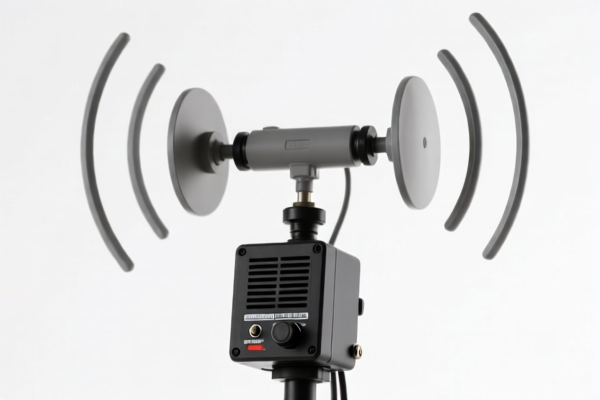
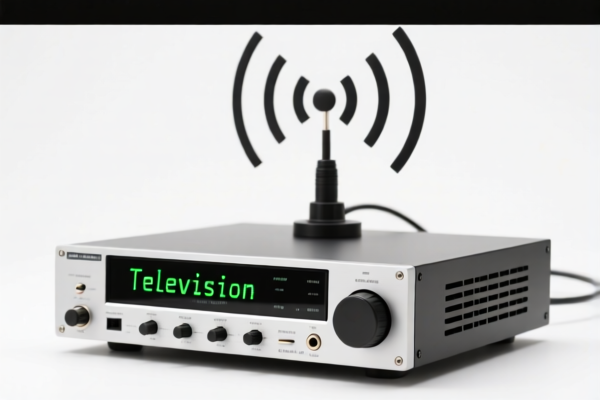
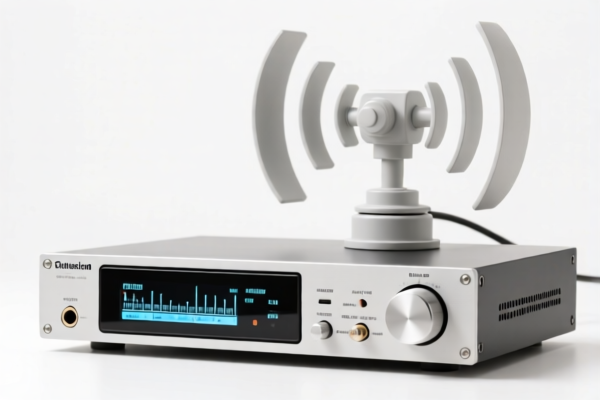
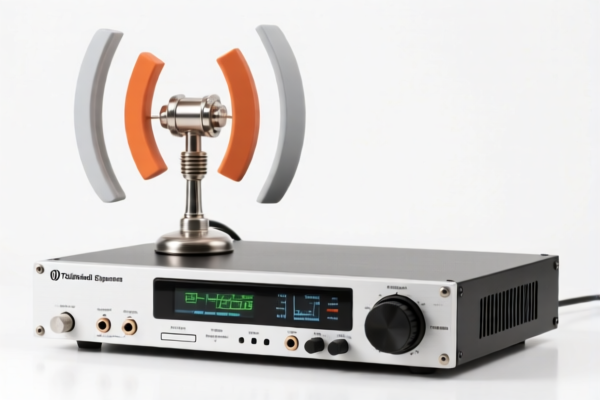
AI Analysis
📡 Radio or Television Transmitters & Components: The "35%-85%" Minefield
🌐 HS Code Reference & Customs Clearance Guide | 2026 Latest Tariff Analysis | Professional Clearance Strategy
📌 Part 1: Product Definition & Classification: Do You Really Know What a "Transmitter" Is?
Radio and Television Transmitters are the backbone of wireless communication, broadcasting audio and video signals to receivers. In international trade, classification is highly dependent on the specific form factor and function of the component.
A critical distinction must be made between: * Active Transmitter Units: Complete devices capable of emitting radio waves (e.g., TV broadcast towers, FM transmitters). * Specific Functional Parts: Components designed specifically for the equipment in Heading 85.24 to 85.28 (e.g., specific antennas, tuner modules). * General Electrical Parts: Components with electrical characteristics but not uniquely identified as transmitter parts. * Catch-all Components: Parts that do not fit the specific functional definitions above.
⚠️ Key Distinction Point:
- If it is a complete broadcasting unit → 8525.50.30.40
- If it is a part for 85.24–85.28 equipment (specific fit) → 8529.90.98.00
- If it is a part matching electrical uses (broadly defined) → 8548.00.00.00 or 8543.90.68.00
- If it is a generic/donut part (other parts) → 8543.90.88.85 (Highest Risk!)
📦 Part 2: HS Code Classification Details (2026 Latest Tariff Authority Comparison)
| HS Code | Product Description | Applicable Scenario | Tax Rate | Risk Level |
|---|---|---|---|---|
8525.50.30.40 |
Radio or television broadcasting transmitters | Complete broadcast equipment; transmitters fitting the category of broadcasting/transmission equipment | 35.0% | 🟡 Medium |
8548.00.00.00 |
Parts of radio/TV equipment, matching electrical parts use | Components defined by electrical function rather than specific mechanical fit for 85.24-85.28 | 35.0% | 🟡 Medium |
8529.90.98.00 |
Parts of radio/TV equipment, for 85.24–85.28 equipment | Specific parts designed for receivers/transmitters in headings 85.24 to 85.28 | 35.0% | 🟡 Medium |
8543.90.68.00 |
Parts of radio/TV equipment, component morphology | Parts that fit the definition of "parts" with specific functional morphology | 35.0% | 🟡 Medium |
8529.10.91.00 |
Parts of radio/TV equipment, other categories fallback | Parts applicable for matching components but falling under other fallback categories | 35.0% | 🟡 Medium |
8543.90.88.85 |
Parts of radio/TV equipment, other parts bottom-up feature | Generic "other parts" catch-all; no specific functional definition met | 85.0% | 🔴 HIGH |
🔍 Important Reminder:
- The "Parts" classification is tricky. Customs will scrutinize whether the part is solely for use with specific broadcasting equipment (8529/8548) or if it is a generic component (8543). - 8543.90.88.85 is the "Worst-Case Scenario" HS Code. It attracts an additional 50% tariff on Steel, Aluminum, and Copper products, leading to a staggering 85% total tax. Avoid this classification unless absolutely necessary and justified.
💰 Part 3: 2026 Latest Tariff Rate Detail (Including Surtax & Policy Surtax)
✅ Applicable Country: United States (US)
✅ Country of Origin: China (CN)
✅ Effective Date: November 10, 2025 (and subsequent imports)
🎯 1. 8525.50.30.40 —— Radio or Television Broadcasting Transmitters
| Item | Content |
|---|---|
| Base Tax Rate | 0% (ad valorem) |
| USITC Surtax (Section 301) | +25% (Additional Duty) |
| IEEPA Surtax (Section 122) | +10% (Targeting China/HK products, effective Nov 10, 2025) |
| Total Tax Rate | 35.0% |
| Tax Calculation | CIF Value × 35% |
| De Minimis Exemption? | ❌ NO (deny_de_minimis) |
| Legal Basis Path | IEEPA:9903.01.25 → IEEPA:9903.01.24 → USITC:8525.50.30.40 → FOOTNOTE:9903.88.01 |
📌 Explanation:
- The 25% USITC surtax comes from the "Additional Duties" under Section 301 of the Trade Act; - The 10% IEEPA surtax is the new对华加征关税 (China-specific surtax) under the International Emergency Economic Powers Act; - Total 35% is considered high for electronic components. Planning is essential.
🎯 2. 8548.00.00.00 & 8529.90.98.00 —— Specific Parts (Radio/TV)
| Item | Content |
|---|---|
| Base Tax Rate | 0% |
| USITC Surtax | +25% |
| IEEPA Surtax | +10% |
| Total Tax Rate | 35.0% |
| Tax Calculation | CIF × 35% |
| De Minimis Exemption? | ❌ NO |
| Legal Basis Path | IEEPA:9903.01.24 → USITC:8548.00.00.00 / 8529.90.98.00 |
📌 Note:
- These codes share the same tax structure as the main transmitter. - Even if classified as "parts," as long as they are for broadcasting/TV equipment (HS Chapter 85), they are subject to the same 301 + 122 surtaxes.
🎯 3. 8543.90.88.85 —— The "Other Parts" Trap (High Risk)
| Item | Content |
|---|---|
| Base Tax Rate | 0% |
| USITC Surtax | +25% |
| IEEPA Surtax | +10% |
| Steel/Aluminum/Copper Surtax | +50% (Specific to metal products) |
| Total Tax Rate | 85.0% |
| Tax Calculation | CIF × 85% |
| De Minimis Exemption? | ❌ NO |
| Legal Basis Path | IEEPA:9903.01.25 → USITC:8543.90.88.85 → Additional Steel/Al/Cu Duty |
📌 Warning:
- This is the highest possible tax rate in this dataset. - It applies if the part does not fit the specific "radio/TV part" definitions (8529, 8548) or other component definitions (8543.90.68), falling into the generic "Other" bucket. - If the part contains steel, aluminum, or copper, the extra 50% applies on top of the 35%, totaling 85%.
🛠️ Part 4: Customs Clearance Practical Advice (Battle-Tested Pitfall Guide)
✅ 1. Documentation Checklist (Non-negotiable)
| Document | Required | Description |
|---|---|---|
| ✅ Product Specification Sheet | ✔️ | Must include frequency range, power output, modulation type, and specific intended use. |
| ✅ Circuit Diagram/Structure Drawing | ✔️ | Crucial to prove the part is specifically for 85.24-85.28 equipment (to avoid 8543.90.88.85). |
| ✅ Product Photos (with Label) | ✔️ | Clear view of model number, brand, and input/output parameters. |
| ✅ Third-party Test Report | ✔️ | FCC, CE, RoHS, UL (if applicable). FCC ID is mandatory for RF devices. |
| ✅ Commercial Invoice | ✔️ | Must clearly state "Radio/Television Transmitter" or "Parts for Radio/TV Equipment." Avoid vague terms like "Electrical Component." |
| ✅ Certificate of Origin (CO) | ✔️ | If not from China, may qualify for exemptions (though rare for these HS codes). |
| ✅ Packing List | ✔️ | Clearly distinguish between main units and spare parts. |
✅ 2. Declaration Strategy (Key Mantra)
🔥 "Be Specific, Not Generic! Avoid 'Other Parts' at All Costs!"
| Scenario | Correct Declaration | Wrong Approach |
|---|---|---|
| Complete Transmitter | 8525.50.30.40 |
Calling it "Electrical Machine" → Risk of 8543 |
| Specific Antenna for TV | 8529.90.98.00 |
Calling it "Metal Part" → 8543.90.88.85 (85%!) |
| Generic Resistor/Capacitor in Transmitter | 8548.00.00.00 (if electrical use) or 8529.90.98.00 (if specific part) |
Calling it "Other Part" → 8543.90.88.85 (85%!) |
| Metal Housing of Transmitter | 8543.90.68.00 (Component Morphology) |
Calling it "Steel Part" → 8543.90.88.85 + 50% metal surtax |
✅ 3. Special Case Handling
| Scenario | Recommendation |
|---|---|
| OEM Custom Transmitter | Provide client order + design drawings. Prove it is a "transmitter" under 8525, not a generic part. |
| Transmitter with Metal Housing | Ensure classification is based on function (8525/8529), not material. If classified as "Part," use 8543.90.68.00 to avoid the 50% metal surtax if possible. |
| Receiver Components | If the part is for a receiver (8526/8527), ensure it falls under 8529.90.98.00, not 8543. |
| Mixed Shipments | Do not mix "Transmitters" (8525) with "Generic Parts" (8543) in one line item. Declare separately to avoid customs confusion and potential misclassification. |
🌍 Part 5: Global Market Clearance Comparison (2026 Latest)
| Country/Region | Recommended HS Code | Tariff | Certification Requirements | Notes |
|---|---|---|---|---|
| 🇺🇸 USA | 8525.50.30.40 / 8529.90.98.00 |
35% (China) | FCC + RoHS | Avoid 8543.90.88.85 (85%)! |
| 🇨🇳 China | 8525.50.30.40 |
~0-5% (Import Duty) | SRRC (China FCC) | Low tariff, but strict RF certification. |
| 🇪🇺 EU | 8525.50.30.40 |
0% (if CE) | CE + RED Directive | No surtaxes. Strict RED compliance. |
| 🇦🇺 Australia | 8525.50.30.40 |
5% | RCM + ACMA | No surtaxes. ACMA registration required. |
| 🇯🇵 Japan | 8525.50.30.40 |
0% | Giteki Mark | No surtaxes. Giteki certification mandatory. |
📌 Conclusion:
- The USA is the most critical market due to the 35% surtax and the risk of 85% tax if misclassified. - Europe, Asia, and Australia have much lower tariffs (0-5%), but strict technical certifications (FCC, CE, SRRC, ACMA, Giteki) are required. - Misclassification in the US is the biggest financial risk. Never use "Other Parts" (8543.90.88.85) unless the part is truly generic and non-functional for broadcasting.
📌 Part 6: Common Mistakes & Pitfall Guide (Blood & Tears Lessons)
❌ Mistake 1: Classifying a complete transmitter as a "Part" (8543.90.88.85)
👉 Consequence: You might think you're safe, but if it's metal, you hit 85% tax. If it's electronics, it's still 35%, but you risk customs rejection for incorrect description.
❌ Mistake 2: Calling a specific antenna "Metal Structure" or "Steel Part"
👉 Consequence: Misses the functional definition of 8529/8548. Customs may reclassify to 8543.90.88.85 + 50% metal surtax = 85%.
❌ Mistake 3: Vague Invoice Description: "Electrical Component"
👉 Consequence: Customs cannot determine if it's for 85.24-85.28. They may choose the least favorable HS Code (8543.90.88.85) for duty assessment.
❌ Mistake 4: Ignoring FCC/RED Certification
👉 Consequence: Even with correct HS Code, the product will be detained or seized if it lacks proper RF certification for the destination country.
✅ Correct Approach:
"Radio Transmitter, Model XYZ, 100W Output, 144-148MHz, with Built-in Power Supply, FCC ID: ABC123, for Commercial Use"
🎯 Part 7: Conclusion: Precise Classification Saves Thousands!
🎯 Remember the Mantra:
🔹 "Be Specific, Not Generic!"
🔹 "35% is High, 85% is Death!"
🔹 "FCC/CE First, HS Code Second!"
📌 Pro Tip:
If your transmitters/components are originating from Vietnam, Mexico, Thailand, or Malaysia, you may be eligible for IEEPA Exemption (0-5% tariff).
Recommend Advance Ruling (Pre-classification) with US Customs (CBP) for high-value shipments to avoid surprise 85% taxes.
📣 Immediate Action:
📞 Contact a Professional Customs Broker + Provide Product Specs + Apply for FCC/CE Certification
🚀 Clear Customs Smoothly, Avoid 85% Tax, Maximize Profit!
✨ Professional Clearance Starts with Precise Classification!
💼 Every Cent of Your Cost Deserves Precise Calculation!
Customer Reviews
About HS Code Classification
The Harmonized System (HS) is an internationally standardized nomenclature developed by the World Customs Organization (WCO) to classify traded products. Over 200 countries use the HS system as the basis for customs tariffs, trade statistics, and import/export regulations.
Each HS code follows a hierarchical structure:
- Chapter (2 digits) — Broad category of goods (e.g., Chapter 84: Machinery and Mechanical Appliances)
- Heading (4 digits) — More specific grouping within the chapter
- Subheading (6 digits) — Internationally standardized breakdown, used by all WCO member countries
- National subdivisions (8-10 digits) — Country-specific extensions for further classification, such as US HTSUS 10-digit codes
Correct HS code classification is essential for smooth customs clearance, accurate duty payment, and compliance with trade regulations. Misclassification can lead to customs delays, overpayment of duties, or penalties.
When importing from CN to US, the applicable tariff rates may include:
- Most-Favored-Nation (MFN) rate — The standard duty rate applied to WTO members
- General rate — Applied to countries without trade agreements
- Trade remedy duties — Additional tariffs such as Section 301 (anti-dumping), Section 232 (national security), or countervailing duties
The information provided on this page is for reference purposes only. For official classification, please consult with your local customs authority or a licensed customs broker.