Radio receiver with recording or playback device
CN → US| HS Code | Tariff Rate | Origin | Destination | Doc |
|---|---|---|---|---|
| 8543706000 | 35.0% | CN | US | Official Doc |
| 8543709860 | 37.6% | CN | US | Official Doc |
| 8527916080 | 17.5% | CN | US | Official Doc |
| 8527132025 | 10.0% | CN | US | Official Doc |
| 8519814150 | 10.0% | CN | US | Official Doc |
Product Images


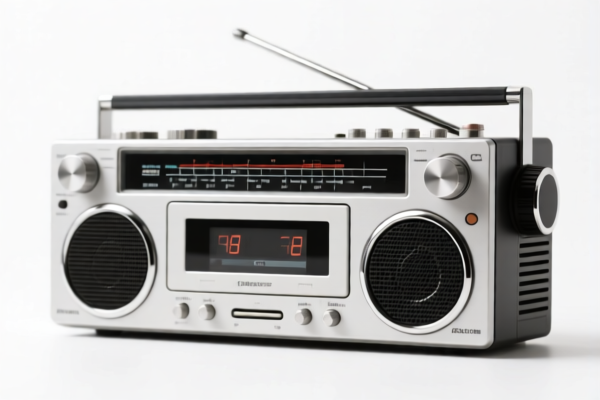
AI Analysis
📻 Radio Receiver with Recording or Playback Device
🌐 HS Code Reference & Clearance Guide | 2026 Latest Tariff Analysis | Strategic Classification
📌 I. Product Definition & Classification: What Exactly Are We Importing?
A "Radio Receiver with Recording or Playback Device" is a composite electronic product. It combines two distinct functions: 1. Radio Reception: Tuning into AM/FM/SW/Digital radio signals. 2. Audio Storage/Reproduction: Capturing, storing, or playing back audio from those signals or other sources (like internal memory/SD cards).
Critical Distinction: * If the device only receives radio signals → It is a pure Radio Receiver (e.g., HS 8527, 8543). * If the device includes hardware to record (microphone/input + storage) or play back (speaker/memory) → It may shift classification based on whether the recording/playback function is primary or ancillary, and whether it falls under "Broadcasting" or "Other Radio Equipment."
⚠️ Key Classification Trigger:
- Does the device have a dedicated recording mechanism (e.g., SD card slot, internal flash, tape deck)?
- Is the playback function integrated into the radio tuner, or is it a separate MP3/player unit?
- Note: In the US trade context, specific HS codes provided in the data suggest that certain configurations are treated as "Radio Receivers for Telecommunication Networks" or "Other Broadcasting Receivers" with specific tax implications.
📦 II. HS Code Classification Details (Based on Provided Data)
The following HS Codes are derived strictly from the provided dataset. They represent different structural and functional interpretations of a "Radio Receiver with Recording/Playback."
| HS Code | Product Description (Summary) | Functional Interpretation |
|---|---|---|
| 8543.70.60.00 | Radio receiver for telegraph/telephone network instruments | Treated as specialized communication equipment connected to telecom networks. |
| 8543.70.98.60 | Radio receiver, other machinery/equipment (catch-all), electronic material | Treated as general-purpose electronic radio equipment not fitting specific telecom categories. |
| 8527.91.60.80 | Sound recording/reproducing apparatus, combined with radio | Recognized as a hybrid device where recording/playback is a key feature alongside radio. |
| 8527.13.20.25 | Radio broadcast receiving equipment, with sound recording/reproducing | Treated as a dedicated broadcasting receiver that includes audio output/recording capabilities. |
| 8519.81.41.50 | Sound reproducing equipment, magnetic/optical/semiconductor media | Treated primarily as a media player (e.g., MP3/Flash player) with radio functionality as secondary. |
🔍 Critical Note:
- 8543 codes generally cover "Electrical machines and apparatus, having individual functions, not specified elsewhere." This often captures complex or specialized radio devices. - 8527 covers "Radio receivers." - 8519 covers "Sound recording or reproducing apparatus." - The tax rates vary significantly (10% to 37.6%) depending on which functional aspect US Customs prioritizes (Reception vs. Recording/Playback).
💰 III. 2026 Tariff Rate Breakdown (Including Surcharges)
✅ Applicable Country: United States (US)
✅ Origin: China (CN) (Implied by the "122 Clause" and surcharge structure typical of US-China trade tensions)
✅ Effective Date: Current 2026 Tariff Structure
🎯 1. 8543.70.60.00 – Specialized Radio Receiver (Telecom Network)
| Item | Detail |
|---|---|
| Base Tariff | 0.0% |
| Section 301 Surcharge | +25.0% |
| Section 122 Surcharge | +10.0% |
| Total Tax Rate | 35.0% |
| Tax Calculation | CIF Value × 35% |
| Legal Basis | Base Tariff (HTSUS) + Section 301 (USITC 8803.01.25) + Section 122 (IEEPA 9903.01.24 equivalent) |
📌 Explanation:
- This classification treats the device as specialized industrial/telecom equipment. - Total Cost Impact: High (35%). The 0% base tariff is offset by significant surcharges.
🎯 2. 8543.70.98.60 – General Electronic Radio Receiver (Catch-All)
| Item | Detail |
|---|---|
| Base Tariff | 2.6% |
| Section 301 Surcharge | +25.0% |
| Section 122 Surcharge | +10.0% |
| Total Tax Rate | 37.6% |
| Tax Calculation | CIF Value × 37.6% |
| Legal Basis | Base Tariff (HTSUS) + Section 301 + Section 122 |
📌 Explanation:
- This is the "Other" category for radio receivers under HS 8543. - Highest Tax Rate in the dataset (37.6%). Use only if no more specific classification (like 8527 or 8519) applies.
🎯 3. 8527.91.60.80 – Radio + Recording/Playback Device (Hybrid)
| Item | Detail |
|---|---|
| Base Tariff | 0.0% |
| Section 301 Surcharge | +7.5% |
| Section 122 Surcharge | +10.0% |
| Total Tax Rate | 17.5% |
| Tax Calculation | CIF Value × 17.5% |
| Legal Basis | Base Tariff (HTSUS) + Reduced Section 301 + Section 122 |
📌 Explanation:
- Best Value Option if the device is classified under HS 8527 (Radio Receivers). - The Section 301 surcharge is reduced to 7.5% (possibly due to exclusions or different subsection rules for recording apparatus within radio receivers). - Total Cost Impact: Moderate/Low (17.5%).
🎯 4. 8527.13.20.25 – Radio Broadcast Receiver with Audio Features
| Item | Detail |
|---|---|
| Base Tariff | 0.0% |
| Section 301 Surcharge | 0.0% |
| Section 122 Surcharge | +10.0% |
| Total Tax Rate | 10.0% |
| Tax Calculation | CIF Value × 10.0% |
| Legal Basis | Base Tariff (HTSUS) + Exempt from Section 301 + Section 122 |
📌 Explanation:
- Lowest Tax Rate in the dataset (10%). - This classification likely benefits from Section 301 exclusions for certain "broadcast receiving" equipment or specific consumer radio products. - Key Advantage: No 25% Section 301 tariff. Only the 10% Section 122 surcharge applies.
🎯 5. 8519.81.41.50 – Sound Reproducer (Media Player with Radio)
| Item | Detail |
|---|---|
| Base Tariff | 0.0% |
| Section 301 Surcharge | 0.0% |
| Section 122 Surcharge | +10.0% |
| Total Tax Rate | 10.0% |
| Tax Calculation | CIF Value × 10.0% |
| Legal Basis | Base Tariff (HTSUS) + Exempt from Section 301 + Section 122 |
📌 Explanation:
- Also has the Lowest Tax Rate (10%). - Classified primarily as a sound reproducing apparatus (e.g., MP3 player, digital audio player). - If the radio function is secondary to the recording/playback function, this classification may be appropriate. - Key Advantage: No 25% Section 301 tariff.
🛠️ IV. Clearance Practical Advice (Avoiding Pitfalls)
✅ 1. Documentation Checklist (Non-Negotiable)
| Document | Required? | Purpose |
|---|---|---|
| Product Brochure/Spec Sheet | ✅ Yes | Must clearly state: "Radio Receiver with Recording/Playback." Show interfaces (SD, USB, Mic). |
| Circuit Diagram/Block Diagram | ✅ Yes | Proves whether the recording/playback circuit is integrated or separate. |
| Photos (Front, Back, Inside) | ✅ Yes | Show labels, ports, and any "FM/AM" indicators. |
| Commercial Invoice | ✅ Yes | Must list both functions: "Radio Receiver" AND "Digital Audio Recorder/Player." |
| Origin Certificate | ✅ Yes | To determine eligibility for any potential Section 301 exclusions (if applicable). |
| Third-Party Test Reports | ✅ Yes | FCC ID (if US), CE, RoHS. Essential for electronic goods. |
✅ 2. Classification Strategy (The "Golden Rule")
🔥 "Function Dictates Code, Not Just Name!"
| Scenario | Recommended HS Code | Why? |
|---|---|---|
| Device is primarily a Radio, with small recording capability | 8527.13.20.25 or 8527.91.60.80 | Primary function is reception. Choose 8527.13 if Section 301 exempt. |
| Device is primarily an MP3 Player with Radio Tuner | 8519.81.41.50 | Primary function is media playback. Likely lower tax (10%). |
| Device is for Industrial/Telecom Use | 8543.70.60.00 or 8543.70.98.60 | If not a consumer product, it falls under "Other Electrical Machines." Higher tax. |
| Device has Tape Deck or CD Mechanism | 8519 or 8527 | Check specific HTSUS notes for "sound recording apparatus." |
✅ 3. Special Considerations for US Customs (CBP)
| Situation | Advice |
|---|---|
| Section 301 Exclusions | Check if your specific model is on the USITC Exclusion List. If 8527 or 8519 models are excluded, you save 25%. |
| Section 122 (IEEPA) | Unavoidable. The 10% surcharge applies to most Chinese electronics unless a specific exemption exists. Factor this into your pricing. |
| Hybrid Devices | CBP may challenge if you declare it as only a radio if it has SD slots. Be transparent: "Radio Receiver with Digital Recording and Playback." |
| Valuation | Ensure CIF value includes all costs (freight, insurance, assistance). Under-declaration leads to penalties. |
🌍 V. Global Market Comparison (2026 Overview)
| Market | Recommended HS Code | Est. Total Duty | Notes |
|---|---|---|---|
| 🇺🇸 USA | 8527.13.20.25 or 8519.81.41.50 |
10% | Best options due to 0% Section 301. Avoid 8543 (35-37.6%). |
| 🇨🇳 China | 8527.91.00.00 or 8519.81.00.00 |
5-10% | Standard MFN rate. No Section 301/122. |
| 🇪🇺 EU | 8527.91 or 8519.80 |
0-3% | Low base tariffs. No US-style surcharges. CE Marking required. |
| 🇯🇵 Japan | 8527.91 or 8519.80 |
0-5% | Low tariffs. PSE Certification required. |
| 🇬🇧 UK | 8527.91 or 8519.80 |
0-4% | Post-Brexit, similar to EU. UKCA Marking required. |
📌 Conclusion for US Importers:
- Prioritize8527.13.20.25or8519.81.41.50for the lowest duty (10%). - Avoid8543codes unless your device is truly specialized industrial telecom gear. - Verify Section 301 Exclusions for your specific product model.
📌 VI. Common Mistakes & Pitfalls (Learn from Others' Errors)
❌ Mistake 1: Declaring a complex radio-player combo as 8543.70.60.00
👉 Result: Paying 35% instead of 10%.
💡 Fix: If it’s a consumer product, argue for 8527 or 8519.
❌ Mistake 2: Omitting the "Recording/Playback" function in the description
👉 Result: CBP reclassifies to a higher-tariff code or issues a penalty for misdeclaration.
💡 Fix: Always include "with SD card/USB/Memory" in the product name.
❌ Mistake 3: Assuming all radio receivers are 8527
👉 Result: If the device is for "telegraph/telephone network instruments," it may be 8543.
💡 Fix: Analyze the intended use. Is it for consumers (8527/8519) or industrial telecom (8543)?
❌ Mistake 4: Ignoring the Section 122 Surcharge
👉 Result: Budget miscalculation.
💡 Fix: Always budget for the additional 10% on top of the base tariff, even if Section 301 is 0%.
🎯 VII. Final Recommendations: Optimize Cost & Compliance
🎯 Strategic Action Plan:
-
Design for Classification:
- If possible, design the device to emphasize Recording/Playback (e.g., large storage, user interface focused on music) to argue for
8519.81.41.50(10% duty). - Or, design it as a pure Radio Broadcast Receiver to argue for
8527.13.20.25(10% duty).
- If possible, design the device to emphasize Recording/Playback (e.g., large storage, user interface focused on music) to argue for
-
Pre-Submission:
- Request a Binding Ruling from US CBP if the product is high-value.
- Check the USITC Exclusion List for your specific HTSUS code.
-
Documentation:
- Clearly label products as: "Digital Radio Receiver with Recording and Playback Function."
- Include FCC ID and CE/UKCA marks on packaging.
-
Cost Calculation:
- Best Case: 10% Total Duty (Base 0% + Sec 122 10% + Sec 301 0%).
- Worst Case: 37.6% Total Duty (Base 2.6% + Sec 122 10% + Sec 301 25%).
📌 Pro Tip:
"HS Code is not just a number; it's your tax bill. Choose wisely, declare accurately, and save thousands per container."
📣 Next Steps:
📞 Consult a licensed US Customs Broker to review your specific product's circuit design.
📝 Prepare detailed specs highlighting the primary function (Reception vs. Playback).
🚀 Secure competitive logistics and factor in the 10-37.6% duty range in your pricing model.
✨ Smart Classification Saves Money. Accurate Declaration Ensures Smooth Clearance.
💼 Your Product Deserves a Clear Path to Market.
Customer Reviews
About HS Code Classification
The Harmonized System (HS) is an internationally standardized nomenclature developed by the World Customs Organization (WCO) to classify traded products. Over 200 countries use the HS system as the basis for customs tariffs, trade statistics, and import/export regulations.
Each HS code follows a hierarchical structure:
- Chapter (2 digits) — Broad category of goods (e.g., Chapter 84: Machinery and Mechanical Appliances)
- Heading (4 digits) — More specific grouping within the chapter
- Subheading (6 digits) — Internationally standardized breakdown, used by all WCO member countries
- National subdivisions (8-10 digits) — Country-specific extensions for further classification, such as US HTSUS 10-digit codes
Correct HS code classification is essential for smooth customs clearance, accurate duty payment, and compliance with trade regulations. Misclassification can lead to customs delays, overpayment of duties, or penalties.
When importing from CN to US, the applicable tariff rates may include:
- Most-Favored-Nation (MFN) rate — The standard duty rate applied to WTO members
- General rate — Applied to countries without trade agreements
- Trade remedy duties — Additional tariffs such as Section 301 (anti-dumping), Section 232 (national security), or countervailing duties
The information provided on this page is for reference purposes only. For official classification, please consult with your local customs authority or a licensed customs broker.