Radio receiver with sound recording or playback device
CN → US| HS Code | Tariff Rate | Origin | Destination | Doc |
|---|---|---|---|---|
| 8543706000 | 35.0% | CN | US | Official Doc |
| 8543709860 | 37.6% | CN | US | Official Doc |
| 8527916080 | 17.5% | CN | US | Official Doc |
| 8527132025 | 10.0% | CN | US | Official Doc |
| 8519814150 | 10.0% | CN | US | Official Doc |
Product Images
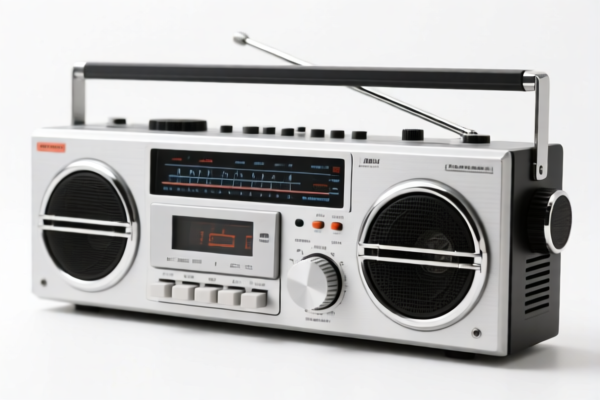


AI Analysis
📻 Radio Receiver with Sound Recording/Playback Device
🌐 HS Code Reference & Customs Clearance Guide | 2026 Latest Tariff Analysis | Professional-Level Entry Strategies
📌 I. Product Definition and Classification: Do You Truly Understand “Radio with Recorder”?
A "Radio receiver with sound recording or playback device" is a hybrid electronic commodity that integrates wireless signal reception with audio storage or reproduction functions. In international trade, this product falls into a complex intersection of chapters 85 (Electrical Machinery and Equipment) and 90 (Optical, Photographic, Cinematographic, Measuring, Checking, Medical, or Precise Instruments), depending on its primary function and structural design.
The key to accurate classification lies in determining whether the device is primarily a receiver with added features, or a recording/playback unit with radio capability. The following analysis breaks down the four possible HS Code outcomes based on the provided data, explaining the logic for each classification.
⚠️ Key Distinction Point:
- If the device is specifically designed for telegraph/telephone networks → 8543.70.60.00
- If it’s a general-purpose radio with recording/playback, falling under residual categories → 8543.70.98.60
- If the recording/playback function is dominant or it’s a combination unit → 8527.91.60.80
- If it’s a broadcast radio receiver with minimal recording features → 8527.13.20.25 or 8519.81.41.50
📦 II. HS Code Classification Details (2026 Latest Tariff Authority Comparison)
| HS Code | Product Description | Primary Function | Recording/Playback Feature | Logic for Classification |
|---|---|---|---|---|
8543.70.60.00 |
Radio receiving equipment | Signals connected to telegraph/telephone networks | Not primary focus | Specifically designed for network instruments; specialized function |
8543.70.98.60 |
Other radio receiving apparatus | General radio reception | Included as auxiliary | Residual category for electronic devices; no specific subheading fits |
8527.91.60.80 |
Sound recording/reproducing apparatus | Recording/Playback dominant | Yes, integrated | Combination with radio; recording function defines primary use |
8527.13.20.25 |
Radio receiving apparatus with sound recording/reproducing | Broadcast reception | Integrated | Specific structure for broadcast radio with recording capability |
8519.81.41.50 |
Sound reproduction equipment | Sound reproduction dominant | Yes (via media) | Uses magnetic/optical/semiconductor media; secondary radio function |
🔍 Critical Reminder:
- 8527 generally covers "Radio receivers, whether or not combined with sound recording or reproducing apparatus."
- 8519 covers "Apparatus for the recording or reproduction of sound."
- 8543 is a residual category for "Other machines and apparatus having individual functions."
- Misclassification Risk: Declaring a complex hybrid as a simple "radio" may lead to underpayment of duties if the recording feature triggers a higher tax bracket (e.g., Section 301 tariffs differ by code).
💰 III. 2026 Latest Tariff Rate Breakdown (Including Additional Duties & Policy Surcharges)
✅ Applicable Country: United States (US)
✅ Country of Origin: China (CN)
✅ Effective Date: November 10, 2025 onwards (for subsequent imports)
🎯 1. 8543.70.60.00 — Radio Receiving Equipment (Network/Telegraph/Telephone Specific)
| Item | Detail |
|---|---|
| Base Tariff | 0.0% |
| Section 301 Additional Duty | +25.0% |
| Section 122 Duty | +10.0% |
| Total Tax Rate | 35.0% |
| Tax Calculation | CIF Value × 35% |
| De Minimis Exemption | ❌ Not Available |
| Legal Basis Path | Section 301: 8543.70.60.00 → Section 122: 10% |
📌 Explanation:
- This code is highly specific to equipment designed for telegraph/telephone networks.
- It benefits from a 0% base rate but is still subject to Section 301 (25%) and Section 122 (10%) surcharges.
- Total: 35%. This is a high-risk code for misclassification. If the device isn’t strictly for network instruments, it may be reclassified to a higher-tariff residual code.
🎯 2. 8543.70.98.60 — Other Radio Receiving Apparatus (Residual Category)
| Item | Detail |
|---|---|
| Base Tariff | 2.6% |
| Section 301 Additional Duty | +25.0% |
| Section 122 Duty | +10.0% |
| Total Tax Rate | 37.6% |
| Tax Calculation | CIF Value × 37.6% |
| De Minimis Exemption | ❌ Not Available |
| Legal Basis Path | Section 301: 8543.70.98.60 → Section 122: 10% |
📌 Note:
- This is a catch-all category for radio receivers not fitting elsewhere.
- It has a 2.6% base tariff, which is the only code with a non-zero base rate in this list.
- Total: 37.6%. This is the highest total tax rate among the options, making it the least favorable for cost-saving if the device can be classified elsewhere.
🎯 3. 8527.91.60.80 — Sound Recording/Reproducing Apparatus (Combination Unit)
| Item | Detail |
|---|---|
| Base Tariff | 0.0% |
| Section 301 Additional Duty | +7.5% |
| Section 122 Duty | +10.0% |
| Total Tax Rate | 17.5% |
| Tax Calculation | CIF Value × 17.5% |
| De Minimis Exemption | ❌ Not Available |
| Legal Basis Path | Section 301: 8527.91.60.80 → Section 122: 10% |
📌 Key Insight:
- This code applies when the device is treated as a sound recording/reproducing apparatus with radio combined.
- The Section 301 rate is significantly lower (7.5%) compared to the 25% for other radio codes.
- Total: 17.5%. This is a cost-effective classification if the recording function is substantial and can be justified as the primary use.
🎯 4. 8527.13.20.25 — Radio Receiving Apparatus with Sound Recording/Reproducing (Broadcast)
| Item | Detail |
|---|---|
| Base Tariff | 0.0% |
| Section 301 Additional Duty | 0.0% |
| Section 122 Duty | +10.0% |
| Total Tax Rate | 10.0% |
| Tax Calculation | CIF Value × 10% |
| De Minimis Exemption | ❌ Not Available |
| Legal Basis Path | Section 122: 10% |
📌 Best Case Scenario:
- This code offers the lowest total tax rate (10%).
- It applies to broadcast radio receivers that include recording/replaying capabilities.
- Crucial: The Section 301 duty is 0%, which is unique. This suggests it may be exempt from certain trade war tariffs.
- Recommendation: If your product is a standard broadcast radio with a built-in recorder (e.g., cassette, digital voice memo), this is the optimal HS Code.
🎯 5. 8519.81.41.50 — Sound Reproduction Equipment (Magnetic/Optical/Semiconductor)
| Item | Detail |
|---|---|
| Base Tariff | 0.0% |
| Section 301 Additional Duty | 0.0% |
| Section 122 Duty | +10.0% |
| Total Tax Rate | 10.0% |
| Tax Calculation | CIF Value × 10% |
| De Minimis Exemption | ❌ Not Available |
| Legal Basis Path | Section 122: 10% |
📌 Alternative Optimal:
- Similar to8527.13.20.25, this code also results in a 10% total tax rate.
- It applies to devices where the sound reproduction is the primary function, using media like magnetic tapes, CDs, or semiconductor storage.
- Recommendation: Use this if the device is primarily a music player/recorder with a radio as a secondary feature.
🛠️ IV. Customs Clearance Practical Advice (Real-World Pitfall Avoidance)
✅ 1. Document Checklist (Mandatory)
| Document | Required | Purpose |
|---|---|---|
| ✅ Product Datasheet | ✔️ | Clarifies primary function (Radio vs. Recorder) |
| ✅ Circuit Diagram | ✔️ | Proves integration level of components |
| ✅ Product Photos (with Label) | ✔️ | Shows interfaces, media slots, antennas |
| ✅ FCC/CE Certification | ✔️ | Mandatory for electronic devices in US/EU |
| ✅ Commercial Invoice | ✔️ | Must specify "Radio Receiver with Recording Function" |
| ✅ Packing List | ✔️ | Details accessories (headphones, cables, media) |
✅ 2. Declaration Strategy (Key Mantras)
🔥 "Function First, Media Second, Radio Tertiary, Tax Minimization!"
| Scenario | Recommended HS Code | Tax Rate | Reason |
|---|---|---|---|
| Broadcast Radio with Recorder | 8527.13.20.25 |
10% | Section 301 exempt; primary use is reception |
| Digital Voice Recorder with Radio | 8519.81.41.50 |
10% | Primary use is recording/reproduction |
| Hybrid Unit (Unclear Primary Function) | 8527.91.60.80 |
17.5% | Balanced function; lower Section 301 rate |
| Network-Specific Radio | 8543.70.60.00 |
35.0% | Highly specific; only for telegraph/telephone networks |
| General Radio with Recording (Catch-All) | 8543.70.98.60 |
37.6% | Highest tax; avoid unless necessary |
✅ 3. Special Cases Handling
| Case | Advice |
|---|---|
| OEM Custom Devices | Provide design schematics to prove primary function |
| Multi-Function Gadgets | Emphasize the primary use in the invoice description |
| Military/Specialty Use | Apply for duty exemptions if applicable; provide usage proof |
| High-Value Luxury Radios | Consider splitting declaration if allowed (risky, consult broker) |
🌍 V. Global Market Comparison (2026 Latest)
| Market | Recommended HS Code | Total Tariff (China Origin) | Key Certification | Notes |
|---|---|---|---|---|
| 🇺🇸 USA | 8527.13.20.25 |
10% | FCC | Lowest tax; best for broadcast radios |
| 🇺🇸 USA | 8519.81.41.50 |
10% | FCC | Best for recorders with radio |
| 🇨🇳 China | 8527.13.20.25 |
~7-9% | CCC | Lower base rates; no Section 301 |
| 🇪🇺 EU | 8527.13.20.25 |
0-4% | CE | No additional tariffs; RoHS required |
| 🇬🇧 UK | 8527.13.20.25 |
0-4% | UKCA | Post-Brexit alignment with EU |
📌 Conclusion:
- USA is the most tariff-sensitive market due to Section 301 and 122 duties.
- Choosing the right HS Code can save 25-30% in duties (e.g., 37.6% vs. 10%).
- China and EU markets are more favorable with standard rates.
📌 VI. Common Mistakes & Pitfalls (Lessons Learned)
❌ Mistake 1: Declaring a complex hybrid as a simple "Radio"
👉 Consequence: May be reclassified to 8543.70.98.60 (37.6%) instead of 8527.13.20.25 (10%) → Huge tax penalty!
❌ Mistake 2: Ignoring the "Recording" function in the description
👉 Consequence: Customs may impose higher duties for "electronic apparatus" without recognizing the lower-rate subcategory.
❌ Mistake 3: Not providing FCC certification for US imports
👉 Consequence: Goods held at customs, delayed clearance, or returned.
✅ Correct Declaration Example:
"Digital Radio Receiver with Built-in Voice Recorder, FM/AM Band, USB Charging, Model XYZ, FCC Certified"
🎯 VII. Conclusion: Precision Classification Saves Money!
🎯 Remember the Mantra:
🔹 "Broadcast Radio = 10% | Recorder = 10% | Hybrid = 17.5% | General Radio = 37.6%"
🔹 "Section 301 Exemption is Key! Avoid the 37.6% Trap!"
📌 Pro Tip:
If your product can be reasonably classified under 8527.13.20.25 or 8519.81.41.50, always choose these to benefit from the 0% Section 301 rate.
Pre-classification with a customs broker is highly recommended to avoid costly reclassification issues.
📣 Immediate Action:
📞 Contact a professional customs broker + Provide product specs + Request Advance Ruling for HS Code confirmation
🚀 Ensure smooth clearance, lower taxes, and higher profit margins!
✨ Professional Customs Clearance Starts with Accurate Classification!
💼 Every dollar of duty saved is profit earned!
Customer Reviews
About HS Code Classification
The Harmonized System (HS) is an internationally standardized nomenclature developed by the World Customs Organization (WCO) to classify traded products. Over 200 countries use the HS system as the basis for customs tariffs, trade statistics, and import/export regulations.
Each HS code follows a hierarchical structure:
- Chapter (2 digits) — Broad category of goods (e.g., Chapter 84: Machinery and Mechanical Appliances)
- Heading (4 digits) — More specific grouping within the chapter
- Subheading (6 digits) — Internationally standardized breakdown, used by all WCO member countries
- National subdivisions (8-10 digits) — Country-specific extensions for further classification, such as US HTSUS 10-digit codes
Correct HS code classification is essential for smooth customs clearance, accurate duty payment, and compliance with trade regulations. Misclassification can lead to customs delays, overpayment of duties, or penalties.
When importing from CN to US, the applicable tariff rates may include:
- Most-Favored-Nation (MFN) rate — The standard duty rate applied to WTO members
- General rate — Applied to countries without trade agreements
- Trade remedy duties — Additional tariffs such as Section 301 (anti-dumping), Section 232 (national security), or countervailing duties
The information provided on this page is for reference purposes only. For official classification, please consult with your local customs authority or a licensed customs broker.