Railway or Tram Vehicle Parts
CN → US| HS Code | Tariff Rate | Origin | Destination | Doc |
|---|---|---|---|---|
| 8607991000 | 37.8% | CN | US | Official Doc |
| 8607995000 | 38.1% | CN | US | Official Doc |
| 8608000000 | 38.8% | CN | US | Official Doc |
| 7302909000 | 35.0% | CN | US | Official Doc |
| 7302300000 | 85.0% | CN | US | Official Doc |
Product Images
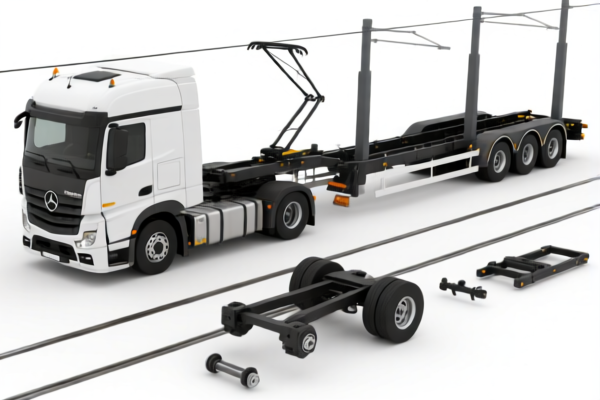
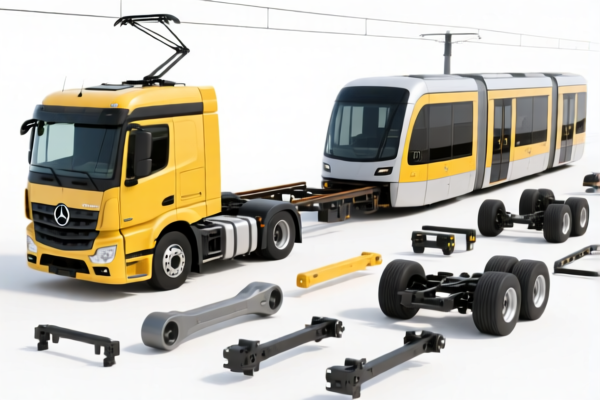
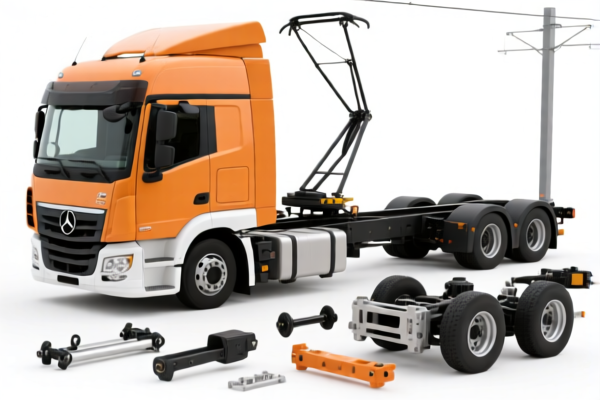
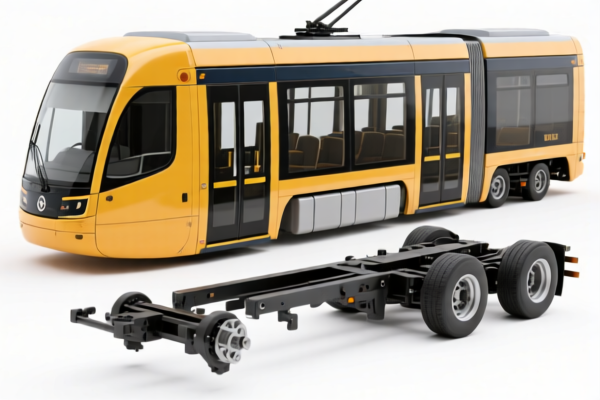
AI Analysis
🚆 Railway & Tram Vehicle Parts: HS Code Decoding & Customs Clearance Strategy (2026)
🌐 HS Code Reference & Customs Guide | 2026 Tariff Breakdown | Professional Entry Strategy
📌 I. Product Definition & Classification: What Are "Railway Parts"?
Railway or Tram Vehicle Parts and Accessories refer to components designed specifically for the assembly, maintenance, or operation of railway rolling stock (trains, locomotives) or tramways. These are not general-purpose hardware but are integral to rail transport systems.
In international trade, these parts are often categorized based on their primary function and material composition: * Functional Parts: Components like brake systems, couplings, suspension parts, and control modules. * Structural/Track-Related Parts: Rail fasteners, track support components, or specialized steel accessories used in rail infrastructure. * General Accessories: Fasteners, bolts, and generic hardware if not specifically identifiable as rail-only.
⚠️ Key Distinction Point:
- If the part is specifically identifiable as belonging to a railway vehicle (e.g., train brake piston, tram pantograph component) →归入 Chapter 86.
- If the part is a generic steel item used in rail construction (e.g., track spikes, generic steel plates) but not uniquely identifiable as a vehicle part → 归入 Chapter 73.
- No Material Conflict: The classification often overrides material (steel/aluminum) if the use is specific to rail vehicles.
📦 II. HS Code Classification Details (2026 Latest Tariff Authority Match)
Based on the provided data, here are the five matched HS Codes for "Railway or Tram Vehicle Parts":
| HS Code | Product Description | Matching Logic (Summary) | Total Tax Rate |
|---|---|---|---|
8607.99.10.00 |
Parts and Accessories of Vehicles of Chapter 86 | Matches "Parts and Accessories" with "Vehicle Parts" use. Fits the catch-all category for rolling stock parts. No material conflict. | 37.8% |
8607.99.50.00 |
Parts and Accessories of Vehicles of Chapter 86 | Directly corresponds to "Parts" attribute. "Railway/Tram" matches the category use. Reasonable catch-all for rolling stock. | 38.1% |
8608.00.00.00 |
Railway or Tramway Track Construction Material & Accessories | High alignment in usage domain ("Rail/Tram"). Classified as "Parts/Accessories" with no material/state conflict. | 38.8% |
7302.90.90.00 |
Other Railway/Tramway Track Construction Materials (Steel) | Inferred steel material based on "Parts/Accessories" attribute and common rail construction materials. Falls under "Other" with no obvious material conflict. | 35.0% |
7302.30.00.00 |
Railway/Tramway Track Construction Materials (Steel/Crossing Parts) | Inferred iron/steel based on "Parts/Accessories" attribute. Reasonable for crossing parts/accessories. High Tax due to specific surcharge. | 85.0% |
🔍 Critical Note:
- Codes 8607 and 8608 are the most precise for vehicle-specific parts.
- Codes 7302 are used when parts are deemed track/construction materials or generic steel components rather than specific vehicle assemblies.
- 8607.99.10.00 is often the safest bet for general rolling stock parts.
💰 III. 2026 Latest Tariff Rate Breakdown (Including Surcharges & Policy Add-ons)
✅ Applicable Country: United States (US)
✅ Origin: China (CN)
✅ Effective Time: 2025–2026 (Current Trade Policy)
🎯 1. 8607.99.10.00 —— Parts & Accessories of Railway Vehicles
| Item | Detail |
|---|---|
| Base Tariff | 2.8% |
| Section 301 Surcharge | +25.0% |
| 122 Clause Surcharge | +10.0% |
| Total Effective Rate | 37.8% |
| Calculation Basis | CIF Value × 37.8% |
| De Minimis Exemption | ❌ NOT Eligible (De Minimis Waiver Applies) |
| Legal Pathway | Base Tariff: 2.8% + USITC Footnote 301: 25% + 122 Clause: 10% |
📌 Explanation:
- 25% Surcharge: Standard USITC Section 301 duty on Chinese goods.
- 10% Surcharge: Specific tariff clause (122) applied to certain industrial and transport components.
- Total 37.8%: Significant cost impact. Must be factored into landed cost.
🎯 2. 8607.99.50.00 —— Other Parts & Accessories of Railway Vehicles
| Item | Detail |
|---|---|
| Base Tariff | 3.1% |
| Section 301 Surcharge | +25.0% |
| 122 Clause Surcharge | +10.0% |
| Total Effective Rate | 38.1% |
| Calculation Basis | CIF Value × 38.1% |
| De Minimis Exemption | ❌ NOT Eligible |
| Legal Pathway | Base Tariff: 3.1% + USITC Footnote 301: 25% + 122 Clause: 10% |
📌 Note:
- Slightly higher base rate (3.1% vs 2.8%) than8607.99.10.00.
- Same surcharges apply.
- Choose this code if the part does not fit the specific sub-category of...10.00.
🎯 3. 8608.00.00.00 —— Track Construction Materials & Accessories
| Item | Detail |
|---|---|
| Base Tariff | 3.8% |
| Section 301 Surcharge | +25.0% |
| 122 Clause Surcharge | +10.0% |
| Total Effective Rate | 38.8% |
| Calculation Basis | CIF Value × 38.8% |
| De Minimis Exemption | ❌ NOT Eligible |
| Legal Pathway | Base Tariff: 3.8% + USITC Footnote 301: 25% + 122 Clause: 10% |
📌 Caution:
- This code is for track infrastructure or fixed accessories.
- Do NOT use for movable vehicle parts (like brakes or seats) unless they are permanently fixed to the track. Misclassification can lead to audits.
🎯 4. 7302.90.90.00 —— Other Steel Railway Track Materials
| Item | Detail |
|---|---|
| Base Tariff | 0.0% |
| Section 301 Surcharge | +25.0% |
| 122 Clause Surcharge | +10.0% |
| Total Effective Rate | 35.0% |
| Calculation Basis | CIF Value × 35.0% |
| De Minimis Exemption | ❌ NOT Eligible |
| Legal Pathway | Base Tariff: 0.0% + USITC Footnote 301: 25% + 122 Clause: 10% |
📌 Opportunity:
- Lowest Total Rate (35.0%) among the matches.
- Applicable if the item is a generic steel component used in rail construction (e.g., steel plates, beams, generic fasteners) and not uniquely identifiable as a specific vehicle part.
- Justification: Must prove it is "other" track material, not a specific vehicle part.
🎯 5. 7302.30.00.00 —— Steel Crossings & Point Work Materials
| Item | Detail |
|---|---|
| Base Tariff | 0.0% |
| Section 301 Surcharge | +25.0% |
| 122 Clause Surcharge | +10.0% |
| Steel/Aluminum/Copper Surcharge | +50.0% |
| Total Effective Rate | 85.0% |
| Calculation Basis | CIF Value × 85.0% |
| De Minimis Exemption | ❌ NOT Eligible |
| Legal Pathway | Base Tariff: 0.0% + USITC Footnote 301: 25% + 122 Clause: 10% + Additional Surcharge: 50% |
🚨 WARNING:
- Highest Tax Rate (85.0%).
- This code applies to specific steel crossing parts and triggers an additional 50% surcharge on steel/aluminum/copper products.
- Avoid this code unless the item is explicitly a steel crossing point/switch component. Do not use for general parts.
🛠️ IV. Customs Clearance Practical Advice (Avoiding Pitfalls)
✅ 1. Required Documentation Checklist
| Document | Required? | Purpose |
|---|---|---|
| ✅ Detailed Product Specifications | ✔️ | Must list exact part name, model, and intended use (e.g., "Brake Pad for Train X"). |
| ✅ Technical Drawings/Photos | ✔️ | To prove the part is specifically designed for railway/tram use (avoids generic classification). |
| ✅ Bill of Lading & Invoice | ✔️ | Clear description: "Railway Vehicle Parts, Model XYZ, Not for General Use." |
| ✅ Statement of Non-De Minimis Eligibility | ✔️ | Confirm awareness of 301/122 surcharges. |
| ✅ Material Declaration | ✔️ | Specify if steel, aluminum, or composite. Crucial for avoiding 7302.30.00.00's 50% surcharge. |
✅ 2. Classification Strategy & Tips
🔥 "Be Specific, Avoid Steel Surcharge, Use 8607 First!"
| Scenario | Recommended HS Code | Reason |
|---|---|---|
| Specific Vehicle Parts (Brakes, Seats, Couplers) | 8607.99.10.00 |
Most accurate. No material surcharge. Tax ~37.8%. |
| Generic Track Components (Steel Plates, Beams) | 7302.90.90.00 |
Lower base tax. Tax ~35.0%. Avoids vehicle-specific scrutiny. |
| Crossing/Switch Parts (Steel) | 7302.30.00.00 |
AVOID unless necessary. Tax 85.0% due to 50% surcharge. |
| Track Fixtures (Non-Vehicle) | 8608.00.00.00 |
If part is fixed to track, not moving vehicle. Tax ~38.8%. |
✅ 3. Special Considerations
| Situation | Action |
|---|---|
| Composite Materials | Clearly declare material. If >50% steel, risk of 7302.30.00.00 surcharge increases if misclassified. |
| OEM Parts | Provide OEM documentation to prove specificity to a railway vehicle. |
| Used Parts | Ensure they are not classified as "waste" or "scrap" (different HS code, higher scrutiny). |
| De Minimis | DO NOT rely on $800 de minimis exemption. Section 301 and 122 clauses waive this for these codes. |
🌍 V. Global Market Comparison (2026)
| Country/Region | Recommended HS Code | Est. Tariff (China Origin) | Notes |
|---|---|---|---|
| 🇺🇸 USA | 8607.99.10.00 |
37.8% | High due to 301 + 122 clauses. |
| 🇨🇳 China | 8607.99.10.00 |
~5-10% | Lower import duty, no 301/122. |
| 🇪🇺 EU | 8607.99.10.00 |
~2.5% | No 301/122. CE Certification required. |
| 🇦🇺 Australia | 8607.99.10.00 |
~5% | No major surcharges. |
📌 Conclusion:
- The USA imposes the highest burden on Chinese-made railway parts due to Section 301 (25%) and 122 Clause (10%).
- Cost Optimization: Consider classifying generic steel components under7302.90.90.00(35.0%) if legally defensible, but never use7302.30.00.00unless necessary to avoid the 85% rate.
📌 VI. Common Mistakes & Pitfalls (Lessons Learned)
❌ Mistake 1: Classifying specific vehicle parts as "General Machinery Parts"
👉 Result: Misclassification, potential audit, and higher duties.
👉 Fix: Use Chapter 86 (8607).
❌ Mistake 2: Using 7302.30.00.00 for generic steel parts
👉 Result: Unexpected 85% tax due to 50% surcharge.
👉 Fix: Use 7302.90.90.00 (35%) for generic steel track materials.
❌ Mistake 3: Assuming De Minimis applies
👉 Result: Customs seizure for undervaluation/tax evasion.
👉 Fix: All these codes exclude de minimis. Plan for full taxation.
✅ Best Practice:
"Declare Specific Use, Provide Technical Docs, Choose 8607 for Vehicles, 7302.90 for Generic Steel."
🎯 VII. Conclusion: Optimize Classification, Control Costs
🎯 Key Takeaway:
🔹 For Railway/Tram Parts:
8607.99.10.00(37.8%) is the standard.
🔹 For Generic Steel Track Items:7302.90.90.00(35.0%) offers savings.
🔹 Avoid7302.30.00.00(85.0%) unless it's a steel crossing part.
🔹 No De Minimis for US imports under these codes.
📌 Pro Tip:
Always request an Advance Ruling from US Customs (CBP) if the part's classification is ambiguous. This protects you from future audits and retroactive duties.
📣 Immediate Action:
📞 Consult a licensed customs broker.
📄 Prepare detailed technical specifications.
🚀 Ensure smooth clearance and cost control!
✨ Precision in Classification, Power in Profitability!
💼 Your supply chain deserves accuracy.
Customer Reviews
About HS Code Classification
The Harmonized System (HS) is an internationally standardized nomenclature developed by the World Customs Organization (WCO) to classify traded products. Over 200 countries use the HS system as the basis for customs tariffs, trade statistics, and import/export regulations.
Each HS code follows a hierarchical structure:
- Chapter (2 digits) — Broad category of goods (e.g., Chapter 84: Machinery and Mechanical Appliances)
- Heading (4 digits) — More specific grouping within the chapter
- Subheading (6 digits) — Internationally standardized breakdown, used by all WCO member countries
- National subdivisions (8-10 digits) — Country-specific extensions for further classification, such as US HTSUS 10-digit codes
Correct HS code classification is essential for smooth customs clearance, accurate duty payment, and compliance with trade regulations. Misclassification can lead to customs delays, overpayment of duties, or penalties.
When importing from CN to US, the applicable tariff rates may include:
- Most-Favored-Nation (MFN) rate — The standard duty rate applied to WTO members
- General rate — Applied to countries without trade agreements
- Trade remedy duties — Additional tariffs such as Section 301 (anti-dumping), Section 232 (national security), or countervailing duties
The information provided on this page is for reference purposes only. For official classification, please consult with your local customs authority or a licensed customs broker.